On a seemingly ordinary September morning in 1970, a deeply composed young woman strolled through the final security checkpoint at an airport in Rome. She possessed all the relaxed elegance of a frequent international flyer. However, the items discreetly nestled in her coat pockets were far from standard duty-free purchases. Tucked away were handheld explosives, and hidden within her mind was the meticulous flight plan for a massive commercial jetliner. At just twenty-four years old, Leila Khaled did not board airplanes to travel to exotic destinations; she boarded them to violently seize the world’s attention. She was determined to force the international community to look up at the skies and acknowledge a population of people that had been largely erased from the daily headlines. In the late 1960s and early 1970s, she shattered the boundaries of what a revolutionary could look like, rewriting the terrifying rules of modern resistance.
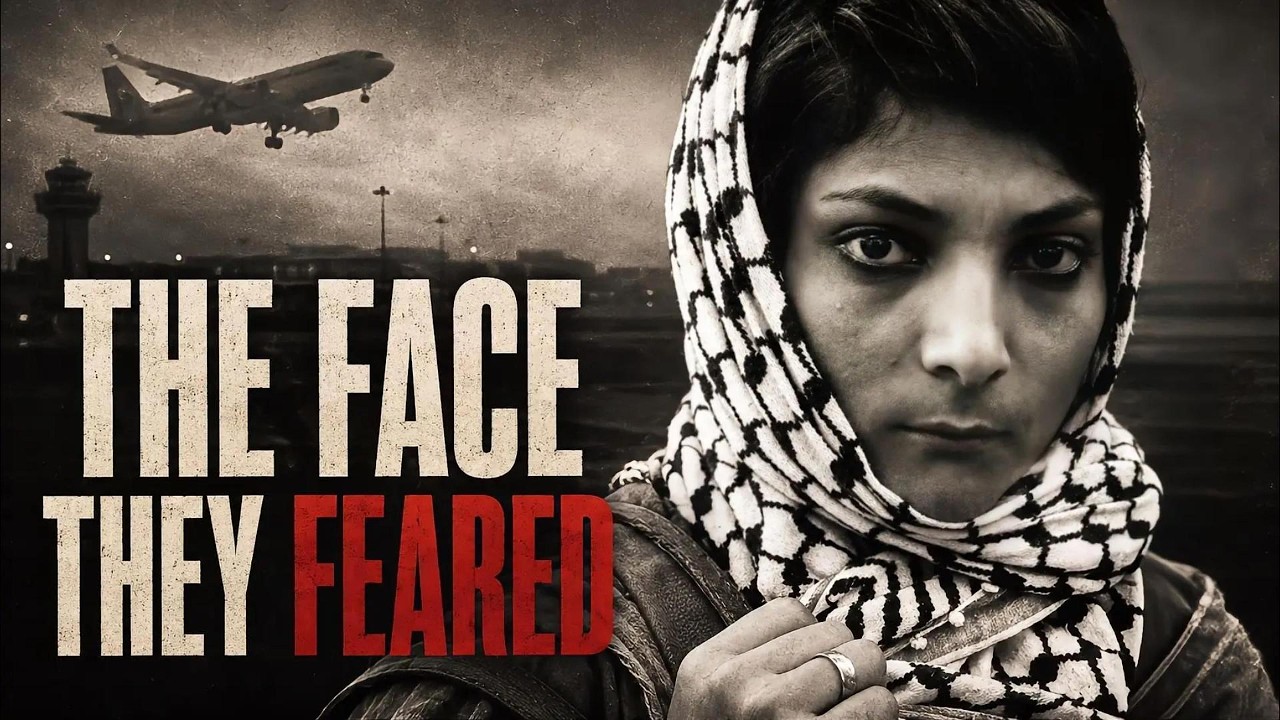
To understand the sheer gravity of Khaled’s actions, one must look back at a childhood completely defined by exile and immense loss. At the tender age of four, Khaled became one of the roughly 750,000 Palestinians displaced during the mass exodus known as the Nakba. Her family was suddenly uprooted from their comfortable, middle-class life in the bustling port city of Haifa, forced into a cramped, desperate existence inside a Lebanese refugee camp. Where most children were raised on comforting fairy tales, Khaled was raised on a steady, bitter diet of political injustice. She watched her once-proud father hollowed out by defeat, his former strength traded for a deep, lingering fatigue. By the time she was fifteen, Khaled’s political awakening had slow-brewed into a fierce generational rage, leading her to join early militant factions. History was calling, and she absolutely refused to wait for an invitation.
While Khaled initially showed academic promise, receiving a scholarship to study pharmacy at the American University of Beirut, her academic dreams were abruptly halted when her funding ran dry. Relocating to Kuwait to teach elementary school, her classroom quickly expanded from young children to potential political recruits. Following the monumental shifts of the 1967 Six-Day War, she officially joined the Popular Front for the Liberation of Palestine (PFLP). She refused to be sidelined by her gender, demanding an active, frontline role in operations. She entered grueling training camps, adapting to minimal sleep, sporadic meals, and maximum paranoia. As a chilling symbol of her unwavering commitment, she even wore a ring forged from the pin of a live grenade and a bullet casing.
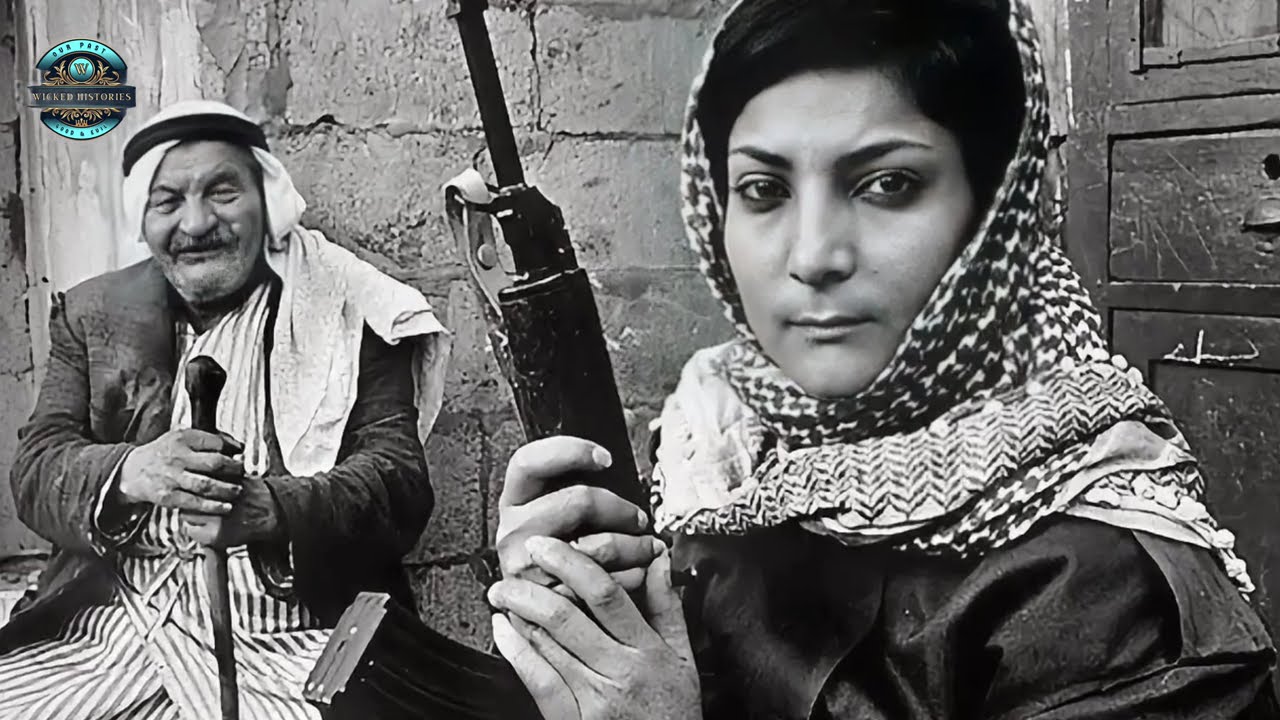
Her transformation from a displaced refugee into a global icon culminated in the summer of 1969. Khaled and a co-conspirator seized control of TWA Flight 840. Without spilling a single drop of blood, they politely redirected the Boeing 707 from its intended route to Tel Aviv, flying it directly over her lost hometown of Haifa before landing safely in Damascus, Syria. The high-altitude public relations stunt was a resounding success for her cause. Upon her release from a brief Syrian detention, Khaled became an overnight sensation. The western media, utterly obsessed with contradictions, latched onto her image. A photograph of her holding a weapon, her cheekbones sharply framed by a traditional keffiyeh, became a masterpiece of militant glamour. She was dubbed “revolutionary chic,” drawing bizarre, romanticized comparisons to Audrey Hepburn from people who had never set foot inside a refugee camp.
However, this explosive notoriety quickly became a catastrophic double-edged sword. Her striking face was now plastered across international newspapers, transforming her into a walking wanted poster. Recognizing that her fame made future undercover operations impossible, Khaled made a deeply chilling, agonizing decision: the famous face had to go. In a shocking display of revolutionary resolve, she submitted herself to six separate plastic surgery procedures to alter her nose and chin. Inconceivably, she opted to undergo these brutal surgeries entirely without anesthesia. She embraced the raw, searing pain as a dark communion with the suffering of her people, turning her own face into a literal battlefield.
Armed with a surgically altered face and fresh, forged documents, Khaled prepared for a sequel that would bring an empire to its knees. In September 1970, she attempted to hijack El Al Flight 219 out of Amsterdam. Flirting her way past a jovial security guard who jokingly asked if she had weapons, she took her seat in first class alongside her accomplice, Patrick Argüello. But when Khaled approached the cockpit and threatened the pilot with a grenade, the situation spiraled into absolute chaos. The Israeli pilot executed a terrifying, steep nose dive, throwing the cabin into zero-gravity pandemonium. Hidden air marshals instantly opened fire, shooting Argüello multiple times and beating Khaled unconscious.
The doomed flight made an emergency landing at London’s Heathrow Airport, where an emotionally wrecked and badly bruised Khaled was dragged into British custody. Housed at the Ealing Police Station, the world’s most dangerous woman surprisingly bonded with the female British officers over cups of tea. But the geopolitical crisis was far from over. Just days later, the PFLP struck again, hijacking a BOAC flight packed with British citizens and forcing it to land in the Jordanian desert. Their demand was brutally simple: release Leila Khaled, or the hostages would face the ultimate consequence. Facing an impossible, high-stakes countdown, British Prime Minister Edward Heath folded. He broke the nation’s proud non-negotiation policy, freeing Khaled in a highly controversial hostage swap that deeply scarred Britain’s credibility.
The aftermath of Khaled’s airborne infamy was marked by profound personal tragedy. After a short-lived marriage to a fellow comrade, she underwent further surgery to reclaim her original face. But the dark shadow of her violent past eventually caught up to her. On Christmas Day in 1976, ruthless assassins broke into her family residence and executed her younger sister and her sister’s fiancé on their wedding day. The horrific, execution-style murders were widely suspected to be a botched assassination attempt by secret services, with the bullets originally intended for Khaled herself.
Despite the unimaginable grief and constant threat to her life, Khaled refused to disappear into victimhood. In the 1980s, she successfully recalibrated her life once more, transitioning away from armed, militant operations to become a fierce advocate for the rights of Palestinian women and children. Today, decades after she terrified international aviation authorities, she remains unapologetic about her history, maintaining that her desperate actions were tactical necessities to shake an ignorant world awake. Whether viewed as an inspiring symbol of relentless resistance or a reckless orchestrator of terror, Leila Khaled’s legacy is impossible to ignore. She is a woman whose actions remain as complicated, dangerous, and controversial as the history she so violently helped write in the skies.