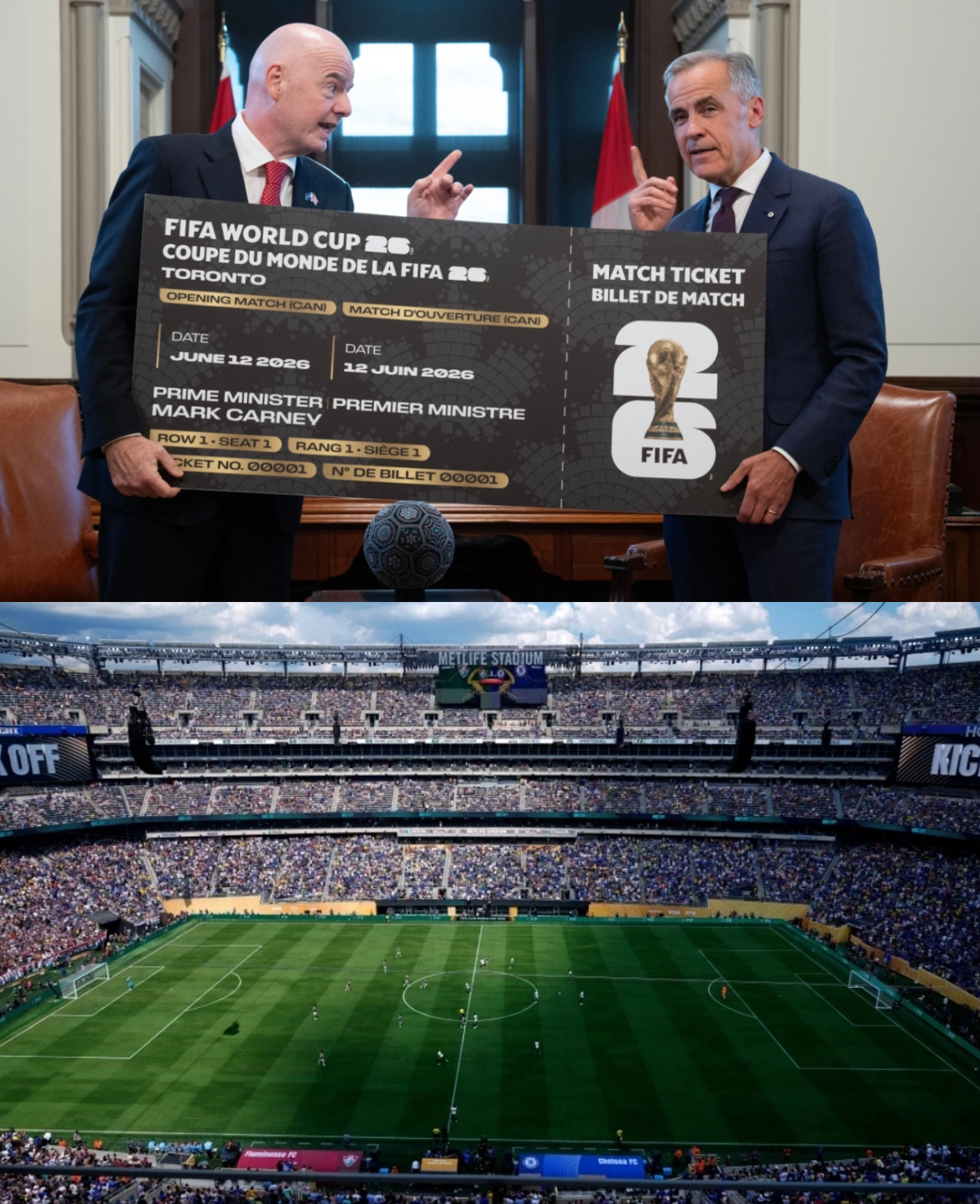
The World Cup has historically been dubbed the “people’s tournament,” a vibrant, global celebration where nations unite, underdogs triumph, and the beautiful game reigns supreme. When FIFA officially announced that the 2026 World Cup would be hosted jointly across the United States, Mexico, and Canada, soccer fans across North America were absolutely ecstatic. It was hailed as a once-in-a-lifetime opportunity to witness the magic of the world’s most popular sport right in their own backyards. Yet, as the tournament actually unfolds, that soaring excitement has crashed headfirst into a brutal, disheartening reality. Instead of focusing on thrilling group stages and star players, millions of everyday fans are finding themselves completely priced out, locked in a frustrating battle with a ticketing system that feels fundamentally rigged against them. Now, major legal heavyweights are stepping onto the pitch, and FIFA is facing a massive, multi-state investigation that could result in millions of dollars in refunds and fundamentally change how mega-events are managed.

At the absolute epicenter of this mounting controversy is a joint legal probe launched by the attorneys general of New York and New Jersey. Letitia James and Jennifer Davenport have aggressively subpoenaed FIFA, demanding comprehensive, transparent answers regarding what they describe as a chaotic and deeply misleading ticket rollout. The investigation explicitly targets the ticketing practices for the highly anticipated matches scheduled at MetLife Stadium in New Jersey, the venue famously selected to host the tournament’s grand finale on July 19, 2026. However, the scope of the outrage extends far beyond the East Coast. Officials in California and Texas, including Attorneys General Rob Bonta and Ken Paxton, have also officially opened their own investigations, signaling a nationwide revolt against the organization’s business practices. The sheer scale of the legal pushback is unprecedented for an international sporting event, highlighting a deep, troubling disconnect between FIFA’s corporate revenue strategies and the fundamental rights of everyday consumers.
The Dynamic Pricing Disaster
The primary point of contention driving this legal firestorm revolves around FIFA’s highly controversial decision to utilize dynamic pricing for the first time in World Cup history. In theory, dynamic pricing adjusts the cost of a ticket based on real-time market demand, a practice commonly seen with airlines or ride-sharing apps. In practice, however, fans argue that it has transformed the ticket-buying process into an unpredictable, terrifying financial gauntlet.
When tickets for the final match at MetLife Stadium initially went on sale, the most expensive premium seats were listed at an already staggering $6,730. Yet, as subsequent sales windows opened and demand inevitably surged, those exact same category tickets skyrocketed to an astonishing $10,990. This aggressive surge pricing meant that fans logging into the official portal had no reliable way to budget for the event, facing wild, algorithmically driven price fluctuations that left many feeling completely extorted. Critics have fiercely accused the governing body of manufacturing fake scarcity—intentionally withholding ticket inventory to artificially drive up prices while instilling a panic-inducing fear of missing out among loyal, desperate supporters.
The Great Seating Bait-and-Switch
But the skyrocketing prices are only half the story. The most shocking and legally perilous allegations within the ongoing probes center on accusations of a blatant bait-and-switch regarding stadium seating maps. During the early phases of ticket sales, fans navigated a standard, clearly defined four-tier seating system, carefully selecting and paying top dollar for what they firmly believed were prime vantage points near the pitch.
However, after millions of purchases had already been processed and confirmed, organizers reportedly went back and significantly altered the internal stadium layouts. They introduced brand-new, ultra-exclusive “Front Category” sections right at the edge of the field. To make room for these exceptionally high-priced seats—some reportedly costing upwards of $30,000 for the final match—initial buyers were quietly and unceremoniously bumped back. Fans who legitimately thought they had secured front-row action were suddenly relegated to significantly less desirable locations, sometimes finding themselves positioned far behind the goals or high up in the stands, completely contradicting the specific representations made to them at checkout.
This post-sale seating manipulation has struck a profound nerve, prompting swift, decisive action from consumer protection agencies across the country. California Attorney General Rob Bonta emphasized that consumers must be able to trust that the physical seats they purchase perfectly match the diagrams and promises shown during the digital sales process. The visceral feeling of being downgraded without prior consent or adequate compensation has entirely shattered the trust between the organizers and the ticket-buying public. New Jersey Attorney General Jennifer Davenport did not mince words when addressing the media, stating clearly that FIFA has turned the simple act of buying a ticket into a “gauntlet of confusion, fake scarcity, and impossibly high prices.” As formal consumer complaints continue to flood in by the thousands, the state legal teams are meticulously examining whether FIFA unlawfully leveraged its absolute monopoly over the global event to exploit working-class fans. If the courts definitively find that the organization engaged in deceptive trade practices, FIFA could be forcefully mandated to issue massive financial refunds to affected buyers, creating a financial and public relations nightmare for the multi-billion-dollar sports behemoth.
A Broken Resale Market
Compounding the intense misery for fans is a deeply flawed, highly restrictive secondary ticket market that has literally left many stranded outside stadium gates. While FIFA officially mandates that all resale transactions occur strictly through its designated official portal—which conveniently slaps a hefty 30 percent surcharge on every single resold ticket, taking 15 percent from both the buyer and the seller—desperate fans have inevitably turned to popular third-party platforms like StubHub, Vivid Seats, and SeatGeek.
The resulting chaos has been truly disastrous. Due to severely restrictive transfer policies and a remarkably delayed ticketing app rollout by FIFA, third-party buyers have reported widespread, heartbreaking technical failures. Tragic stories are actively emerging of families traveling across the country, spending thousands of dollars on non-refundable travel and lodging, only to discover their digital tickets are completely invalid or un-transferable at the stadium security gates. The ensuing, endless finger-pointing between FIFA and the major resale platforms offers absolutely zero comfort or resolution to a tearful fan standing in a concrete parking lot while the highly anticipated match kicks off without them.
Will Fans Finally Get Justice?
In the face of this mounting, fierce criticism, FIFA President Gianni Infantino has staunchly and publicly defended the organization’s pricing models. He argues that the exorbitant costs simply reflect an unprecedented, historical global demand that equates to a thousand years of World Cups combined. He has frequently pointed out that the absolute lowest entry-tier tickets were initially priced at a relatively modest $60, suggesting the grand event remains wonderfully accessible to the general public.
However, those lower-cost options were notoriously, almost mythically scarce, vanishing into the digital ether within mere minutes of becoming available, often snapped up by automated bots or scalpers. For the average, hardworking family, the actual reality of attending a match involves navigating a brutal maze of hidden service fees, soaring secondary market markups, and completely exorbitant transportation costs—such as the widely criticized, vastly inflated premium transit fares initially implemented for public train routes leading to MetLife Stadium. The beautiful, generational dream of taking a child to see their favorite international soccer stars has swiftly morphed into an elite, unattainable luxury reserved almost exclusively for the ultra-wealthy.
The unfolding, high-stakes legal drama serves as a highly critical flashpoint in the much broader, ongoing conversation about the very soul of modern professional sports. As broadcast revenues hit unprecedented record highs and massive corporate sponsorships entirely dominate the physical landscape of the game, the everyday, loyal supporter is increasingly viewed by executives as little more than a sheer revenue stream to be endlessly maximized. The sweeping subpoenas issued by New York, New Jersey, California, and Texas represent a necessary, powerful line drawn firmly in the sand—a firm declaration that even the most powerful, globally recognized sporting organizations are certainly not immune to local consumer protection laws. Fans are not merely asking for cheap, discounted entertainment; they are rightfully demanding basic corporate transparency, ethical business practices, and the simple, unbreakable guarantee that they will receive exactly what they paid their hard-earned money for.
As the 2026 World Cup continues to captivate global audiences with stunning goals and dramatic upsets, the fierce action quietly unfolding inside the sterile courtrooms may ultimately prove just as impactful as the action on the vibrant green pitch. The final outcome of these aggressive state investigations could fundamentally reshape exactly how mega-events are ticketed in the future, setting incredibly critical legal precedents for consumer rights within the massive global entertainment industry. For now, the millions of passionate fans who were unceremoniously priced out, unfairly bumped back from their chosen seats, or financially misled by algorithmic pricing are watching the legal proceedings incredibly closely. They are waiting with bated breath to see if the American legal system can successfully force FIFA to return the beautiful game to the very people who actually make it beautiful. If the determined attorneys general succeed in their mission, it will send a resounding, unmistakable message across the globe: no organization, regardless of its immense global prestige, deep political connections, or staggering financial power, has the right to treat the adoring public with such blatant, unapologetic disregard.