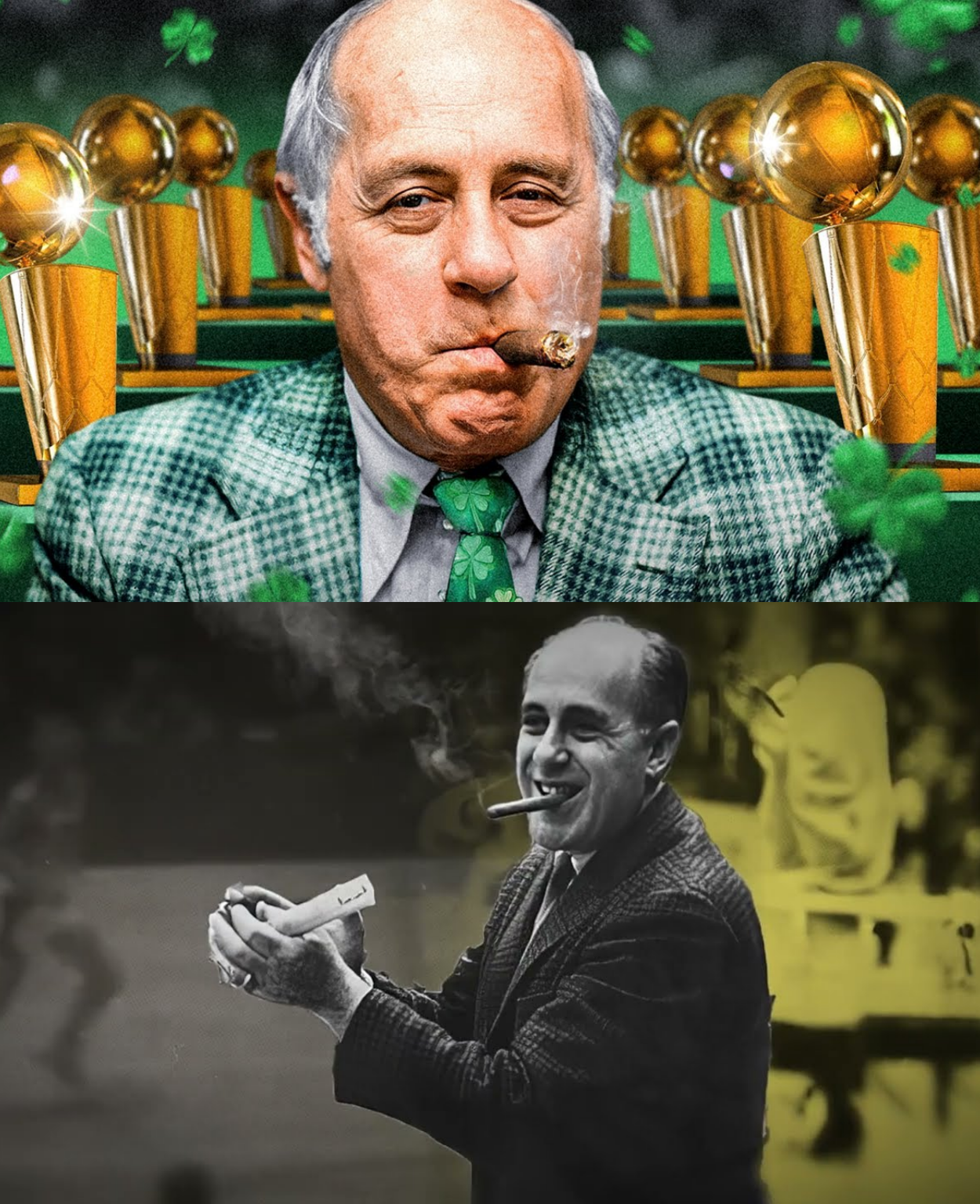
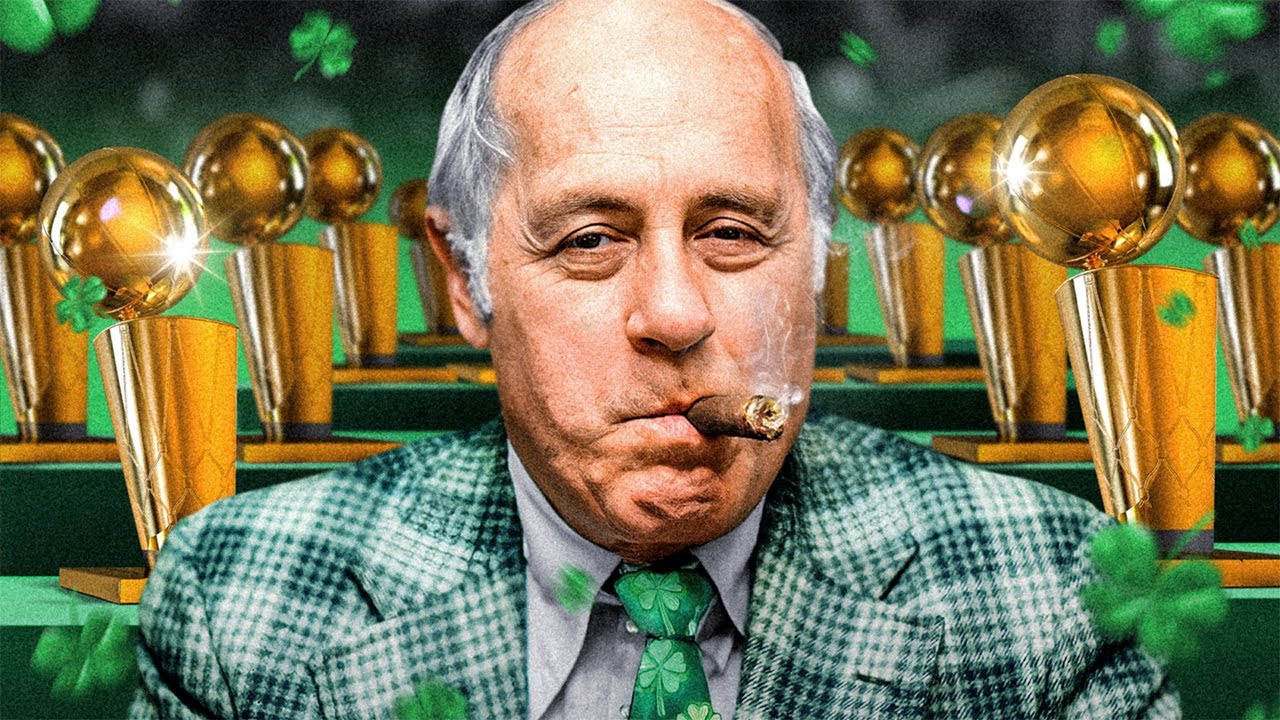
In the annals of professional sports, the conversation about greatness often defaults to the stars on the floor—the Michael Jordans, the Bill Russells, or the modern titans who fill highlight reels. Yet, if you strip away the jerseys and the box scores to find the foundation of the most successful franchise in NBA history, you do not find a player. You find a man with ginger hair, a sharp tongue, a cloud of cigar smoke, and a basketball mind that functioned like a grandmaster chess player. His name was Red Auerbach, and he is, without contest, the biggest winner the NBA has ever known.
To understand the Boston Celtics, one must first understand Arnold “Red” Auerbach. He was not a flashy superstar; he was a 5’9” former high school gym teacher with asthma [01:02]. But what he lacked in stature, he made up for in an uncompromising, abrasive, and brilliant commitment to winning.
The Architect’s Early Trials
Red’s journey was far from a fairytale. Before he arrived in Boston, he cut his teeth in the chaotic, fledgling years of the Basketball Association of America (BAA). He gained a reputation for being brutally tough on his players, demanding a level of physical conditioning that was unheard of in the 1940s. While he found early success with the Washington Capitals, setting a then-league record of 17 consecutive wins, his fiery temperament and clash with ownership led to early exits from Washington and the Tri-Cities Blackhawks [01:48]. By 1950, just four years into his coaching career, his reputation as a difficult personality had nearly derailed his future in the sport.
The Boston Celtics, a team synonymous with losing at the time, were the last stop on the train. When they hired him, they didn’t realize they had recruited the man who would define the next half-century of basketball.
Breaking Barriers and Building the Foundation
Auerbach’s tenure in Boston did not start with a standing ovation. In the 1950 draft, the local fanbase and the media were clamoring for Holy Cross star Bob Cousy. Auerbach, ever the contrarian, famously dismissed the sentiment, joking that Cousy had “too much hair” for his liking [03:03]. Yet, fate—and bankruptcy among other teams—eventually brought Cousy to Boston.
The true mark of Auerbach’s vision, however, was his willingness to challenge the status quo. In that same 1950 draft, he selected Chuck Cooper, making him the first Black player ever drafted into the NBA [03:29]. It was a daring move that shattered racial barriers at a time when most of the league was not ready for such progress. Auerbach didn’t care about the social constraints of the time; he cared about finding the best basketball players. This commitment to talent over prejudice became a hallmark of his career, later culminating in him hiring Bill Russell as the first Black head coach in major American sports [11:32].
The Victory Cigar and the Russell Masterstroke
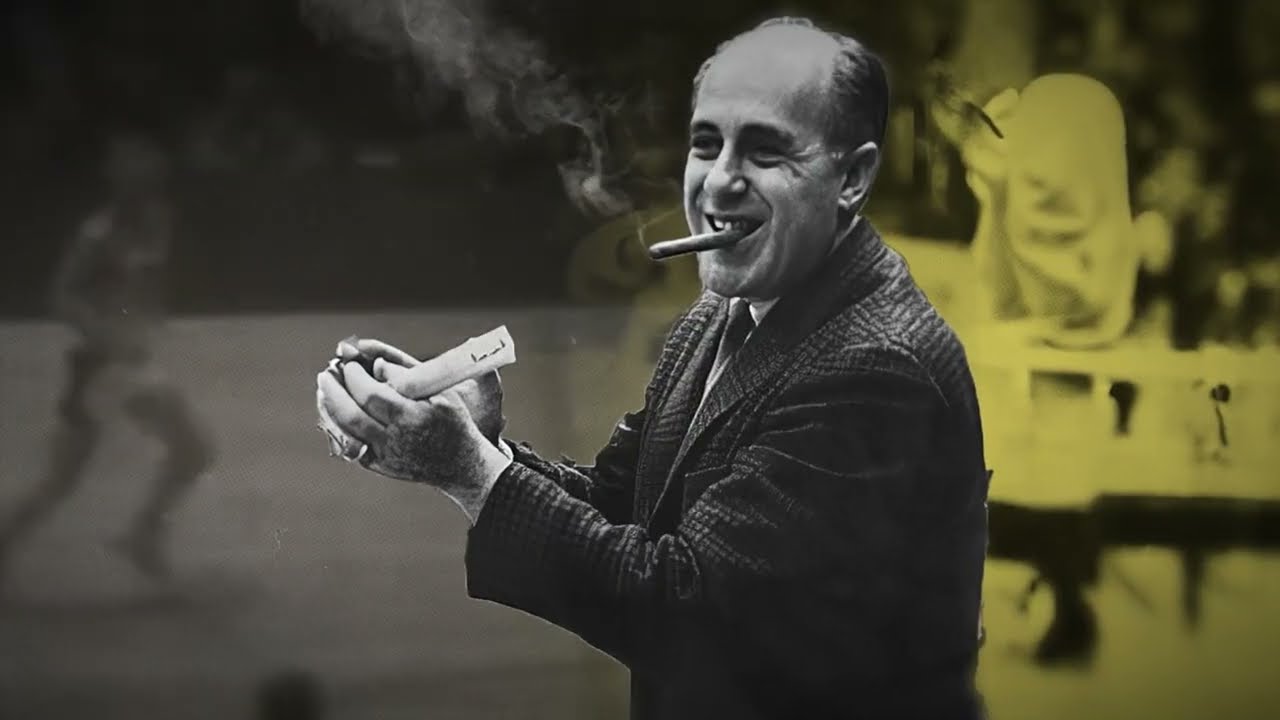
As the 1950s progressed, Auerbach became iconic for his “Victory Cigar.” It started as a practical signal—if he lit up on the bench, the game was essentially over [04:00]. To opponents, it was an infuriating insult; to the Celtics, it was a symbol of the dominance they had established. But winning championships remained elusive until Auerbach pulled off one of the greatest maneuvers in sports history: acquiring Bill Russell.
Knowing he couldn’t land the draft pick for the greatest defensive force in the game through conventional means, Red went to work. He orchestrated a trade with the St. Louis Hawks that involved giving up All-Stars Ed Macauley and Cliff Hagan, knowing the Hawks’ ownership was too racist to value Russell properly [05:08]. To secure the top pick from the Rochester Royals, he leveraged his team owner’s connection to the “Ice Capades” traveling show, promising performances in exchange for passing on Russell [05:19]. It was puppeteering at the highest level. The result? Eleven championships in 13 seasons after Russell arrived [12:10].
The Philosophy: Celtics Pride
Auerbach was never a tactical revolutionary in terms of drawing up complex plays. In fact, he famously ran only seven basic set plays during his time in Boston [07:36]. His genius lay in his ability to extract the absolute maximum from every player. He believed in “Celtics Pride”—a code of excellence that demanded players put the team above individual stats.
He hated the obsession with individual accolades. Auerbach famously noted that they won seven championships without ever having a player in the league’s top 10 scorers [08:26]. He managed egos with a heavy hand; if a player couldn’t buy into the team concept, they were traded. He championed the role player and invented the concept of the “Sixth Man,” ensuring his best players weren’t necessarily the five who started, but the five who could win the game [09:14].
The Second Act: The Bird Steal
When Auerbach retired from coaching in 1966—leaving with nine titles in 10 years—he transitioned into a legendary front-office role [11:12]. After a period of transition with Dave Cowens, Auerbach proved he had not lost his touch in 1979. He saw potential in Larry Bird while he was still in college and took the gamble to draft him a year early, betting on his superstar future [13:59].
A year later, he pulled off what many call the “steal of the century.” He manipulated the Golden State Warriors into giving him the third overall pick and Robert Parish in exchange for the first and 13th picks, allowing him to draft Kevin McHale [14:29]. With Bird, McHale, and Parish, he built the greatest frontcourt in history, securing championships in 1981, 1984, and 1986.
The Tragedy and the “What If”
The trajectory of the Celtics changed forever in 1986. After carefully planning for years to draft Len Bias—a player projected to be even better than Michael Jordan—tragedy struck [16:03]. Just two days after being drafted, Bias died of a cocaine overdose [16:17]. The loss hit Auerbach personally; he knew the Bias family and was never quite the same after the tragedy. The dynasty began to crumble, and while they remained competitive, the window for another championship run of that magnitude had closed.
Even in his later years, Auerbach’s eye for talent remained sharp. In the 1996 draft, he pushed the Celtics to select a young prospect named Kobe Bryant [17:17]. The team, unfortunately, decided to move in a different direction, drafting Antoine Walker instead. One can only imagine what a second-act dynasty under Auerbach’s guidance might have looked like had they listened to the old fox.
Conclusion
Red Auerbach died in 2006, but his legacy is the DNA of the modern NBA. He was more than a coach or a general manager; he was an innovator who understood that a basketball team was a living, breathing organism. He taught the league that winning isn’t about collecting the best individual stats, but about building a culture where pride, hustle, and fundamental team play are the only metrics that matter. The smoke from his victory cigars may have long since cleared, but the standard he set remains the benchmark for every franchise in the league. He truly was the man who built the Boston Celtics, and in doing so, he built the winning standard for the game of basketball itself.