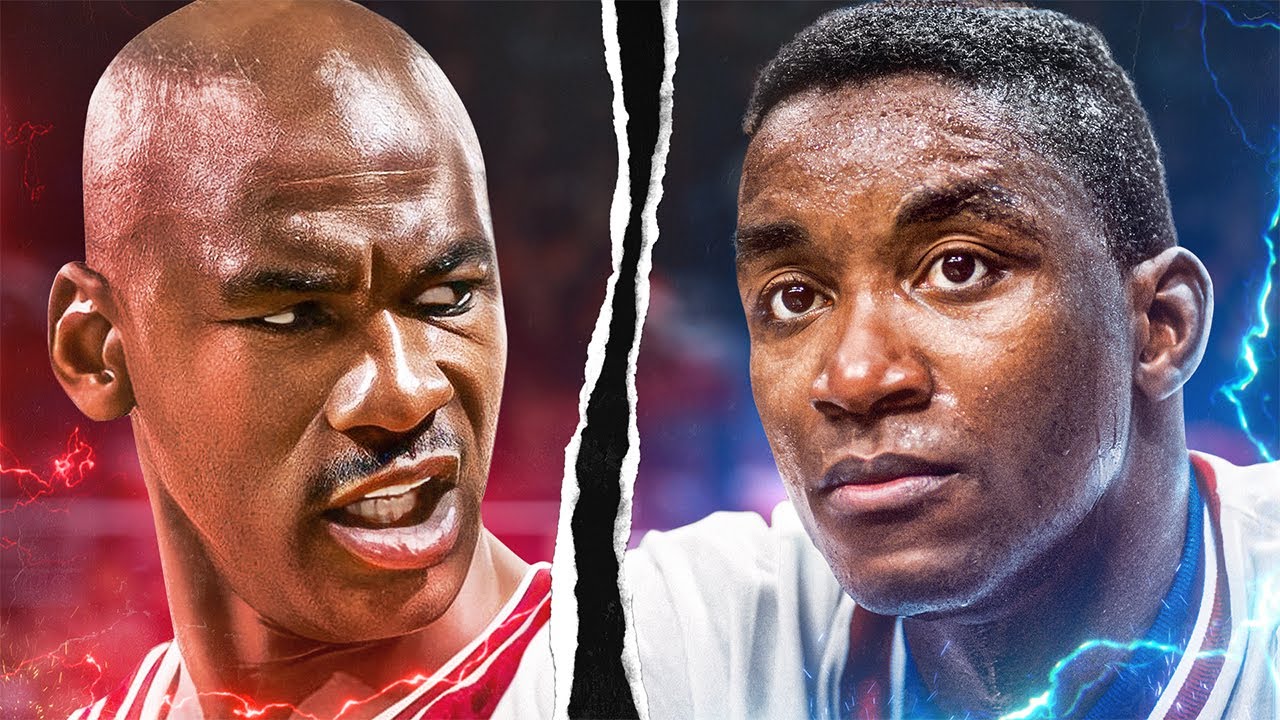
In the pantheon of sports rivalries, few hold the cultural weight, the persistent bitterness, and the sheer longevity of the conflict between Michael Jordan and Isiah Thomas. For nearly four decades, this feud has simmered behind the scenes and boiled over in public, coloring the narratives of two of the greatest careers in basketball history. It is a story not just about basketball excellence, but about ego, pride, regional loyalty, and the kind of personal resentment that can endure long after the final whistle has blown.
To understand the animosity, one has to look back further than the championship rings and the MVPs. The story begins in the mid-1980s, an era when the NBA was transitioning from a struggling league into a global juggernaut.
The Elevator Myth and the 1985 “Freeze-Out”
The common narrative for the birth of the beef traces back to the 1985 All-Star Game. Jordan, a wide-eyed rookie who had already captured the imagination of the public, arrived in the league with a level of hype that few had ever experienced. According to Jordan, the seeds were sown during a simple elevator ride. Jordan claimed he introduced himself to Thomas, only to be met with silence, which he perceived as the cold shoulder from an established veteran who was perhaps threatened by the rookie’s ascension [03:08].
Thomas, of course, disputes this interpretation, framing Jordan as an arrogant newcomer who had already alienated the veterans by violating team protocols during the weekend. The perception—whether real or imagined—was that Thomas and the Eastern Conference starters conspired to “freeze out” Jordan during the game, refusing to pass him the ball to teach the rookie a lesson [02:41]. While statistical evidence suggests Jordan received his fair share of shots, the perception became the truth. The very next time the two met on the court, a motivated Jordan dropped 49 points on the Pistons. The battle lines were drawn.
The “Jordan Rules” and the Physicality of the 80s
As Jordan’s Bulls ascended to relevance, they found themselves repeatedly hitting a brick wall: the Detroit Pistons. Under head coach Chuck Daly, the Pistons were the “Bad Boys”—the quintessential antagonists of the league. They didn’t just want to beat the Bulls; they wanted to brutalize them. They implemented the “Jordan Rules,” a tactical and psychological strategy to physically wear Jordan down, double-teaming him, bumping him, and putting him on the floor with regularity [04:46].
For three consecutive years (1988, 1989, and 1990), Detroit eliminated Chicago from the playoffs. It was a formative experience for Jordan, who learned that individual talent could not overcome a hardened, unified team culture. While Thomas would later speak respectfully of Jordan’s talent, calling him the best player he’d ever seen, the competitive hatred was palpable [05:04]. The Pistons felt that Jordan, and the league’s media, were underestimating the difficulty of the path they had cleared to win their own championships.
The Controversial Walk-Off
The breaking point arrived in 1991. The Bulls, finally stronger and more mature, swept the Pistons in the Eastern Conference Finals. In the waning seconds of the series-clinching game, the Pistons walked off the court without shaking the hands of the Bulls players—a violation of the unspoken sportsmanship contract [14:29].
To Jordan, this was the ultimate sign of disrespect. It cemented his view of the Pistons as “street-yard bullies” who couldn’t handle the changing of the guard [14:47]. Thomas, for his part, later claimed he didn’t orchestrate the walk-off, but the damage was done. The incident added a layer of personal malice to the rivalry that would persist for the rest of their lives.
The Dream Team Snub
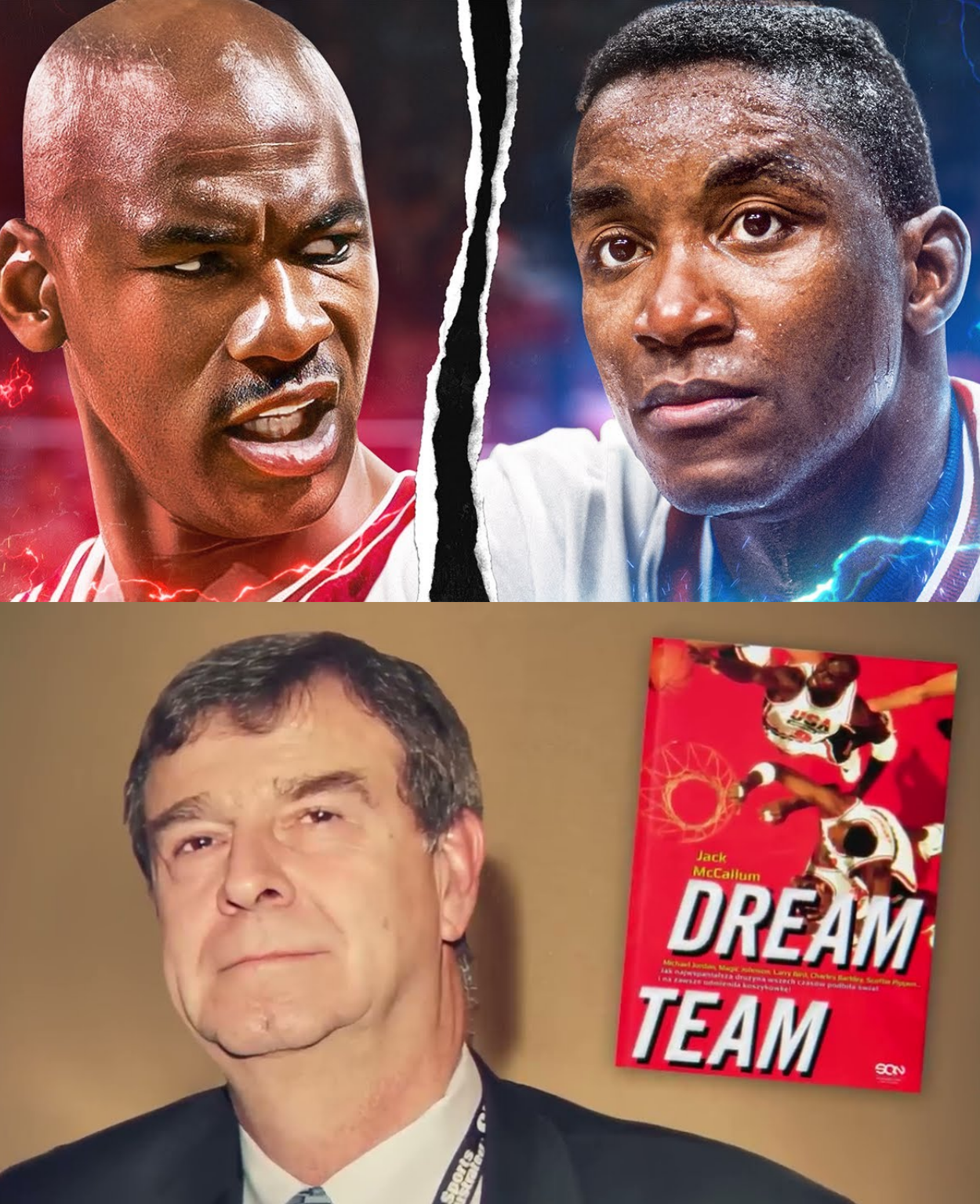
Perhaps the most persistent mystery in this long-running saga is Thomas’s absence from the 1992 “Dream Team.” As a perennial All-Star and a two-time NBA champion, Thomas was arguably the most glaring omission from what is widely considered the greatest basketball team ever assembled [08:12]. Rumors immediately swirled that Jordan had issued an ultimatum: if Thomas was on the team, he wasn’t [07:17].
In his 2020 documentary, The Last Dance, Jordan denied orchestrating the snub, though he openly admitted he hated Thomas [07:46]. Regardless of the truth, the perception that Jordan had successfully conspired to deny Thomas his Olympic moment further fractured the relationship. To this day, the debate rages among fans and analysts: was it a collective decision by players who didn’t want to deal with Thomas’s personality, or was it a targeted strike by the man who had become the face of the NBA?
Chicago: The Soul of the Beef
Perhaps the most fascinating element of this rivalry is the regional dynamic. Isiah Thomas was a proud son of Chicago, a product of its west side who returned to his hometown not as a hero, but as an adversary [12:33]. When Jordan arrived, he became the city’s adopted son, effectively eviscerating Thomas’s local legacy. John Salley, a teammate of both players, noted that Thomas was deeply hurt by seeing his own family members cheering for the Bulls and wearing Jordan jerseys [10:12]. This wasn’t just a professional disagreement; it was a battle over the soul of Thomas’s own city.
Can the Hatchet Ever Be Buried?
Since their respective retirements, the beef has remained surprisingly active. The release of The Last Dance acted as a lightning rod, bringing decades-old wounds to the surface. Thomas has since demanded a public apology on national television, fueled by his perception that Jordan used the documentary to rewrite history and damage his legacy [12:17]. Jordan, known for his relentless competitiveness and occasional pettiness, has shown no sign of contrition.
The two men have avoided each other at high-profile league events, and while other feuds in the NBA have thawed—such as the reconciliation between Magic Johnson and Thomas—the Jordan-Thomas conflict appears destined to remain cold [13:16].

Ultimately, the beef between Michael Jordan and Isiah Thomas is more than just a clash of personalities. It is a clash of eras and philosophies. It is the story of a veteran who saw his kingdom being taken away, and a challenger who demanded total dominance. They are two of the most competitive, intelligent, and influential men to ever play the game, and perhaps it is that very intensity—the same intensity that drove them to greatness—that makes forgiveness impossible. For as long as they live, their rivalry will serve as a reminder that even in the world of professional sports, the fiercest battles are rarely the ones played on the court; they are the ones played in the minds of those who refuse to let the past go.