The atmosphere inside the colossal stadium in Arlington, Texas, was nothing short of electric. It was a balmy Monday evening on June 22, 2026, a date that will forever be etched in the annals of sporting history. Exactly 70,649 fans packed into the sold-out arena, creating a sea of sky-blue and white, all vibrating with a singular, collective anticipation. They had traveled from every corner of the globe not just to witness a Group J football match between Argentina and Austria, but to bear witness to destiny. Lionel Messi, the diminutive maestro who has spent the better part of two decades rewriting the laws of physics and footballing logic, stood on the precipice of absolute immortality. Tied with legendary German striker Miroslav Klose at sixteen World Cup goals entering the tournament, Messi had already equaled the record just days prior with a hat-trick against Algeria. Now, he was looking to stand alone at the summit. What transpired over the next ninety-plus minutes was a dramatic, emotional, and transcendent theatrical performance that left television commentators breathless and fellow footballing legends bowing in pure reverence.
However, the path to undisputed greatness is rarely a straight line, and this historic night began with a moment of shocking vulnerability. In the ninth minute of the match, Argentina was awarded a penalty after Lautaro Martinez was brought down in the box. A hush fell over the stadium as Messi stepped up to the spot. This was the moment. The script was perfectly written for an early coronation. Yet, in a stunning twist of fate, Messi’s left-footed strike dragged just wide of the right post. A collective gasp echoed throughout the massive stadium. For a fleeting second, a shadow of doubt crept into the minds of the spectators. Missing a penalty on the world’s biggest stage carries a psychological weight that can crush even the most seasoned professionals. But Lionel Messi is not governed by the emotional gravity that affects ordinary men. Instead of retreating into his shell, the missed opportunity seemed to ignite a fierce, quiet determination within him. He recalibrated, analyzed the defensive structures of the Austrian team, and began to orchestrate the game with the precision of a master conductor.
The true magic arrived in the thirty-eighth minute, entirely washing away the bitter taste of the earlier aberration. The buildup was fluid and devastatingly quick. Following a brilliant dummy by Thiago Almada, who cleverly let Facundo Medina’s precise pass roll past him, the ball found its way directly onto Messi’s legendary left foot just outside the penalty area. With a fraction of a second to act, Messi struck the ball with lethal accuracy, catching Austrian goalkeeper Alexander Schlager leaning the wrong way. The ball rippled the back of the net, and the stadium absolutely erupted in a deafening roar of pure ecstasy. It was his seventeenth World Cup goal. The record was officially broken. Messi sprinted toward the corner flag, thrusting his right arm into the Texas night sky as his teammates piled onto him in sheer jubilation. In broadcasting booths around the arena, television commentators completely lost their composure. They shouted into their microphones, their voices cracking with emotion as they scrambled to find the adjectives necessary to describe a player who consistently exhausts the limits of the human vocabulary. They were not just calling a goal; they were narrating the coronation of the greatest goalscorer in the history of the FIFA World Cup.
The night, however, was far from over. As the match progressed into its final moments, with Argentina tightly holding onto a 1-0 lead, the physical toll of the intense contest became apparent. Yet, deep into stoppage time, in the ninety-fifth minute, Messi found one last reserve of magical energy. Gathering the ball in the final third, he navigated through a maze of exhausted Austrian defenders. His initial attempt was blocked by the goalkeeper, but with relentless tenacity, he collected the rebound and fired a shot through a tight window of defenders. Goal number eighteen. The final whistle blew shortly after, securing a 2-0 victory for Argentina and cementing a performance that will be studied by football historians for centuries to come.
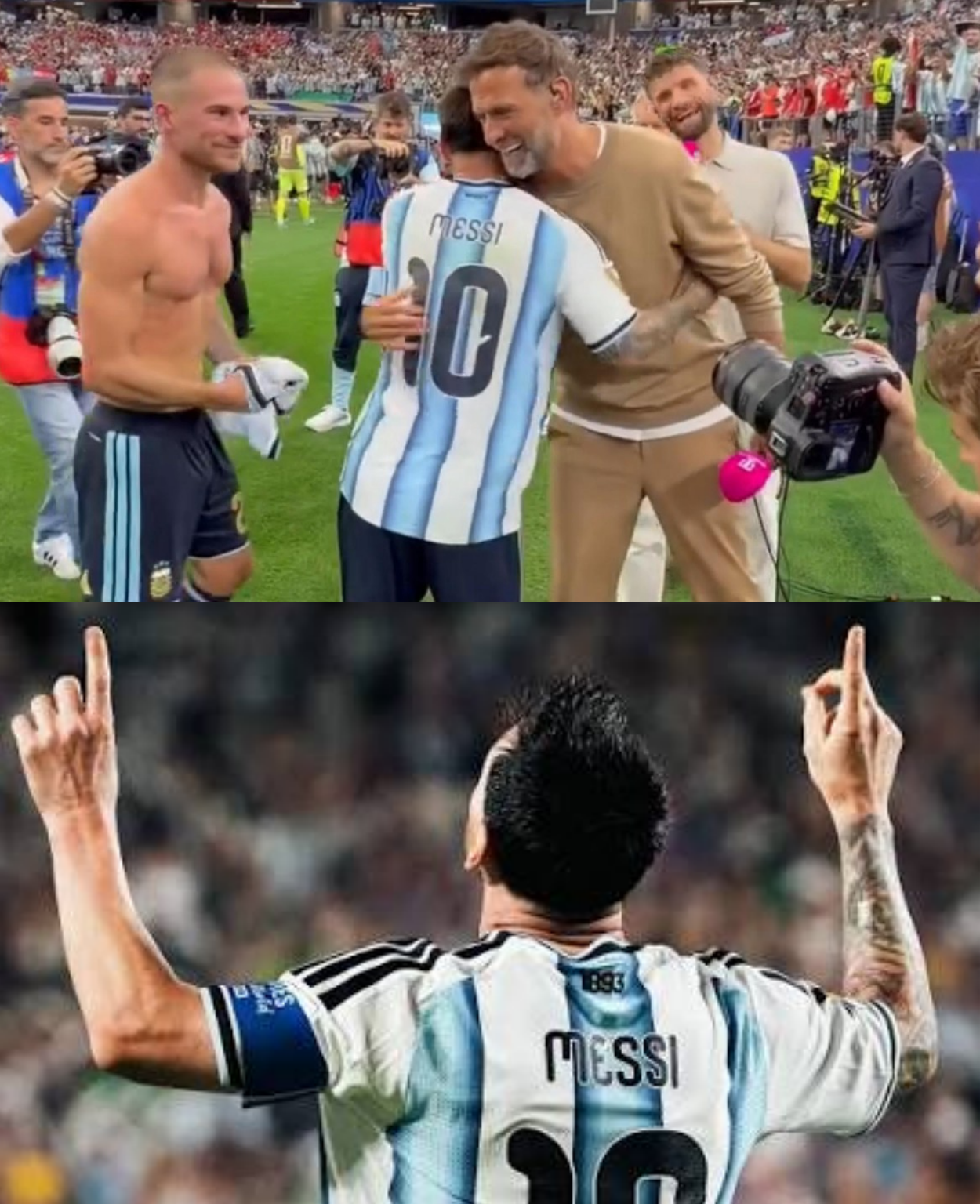
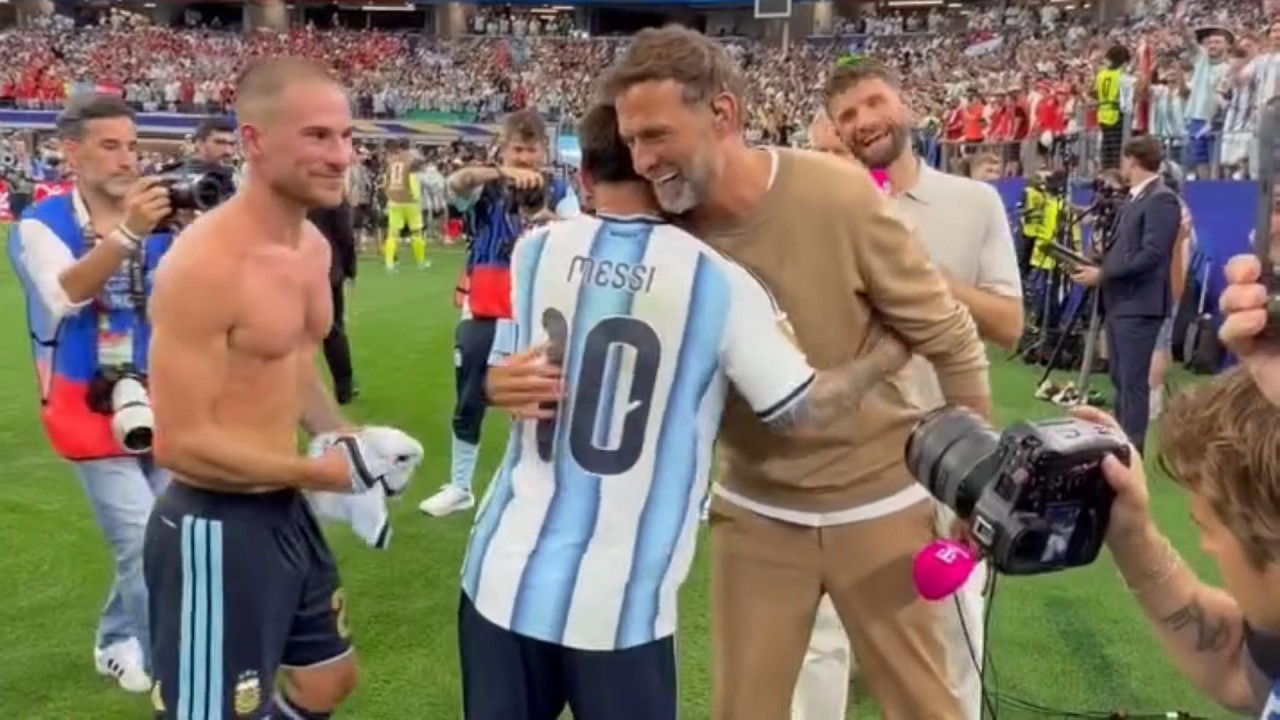
While the sheer statistical achievement of eighteen World Cup goals is staggering on its own, what happened immediately following the match provided a profound look into the level of respect Messi commands across the global footballing fraternity. Viral footage captured in the tunnel and on the sidelines showed an incredible exchange between Messi and two massive figures of German football: iconic manager Jurgen Klopp and legendary forward Thomas Müller. It is worth noting the deep historical poetry of this interaction. Messi had just shattered a record previously held by a German icon, Miroslav Klose, a record set during the 2014 World Cup final where Germany defeated Argentina. Yet, there was not an ounce of bitterness to be found.
Thomas Müller, a fierce competitor who has battled Messi on numerous grand stages throughout his career, was seen approaching the Argentine captain with a beaming smile, engaging in a warm, deeply respectful conversation. Moments later, Jurgen Klopp, renowned for his passionate and demanding approach to the game, enveloped Messi in a massive, heartfelt embrace. The television commentators covering the post-match scenes were quick to highlight this beautiful display of sportsmanship. They noted that when men of Klopp and Müller’s immense stature drop their competitive guards to openly admire a rival, it speaks volumes about the transcendent nature of Messi’s genius. It was a poignant reminder that while football is fiercely tribal, true greatness creates a universal language of appreciation that bridges international divides.
The emotional weight of this achievement cannot be fully understood without acknowledging the intense personal circumstances surrounding the Argentine captain. Approaching his thirty-ninth birthday, Messi is operating at an age where most professional athletes have long since retired to the comfort of television punditry. Furthermore, he achieved this monumental milestone while carrying the heavy burden of his father’s undisclosed medical illness back home. To compartmentalize that level of personal distress and deliver a masterclass performance on the global stage requires a level of mental fortitude that is almost incomprehensible. It is a testament to his unbreakable commitment to his country and his profound love for the beautiful game.
This historic match in Texas was more than just a group stage victory; it was a definitive statement of enduring brilliance. By scoring in his sixth consecutive World Cup appearance—a feat matched only by historical titans like France’s Just Fontaine and Brazil’s Jairzinho—Messi has proven that his talent is remarkably immune to the ravages of time. He has seamlessly evolved his game, relying on unparalleled vision, spatial awareness, and clinical finishing to compensate for whatever raw pace he may have lost over the years.
As the stadium emptied and the lights dimmed on the Dallas Cowboys’ colossal arena, the reality of what had just transpired began to sink into the collective consciousness of the football world. The record of eighteen World Cup goals now stands as a towering monument to Lionel Messi’s unparalleled career. It represents years of relentless dedication, devastating heartbreaks, and ultimate triumphs. But perhaps more importantly, as evidenced by the joyful embraces of Jurgen Klopp and Thomas Müller, and the tearful awe of the television commentators, it represents the unification of the sports world in pure admiration. Lionel Messi is no longer just Argentina’s hero; he is football’s undisputed king, and his historic eighteenth goal has forever secured his throne at the very pinnacle of the sport. The world of football stopped to pay its respects, and rightfully so, for we may never see his equal again.