The man had been digging for 40 minutes when his shovel stopped working, not the shovel itself. The shovel was fine. It was his hands. His fingers wrapped inside two layers of wool and one of leather had stopped sending messages to his brain sometime in the last hour. And now they simply grip the handle the way a dead man grips a railing by reflex rather than intention.
The temperature had fallen to 40° below zero. The wind drove that cold through everything, through wool, through leather, through bone, through 30 years of conviction about what the cold could and could not do to a man who built things right. Ezra Boon was 6 feet and three inches tall, 240 pounds of muscle earned through three decades of swinging axes and hauling timber across the Black Hills of Dakota territory.
He was the finest builder in the valley, the man every family called when they needed something that would last. And right now he was on his knees in a snow drift, digging like a man who had lost something he could not afford to lose. He had not lost anything. He was looking for a door. A small wooden door set into the face of a hillside leading into the earth into a hole where a woman had sealed herself two months ago.
A woman the entire town of Prospect had written off as dead before December had even begun. A woman he himself had called insane had warned had watched walk away from him into the pine trees with 60 lb of iron on her back and nothing else in the world to her name. He was not here to save her. He understood that clearly the way a man understands things when the cold has stripped away every pretense and left only the essential facts. She was dead.
She had been dead for weeks, possibly months. No one could survive two months in a hole in the ground in a Dakota winter with only a small stove and a design that every principle of construction told him could not work. He had known this. He had said it out loud. He had said it to Reverend Harlon Maul in the church vestri.
and Maul had nodded and offered to pray for her, which in prospect was understood to be the beginning of a funeral. Ezra was here because of something older and simpler than hope. He was here because he had mocked her and warned her and then ridden away. He had tipped his hat from horseback, the frontier acknowledgment that costs a man nothing and promises exactly that much.

and he had clicked his tongue and left her standing in front of a door that was no longer hers with a crate at her feet that held everything she owned in the world. He owed her a burial. The frozen ground would make it almost impossible, but he owed her that much. And Ezra Boon had never in his life walked away from a debt.
The blizzard had been screaming for 2 days. The temperature had dropped and kept dropping. Not settling the way a cold snap settles, but falling the way a man falls from a roof fast total, and without any interest in reversing itself. His beard had frozen into a single solid mass against his chest. His breath crystallized before it had even properly left his body.
Every step from his house to this hillside had been a negotiation with a wind that wanted him flat on the ground and covered. He dug anyway. The shovel went in. He threw the snow aside. The shovel went in again. The hillside rose above him, white and absolute. The Hawthorne bushes that marked the entrance reduced to small white mounds that might have been rocks or might have been nothing at all.
He had nearly walked past them twice. He found them by memory, by the particular angle of the slope, and the way the ridge above threw a shadow, even in the flat gray light of a blizzard afternoon. The thought that arrived as he dug was one he had been pushing away for 2 months.
It arrived now because he was too cold to push anything. It arrived quietly, the way dangerous thoughts always do, dressed in the plain clothes of a reasonable question. What if she was not dead? He shoved the thought down. He dug. The shovel struck something that was not snow, something solid, something flat, something made by human hands, wood.
He cleared the snow from the top of it with both forearms sweeping in broad strokes. And there it was a small wooden door set flush into the hillside, its frame packed solid with ice, its hinges dark with rust. He gripped the handle with both hands, or tried to, his fingers curved around it, more from habit than from feeling.
He set his knees and pulled. The door opened. What came out of that hillside was not the smell he had been bracing himself for. It was not the stillness he had been expecting. It was not the terrible cold of a sealed tomb. It was warmth, dry, steady, quiet warmth rolling out of the dark mouth of the earth like something that had been waiting there patiently for a very long time.
It moved over his face the way a hand moves gently without force. The way a person touches you when they want to remind you that you are still alive. Ezra Boon stopped moving entirely. His shovel slipped from his fingers and fell without sound into the snow beside him. He knelt at the entrance of the hillside with his mouth open and the warmth moving over his ice covered skin.
and for the first time in two months, the question he had been pushing away stood up fully and looked him in the face and refused to be pushed anymore. He did not go inside. Not yet. He knelt there and breathed the warm air and felt something shift in his chest that he did not have good words for because it was not an emotion he had prepared to feel on this hillside on this night in the middle of this storm.
Two months earlier, in the first cold days of November, Ezra Boon had stood on the porch of the finest house he had ever built and had known exactly how the world worked. That was where everything had started. And that was where the story had to go back to before it could move forward into the warmth that was now pouring over his face like a prayer answered in a language he had not learned yet.
November 4th, 1887. The sky above the black hills was a pale and exhausted blue, the color of a man who has been awake too long. The air carried the bite of pine resin and something harder underneath it, the iron smell of a winter that intended to be serious about itself. Ezra stood on the porch of the Mercer house and ran his hand along the doorframe with the quiet satisfaction of a man who has just done something exactly right.
white oak walls 8 in thick, dovetailed joints cut so tight you could not fit a playing card between them. A stone hearth large enough to hold a fire that would roar through any night this territory could produce. He had built better houses than most men dreamed of. But this one was something particular. This one was the fullest expression of everything he had learned in 30 years of labor and cold and getting it wrong until he got it right.
Seth Corby was on his knees at the far end of the porch, shaping a wooden peg with a draw knife. He was 19 years old, lean and watchful with quick hands and the kind of eyes that noticed things and held on to them longer than most people thought worth holding. He had been Ezra’s apprentice for 2 years, which meant he had spent two years learning that there was a right way to build a thing and a wrong way, and the right way was always Ezra Boon’s way.
Ezra wrapped his knuckles against the wall. The sound that came back was dense and satisfying the sound of permanence, the sound of a thing that was not going anywhere. 8 in of white oak, he said. Wind cannot get through it. Cold cannot get through it. That is how a man survives a winter out here.
You build the wall thick enough that the world outside cannot touch what is inside. Seth looked up from his work. Then why was Mr. Harrison’s place so cold last winter? His walls were thicker than the Petersons, and the Petersons were fine. It was a good question. Ezra frowned because it was a good question, and he did not have a complete answer.
which was a situation he found privately uncomfortable and chose not to spend time in. Harrison did not manage his fire properly, burned green wood half the season. That is not a fault of the house. Seth nodded, but his eyes moved to the chimney rising from the Mercer roof. Smoke was already coming from it in a steady gray column.
The Mercer family having lit their first fire that morning. The smoke rose fast and straight in the still air, climbing toward the blue sky with no hesitation at all, a gray column of heat escaping into the cold as if it had somewhere better to be. Ezra caught the direction of his apprentice’s gaze and misread it entirely.
“She draws well,” he said, with the approval of a man who has achieved a specific and difficult thing. “Good draft. That is what keeps a house clean and warm, a strong upward pull. Without that, you have nothing worth calling a chimney. A plank slipped from the stack beside Seth and clattered against the frozen ground. Ezra’s body reacted before his mind could.
His hand shot out and seized the porch railing. His entire frame went rigid, every muscle locking at once, his weight shifting backward as if the sound had been the opening shot of something terrible. For three full seconds, he did not move. His knuckles were white against the railing. His jaw was clenched so hard the tendons in his neck stood out against his collar.
Seth stared. Ezra released the railing slowly. When he spoke, his voice had the careful flatness of a man navigating around a wound that had not healed in 14 years. In 73, I built my first house in Nebraska. I was 20 years younger and twice as stupid. I used green cottonwood because it was cheap.
The joints were loose. The roof was pinned, not pegged. He paused. His eyes went to the Mercer chimney to the smoke climbing cleanly into the pale sky. A storm came through in January, not even a bad one by Dakota standards. It tore the roof off like pulling a page from a book. He stopped again, the paws of a man who is still inside the memory, even as he describes it.
Dela and I spent the night in a root cellar with nothing but a horse blanketed between us. She never fully trusted a roof again. Not for years. He picked up the fallen plank and set it back on the stack with a precision that was slightly more deliberate than the situation required. I swore after that night that I would never build anything weak.
Every problem I have ever seen comes down to the same thing. Not strong enough, not thick enough, not heavy enough. You build it right. You build it solid and the winter cannot touch you. He looked at Seth the way a man looks when he wants to make certain something has been received. Remember that Seth watched him walk the length of the porch, checking each joint with his fingers, pressing his thumb into the chinking between the logs with the focused attention of a man conducting a personal inspection of his own faithfulness.
Every gap he found was a small defeat. Every joint that held was a small victory against a memory that still had teeth after 14 years. But the question Seth had asked did not leave. It settled into the back of his mind the way a splinter settles into a fingertip too small to remove, too sharp to ignore. If Harrison’s walls were thicker than the Petersons, and Harrison’s house was colder, then the walls were not the whole answer.
Something else was happening inside those rooms. Something about the way heat moved that neither of them could see from where they were standing. He said nothing. Ezra had already stepped off the porch and was walking toward his horse, and that particular set of the older man’s shoulders meant the conversation had been decided.
Seth picked up his draw knife, but the question did not go anywhere. On the ride home, Ezra took the eastern trail past the foothills the way he always did in November when he wanted to see the valley from above before the snow closed in and the world contracted to a smaller thing. He had ridden this trail 300 times.
He knew every turn, every hollow, every outcropping of gray rock. He slowed his horse when he reached the small flat where the Aldrid cabin stood. He had known the cabin was there. He had known in the unspoken way a man knows things he has not explicitly thought about that the bank notice had been served sometime in the past week. Word moved fast in prospect.
Word about foreclosure notices moved faster than most. What he had not prepared himself for was Norah Aldred standing in front of her own door in the November wind. She was a slight woman built for endurance rather than size. perhaps 38 years old. Though the past year had added something to her face that was not quite age, a quality of having been reduced to something more essential, the way a fire burns away everything unnecessary and leaves only what was actually there to begin with.
At her feet was a small wooden crate. On the door behind her, a sheet of heavy paper fluttered in the cold wind, held in place by a single nail driven through the frame. Ezra felt something tighten in his chest. He had respected Daffi Aldrid. The man had been steady, reliable, the kind of quiet presence a frontier town needed and could not always find.
But Daffod had also been in Ezra’s private assessment, a dreamer. A man who spent his evenings with a notebook instead of his tools, who talked about airflow and thermal principles and the temperature of deep earth, the way other men talked about land prices and the spring planting, as if ideas alone could keep a family warm through a Dakota winter.
Ideas had not kept them warm. Here was the result. a woman standing alone in the wind with everything she owned in a crate at her feet. He felt the uncomfortable mixture of genuine sympathy and something grimmer underneath it. The quiet relief of a man whose principles have been confirmed at someone else’s expense. This was what happened when you trusted theories over solid timber.
when you prepared for the future you imagined instead of the winter that was actually coming. Their eyes met across the frozen yard. Ezra tipped his hat. It was the frontier nod, the minimal acknowledgement that costs nothing and promises exactly that much. Then he clicked his tongue, his horse moved on, and he did not look back.
Norah Aldred watched him go. She picked up her crate and began to walk toward town. Not because she had anywhere to go, because standing still beside a door that was no longer hers was not something she was willing to do. At the edge of the main street, where the framed buildings gave way to the white steeple of the Presbyterian Church, a man stepped into her path.
Reverend Harlon Maul was tall and thin with the particular quiet authority that comes from decades of being the sole intermediary between a small community and its God. His face, when he chose, was kind. His eyes, when he thought no one was watching them, were calculating. Mrs. Aldrid. His voice was warm, shaped by a long practice into something that landed between comfort and certainty.
I heard about the bank’s decision. I am deeply sorry. Norah adjusted the crate in her arms. Thank you, Reverend. The church has a small room in the back. He paused, and the pause was where all the real terms of the offer lived. It is warm and dry. You are welcome to use it. In return, perhaps you might help with the laundry and the cooking for the parish.
A fair arrangement, a place, a purpose. Norah understood the structure of his offer the way Ezra understood the structure of a log cabin. She could read it without needing it explained. She would be given shelter in exchange for service. She would become the church’s evidence of its own generosity, its permanent example of what happened to women who ended up alone, visible, grateful, and perpetually in debt.
The arrangement was designed never to conclude because a concluded debt was a debt that was finished, and a finished debt was a reason to leave. That is kind of you, Reverend, she said, but I cannot accept. Something crossed Maul’s face, a tightening around the eyes, brief and quickly controlled. In prospect, people did not refuse Reverend Maul.
They thanked him and complied because his goodwill was the currency of survival in a town of 400 people where everyone knew everyone else’s business, and the minister’s opinion of you traveled faster than weather. Pride is the most expensive sin in winter, Mrs. Aldrid. Norah looked at him steadily. I am not proud, Reverend.
I simply do not wish to owe anyone else anything. She stepped around him and kept walking past the church, past Ozgood’s general store with its window full of harnesses and tin goods, past the last frame house at the edge of town and into the darkening treeine where the hills rose steeply to the west. Two members of Mole’s congregation were standing on the church steps.
They had heard every word in a town the size of Prospect that was sufficient. Mole stood on the street and watched Norah walk away from him into the pines. He folded his hands behind his back. His expression did not change, but a thought had taken root in the space behind those careful eyes, and it was not going anywhere. The woman had refused him publicly in this town, in this winter.
That was not simply an act of independence. It was an act of defiance. And Harland Maul did not forget defiance. He would remember Norah had not made it far. She had reached the place where the main street narrowed into a dirt track when a figure stepped out from the alley beside the general store. Agnes Puit was 55 years old and small.
Her face weathered by grief into something resembling carved driftwood, not destroyed by what had happened to her, but shaped by it made denser and more particular. Her husband Henry had worked the same kind of mine that had taken Daffid and the same cold dust had taken him three years before. She knew the specific texture of the loneliness Norah was carrying, not in the abstract way of sympathy, but in the way you know a room you have spent years inside by feeling the dark without needing a lamp.
She did not offer sympathy. She did not offer a room or a meal or the use of her spare bed. She did not reach for scripture. She pressed a small canvas sack into Norah’s free hand without ceremony and without explanation. Norah looked down at it. Flower, lard, a box of matches. Every other person in prospect had either pied her or dismissed her or tried to redirect her back into the structures that would absorb her and render her harmless.
Agnes was doing none of those things. Agnes was giving her fuel for the road in front of her. My husband died underground, too, Agnes said. Her voice was low and factual. The voice of a woman who was made her peace with a hard thing without pretending the thing was anything other than what it was. She looked at Norah with an expression that was not pity and not sympathy, but something more demanding than either trust.
plain, direct, unornnamented trust. I am too old to climb hills anymore. You are not. Norah looked at the sack then at the older woman. Somewhere in her chest, a knot that had been there since the morning, Sutter nailed the notice to her door shifted. Not loosened entirely, just moved. “Thank you, Agnes.
Do not thank me. Just do not die.” Norah nodded once. She adjusted the crate under her arm, took the sack in her other hand, and turned west toward the pines. Agnes watched her go without moving, watching the place where the smaller woman had been long after Norah had disappeared into the treeine.
Then she turned and walked home, moving with the deliberate steadiness of a person who has made a decision and intends to stand by it. The hills west of Prospect rose steeply, the pines crowding close enough that by late afternoon the trail became a narrow corridor of shadow and dark bark and cold resin.
Norah climbed because there was nothing behind her worth returning to, and because the only direction that offered even the thinnest threat of possibility was up. She was following a memory. A summer afternoon in 1885, when Daffford had still been healthy enough to pretend otherwise, he had walked ahead of her on this trail with the easy rolling gate of a man raised on Welsh mountain slopes, and he had stopped at a flat outcropping of gray stone warmed by the afternoon sun, and pressed his palm against it. “Feel this,” he had said.
She had pressed her hand beside his. The stone was warm, not at the surface where the sun had been striking it all day, but from somewhere deeper inside, as if the rock had been gathering heat over hours, and had not yet decided to release it. Stone has a longer memory than people, Norah. His voice carried the particular wonder he saved for the workings of the earth.
It remembers summer long after we have forgotten. He had coughed then, a small sound barely audible. the kind you brush away without looking up. She had thought nothing of it at the time. She understood now that it had been the first word of a sentence that took 2 years to finish. The crate grew heavier with every 100 ft of elevation.
The cast iron skillet alone weighed 8 lb and the corners of the wooden box dug into her forearms until she could feel the bruises forming beneath her skin. She shifted the weight from hip to shoulder to arms, each position, trading one flavor of pain for another. She stopped twice to catch her breath, bending forward with her hands on her knees, her lungs burning in the cold, thin air.
The second time she stopped, she looked at the skillet and considered leaving it in the snow. It was dead weight. It served no immediate purpose she could name, but her mother had carried it from Wales in a trunk that smelled of salt water and coal smoke, and Norah had carried it through every move in the years since, and she found that she could not leave it on this particular hillside on this particular evening.
Some things are worth carrying, not because they are useful, but because they are the last evidence that a life was lived. She found the cellar just as the last light left the sky. It was almost entirely hidden inside a tangle of hawthorne and wild raspberry canes. A low arch of crumbling fieldstones set into the base of the hill built decades ago by a homesteader who had since been defeated by the same brutal winters that were now Norah’s problem to solve.
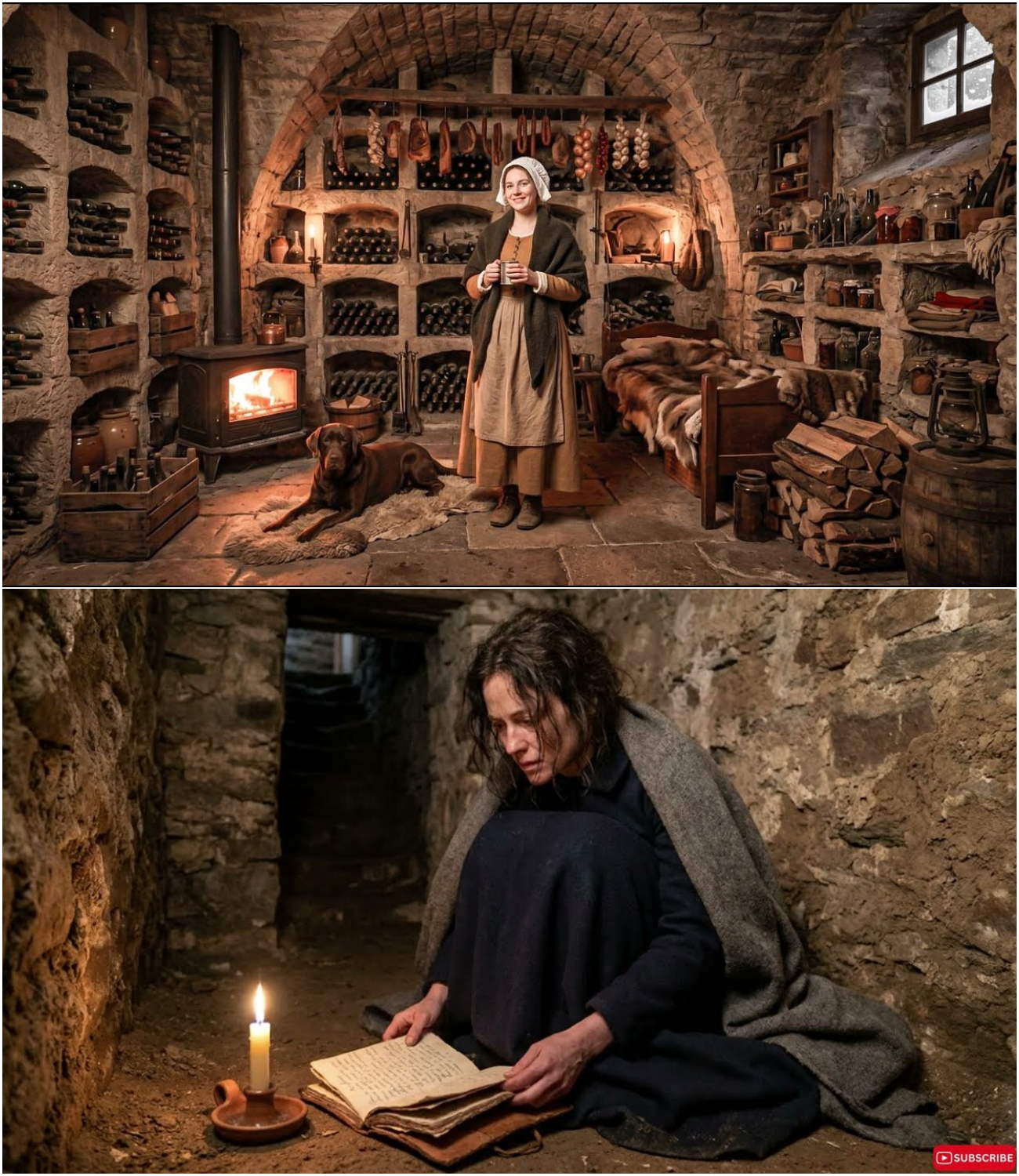
She pushed through the thorns, ignoring the scratches opening across her hands, and duck through the low entrance. The space was small, not much larger than a modest bedroom, earthn walls, a packed dirt floor. In the far corner, a wooden shelf still bolted to the wall, its boards warped with age, but solid enough. Beneath the shelf, half buried in the floor, a rusted tin can and a broken ceramic croc that had once held butter.
The smell was damp soil and the deep stillness of enclosed earth. By any reasonable measure, it was a tomb, but the wind that had been driving at her for 4 hours could could not reach her here. The cold inside was present, but it was a different quality of cold from what existed outside. Outside the cold came with intention, finding every gap in clothing, every exposed inch of skin.
Inside the cellar, the cold simply existed. It was the absence of warmth rather than the active presence of malice. That difference was small, but small differences, Norah had learned, were sometimes the only differences that mattered. She set her crate on the old wooden shelf. She arranged her few possessions with the care of a woman setting a proper table to skillet to the left.
Senica and Daffid’s journal in the center. Agnes’ provisions in the tin can to keep them off the damp floor. The blanket she would need immediately. It took less than a minute. There was nothing else to arrange. She wrapped herself in the blanket, placed the cast iron skillet beside her as a weapon against nothing in particular, and laid down in the corner of the earthn room with her back against the cold stone.
The darkness when it came was total absolute in a way that daylight never is. She could not see her own hand. She could hear the wind above a high searching sound that rose and fell like something a leash and hunting. She could hear the hillside settling around her. She could hear her own breathing steady and slow, the only evidence that she was still part of the world of the living.
She did not sleep for a long time. She lay in the dark and thought about Daffod, not about his dying, what she had replayed until it had become nearly abstract, worn smooth by repetition, like a stone in a river. She thought about the way he used to fall asleep flat on his back, one arm behind his head, talking about something he had read or something he had observed in the mind that day.
his voice slowing and thickening until it trailed off somewhere in the middle of a sentence. She would lie beside him and listen to his breathing deepen and she would know in the way you know things that require no thought that she was safe. That warmth, the specific warmth of another person close to you in the dark was something no stove or design or engineering could replicate.
It was gone. She would not have it again. That knowing was the coldest thing in the cellar that night, colder than the walls, colder than the floor. She slept. She woke before dawn, stiff and aching, but alive. The world outside the entrance was white. Her breath came out in small clouds in the dim early light. She reached for Daffid’s journal.
not the early pages with their confident diagrams and bold annotations, the handwriting of a healthy man who believed he had time. She opened to the later sections where his writing had grown smaller and more careful as his lungs had grown weaker. She found the pages on mine ventilation horizontal passages drawn with the precision of 20 years of underground observation airflow patterns mapped by a man who had made it his life’s work to understand how air moved through enclosed earth.
She found his notes on the constant temperature of deep rock steady at 55° regardless of what was happening at the surface above. She found his sketch of a flu that ran not upward but sideways through the earth, a design conceived to warm a mine entrance through winter by storing heat in the surrounding stone and releasing it slowly into the air.
and she found the phrase he had underlined twice pressing hard enough with his pen that the letters had almost gone through the page makin and taluite rent the smoke must pay its rent tucked beneath the sketch pressed flat by the weight of the pages above it was a receipt a purchase order from Ozgood’s general store dated August 3rd 1886 stone pipe fittings a small sheet iron stove move clay for mortar.
Deed had ordered the materials. He had been preparing to build this to test what he had been sketching and writing and thinking about for years. The date on the receipt was 2 weeks before he started coughing blood. Norah folded the receipt with great care and put it in her coat pocket inside against her chest. Daffied had placed the order.
His body had refused to let him fill it, but the order was still open and the design was still in the journal and she was still here. She would build what Daffod could not. The walk down to prospect the next morning took an hour in the early cold. She did not go to the church.
She did not knock on any of the doors where sympathetic faces might offer a meal alongside a quiet accounting of what she owed for receiving it. She went directly to Ozgood’s general store and waited on the frozen step until the old man came to unlock the door. Inside, in the yellow light of the oil lamp, she placed Daffid’s wedding band on the counter, a simple gold ring worn thin at the bottom where it had pressed against shovel handles and rock faces for 15 years.
She had sworn she would never take it off. Swearing, as it turned out, was a luxury that belonged to people who had other options available to them. “I need a small pot-bellied stove with a good damper,” she said. “20 ft of stove pipe, a shovel, a pickaxe, and 10 lb of clay.” Osgood picked up the ring and examined it with the practiced eye of a man who bought other people’s emergencies for a living.
He glanced at the scratches from the hawthornne on Norah’s hands, at the particular quality of stillness that sits on a person who has already made the hardest decision and is now simply carrying it out. A stove will not do you much good in a hole in the ground, Mrs. Aldrid. You will smoke yourself out like a gopher down there.
The smoke, Norah said, will go where I tell it to go. Bosgood shrugged. Business was business. He set the supplies on the counter and Norah walked back out into the gray morning with 60 lb of iron stove pressing into her back and the absence of gold burning on her left hand like a new kind of weight. She nearly walked into Agnes Puit on the step outside.
The older woman looked at the stove on Norah’s back at the bundle of stovepipe sections clanging together against her hip at the ring-shaped absence on Norah’s finger. She said nothing for a moment. Then she looked at Nora with those weathered eyes that had already seen the worst available outcomes and found a way to keep moving through them regardless.
“Go,” Agnes said quietly, before the cold gets any ideas about you. Norah nodded. She turned west and began the long climb back up the hill. The stove pressed into her spine through the thin fabric of her coat. The stove pipe sections announced every step she took with a bright clattering percussion that echoed off the pines on both sides of the trail and woke every bird within a quarter mile.
She stopped four times on the climb. Each time she set the stove down in the snow, straightened her back, looked at the sky to judge the remaining light, and hoisted it again. On the fourth stop, she sat on a fallen log and placed her bare left hand on the cold iron surface of the stove. The ring was gone.
The skin where it had been, was lighter than the rest of her finger, a narrow strip of white that had not seen direct sunlight in 15 years. She looked at that strip of lighter skin for a long moment. Then she curled her fingers into a fist and pressed it against her stomach and sat there in the wind without moving or thinking, feeling only the two things that were true in that particular moment.
The absence of gold against her skin and the presence of iron against her back. Then she stood, swung the stove onto her shoulders, and kept climbing. Above her, the hillside waited. Inside it, in a small, dark space that smelled of old earth, and the deep patience of things that had been there a very long time, a design drawn by a dying man’s hand was waiting, too.
The smoke would pay its rent. She was going to make certain of it. She began digging that same afternoon. The trench started at the far interior wall of the cellar, running outward through the hillside at a slight downward angle, following the natural decline of the terrain toward the ravine below, 2 ft wide, 18 in deep.
She worked the pickaxe first against the frozen crust of earth, breaking it open in rough chunks, then switched to the shovel to clear the loosened soil. Every few feet she climbed down the slope to the creek bed in the ravine, and came back with flat river stones, smooth and dense, worn by centuries of moving water, into something close to the ideal shape for what she needed, thin, regular, capable of lying flush against each other without gaps.
She laid them in the bottom of the trench one at a time, flat sides facing up, fitting them together with the patience of a woman who understood that patience was the only material she had in unlimited supply. Her palms began to blister on the first day. By the second day, the blisters had broken, and the skin beneath was raw and weeping in the cold.
She wrapped strips of cloth from the hem of her dress around both hands and kept working. The provisions Agnes had given her, she rationed with the precision of a woman doing arithmetic with no margin for error. A small portion of cornmeal mush cooked over a fire at the cellar entrance each morning.
Nothing else until the light failed and she allowed herself to stop. She slept in the cellar on the packed earth with Daffod’s journal pressed against her chest, not for warmth, but for ballast, the kind of weight that keeps a boat low and steady in rough water. On the third day, Seth Corby heard her before he saw her.
He was hauling a load of split timber on a muledrawn sled back toward Prospect from the Mercer property. The same trail he had taken a dozen times that season, and the rhythmic clang of a pickaxe striking frozen earth reached him through the pines at a distance of perhaps 200 yards. He stopped the mule. He listened.
The sound was too deliberate to be random, too patient to be the kind of work a person does without a plan. He tied the animal to a pine and moved through the tree line, keeping behind cover, and crouched at the edge of the slope above the Aldridge cellar. The woman was standing in a trench that reached her waist.
She was covered in a mixture of mud and dried clay, despite the cold, and her movements, though slow, had a quality he recognized from two years of watching the best craftsman in the valley inspect his own work. Each stone she lifted was turned in her hands before it was placed. Each one was tested against its neighbors with two fingers.
The same pressure checking for wobble, for gap, for anything that would compromise the fit. When she found a stone that would not seat correctly, she did not force it. She set it aside and reached for another. The trench ran away from the dark entrance of the cellar in a line that was not quite straight, curving gently to follow the contour of the hillside before terminating in the open air some 30 ft out.
At the far end of the completed section, a short vertical pipe stood at a slight angle, its opening pointed toward the sky. Seth watched for 10 minutes without moving. He had spent two years learning from Ezra Boon that there was a right way to build a thing and every other way was wrong. He had absorbed this principle the way a young man absorbs everything from a mentor he respects completely without reservation as if it were a description of reality rather than one man’s hard one opinion about it.
Ezra’s voice was in his memory as clearly as his own. Stay away from her. She has lost her mind. Seth looked at the trench. He looked at the stonework. He looked at the small woman working inside it with a focus that had no room in it for anything except the task directly in front of her hands. He did not see madness.
He saw something he did not have proper words for, yet something that made the back of his neck prickle with a recognition that had not yet become knowledge. It was the feeling of watching someone solve a problem he had not yet learned to see. He turned and walked back to his mule. He untied the animal.
He took 20 steps down the trail toward town. Then he stopped and looked back over his shoulder at the hillside at the thin figure in the trench at the line of carefully fitted stones leading into the earth like a road going somewhere no one had gone before. He stood there for a long moment. Then he kept walking, but the image stayed behind his eyes, settled into the same place where the question about Harrison’s house had settled, too sharp to ignore, too small to remove.
He knew he would come back. He did not know yet what that knowledge would cost him. The trench collapsed for the third time on the 12th day. Three days of freezing rain had moved through, turning to slate, and then to a wet, heavy snow that pressed down on the hillside with the weight of a hand trying to smother something.
The soil, which had held firm through the first week of digging, when the cold had kept it rigid and cooperative, had become saturated beneath the surface. It had been waiting the way treacherous things wait for the moment when Norah’s attention was fully committed to something else. She was standing waist deep in the channel, fitting a capstone over a section she had spent two days completing when the south wall gave way.
The earth slid inward with a low grinding sound that she felt more than heard, and the stone she had spent those two days placing disappeared beneath a thick slurry of mud and gravel. The channel she had built filled from the side like a cup being tipped over. She climbed out and stood at the edge and looked at it. Her hands were past blisters now.
The skin of her palms had hardened into something between callous and scar, and new wounds had opened beneath the old ones in the wet, and she had stopped bothering to wipe the mixture of mud and blood from her hands because there was nothing to wipe them on that was any cleaner. Her left shin was a solid mass of bruise from stones that had slipped in the wet.
She had lost weight she could not afford to lose. The flower Agnes had given her was nearly gone. She sat down at the mouth of the cellar and looked at the ruined trench and felt something move through her that she had not permitted herself to feel since the morning Sutter had hammered that nail through the date had carved into their doorframe.
Doubt, not doubt in Daffod’s principles. She understood those now with the intimacy of someone who has staked their life on a piece of knowledge and has tested it against every argument available to them. The principles were sound. She believed them the way you believe the ground will hold your weight when you step onto it.
What she doubted was herself. Daffod had designed this for a crew of experienced miners men who could read Earth and rock the way she read print men whose bodies were built for this kind of punishment over sustained time. She was a 110 lb of Welsh widow who had never built anything more demanding than a chicken coupe and the design was beating her at the third attempt.
She opened the journal to the last page he had written. The handwriting trembled with the effort of a man putting down words when every breath was becoming an act of will. He had written it a week before he died. The earth does not require strength. It requires patience. The earth is not in a hurry. She closed the book and pressed it against her chest and sat with her eyes shut while the sleep drove against her face and the doubt settled into her bones like the cold settled into everything slow.
thorough indifferent to whether she wanted it there or not. She could go back to prospect. She could walk into Harland Maul’s church and accept the arrangement he had offered the room in exchange for labor. The debt designed never to end. She would be warm. She would be fed. She would owe everything she had to people who would consider themselves generous for requiring it.
and she would spend whatever years remained to her, washing their shirts and ladling their soup and being the proof of their charity. People survived all kinds of things. But surviving and living were not the same country, and Daffod had not used his last good breath to write about patience so that she could spend hers in permanent surrender to a man like Harlland Maul. She stood up.
She looked at the ruined trench and made the only decision that had not already been closed to her. She would not rebuild it the way David had drawn it. His design called for a deep trench cut fast and supported with timber, bracing the approach of a mine engineer with a crew behind him. She had neither the timber nor the crew, and she had already discovered three times that the approach could not be maintained by one person working alone in freezing rain.
She would do it differently. Shallower sections, only a foot or so at the bottom, not the full 18 in. Let each short section freeze solid before extending it by another few feet. She would use the winter itself as her bracing, let the frost do the structural work she could not do alone. It would take twice as long.
The sections would be small enough that a wall collapse would set her back days rather than weeks. The ice would hold the walls until she could line them with stone, and once the stone was in, the ice could melt and nothing would move. It was not Daffid’s method. It was hers. She picked up the shovel.
The mud was still sliding at the edges of the collapsed section. She started digging, but slowly this time feeling the soil with her hands the way Daffid had once taught her to feel for changes in the rock face, searching for the boundary between the frozen layer and the soft thawed earth beneath it.
She found it with her fingers and dug just above it, using the natural floor of perafrost as her base. By the end of the second week after the collapse, the trench had advanced eight more feet. slow, ugly progress, but the walls held. Ezra Boon arrived on a Tuesday morning, 3 weeks into the work. He came on horseback, the vapor of his breath hanging in the frigid air, his heavy coat dusted with frost from the ride.
He had heard from Ozgood about the wedding band traded for a stove and a pickaxe. He had heard from two different families in prospect about the widow digging something on the hillside above the old math’s claim. He had come to see it himself, not out of curiosity, which would have been a softer motivation, but out of what he described to himself as professional obligation, a description that would not have survived examination in better light.
He tied his horse to a pine and walked to the edge of the trench and stood there with his arms crossed and his jaw working slowly the way it did when something in front of him was refusing to fit into any category he possessed. The trench was nearly 30 ft long. Flat riverstones lined the bottom, sealed at every joint with clay.
It ran from an opening in the cellar wall outward along the hillside and ended at a vertical pipe rising about 10 ft into the air. The work was not hasty. The work was not random. It was the work of someone who knew exactly what she was doing and had the patience to do it correctly even when correctly was taking a very long time.
He did not want to acknowledge this. He acknowledged it anyway. The way an honest man acknowledges things he would prefer not to. Mrs. Aldrid. His voice carried the weight of a man accustomed to being the final word on any matter involving construction within 50 mi of where he was standing. What in God’s name are you building? Norah straightened slowly from the trench.
Her dress was stiff with dried mud. Her hair, which had been pinned carefully on the morning she left Ozgood’s store, hung in loose strands around a face that was considerably thinner than the face Ezra remembered seeing outside the cabin with the crate at her feet. Her hands were wrapped in strips of cloth, but her eyes were the same quality they had been that day, steady present, requiring nothing from him.
I am building a flu, Mr. Boon. He gestured at the trench with the air of a man correcting an obvious error with more patience than the error deserves. A flu runs straight up. That is how a chimney works. Hot air rises, smoke rises, the draft pulls it out. What you have here runs sideways. You are building a ditch.
The smoke will travel the full length of this channel. Norah said her voice quiet and almost conversational. The tone of a person explaining something that does not require force to be true. As it travels, the stones absorb its heat. The earth around the stones absorbs the heat from the stones. By the time the smoke reaches that vertical pipe at the far end, most of its energy will have transferred into the ground.
The ground surrounding my cellar becomes a slow storage of warmth. It will release that warmth steadily for hours long after the fire has been reduced to coals. Ezra stared at her. And the pipe at the end, she continued before he could form the objection that was already moving toward his mouth. Still rises into air that is colder than the smoke inside it.
The smoke inside the pipe is still warmer than the surrounding air, so it still rises. That rising column creates the low pressure that pulls the smoke through the entire horizontal section. The draw is weaker than a conventional chimney, but it is constant and it is sufficient for a small stove managed with a nearly closed damper. The objection arrived anyway.
A family in Deadwood, winter of 82. Father sealed the cabin too tight, blocked the chimneys draw, found all four of them in their beds. His voice had hardened in a way he recognized and could not entirely stop. It was the voice of a man who has staked his identity on a set of principles and is now listening to those principles disputed by someone he has not granted the standing to dispute them. Smoke backs up.
It fills the space and it kills everyone inside it. I have seen it. I am not inventing the danger to frighten you. I know what backed up smoke does, Norah said. Which is why the intake pipe running alongside the main channel matters as much as the flu itself. Fresh air enters at the surface travels underground parallel to the heat channel arrives in the cellar already warmed by the surrounding earth.
The pressure balance is maintained. The draw continues. The smoke moves. She paused. Daffed spent 20 years studying how air moves through enclosed earth. This design is his. Every element of it has a reason. Ezra took a step closer to the trench and looked at it. He saw the clay ceiling between the stones.
He saw a secondary pipe running alongside the main channel. smaller its surface opening pointed away from the prevailing wind. He understood almost none of what she had said in the way that would allow him to agree with it. What he understood was that this woman who was penniless and widowed and had been dismissed by everyone in prospect, including himself, was standing in the mud telling him Ezra Boon that there was something about heat and stone and air that he had been missing for 30 years.
The words came out before he decided to say them. You are telling me that everything I have built for 30 years is wrong. Nor looked at him for a moment without speaking the way you look at something before deciding how to handle it. I am not telling you that you are wrong, Mr. Boon. I am telling you there is another way.
There is no other way. He heard his own voice rising and recognized the specific quality of the anger, the irrational heat of a man whose identity is being questioned by someone he had decided was not qualified to question it. There is the right way and there is dying. That hole is a tomb. That trench is a grave.
And you are digging both of them yourself. Stop this. Come to town. The church will take you in. Norah had already turned back to the trench. She knelt beside it and lifted another stone and turned it in her wrapped hands and set it into place with two careful fingers, testing the fit. She did not look at him again.
The precision of the movement was what stayed with him. The way her hands moved with the confidence of someone following a plan she trusted completely, which implied knowledge, which implied that perhaps she was not as lost as he needed her to be. He mounted his horse and rode back down the hill. And by the time he reached Prospect’s Main Street, the anger had cooled into something that felt more like certainty.
The grim settled conviction of a man who has decided that the situation requires action. The woman was going to die. When she died, the town would feel the weight of it and guilt in a small community need somewhere to land. Ezra had no intention of being where it landed. He found Harlland Mull in the church vestri writing his Sunday sermon.
“The Aldred widow is building an underground chimney on the hill above the old Mather’s claim,” Ezra said without greeting. “She intends to burn a fire in that cellar, and the smoke will back up and kill her.” Mole set down his penant with the careful deliberateness of a man who has been interrupted and wants it noted.
“I offered her shelter.” She refused. I know she refused. That is exactly the problem. She is not thinking clearly. Grief does that to people. You have seen it. I have seen it. She needs to be brought back to town before the real cold arrives. Mole was quiet for a moment. And in that quiet, he was not thinking about Norah Aldrid’s well-being.
He was thinking about the geometry of the situation the way a chess player thinks about a board. A woman who had publicly refused his charity was now, according to the most respected builder in the territory, engaged in behavior that would likely kill her. If she died, the reflection on him would be damaging. If he intervened and she was brought in safely, the balance would be restored and the public refusal would be overwritten by the public rescue.
I will speak with her, he said. He did not ride up alone. He brought two men from his congregation, solid men with families and standing in the community. Men whose combined presence on horseback communicated something that did not need to be said aloud. They arrived on a Thursday morning, three men on horseback, moving up the trail in the gray light, mull in the center.
Norah was sealing joints in the completed section when she heard the hooves. She stood up and wiped her hands on her dress and waited. Mole dismounted and walked to the edge of the trench and looked at it the way a physician looks at a symptom with clinical attention that has already reached its conclusion before the examination begins.
Mrs. Aldrid, he said, and his voice was the voice he used at gravesides. The town is concerned for your safety. Mr. Boon has shared his professional judgment about what you are attempting to build here and his opinion is that this construction poses a serious and immediate danger to your life. Mr. Boon’s professional judgment is based on chimneys that run vertically.
Norah said this is not a chimney. Mole used her given name then a deliberate intimacy deployed like a hand on the shoulder. Nora, no one blames you for what you are feeling. Loss of the kind you have experienced can cause the mind to seek comfort in ideas that would otherwise seem impractical. But if something happens to you in this cellar, this community bears the weight of it. We cannot stand aside and watch.
” She looked at the three men. She understood clearly what Mole was standing beside without quite touching. In Dakota territory in 1887, a woman judged mentally unfit by her minister and a respected citizen could be committed to a territorial institution with very little legal process in between.
Maul had not made a threat. He had simply positioned himself near one close enough that she could see its outline. She made a decision. She did not argue. She walked to the cellar entrance and reached inside and came back with Daffid’s journal. She opened it to the pages of ventilation diagrams, the careful, precise drawings of a man who had spent his working life underground, learning how air moved through enclosed spaces, and she held it out to maul.
My husband was a mining engineer. He spent 20 years underground before his illness. These are his designs. What I am building is not grief, Reverend. It is engineering. Mole took the journal and examined the pages. What he saw was dense handwriting in a precise hand surrounded by diagrams of shafts and passages and airflow patterns that were as foreign to him as the surface of another planet.
He had no framework to evaluate what he was looking at. No way to distinguish competence from delusion in that particular language. But he could not say this out loud because admitting ignorance would dissolve the authority he had written up this hill to project. He handed the journal back. I will pray for you, Mrs. Aldrid.
He said it without cruelty and without warmth. In prospect, when Harlon Mull announced from the pulpit that he was praying for someone, that person was thereafter regarded by the entire congregation with the particular cautious pity reserved for those already halfway out the door. It was the most powerful soft instrument available to a minister in a small community, and he used it now with the precision of long practice.
The three men remounted and rode down the hill. Norah stood at the edge of her trench and watched them go. Her hands were shaking, not from cold, but from the sustained effort of remaining composed in front of men who had the legal and social power to take away the only freedom she had left. The freedom to fail on her own terms in her own way without anyone else deciding when she had failed enough.
She had won this particular morning, but only because Maul did not yet have sufficient evidence to act. If the smoke backed up if she was found senseless on the cellar floor, he would have everything he needed, and he would use it without hesitation. The clock on this project was not just the arriving winter. It was Harlon Mole’s patience.
She picked up her tools and went back to work. The following Sunday, Agnes Puit stayed after the morning service to speak with a neighbor about preserved venison. She was pulling on her coat in the vestibule, moving toward the door, when Mull appeared at her elbow with his Bible tucked under one arm, and an expression of pastoral concern arranged carefully across his features.
Dorotha, he said, using the name she had never preferred, but that he used to establish a particular register of relationship. I am told you have been providing provisions to Mrs. Aldrid on the hill. Agnes continued buttoning her coat. I have. I want you to know that I understand the impulse entirely. Your compassion speaks well of you.
He paused, timing it the way he timed pauses in his sermons. But I wonder if you have considered that by supplying her needs, you may be extending her ability to persist in a course of action that will ultimately harm her. If she became hungry enough, she would come down. She would accept help. She would allow this community to do what communities exist to do.
Agnes finished buttoning the last button. She turned and looked at Reverend Harlon Maul with an expression he had not seen on her face in the 15 years he had known her. An expression that suggested she had been waiting some time for exactly this conversation. My husband died in a mine in 79.
Reverend, her voice was low and unhurried and completely without the softening that her voice usually carried. He died because the men who owned that mindmen who were educated and credentialed and respected men who wore good coats and spoke with confidence about systems and safety told everyone that the ventilation was adequate, that the air was being monitored, that the system was functioning as designed.
She pulled her gloves on one finger at a time. My husband trusted them because they had the authority and he had only a pickaxe. He went into that shaft every morning believing he was safe because important men told him the situation had been assessed. She looked at Maul steadily. One morning the air was not safe and he did not come back up.
She smoothed her right glove across her knuckles. Sometimes people do not die because they lack help, Reverend. They die because they receive the wrong kind delivered by the right people with great confidence. She walked out of the church church into the cold air without waiting for his response.
Two women at the far end of the vestibule had been arranging himnels on the rack along the back pew. They had heard every word. In a town of 400 people, that was sufficient. Mole stood in the vestibule with his Bible pressed slightly too firmly against his ribs and his face carrying a flush that had not been there when the service ended.
He was not accustomed to being spoken to this way in his own church by a woman of Agnes Puitz standing in front of witnesses. The words she had spoken were already traveling. He had come to the vestibule intending to manage a situation. He left it having created a different one on the hillside. Norah worked through the gray days of late November and the trench grew 8 ft in the second week after the collapse 12 in the third.
The sections were small and slow and she let each one freeze fully before moving to the next, and the ice held the walls as she had calculated it would. She learned to read the sky at dawn for information about the day’s conditions. A pale yellow light meant dry cold good for stone work. A heavy gray meant fresh moisture in the air, which meant unstable walls, which meant she should spend the day hauling stones from the creek instead of digging.
She organized her stone piles by the seller entrance with a precision that would have made Daffid recognize her immediately flat stones for the channel floor irregular ones for the sidewalls. thin ones for capstones. Each pile was a commitment made solid. She snared a rabbit with a wire loop and patience she had not known she possessed.
She skinned it with Daffi’s pocketk knife and rationed the meat across three days. She was losing weight she could not easily recover, but she was not yet starving. And not starving was sufficient to continue. At dusk on a Thursday, three weeks into the trenchwork, Seth Corby came back. He came by a route that avoided the main trail moving through the tree line at an angle that would not be visible from the road below.
He had been telling Ezra he was checking trap lines, a lie that required him to actually set and monitor traps so the inventory would be consistent if questioned. He had been thinking about the trench every day since he first saw it. Turning it over against everything Ezra had taught him, testing it from different angles, the way you test a joint.
You are not sure about pressing from the season from beneath to see where it gives. He found Norah at the far end of the completed section fitting a capstone over a new stretch of channel. She looked up at him without surprise, as if she had been expecting him to return and had simply been waiting for the timing to be his decision.
“I do not understand what you are building,” Seth said. “But I watched you work two weeks ago, and it does not look like digging a grave.” Norah looked at him for a moment. He was young, still carrying the unfinished quality of someone whose beliefs had not yet been seriously tested against reality. But his eyes were the eyes of a person who came to see rather than to confirm what he had already decided.
She held out a flat stone, place it beside that one, flat side up, edge flush with the capstone next to it. Seth took the stone and knelt beside the trench. Two years of working under Ezra Boon had given his hands a knowledge that operated independently of his conscious thought. He pressed the stone into the clay bed and felt it seat against its neighbor with a solidity that was almost audible.
He looked at the channel taking shape beneath his hands, a continuous stone line passage running into the earth, and something shifted behind his eyes. “This is a flu,” he said. “It is a flu lying on its side,” Norah said and handed him another stone. They worked together for two hours in the falling light without explanation and without questions.
The work itself filling the space where words would have been inadequate anyway. Stone against stone clay pressed into gaps, the channel growing longer and more refined as the temperature dropped and the stars began to appear in the gaps between the pine branches above them. When they stopped, Seth stood and brushed the clay from his knees and looked at what they had built together.
“I will not tell Mr. Boon,” he said. “You should tell him,” Norah replied without looking up from the joint she was sealing. “But wait until it works.” Seth walked down the hill in the dark, and with his mind working hard against itself. He had just spent two hours helping build something that his master had declared a death sentence.
If Azra found out Seth would lose his apprenticeship, which was the only path to a livelihood he could see from where he was standing at 19 years old in Dakota territory. He had just wagered his entire future on the judgment of a woman that the town of Prospect had agreed was not in her right mind. The wager felt correct.
That was the part that kept him awake that night. Because if the wager felt correct and Ezra was right, then Seth’s instincts were broken. And if the wager felt correct and Norah was right, then the principles Ezra had built his life on were not the complete truth he had presented them as. Either way, something that Seth had been leaning his full weight on had turned out to be less solid than it had appeared. He thought about the channel.
He thought about the stones fitted flat against each other, the continuous passage running through the earth. He thought about what it would mean for air to move through it, drawn by the same physics that pulled smoke up a vertical pipe, except running sideways through the cold ground for 30 ft before it rose.
He thought about Harrison’s house and the question he had asked on the Mercer porch, and the way Ezra had walked away from it. Above him on the darkened hillside, Norah Aldrid sealed the last joint of the day with her wrapped hands and looked at what remained to be done and calculated in the particular arithmetic of a person who has nothing left to lose but time exactly how much of it she could afford to spend.
The trench was almost complete. The system that Daffod had sketched in his journal while his lungs were filling was almost ready to be tested by the only test that mattered. But ready was not yet finished, and finished was not yet proven. And Harlon Maul was not a patient man by temperament, and the real cold had not arrived yet.
What arrived first was Ezra Boon’s conviction that she was going to die, and his decision to do something about it before she did. The candle was the size of a thumb and burned with a flame no larger than a thumbnail, but it changed everything. Seth had come back for the third time on a Tuesday evening, moving through the pines by a different route than the two before it, carrying two rabbits from his trap lines, and a small bag of square head nails he had counted carefully out of the workshop stores.
He set both down inside the seller entrance without ceremony, and waited. Norah had completed three more sections of the stone channel since his last visit. The trench now ran nearly the full 30 feet. The capstone sealed with clay pressed in by finger the joint so tight that when Seth crouched at the near end, he could feel almost nothing from the outside air.
At the far end, the vertical exhaust pipe stood at its slight angle against the hillside. Its opening pointed toward the sky. She did not explain what she was about to show him. She lit the candle from her tinder box and held it at the near end of the channel down at the mouth where the stone passage began.
Then she looked at Seth and nodded toward the far end 30 ft away. He walked the length of the trench and crouched at the base of the exhaust pipe where a small gap remained open between the last capstone and the pipe fitting. He held his palm flat above it, the way you hold your hand above a stove to judge the heat from a safe distance.
He felt it. Not warmth, not cold. Something in between a faint and absolutely steady pull of air moving through 30 ft of stone lying horizontal in the frozen earth, drawn by nothing larger than the heat of a single candle flame. The air moved against his palm with the quiet persistence of something that did not need to hurry because it was not going to stop.
Seth pulled his hand back. He stood there for a moment without speaking, looking at the length of the channel, at the small flame burning calmly at the far end, at the thin column of vapor his breath made in the cold air. Two years of learning under Ezra Boon had given him a thorough and working understanding of how heat and smoke moved through enclosed spaces.
That understanding was currently sitting in his chest like a stone that had shifted from where it was supposed to be. “It works,” he said. His voice came out slightly wrong, not cracked with emotion, but with the specific quality of a certainty dissolving, which is a different and quieter thing than grief. Norah did not say anything.
She cuped her hand around the candle to protect the flame and began walking the length of the channel, checking each joint, visually pressing her thumb into the clay at two places where she was not yet satisfied. Seth watched her work and understood something that he would spend the rest of his life trying to articulate to other people that what she had built was not simply a different kind of chimney.
It was a different way of understanding what warmth was. Ezra had always treated warmth as something you made and defended a fire you fed and a wall you built high enough that the cold could not climb it. What Norah had built treated warmth as something you stored the way a bank stores money, the way a stone stores the memory of summer sunlight.
You did not burn against the cold. You remembered against it. He came back a fourth time 4 days later. He brought a small jar of rendered bear grease for the cracks in her hands and a pair of leather work gloves he had purchased from a fur trapper in town using his own wages. He set them on the shelf beside her provisions without explanation.
Norah looked at the gloves for a moment. They were sized for a man’s hands considerably larger than her own. She put them on anyway. They made her look slightly absurd. The overlarge leather fingers flopping past her own. She wore them without comment. They were the first gift she had received from anyone except Agnes since Defeed died.
She did not say that. She did not need to. Seth was 19 and could read a situation when it was standing directly in front of him. He went home and told Delaboon what he had seen. The system was complete by the last week of November. Norah sealed the final joint at dusk on a Wednesday evening, pressing the last of her clay into the capstone seam with the knuckle of her thumb and smoothing it flat and then sitting back on her heels in the dim light and looking at 30 ft of stone channel disappearing into the earth from
the near end of the cellar to the exhaust pipe. Standing in the cold air 30 ft out on the hillside, she connected the small pot-bellied stove to the cellar end of the channel, running the stove pipe downward rather than up through the ceiling, the direction that every instinct in convention said was wrong.
She installed the fresh air intake at its opening above the expected snow line. Then she lit a handful of damp grass at the mouth of the stove and watched. The smoke paused for one moment at the junction where the pipe turned downward, gathering itself at the edge of the unfamiliar direction like a man pausing at the top of a dark staircase.
Then it went. It slid into the horizontal channel and disappeared into the stone and did not come back. She ran outside and around the hillside to the exhaust pipe. In the gray evening air, a thread of vapor, barely visible, curled from the opening and dissolved into nothing. The smoke had traveled 30 ft through the earth and was paying its rent exactly as defid had written that it should.
On the first day of December, she lit the stove with real wood. Two small logs, the damper closed to nearly shut, and then she sat down and waited. What happened to the walls over the following hour could not be described as dramatic. There was no sudden heat, no roar of warming. It was slower than that and more total.
The earth around the channel, which had been receiving warmth in steady, quiet increments for 3 weeks of trial burns, began to release it back into the space. The stone walls, which had been radiating cold for as long as Norah could remember being in that cellar, began instead to radiate something else. Not heat in the fireplace sense, not that aggressive forward push of radiant energy that scorches your face and leaves your back cold. Something more pervasive.
warmth that came from all directions at once, from the walls and the ceiling and the floor, as if the earth itself were adjusting its breathing. By evening, the cellar held 60°. Outside, the temperature had fallen below zero, and the wind was driving snow against the Hawthorne bushes that hid the entrance.
Norah placed her palm flat against the wall. The stone was warm. She closed her eyes. The warmth moved through her hand, into her wrist, and up her arm, and into the center of her chest. For one moment, she was not in a hole in the earth in a Dakota winter with nothing to her name. For one moment she was simply warm, and the warmth had come from something Daffid had understood before she did, and it had reached her across the distance of his death, the way his voice had reached her in the journal patient.
certain still completely his. “Thank you,” she whispered. She burned a tenth of the wood that any family and prospect would consume for the same result. Two small logs smoldering with the damper nearly closed kept the channel charged in the thermal reserve of the surrounding earth maintained. She read Senica in the evenings by candlelight, then started it again when she finished.
She read Daffod’s journal from beginning to end. not for the technical knowledge she now held in her hands, but for the personal notes between the diagrams, a sketch of a wildflower he had identified near a mine entrance, a note about the proper way to brew tea in a tin cup underground, and one line undated that read, “Nora laughed today for the first time since we lost the baby.
The sound of it nearly broke me with relief.” She sat with that line for a long time, her finger tracing the letters of her own name in his handwriting. She had not thought about the miscarriage in years. It had been early in their first Dakota winter before the illness, a small grief swallowed by the larger one that came after.
She had not known he was still carrying it. She did not speak to anyone for 3 weeks after the system came alive. Agnes came twice with provisions, climbing the hill with the deliberate steadinesses of a woman who has decided that a thing is worth doing and therefore does it. She left her parcels at the entrance, exchanged a few quiet words, and went back down.
She would not come inside, not because she doubted the system, but because she was a practical woman who did not impose. Seth came once more, staying long enough to press both palms flat against opposite walls, and stand in the center of the cellar with his eyes moving slowly over everything, the stove pipe going down into the floor, the clean dry air, the candle flame that did not waver because there was nothing to disturb it.
He left shaking his head in the slow way of a person who is reccalibrating something fundamental and knows it will take time. Outside December settled in with a seriousness that the old-timers and prospects said they had not seen in 20 years. The temperature dropped in the first week of December and did not come back up.
Snow accumulated on roads and fences and rooftops in quantities that made men do arithmetic about their wood piles in the middle of the night. In the houses Ezra Boon had built the fireplaces that had been the pride of every family began revealing a flaw that no amount of thick walling would conceal. The fires had to be enormous to push warmth into rooms that had been designed with every gap filled and every joint tight, which meant the fires were consuming oxygen and replacing it by pulling outside air through every microscopic imperfection in the
structure. The bigger the fire, the more cold air it needed to sustain itself. And the more cold air that entered, the bigger the fire had to be. Ezra sat in his own house, the house he had built with his own hands, from the finest white oak and the tightest joints he knew how to cut, and watched his fire consume a full day’s worth of wood before noon.
His wife, Dela, pulled blankets tighter around their two children on the bed. Caleb, 7 years old, had developed a cough in the second week of December that had not improved. Iris 5 pressed against her mother’s side and shivered in a room with a fire large enough to burn a church. He tried everything he knew. Blankets over the windows, rolled towels pressed into the gaps beneath the doors.
He scraped the interior frost from the windows each morning and watched it returned thicker by afternoon. The nails in the roof trusses contracted in the deep cold and fired off sounds like rifle shots in the dark, startling the children from sleep. His fire roared. His children shivered. The far wall of his house, 30 ft from the fireplace, was coated in ice on the inside.
He understood something then, or rather he felt something, because he did not have the vocabulary to turn it into a clear thought. The cold was not coming through his walls. It was coming through the chimney through the mechanism he had spent 30 years perfecting and defending and teaching as the correct and only answer.
Every fire in every house he had ever built had been doing the same thing, pulling the cold in from outside to replace the air the flames were consuming. He had built beautiful and expensive structures that fed the cold into themselves to sustain the fire that was supposed to drive it out. He did not articulate this. He felt it as a man feels a structural failure before he can name it in his skin in the space between what he expected and what was happening.
Dela looked at him across the room one evening after the children had finally fallen into an exhausted and fitful sleep. 17 years of marriage. She had seen him angry and tired and proud and tender. She had never seen this particular expression, the expression of a man watching the principles he had built his life on fail in front of his own family.
Ezra, she said quietly. Norah Aldrid, where is she now? He did not answer immediately. He stared at the fire, at the flames rushing up the chimney, at the heat he was generating, flying skyward into the indifferent black cold while his son coughed and his daughter shivered. “She is dead,” he said. “She has been dead for weeks.
” He said it with the flatness of a man repeating a conclusion he has already decided on, and it tasted like something burned. He knew in the place beneath his knowing that he was not certain. He had been treating the certainty of her death as a fact because the alternative required him to examine things he was not ready to examine. She is dead.
She froze in that hole. Dela said nothing. She pulled Caleb closer and looked at her husband. Seth told me something. She said, “Weeks ago when you were at the Mercer property.” She paused. He went up to that cellar more than once, Ezra. He said it was warm. He said she was comfortable. He said the system worked. The silence that followed was longer and heavier than any silence Ezra could remember sitting inside.
Outside, the wind hammered the house. Inside Caleb’s breathing had the wet and labored quality that old-timers associated with children who did not see February. You knew Ezra said his voice was flat, stripped of the anger he would have reached for in a different circumstance since the first weeks of December. You did not tell me.
You would not have heard it. She said it without accusation as a simple description of what was true. You would have been furious and you would have fired Seth and you would have been wrong and we both know that he did not argue. He was sitting on the floor with his back against the wall and his fire roaring uselessly 12 ft away and his son’s breath sounding the way it did.
And his wife was right. He would have been wrong. The wrongness would have been dressed in the clothes of certainty and conviction and professional expertise, and it would have been wrong all the same. His pride was a luxury that was now being measured in logs and hours and the sound of a child’s laboring lungs. Ezra Boon stood up.
He put on everything he owned, layer by layer, until he could barely move his arms. He wrapped his scarf around his face until only his eyes were visible. Dela watched him from the bed without moving. Where are you going? To find out whether I have been a fool. He looked at her once at the children pressed against her. If I am not back by morning, go to the Huitt house. He opened the door.
The wind struck him with a force that was not metaphorical, a physical blow that staggered him backward one step before he braced against it and went forward. He pulled the door shut behind him and the storm closed around him entirely. The walk should have taken 20 minutes. It took more than an hour. The snow had drifted to the height of a man in the low places, and he dug through each drift with his shovel in a slow process that burned through what remained of his strength and turned his lungs into something painful with every breath. He
navigated by what his body remembered rather than what his eyes could show him because his eyes could show him nothing except white in every direction. He counted his steps. He felt for the slope of the terrain under the snow with his boots. He moved uphill when he needed to move uphill and across the slope when he needed to cross it.
He was composing the report he would give when he returned. The words formed in the cold, “The Aldred widow is dead. She froze in the cellar. I went to confirm it. He had warned her. He had done his duty. He had come out in the storm out of obligation, and he would return with the grim news, and that would be the end of it.
” He found the Hawthorne bushes by feel by the particular scratch of their branches against his coat, half buried in snow, but still in the same place they had always been. He dropped to his knees and began to dig at the base of the hillside. His hands had stopped sending signals. He dug from memory.
The shovel struck wood. He cleared the door with his forearms, packed the snow aside, gripped the handle with hands he could no longer feel and pulled. The warmth came out of the earth and moved over his face. He did not move for a long time. He knelt at the entrance of the cellar in the screaming dark of the blizzard and let the warm air flow over him.
Then he descended the three short steps into the earth. Norah Aldred was sitting at her small table, mending a tear in her blanket by the light of a single candle. The pot-bellied stove in the corner glowed dully, barely a light, a single small log smoldering with the damper pulled nearly closed. The air in the cellar was warm and dry and completely still.
No smoke, no dampness, no coal spots, no smell of anything except earth and candle wax and the faint cedar of the old wooden shelf. She looked up. Her expression was not surprise. It was not triumph. It was the face of a person who had been waiting for this specific moment with the patience of someone who has learned that the right things arrive on their own schedule.
Ezra stood in the center of the cellar. He was enormous in the small space encrusted in ice and snow, his scarf frozen around his face, his coat stiff. He reached out one gloved hand and placed it flat against the wall beside him. The wall was warm. He held his hand there for a long time. He did not need an explanation.
He did not need the physics of it laid out for him again. The wall told him everything that two months of argument had failed to communicate. It told him in the language of physical fact, in the language of his own palm, and the heat moving through his glove, in the language that 30 years of working with his hands had made him completely fluent in.
The warmth was real, and it was steady, and it came from every direction at once from the earth that surrounded this small room on all sides. and it had been here through the coldest December in 20 years. While his children shivered 40 feet from the largest fire he knew how to build, a single word came out of him.
How it was not a question about engineering. Norah heard it for what it was. A man’s entire confidence in his own judgment cracking open in a warm room underground asking to be shown what was on the other side. Norah stood up. Your family is cold, Mr. Boon, she said. Bring them here. He went back into the storm.
The return journey was faster than the first, not because the wind had changed, because desperation is a different kind of fuel than duty. He pushed through the drifts with a purpose that was not the grim obligation of his outward journey, but something raw and more honest. the stripped down urgency of a man whose family needs something he cannot provide and who has just found the person who can.
He came through his own door and Dela was exactly where he had left her. Curled around the children on the bed, her body the last substantial source of heat in the house. Get up, he said. Dress the children in everything they have. Ezra, where are we going? You cannot take them out in this. I am taking them somewhere warm. He looked at her and she looked back at him and whatever she saw in his face was enough.
The rigidity she had known for 30 years was gone. What had replaced it was something harder to name but easier to trust the expression of a man who has had something broken out of him and discovered in the breaking that he could breathe more fully without it. She dressed the children without another word. Ezra carried Caleb wrapped in three blankets, the boy too exhausted by fever and coughing to do more than press his face against his father’s shoulder.
Dela carried Iris. They went out into the screaming white dark Ezra breaking trail through the drifts with Dela following in the channel. His body made both of them moving by the faith that the path he had dug an hour before had not yet completely filled. 40 minutes. The Hawthorne bushes in the dark. The door dug out again with hands that had lost all sensation.
The warm air rushing up to meet them as the door swung open. Dela stepped inside. She stood in the center of the cellar with iris on her hip and her eyes moving slowly over the earthn walls, the small stove, the candle on the table. The woman who stood quietly to one side, giving them room to understand what they were standing in.
Dela pressed her free hand against the wall. She was silent for a long time. “You have been alone here for 2 months,” she said finally. “And you are warmer than anyone in the valley.” “It was not a question. It was the sound of a reckoning being completed.” Norah took Caleb from Ezra’s arms and laid the boy on her narrow bed and covered him with her own blanket.
She placed her hand on his forehead. The fever was high, but the violent shivering that had been burning through the child’s reserves stopped within minutes of entering the warm room. His breathing slowed, his small fists unclenched. Within an hour, he was sleeping in the way of a person whose body has finally been given the conditions it needed to do its work.
Ezra sat on the packed earth floor with his back against the warm wall and watched his son sleep. He looked at the stove pipe disappearing into the floor. He traced the invisible path of it through the earth with his eyes horizontal through the stone channel, heat transferring into rock and soil, the slow, patient accumulation of warmth in the ground itself.
He saw things in it that Norah could not have seen because his eyes were the eyes of a builder. He saw where the stone work could be strengthened with proper mortar. He saw how timber framing could stabilize the channel for decades of use. He saw how the principle could be integrated into conventional above ground construction combined with south-facing windows that would let in winter sunlight, the two designs working together rather than competing.
Norah sat down across from him. She opened Daffid’s journal and set it on the table between them without speaking. Ezra looked at the pages for a long time. When he closed the journal, he did it carefully. “Your husband was a brilliant man.” “Yes,” Norah said. He was, “And I was a proud fool.” She looked at him across the candle light, at the large man sitting on her earthn floor, with the ice still melting from his coat, at the particular quality of his stillness, which was the stillness of someone who has just set down something heavy and is
not certain they can lift it again. “You were a good builder,” she said, who had not yet learned everything. Ezra Boon did not respond for a moment. The generosity of it moved through him in the way that very simple, very accurate things move through a person who has been living inside a more complicated version of the truth.
He did not forget it. Not that night, not afterward. The storm stopped on the third day. The silence it left behind was almost louder than the wind had been a ringing absence that felt physical. The temperature remained brutal, but the air was still, and a pale winter sun appeared in the break between clouds and lit the snow covered hills around Prospect with a cold and absolute clarity.
The town emerged slowly. The damage was considerable. Livestock lost in barns that had not held. Two families with members who had not come home when the storm arrived. an older man who had gone to check his animals and had not been found until the drifts were cleared and a boy of 14 caught in the open between the schoolhouse and his family’s claim.
Nearly every family had burned through half their winter wood supply in 3 days. The news that Ezra Boon had carried his feverish son through the storm to shelter in Norah Aldrid’s underground cellar traveled through Prospect. in the way that significant things travel in small communities completely and without delay.
The reaction it produced was complicated and not entirely comfortable. There had been a consensus in the town about Norah Aldrid and consensus in a small community has a weight to it that is difficult to dislodge even when the facts have clearly moved. People had agreed that she was grief damaged and the project was dangerous and the outcome was inevitable.
The outcome had not been what they agreed it would be. Harlon Maul felt this more acutely than most. He came to the cellar 3 days after the storm alone for the first time without the two congregation members who had flanked him on his previous visit. The absence of escort was itself a kind of statement, though not the kind Mole would have chosen to make in better circumstances.
He stood at the entrance without coming in. Mrs. Aldred, his voice carried none of the graveside quality it had carried before. It appears that Providence had a plan for you that none of us fully understood. Perhaps this trial was placed in your path to reveal a wisdom that this community needed. Norah was cleaning her cooking pot in a basin of snow melt.
She dried her hands on her dress and looked at the minister standing at her doorway. She understood precisely what he was doing. He was rearranging the story so that her survival became evidence of divine design which made his opposition a necessary element of the process rather than a mistake which preserved everything intact.
His narrative had not been wrong. It had been prologue. She held up her hands. The palms were calloused and scarred. The knuckles swollen. The fingernails cracked and darkened with old clay. God did not build this cellar, Reverend. Daffid designed it, and I dug it with these. Maul looked at her hands. He looked at the warm walls.
He looked at the stove pipe going down into the floor, which still offended every instinct he possessed, even though he could feel the warmth against his face from where he stood. He opened his mouth and found his considerable vocabulary empty of anything adequate. I will not pretend to understand the engineering, he said at last. But I am glad you are alive.
It was not an apology. Norah understood that it would never be an apology because apologizing would require Haron Maul to locate an error in his own judgment. And he was not built for that particular exercise. But it was the closest available thing, and she accepted it for what it was. A door moved slightly, not opened, but moved.
He left. He never came to the hillside again. The conversation between Ezra and Seth happened on a Monday morning in the workshop 3 days after the storm ended. Seth was sweeping sawdust into the corners when Ezra came in. Seth had been waiting to be fired for a week. He had decided that waiting was better than anticipating, and he had shown up to work every morning because showing up was the honest thing to do.
Ezra stood in the doorway and looked at his apprentice for a moment. You went behind my back, he said. Yes, sir. You helped her build the flu. Yes, sir. You told my wife and not me. Yes, sir. Ezra was quiet for a time that stretched long enough for Seth to understand that it was not a simple anger being managed. It was something more complicated being examined.
I taught you how to build houses for two years, Ezra said. She taught you something I could not in 2 hours. I should have listened the morning you asked about Harrison’s walls. He paused. The problem was never the walls. I just did not want to look at what it actually was. Seth stared at him. I am furious, Ezra said. But I am more furious at myself than at you.
And a man who punishes someone else for his own mistakes is not a man worth working for. He extended his hand. Seth shook it. That spring, the first community seller went up on a hillside south of Prospect. Ezra led the construction crew with the knowledge he had built across 30 years of framing and joinery and loadbearing design.
Norah stood at the edge of the site and answered questions when they were asked and did not volunteer information when they were not. The men who had nodded along when Harlon Maul called her deluded now followed her instructions with the careful attention of people who have recently learned something about the cost of certainty.
Ezra designed the above ground elements, the entry frame, the door, the southacing window that would admit winter sunlight. Norah designed what went into the earth, the stone flu, the thermal walls, the intake system. The two designs fit together into something neither of them could have built alone. Ezra called it a hybrid solid above intelligent below.
Agnes Puit stood at the edge of the site with her arms folded on the first day of construction and watched the men with their shovels taking instruction from the woman the previous autumn’s consensus had written off as already dead. A neighbor stood beside her and laughed uncomfortably at the site. Strange world, Agnes said.
I suppose it is, the neighbor agreed. Agnes looked at the neighbor with the expression she had used in the church vestibule. I was not making a joke. Over the following decade, the method spread. Other builders learned it, carried it to other valleys, other territories, other families who had spent years feeding enormous fires and shivering 2 feet away from them.
The designs grew more refined with each iteration. south-facing glass, thermal mass foundations integrated into above ground frame construction. The principles that Daffed Aldrid had sketched in a mining journal while his lungs filled became the foundation of homes that were warmer and cheaper to heat and safer than anything the region had seen.
The people who lived in them did not huddle near fires. They lived inside warmth that came from the ground itself, warmth their building stored rather than consumed. Nora Aldrid lived the rest of her years on her hillside. She declined two newspaper interviews. She did not attend the territorial builder conference where Ezra presented the method to an audience of skeptical architects.
She stayed in her cellar, tended her stove, or read Daffid’s books until she had read them all, and started again, and answered the questions of anyone willing to climb the hill to ask them. Ezra came every week until she died. He told the story of that night in the storm to every apprentice he trained over the following 20 years.
And he told it honestly, including his own certainty and his own blindness and his own refusal to hear something true because the person saying it had not been credentialed to say it. He believed the story of his failure was more valuable than any house he had built. Caleb Boon, the 7-year-old boy his father had carried through a blizzard wrapped in blankets, grew into a builder.
He specialized in the hybrid design. At 22, he sent Norah a letter and a photograph himself standing in front of a stone and timber house built into a Montana hillside, the first home of his own design. On the back of the photograph, he had written for Norah Aldrid, who taught me that walls can hold warmth. She pinned it to the cellar wall beside Daffid’s journal.
On the last evening of her life, she sat beside her stove in the cellar that had been her home for nearly 20 years. The walls radiated the same warmth they had radiated on the first December night when the system came alive. The air was clean and still. A candle burned on the table beside the journal, opened to the last page.
She read the passage one final time. The handwriting trembled with the effort of a man who was giving his last good words to the page because that was where they would be safe. The mountain does not fight the winter. It does not rage against the cold. It simply holds the memory of the sun deep within its stone and it waits.
She placed her hand on the cover of the journal. The leather was worn thin by two sets of hands across three decades. his hands and hers. The man who had understood the earth and the woman who had trusted his understanding of it enough to stake everything she had on it when the world around her had agreed that she was wrong.
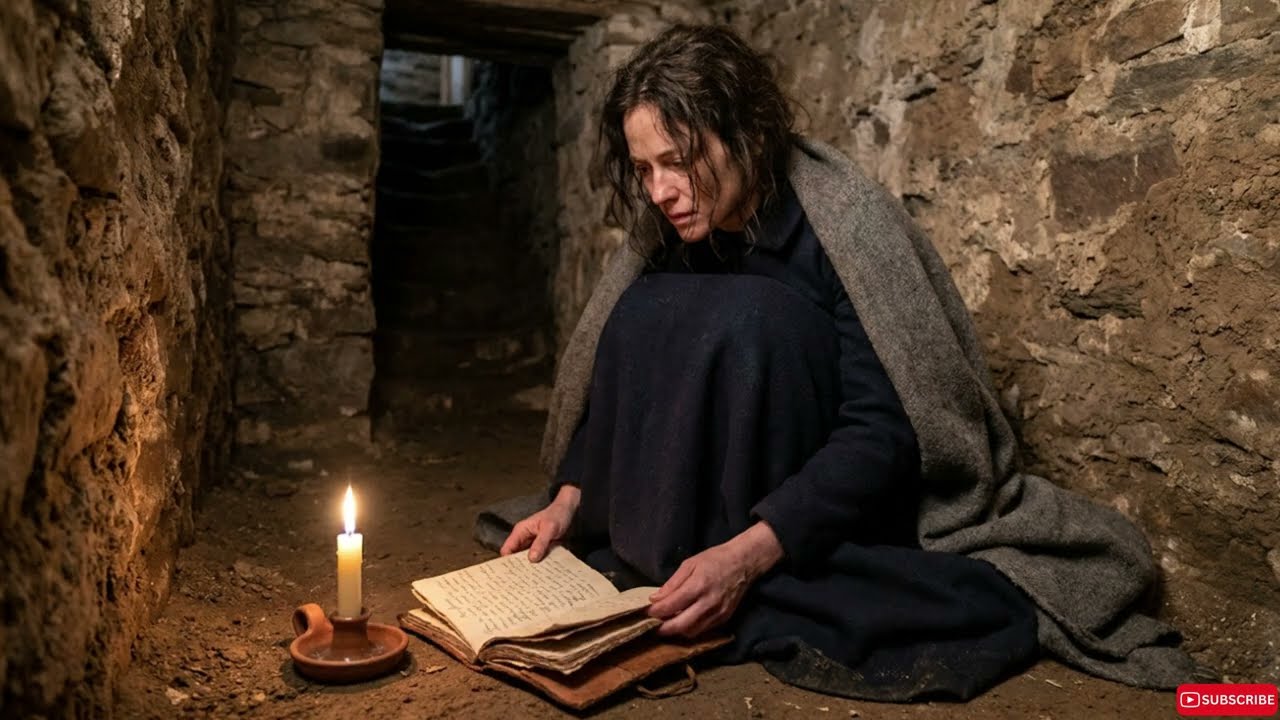
Together they had built something that neither could have built alone. It had begun with a death in a hole in the ground and a design on the last page of a journal no one else could read. It had ended with warmth in the walls of homes across a territory that had once tried to bury her before she was finished.
She had listened when the world told her she was wrong. She had kept digging. The smoke had paid its rent. The earth had kept its promise, and the warmth she had coaxed from the stone on a desperate December morning had traveled farther than she would ever know through the hands of builders and the walls of homes and the lives of children who slept through hard winters in houses that breathed with the long, slow, patient breath of the ground itself.
There are such overgrown entrances all around us. Forgotten sellers of knowledge we walk past every day dismissing them as outdated, as impractical as the grief work of someone who did not know better. We are taught to build higher and burn brighter and fight harder. We are taught that the answer to resistance is more force. But Daffid Aldrid spent 20 years underground learning a different lesson.
And Norah carried that lesson up a frozen hill on her back while the town below agreed she was already lost. What quiet truth has been waiting in your own life for a mind desperate enough and open enough to go looking for it? What simple and elegant answer is buried under the conventional wisdom dismissed by the people with the authority to dismiss things hidden behind an overgrown entrance? No one thought worth clearing.
Your seller is waiting.