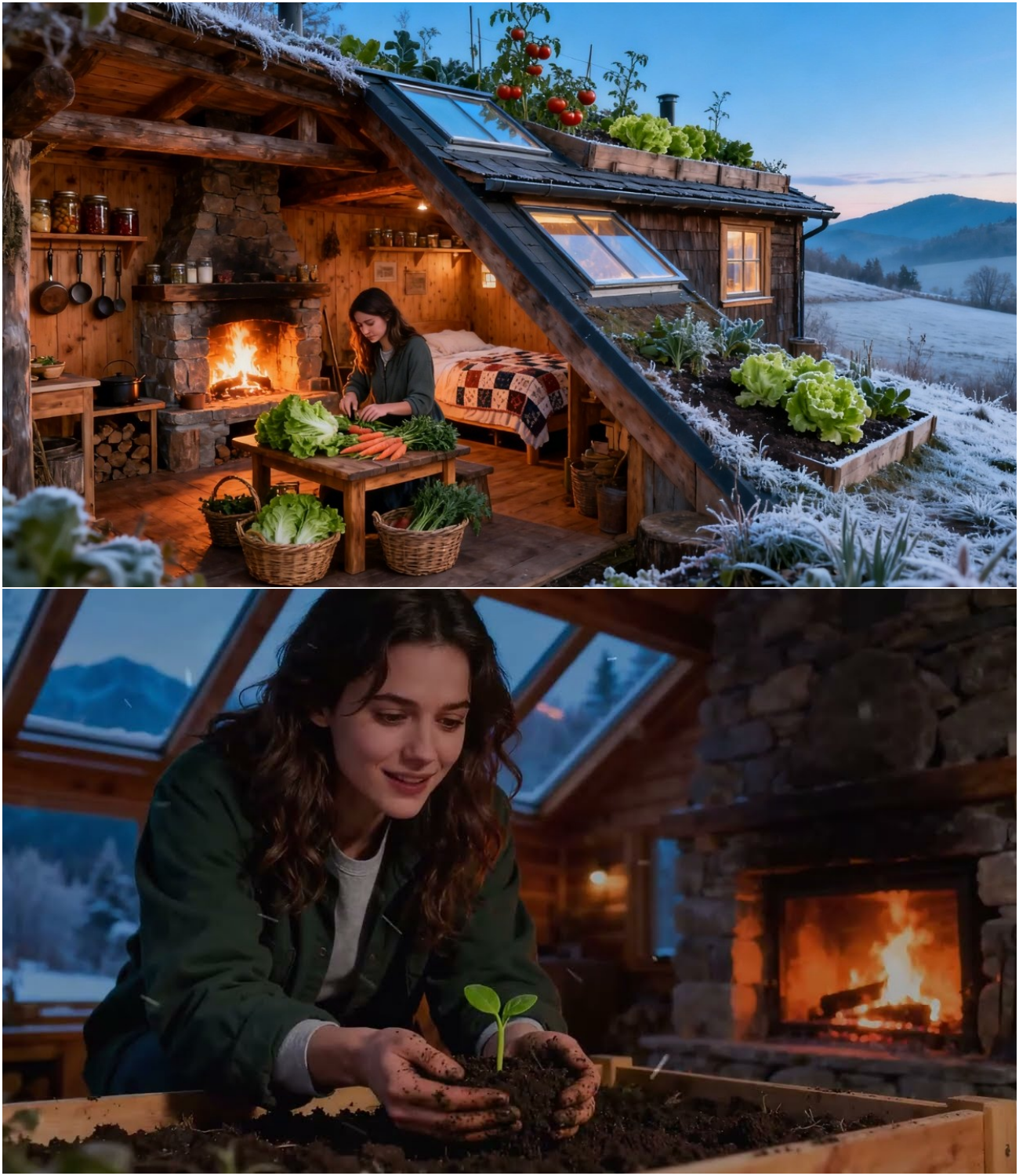
They gave me the ruin as a parting gift, a final, stony judgement. It was meant to be an anchor, a weight to drag me down into the dust from which their son had been raised and to which he had so swiftly returned. The inheritance, they called it. Four thick stone walls that clawed at the sky, holding nothing but the vast, empty blue above and the cracked earth below.
There was no roof, no door, just the jagged openings where they once had been, like a skull’s vacant eyes. My parents-in-law, the Hawthornes, stood beside me on that windswept hill, their faces carved from the same unforgiving granite as the land itself. Mr. Hawthorne cleared his throat, a dry, rasping sound.
“Thomas always said this place had potential.” “His grandfather built the walls.” “Never got further.” His words were heavy, each one a stone laid upon my shoulders. Mrs. Hawthorne, a woman wrapped in shades of gray, simply stared at the structure, her lips a thin, bloodless line. They believed they were leaving an 18-year-old widow with a monument to failure, a place to be weathered down by loneliness and hardship until I came crawling back to their town, to their charity, to their control.
They saw a girl softened by a brief marriage and shattered by a sudden loss. They did not see the quiet thing that had taken root in me, a resilience forged in the silence of my own upbringing. They saw a roofless cabin. I saw a foundation. I saw the way the sun fell unbroken onto the dirt floor from dawn until dusk.
I saw the stone walls, thick and true, a perfect barrier against the gnawing winds. They left me there with a sack of flour, a tin of coffee, and a pity that felt sharper than scorn. As their cart creaked away, shrinking into the haze of the horizon, I did not cry. I walked into the center of the ruin, tilted my head back, and let the sheer, unfiltered sunlight warm my face.
The sky was my ceiling. The earth was my floor. It was not an end. It was a beginning, scraped clean and ready for something new. I had nothing left to lose, and in that emptiness, I felt the first stirrings of a terrifying and exhilarating freedom. The world had taken everything from me here now.
I would learn to build with what remained. I spent the first weeks in a daze of methodical survival, sleeping under a simple canvas lean-to I rigged against the outside of the western wall, the stone holding the day’s heat long into the cold nights. The silence was a living thing, broken only by the cry of a hawk or the rustle of unseen creatures in the scrub brush.
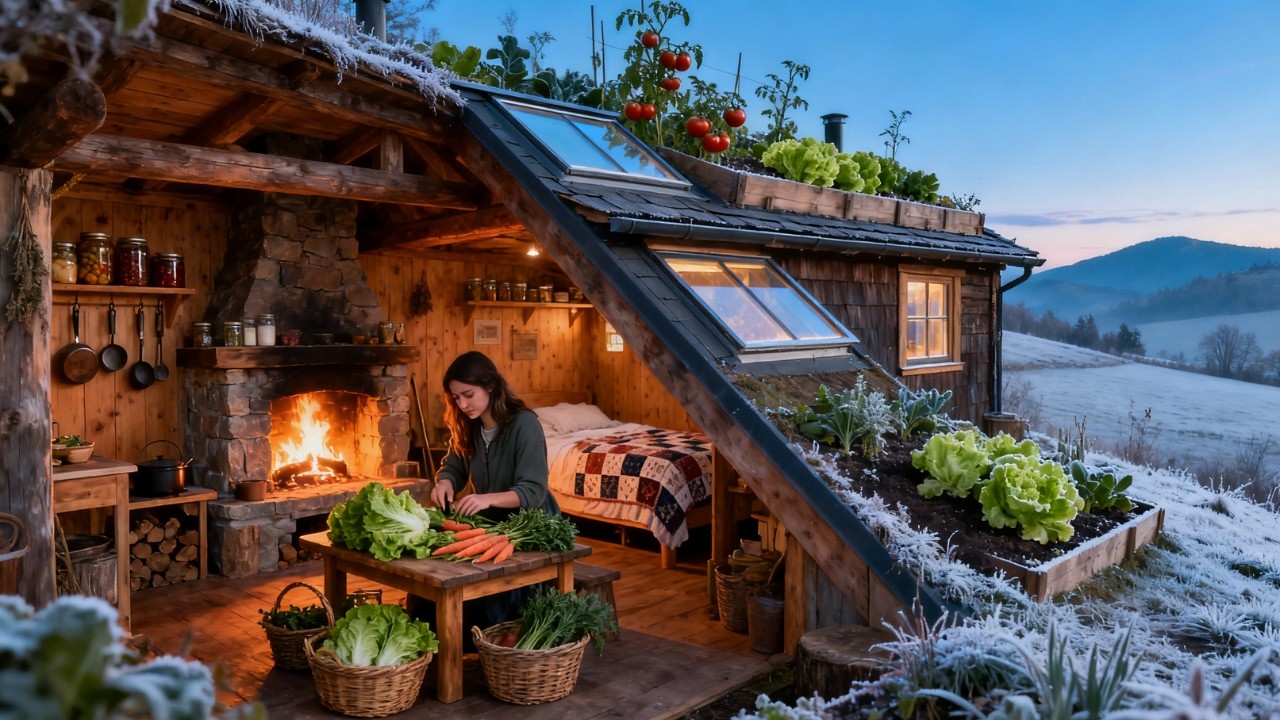
It was during one of those long, still afternoons, while sweeping the dust from the cabin’s floor, that my broom struck something solid. A loose flagstone. Beneath it, wrapped in oilcloth, was a small, iron-bound chest. It wasn’t treasure, not in the way the world understands it. There was no gold, no silver.
There was something far more valuable. Inside lay a leather-bound journal, its pages filled with a cramped, elegant script and a series of diagrams drawn with breathtaking precision. It was the journal of Thomas’s grandfather, a man the family spoke of as an eccentric, a dreamer who had wasted his life on impossible ideas.
His name was Samuel. He had been a botanist, a student of the earth, and these were his life’s work. He wrote not of farming the land, but of creating it. He wrote of the symbiotic dance between rock, water, and life, of how soil was not a static thing to be found, but a living substance that could be made. The diagrams showed a cross-section of the very walls I now inhabited.
But they were not meant to hold a roof. They were meant to hold a world. He called it his hortus celestis, the sky garden. A self-contained ecosystem, elevated, protected, and fed from above and below. He had built the vessel, but had died before he could fill it. His son, Mr. Hawthorne’s father, had seen only a failed foundation, a fool’s errand.
But I saw a blueprint. I saw a legacy waiting not to be discovered, but to be completed. Thomas had known. He had told me once, his voice soft with reverence, “My grandfather believed you could grow anything, anywhere, if you just listen to what the earth wanted to be.” He must have put the chest here for me.
It was his final gift, a quiet act of faith. He hadn’t left me a ruin, he had left me a map. The work began before the sun. My first task felt like madness, a fool’s labor for a grieving fool. I took a bucket and began hauling stones from the dry, bleached creek bed half a mile away. Not large stones for building, but small, smooth, fist-sized rocks.
I poured them onto the cabin floor, the clatter echoing in the morning stillness. Then I went back for more. The journey became a rhythm, a meditation. The weight of the bucket in my hand, the burn in my shoulders, the grit of dust in my throat. Each trip was a step away from the girl the Hawthornes had left behind.
I was not building a wall or a roof, I was laying the bones of my new world. The few travelers who used the old track that passed a mile from my hill would sometimes stop and stare, their figures small and dark against the horizon. I could feel their judgement, their pitying glances. News traveled to the nearby town.
“The Widow Hawthorne’s gone simple with grief.” I later heard Mr. Hemlock, the storekeeper, had said. “Filling her house with rocks.” “A tomb for herself, likely.” He was a man who measured wealth in coin and acreage, and I had neither. He saw a pointless, repetitive act, the scrabbling of a desperate creature.
He could not see the layers of Samuel’s diagrams in my mind’s eye. He could not understand that this was not an act of destruction, but of creation. First, the coarse stone for drainage, a full foot deep. Then, a layer of finer gravel, painstakingly gathered and sifted. And then, the sand. Bucket by bucket, I carried the pale, soft sand from the creek, my hands raw, my back a single, solid ache.
Days bled into weeks. The floor of the cabin disappeared. The hollow space began to fill, rising slowly, inch by painstaking inch. I was not filling a hole. I was building a foundation for life, a place for roots to find their way in the darkness, a system to hold water against the tyranny of the sun. The stone walls that were meant to mock me with their emptiness were becoming the cradle for my garden in the sky.
The next layer was life itself, or rather, the memory of it. Samuel’s journal was my guide, his words a quiet voice of encouragement across the years. “Soil is not dirt,” he wrote. “It is a conversation between the dead and the living.” So I became a collector of decay. I walked the arid land for hours, my eyes scanning the ground not for beauty, but for purpose.
I gathered every dry leaf, every brittle twig, every piece of sun-baked animal dropping. I pulled up withered weeds by their roots, shaking the precious soil back into my sack. I layered this organic matter over the sand, a blanket of sleeping life. To this, I added my own small contributions, coffee grounds, eggshells, the peelings from the few potatoes I had.
Nothing was wasted. Every scrap of life returned to the hole. The smell was rich and earthy, the scent of rot and renewal. Mrs. Gable, a widow herself who lived a few miles east, rode over one afternoon, her face a mask of practical concern. She had brought me a small jar of preserves. She stopped short at the entrance to the ruin, her eyes wide.
The cabin was now filled more than halfway to the top of its walls with my strange, layered creation. I was standing in the middle of it, turning the mixture with a pitchfork I had bought with the last of my money. “Child,” she said, her voice holding no judgement, only a deep and profound confusion. What is this?” I leaned on the pitchfork, sweat tracing paths through the dust on my face.
“I’m making soil,” I answered. The word sounded simple, almost foolish, in the vast silence. She looked at the compacted layers of rock and sand and decomposing matter. She looked at my calloused hands, my worn dress. She looked at the endless, dry landscape around us. “Soil,” she repeated, not as a question, but as if testing the weight of the word.
Here?” “Yes,” I said. Here, she said nothing more, just handed me the jar and rode away. But I saw in her eyes the first flicker of something other than pity. It was a hesitant curiosity, the cautious opening of a mind to a possibility it had never before considered. She was the first person who didn’t look at me like I was already a ghost.
Water was the ghost that haunted this land, a memory of wetter times whispered by the dry creek beds and the stunted, thirsty trees. My sky garden could not survive without it, and the sky itself was a miser, hoarding its rain for months on end. Samuel’s journal dedicated an entire chapter to this problem, to the art of capturing and holding every precious drop.
His solution was elegant and ancient, the hidden reservoir, a secret heart of clay. “The earth will provide the cup if you know how to ask,” he wrote. So I began to dig. Miles from my cabin, near a low-lying patch of alkali flats, I found the vein of dense, gray clay he had described in his notes. The digging was heavy, unforgiving work.
The sun beat down and the clay was stubborn, clinging to the shovel. I hold it back in sacks, a grueling, back-breaking process that made the rock hauling feel like a leisurely stroll. For days, my world was reduced to the sharp bite of the shovel, the weight of the sack on my back, and the rhythmic plot of my own feet.
Back at the cabin, I mixed the clay with water from my well, stomping it with my bare feet until it had the consistency of thick dough. Then, I began to line the basin of my garden. I packed it carefully over my first layer of coarse stone, creating a seamless, impermeable bowl hidden deep within the structure.
This clay liner would catch any water that filtered down through my man-made soil, holding it in reserve, a secret reservoir for the roots to find during the long, dry spells. It was a hidden system, an act of faith in a future rain. To an outsider, it would look as though I was merely adding more dirt to my bizarre project.
But, I knew I was building a lung, a heart, a promise. This was the most critical step, the one that would determine whether my garden would be a fleeting experiment or a sustainable miracle. As I smoothed the final patch of clay with my hands, my palms coated in the cool, damp earth, I felt a connection not just to the land, but to the man who had dreamed of it.
I was no longer just following his instructions, I was in conversation with him, my labor the answer to his vision. Planting the seeds felt like a final prayer. They were not common seeds from Mr. Hemlock’s store. They were special, saved in small, wax-sealed packets tucked into the back of Samuel’s journal. He had collected them from hardy, tenacious plants that thrived in harsh conditions, high mountains, rocky slopes, arid plains.
There were climbing beans that needed little water, squash with thick, waxy skins to prevent evaporation, and a type of dark, leafy green he called stonecress. I planted them with a reverence I hadn’t felt since I had buried my husband. I pushed each tiny seed into the dark, rich soil I had spent a season creating, my fingers feeling the cool dampness just beneath the surface.
For weeks, the surface remained stubbornly brown. The sun baked it. The wind scoured it. My heart ached with a familiar fear, the fear of investing everything in something that might never grow. The whispers from the town grew louder, more certain. “Still at it, is she?” Mr. Hemlock asked Mrs.
Gable, a smirk on his face. “Poor girl has planted rocks, I reckon.” She’ll be harvesting dust even Mrs. Gable’s visits became less frequent, her expression shadowed with a gentle disappointment, as if she had hoped for my sake, but was now resigned to the inevitable. I continued to water the plot sparingly, using the gray water from my washing, just as the journal instructed.
I waited. And then, one morning, after a night that had blessed the land with a soft, steady drizzle, I saw it. At first, I thought it was a trick of the light. But, it was there. A single, tiny loop of brilliant green, shouldering aside a crumb of dark earth. Then, I saw another and another. They were fragile, almost impossibly delicate, yet they were pushing upward with a fierce and undeniable life.
I dropped to my knees, my breath catching in my throat. I touched the damp soil beside one of the shoots, a silent communion. It was not just a sprout. It was a promise kept. It was Samuel’s vindication. It was Thomas’s faith. It was my own stubborn, foolish, beautiful hope made real and green and alive, reaching for the sun from a garden that should not exist.
The growth, once it began, was explosive. The deep bed of rich, man-made soil, the hidden reservoir of water in the clay basin, and the protection of the thick stone walls created a perfect microclimate. The plants thrived, sheltered from the relentless wind and basking in the direct, unimpeded sunlight. The stone walls absorbed the heat of the day and radiated it back during the cool night, extending the growing season.
It was exactly as Samuel had predicted. My sky garden became an island of impossible green in an ocean of parched brown. The climbing beans snaked their way up lattices I built from scavenged branches, their leaves a vibrant canopy. The squash plants spread out, their broad leaves shading the soil and preserving its moisture, their yellow blossoms like fallen stars.
The dark green stonecress grew in thick, healthy bunches. The sight was so startling, so contrary to the logic of the landscape, that it began to draw attention. People would ride out of their way just to stare up at the green spilling over the top of the old stone ruin. They would stop, silent and bewildered, before moving on, shaking their heads.
Mrs. Gable returned, her eyes wide with an awe that erased all her previous doubt. She walked around the base of the walls, touching the cool stone. “I I never would have believed it,” she whispered, looking up at me as I stood among the leaves. I smiled, a real smile that reached my eyes for the first time in over a year.
A week later, I harvested the first of the beans. The pods were crisp and full. The squash were heavy and solid. The greens were tender and sweet. It wasn’t a massive harvest, but it was mine. I had not just cultivated it, I had created the very ground it grew in. That evening, I filled a basket with vegetables and took it to Mrs. Gable.
I found her sitting on her porch, watching the sunset paint the sky in shades of orange and purple. I held out the basket. She looked from the vibrant produce to my face, and her own face crumpled with emotion. “Oh, child,” she said, her voice thick. “You didn’t just grow a garden. You grew a future.” The stories of the hanging garden on the Hawthorne ruins eventually reached the ears of my parents-in-law.
The tales were likely embellished, twisted into a local myth, but the core of them, that the grieving, simple-minded widow had somehow made the worthless land bloom, was too persistent for them to ignore. One hot afternoon, I saw a dust cloud on the horizon, the kind made by a formal cart, not a lone rider. I knew it was them.
I did not run or hide. I simply continued my work, weeding a row of stonecress, my hands deep in the dark, living soil. They stopped the cart at the bottom of the hill and approached on foot, their progress slow and stiff. They were dressed in their Sunday best, as if for an inspection or a funeral. They walked to the entrance of the cabin, the same spot where they had left me months before, and stopped dead.
Their faces, which I remembered as hard and impassive, were now masks of utter, slack-jawed disbelief. They stared, not at me, but past me, at the impossible reality of it. They saw the thick, green vines cascading over the stone walls. They saw the heavy, pale globes of squash nestled among enormous leaves.
They saw the rows of beans, the bunches of herbs, the sheer, riotous life erupting from the top of the structure they had given me as a tombstone. Mr. Hawthorne took a step forward, his eyes scanning the impossible sight. “How you he managed?” The word a dry croak. It wasn’t a question directed at me, but at the universe.
“Samuel,” I said, my voice quiet, but clear. His journal showed me how Mrs. Hawthorne’s gaze finally fell on me. She saw not the broken girl she had abandoned, but a woman standing firm on her own ground, literally. Her hands were dirty, her face was tanned by the sun, but her eyes were steady. There was no triumph in my expression, no “I told you so.
” My victory was not over them, it was over the dust, over the drought, over the despair. Their shock was profound. They had come expecting to find failure, to confirm their judgment. Instead, they found a testament to a legacy they had dismissed and a strength they had never imagined. They stood there for a long time, silent, while the garden hummed with the sound of bees, a sound of life in a place that should have been silent.
Years passed. The garden became my life, my ledger, my story written in soil and leaf. I never built a roof on the cabin, the sky was the only one it ever needed. I expanded, using Samuel’s principles to create new elevated beds alongside the original, each one a testament to the power of a single, radical idea.
The sky garden was no longer a curiosity, it was a landmark. People came not to stare, but to learn. They brought their own challenges, their own patches of worthless land, and I would share what I knew, passing on the legacy that had been given to me. I showed them how to listen to the land, how to see a foundation where others saw a ruin, how to build soil from the scraps of what was.
The Hawthornes never spoke of that day they returned, but something in them had shifted. They sent word through Mrs. Gable, offering assistance, money, a proper house in town. I politely refused. I had a proper house. Its walls were stone, its floor was earth, and its ceiling was the infinite, turning canvas of the stars.
My inheritance had not been the ruin, but the resilience it taught me. It was the knowledge that the most barren ground can be made to flourish if you are willing to do the slow, patient, unglamorous work. It was the understanding that you don’t always need to find fertile ground. Sometimes, you need to create it.
The journal, its pages now soft and worn from my touch, taught me the greatest lesson of all. That true wealth is not something you own, but something you can grow. It is the ability to create sustenance from dust, to build a future from the fragments of the past. It is the quiet, powerful magic of transformation.
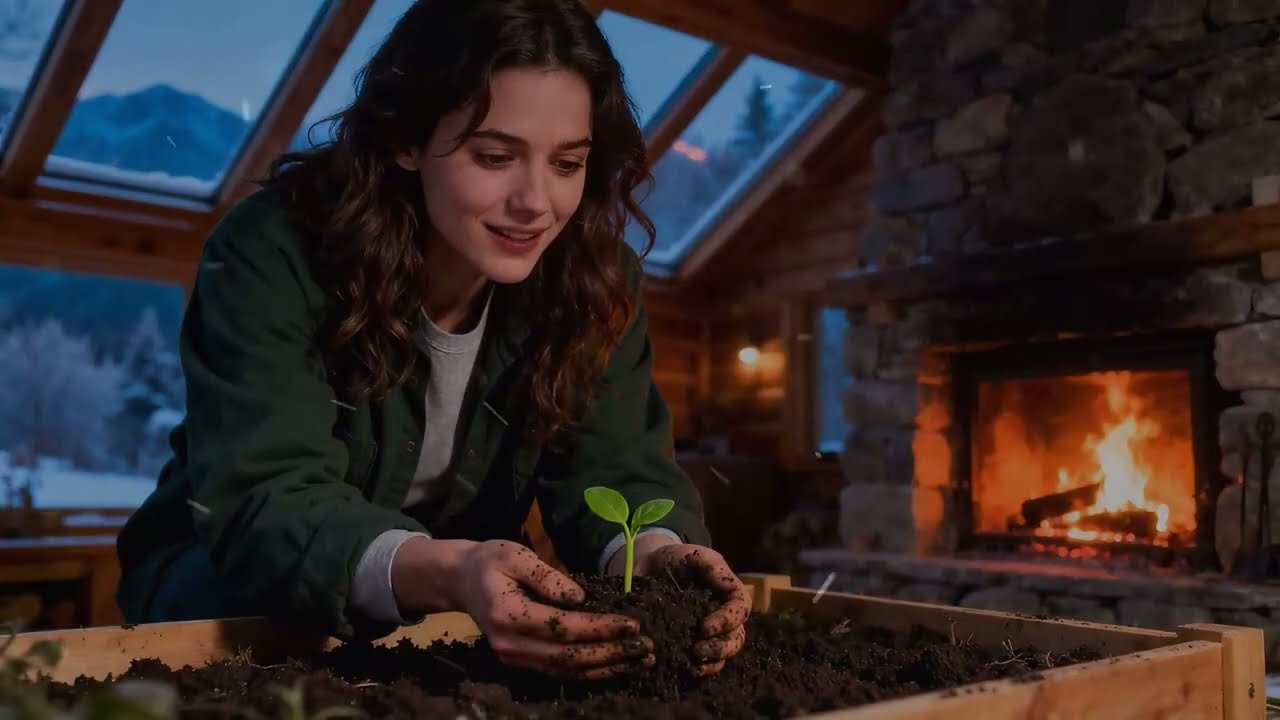
And now, I look back on that girl, the one left with four walls and an empty sky, and I see the seed of everything that followed. I see that her emptiness was not a void, but a space waiting to be filled. And I have to ask you, what is your ruthless cabin? What is the inheritance of ruin or hardship that you have been given, the one that feels like an ending? Look closer.
It is not an anchor meant to drown you. It is a foundation. It is the strong, solid, unshakable beginning of whatever you choose to build next. Your task is not to curse the missing roof, but to embrace the endless sky. Your work is to start hauling the stones, to start collecting the scraps, to begin the slow, patient, sacred work of creating your own soil.
It will be hard. People will doubt you. They will call you a fool for trying to grow something where nothing has grown before. Let them. Your job is not to convince them. Your job is to cultivate your own small patch of impossible life. Find your own hidden journals, the wisdom left behind for you. Listen to the quiet voices of those who dreamed before you.
And then, begin. Start with the first stone, the first handful of dust. Build your garden in the sky. Because it is in the most broken places that the most beautiful things can grow. What will you plant there? What will you make bloom?