It was the precise kind of live television friction that demands complete, undivided attention—the sort of cultural collision that renders scrolling or looking away impossible. Every second carried weight because it exposed the deep, structural fractures of modern political discourse in real time.
“I want to talk to you about something, my friend,” one of the co-hosts pivoted, softening the edge with a practiced smile. “And some things that you recently said. You know I like you, right? Okay, so you recently criticized Senator Mark Kelly—a veteran and an astronaut—for participating in a video reminding military personnel that they have a right to decline orders that violate the law.”
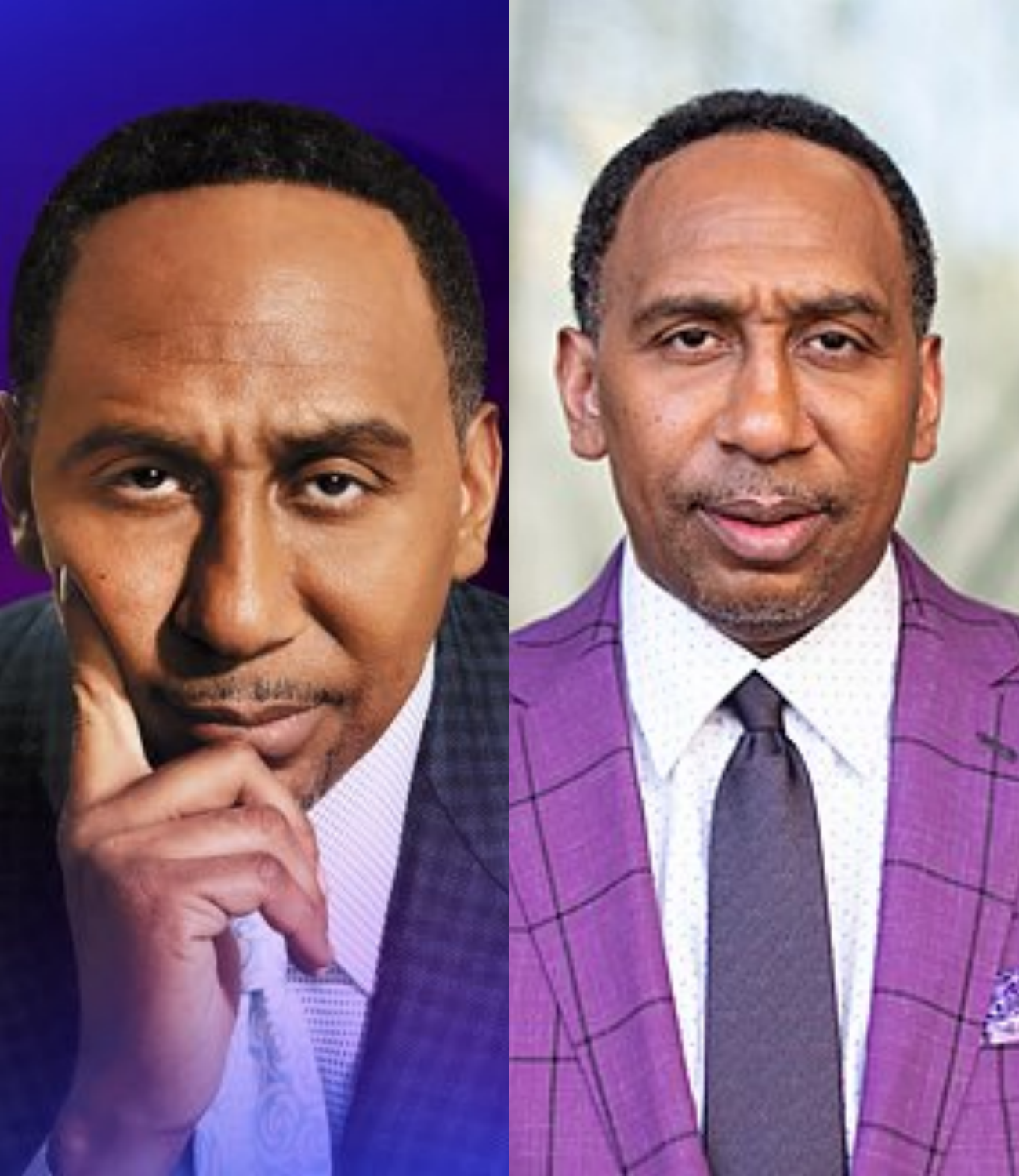
Stephen A.’s counter-argument was direct, stripped of the usual beltway diplomacy. He made it plain that dragging the United States Armed Forces into the center of the nation’s hyper-partisan culture wars was an incredibly high-stakes gamble. In his view, the military had to remain an insulated, apolitical entity. The moment partisan politics began to degrade the chain of command, the downstream damage to the republic would be catastrophic. For him, keeping the military clear of the domestic political crossfire wasn’t just a preference; it was a baseline requirement for national stability.
“I watched your commentary, my friend,” the host pressed.
“Sure,” Stephen A. said, nodding.

“You said, ‘You know better, Senator Kelly. You know better. How dare you do that?'” The host recounted his televised monologue. “You said they could go to the House, they could put up paperwork, they could try to initiate articles of impeachment if they think there’s a serious violation. You said, ‘Damn it, ain’t like y’all haven’t done it before. You impeached the man twice. Where did that get you? Got his behind right back in the White House. Had you left him alone in 2016, 2020, maybe he wouldn’t be back.’ You insisted that you don’t tell military men and women to ignore an order from the commander-in-chief.”
Right now, domestic confidence in foundational American institutions—including the Department of Justice and various intelligence agencies—has hit historic lows. Millions of everyday citizens view the traditional apparatus of power with deep skepticism. Yet, through it all, the military has largely protected its status as one of the most widely respected institutions in the country. That equity wasn’t built overnight; it was forged through generations of rigid discipline and a strict adherence to duty.
Because of that, Stephen A. took severe issue with the rhetoric coming from a handful of Capitol Hill lawmakers who publicly suggested that troops might need to bypass commands. The fundamental flaw, as he argued, was that these politicians never provided a concrete framework for what an unconstitutional order actually looked like in the field. Without explicit legal definitions, that kind of public messaging just injects noise into the ranks. Instead of sounding principled, it sounded reckless to him. Vague language opens a dangerous door to internal debate within a fighting force, encouraging subordinates to question orders based on subjective interpretations.
Since those lawmakers failed to provide any real legal parameters, the entire public relations push began to look less like serious constitutional oversight and more like a theatrical performance designed for social media feeds.
Then, right on cue, Sunny Hostin attempted to pin him down. She lobbed a classic daytime television gotcha question, fully expecting the sports analyst to stumble over the legal nuances or contradict his own logic.
But the play blew up on the launchpad. Instead of trapping him, the question gave Stephen A. the perfect runway to double down on his thesis, leaving the panel to deal with an entirely different level of pushback.
“Senator Kelly said back then, ‘I do think there have to be consequences for absolute misconduct,'” Sunny noted, quoting the transcript as the studio audio swelled slightly. “‘If you’re doing something that is completely outside the law and ruthless, then there is a consequence for that. That’s why the military structure dictates it won’t execute unlawful orders from a commander-in-chief.’ Now, given the fact that the leadership itself stated that, I’d love to give you the opportunity to perhaps reconsider your stance.”
“I am not changing a single thing,” Stephen A. shot back, his voice cutting through the studio air. “I didn’t stutter once.”
“Even if it’s loud and wrong?” Sunny challenged.
“You can call it loud and wrong all you want,” he said, deadpan. “You’re entitled to your opinion. I’m entitled to mine.”
He leaned heavily on this point, refusing to yield an inch of ground on the footage Sunny had chosen to air. His message was basic but critical: these lawmakers aren’t digital creators chasing an algorithm or trying to build a personal brand. They are federal officials with real constitutional responsibilities. Their public statements carry massive institutional weight, and when they casually theorize about military non-compliance on public platforms, the real-world fallout can be incredibly severe.
“I was talking about the reality of the service,” Stephen A. explained, gesturing with his hands. “What I did was get on the phone with family and friends who actually served in the military. And I told them, ‘We’re not civilians. This isn’t a civilian court of law. You can face severe military justice for implying certain things if you are a former or active service member.’ It wasn’t just about the literal words Mark Kelly used. It’s the reality that he was a combat Navy pilot who served, telling people to ignore a command when that exact behavior could get a service member deeply compromised in the middle of a conflict.”
The debate grew sharper as the hosts repeatedly tried to steer the conversation back to the legal definition of unlawful commands. As the minutes ticked by, the ideological uniformity of the panel became impossible to miss—a clear display of groupthink where the desk moved in perfect unison, rarely questioning the broader implications of their own logic.
Stephen A. brought up a glaring counterpoint: if those Capitol Hill lawmakers were genuinely concerned about systemic executive overreach, they possessed far more potent constitutional mechanisms than a viral video or a morning show appearance. As members of Congress, they had the authority to convene formal committee hearings. They could have demanded an expedited, comprehensive legal review from the Pentagon’s Inspector General. They had the power to launch legitimate, bipartisan oversight through official channels.
All of those high-leverage tools were sitting right in front of them. Yet, by choosing to take their grievances to social media platforms, they transformed a serious matter of national security into mere political theater.
Just as the temperature at the desk threatened to boil over, Whoopi Goldberg seized the wheel, abruptly shifting the focus away from the military debate and turning the spotlight squarely onto Stephen A. himself. Specifically, she began grilling him on his historical criticisms of how the political establishment had managed recent campaign cycles.
The pivot transformed the entire energy of the segment. Suddenly, it wasn’t a debate about policy or military protocol anymore; it was an direct examination of Stephen A.’s own public commentary and whether he possessed the stomach to stand by it on live television.
“I know that you have very strong feelings about the party’s strategy,” Whoopi said, leaning in. “But I do have this to say to you. It was vital for the leadership to demonstrate that they stood firmly with the advocacy communities, that they stood with minority women, and women across this country. Because once you let us go, once you drop women and working-class families, what exactly do you have left? And so, I’ve listened to plenty of people argue that the strategy didn’t follow what was necessary. They did it the way they believed they could. It didn’t yield the results they wanted. They lost.”
From the perspective of a massive segment of the viewing audience, the political reality Whoopi was constructing didn’t match the ground truth. To Stephen A. and a growing chorus of working-class critics, the political establishment had decoupled itself from its traditional base of blue-collar voters a long time ago. The coalition that once relied heavily on manufacturing workers, manual laborers, and everyday middle-class families now felt entirely foreign to those very communities.
“See, respectfully, I don’t agree with that perspective,” Stephen A. broke in. “Let me explain.”
“That’s fine,” Whoopi allowed.
“Let me explain,” he repeated, trying to speak over the mounting crosstalk.
“Just like you expressed your view to me,” Whoopi cut through, raising her hand as the commercial music began to cue up. “We have to go to a break. We have to take a quick break. We’ll be right back.”
The underlying critique, as independent analysts have noted for years, is that the party infrastructure has slowly drifted away from its historical identity as the champion of the lunchpail worker. Instead, it often appears hyper-focused on the cultural priorities of coastal donors and corporate boardrooms.
The most recent election cycle laid this transformation bare. Many political observers note that without intense behind-the-scenes pressure from high-net-worth contributors, the ticket might never have been reshaped in the eleventh hour. And the moment the transition occurred, that exact same elite financial apparatus instantly funneled an historic mountain of cash into the new campaign. Financial outlets reported that the spending crossed the staggering 1.5 billion dollar mark, outspending the opposition by a historic three-to-one margin.
But for Stephen A., the fundamental problem wasn’t the raw dollar amount; it was the profound disconnect between legacy media voices and the punishing economic realities faced by average citizens. The moment the show returned from commercial, he didn’t waste a single breath. He launched an immediate, powerful counter-offensive against Whoopi’s pre-break narrative.
“You were about to disagree,” Whoopi noted as the cameras caught them.
“I absolutely disagree with that framework,” Stephen A. said, his voice commanding the room. “The bottom line is this. We talk about looking out for working-class people. Who isn’t thinking about them? I know I do. I know that most candidates within the party structure genuinely care about everyday folks, the left behind, and the disenfranchised. I completely acknowledge that. But what I am saying is, during the heat of a national campaign, are you doing what it actually takes to win the race? You had too many people spending energy attacking the opposition for things that simply weren’t going to stick. It wasn’t moving his core voters. So what I would say to you, and what I would say to anyone who wants to prevent the opposition’s bench from succeeding in the future, is simple: focus exclusively on what actually wins.”
While Stephen A.’s pragmatism resonated with a lot of viewers, critics of the political establishment have pointed out a parallel issue: the tendency of party leadership to try and aggressively rewrite the narrative around their own public records. A textbook example frequently cited by political commentators involves the specific policy portfolio handed down early in the administration regarding the southern border.
Initially, the leadership was explicitly tasked with managing the deep-seated socioeconomic causes driving migration from Central America. Because of that high-profile assignment, major media operations and political commentators universally labeled her the administration’s point person on the border. However, as immigration evolved into one of the most volatile and damaging issues of the campaign cycle, the public messaging underwent a sudden transformation. What had originally been framed as a long-term, compassionate diplomatic effort was abruptly swapped out for a highly aggressive, security-first posture. To outside observers, it looked like a total 180-degree reversal designed purely to survive the immediate political pressure of the election.
“Yeah,” Whoopi acknowledged.

“That’s exactly where my sports background kicks in,” Stephen A. argued, slamming his hand lightly on the table for emphasis. “Tell me what plays actually win the game. I don’t want to hear excuses. I completely understand that the advocacy communities are vital. I understand that the vulnerable and the disenfranchised must always be protected. I understand the weight of the economy. I understand the complexity of immigration. I get all of that. But the entire point of a campaign is to win the structural power so that you are inside the room making policy, and the opposition is not. The strategy didn’t execute that basic objective last time.”
Of course, if one were analyzing the exchange objectively, leaning too heavily on a sports analog in a high-stakes political debate has its own built-in risks. Even the most elite commentators have stretches where their grand predictions age incredibly poorly. Stephen A. famously endured a legendary, multi-year cold streak where his official picks for the NBA Finals dropped straight through the floor, missing the mark for six consecutive seasons. That definitive drought only broke in 2017 when he finally picked the Golden State Warriors to hoist the trophy—a prediction made only after the team had added an all-world superstar to a roster that had already broken the regular-season wins record.
Yet, the panel on The View had no intention of slowing down to analyze credentials. As the segment hurtled toward its final seconds, the hosts leaned directly into the volatile atmosphere. Instead of lowering the temperature or finding a polite consensus for morning TV, they poured more fuel onto the fire, turning the final moments of the broadcast into a loud, chaotic, and utterly quintessential piece of American media spectacle.