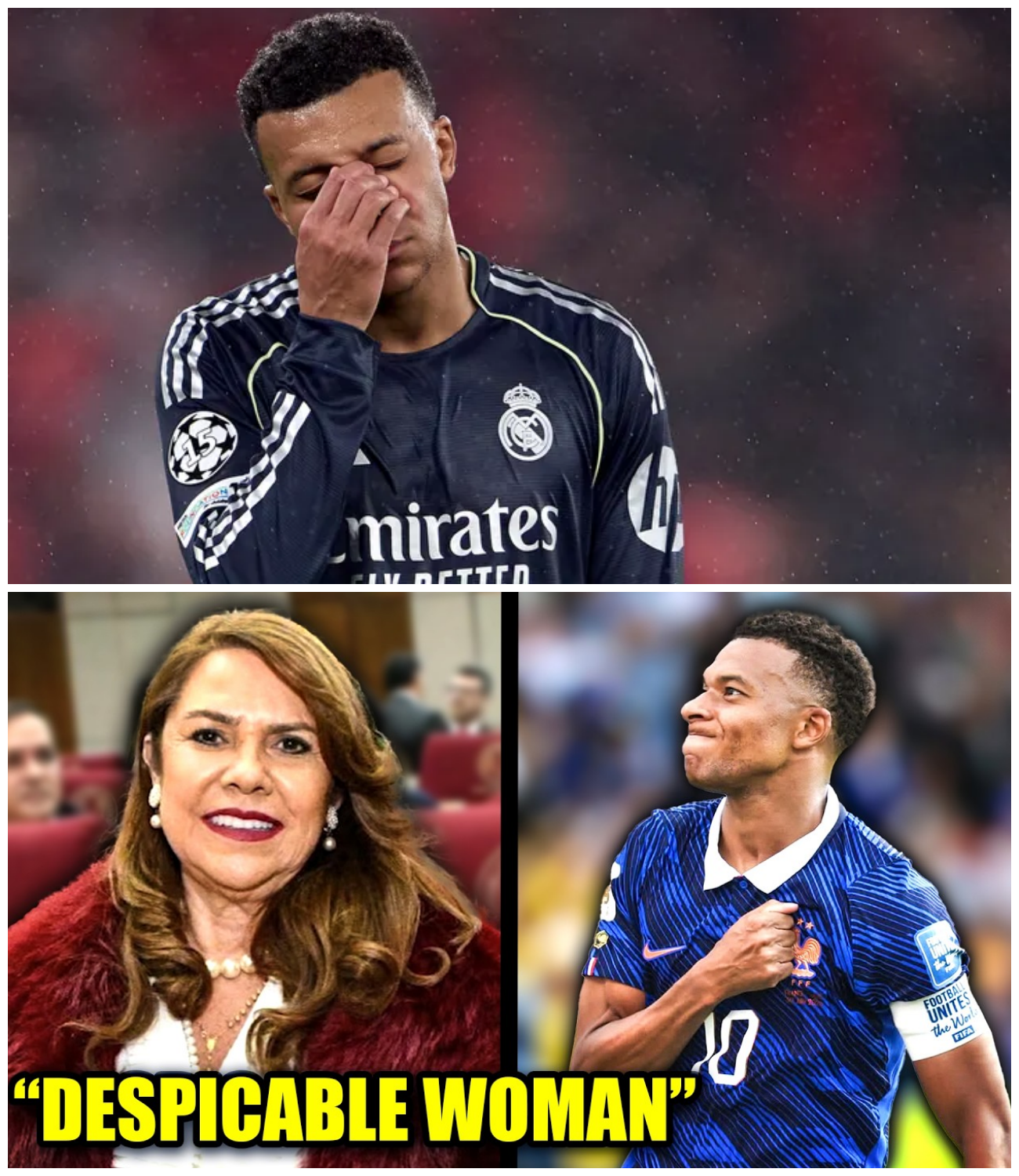
The Beautiful Game has long been celebrated as a great unifier, a universal language spoken across continents, cultures, and generations. Yet, beneath the roaring crowds, the stunning goals, and the shimmering trophies, there exists a dark and persistent underbelly that refuses to be excised. Time and time again, the world’s most brilliant footballing talents are forced to confront an ugly reality: their immense skill and dedication are frequently overshadowed by vile, unprovoked racist abuse. Recently, this insidious reality reared its head once more, targeting none other than France’s generational superstar, Kylian Mbappé. But instead of suffering in silence, the World Cup phenom chose to fight back, igniting a global conversation about the rampant prejudice still festering within the sport’s highest echelons.
The controversy was initially sparked during the buildup to a highly anticipated matchup between France and Paraguay. The inciting incident seemed relatively innocuous at first—typical pre-match banter that happens before any major international clash. Christophe Dugarry, a former member of the French national team and a 1998 World Cup winner, confidently predicted that the Paraguayan squad would get absolutely hammered by the dominant French side. It was a bold statement, but well within the bounds of standard sports punditry. However, this harmless prediction proved to be the catalyst for a shocking eruption of bigotry from one of Paraguay’s most recognizable footballing figures: former national team goalkeeper José Luis Chilavert.
For those unfamiliar with football history, José Luis Chilavert was once a celebrated and highly eccentric figure on the pitch. Known for his flamboyant style and his incredibly rare ability to score goals from free kicks and penalties as a goalkeeper, he was a massive star during the 1990s. Unfortunately, his post-playing career has been defined not by his athletic achievements, but by a descent into toxic rhetoric and political extremism. Responding to Dugarry’s prediction, Chilavert took to social media and went full bigot. He wrote, “Christophe you are right. At the 1998 World Cup we played against France and now Paraguay face a team from Africa.”
This horrific comment was a direct attack on the black players who make up a significant portion of the modern French national squad, attempting to strip them of their French identity and reduce them to racial caricatures. What makes Chilavert’s statement even more bizarre and intellectually bankrupt is the glaring historical hypocrisy it reveals. During the 1998 World Cup—the exact tournament Chilavert referenced—he played against a French team that was famously celebrated for its multicultural “Black, Blanc, Beur” (Black, White, Arab) makeup. That legendary 1998 roster featured iconic black players such as Lilian Thuram, Patrick Vieira, Marcel Desailly, Thierry Henry, and Nicolas Anelka, alongside legends like Zinedine Zidane. Why did Chilavert view those men as authentically French, yet he now looks at modern stars like Kylian Mbappé, Ousmane Dembélé, Ibrahima Konaté, and Aurélien Tchouaméni and maliciously brands them “a team from Africa”?
This insidious brand of racism is not isolated to aging ex-goalkeepers; it echoes the dangerous, far-right political rhetoric that has been weaponized by figures like Marine Le Pen. It is a calculated narrative designed to suggest that black French citizens, regardless of whether they are lifting World Cup trophies or living everyday lives, cannot possibly represent the true nation of France. It is an ideology rooted in exclusion, and it sets the stage for even more severe and unhinged attacks, which unfortunately followed in short order.
If Chilavert’s comments were a dog whistle, the subsequent remarks from a sitting Paraguayan politician were an ear-shattering siren of blatant racism. Celeste Amarilla, a prominent senator in Paraguay, entered the fray and unleashed a tirade against Kylian Mbappé that was so primitive and grotesque, it genuinely defies belief. A government official, someone elected to lead and represent a nation on the global stage, decided to attack one of the world’s most beloved athletes using the most archaic and disgusting racist tropes imaginable.
Senator Amarilla’s words were utterly horrifying. She referred to Mbappé as a “colonized Cameroonian pretending hard to be French.” She baselessly called him a “resentful, newly rich, arrogant, and ugly” individual who was “scared to death” on the pitch. But she did not stop at petty insults; she descended into full-blown white supremacist rhetoric. Amarilla claimed the “brute didn’t even learn to write,” and shockingly stated that instead of mother’s milk, “he sucked on coconuts and the most educated thing he heard were chimpanzees.” She concluded her vile rant by suggesting that her country’s players should have slapped him open-handed, boasting about her own aggressive behavior in the Senate where she claimed “nothing happens.”
To read these words today is truly sickening. That a sitting politician felt comfortable enough to publicly broadcast such virulent hatred toward a young black athlete highlights a profound societal failure. It exposes the grim reality that, for many people in positions of power, black excellence is viewed as a threat that must be degraded and humiliated at all costs.
Faced with this avalanche of racism, Kylian Mbappé could have easily ignored the noise. He is, after all, a global icon who operates in a stratosphere of success that these bigots will never reach. However, Mbappé understood the weight of the moment and the necessity of confronting such blatant hatred head-on. He took to social media to deliver a masterclass in how to dismantle a bully with grace, intelligence, and devastating precision.
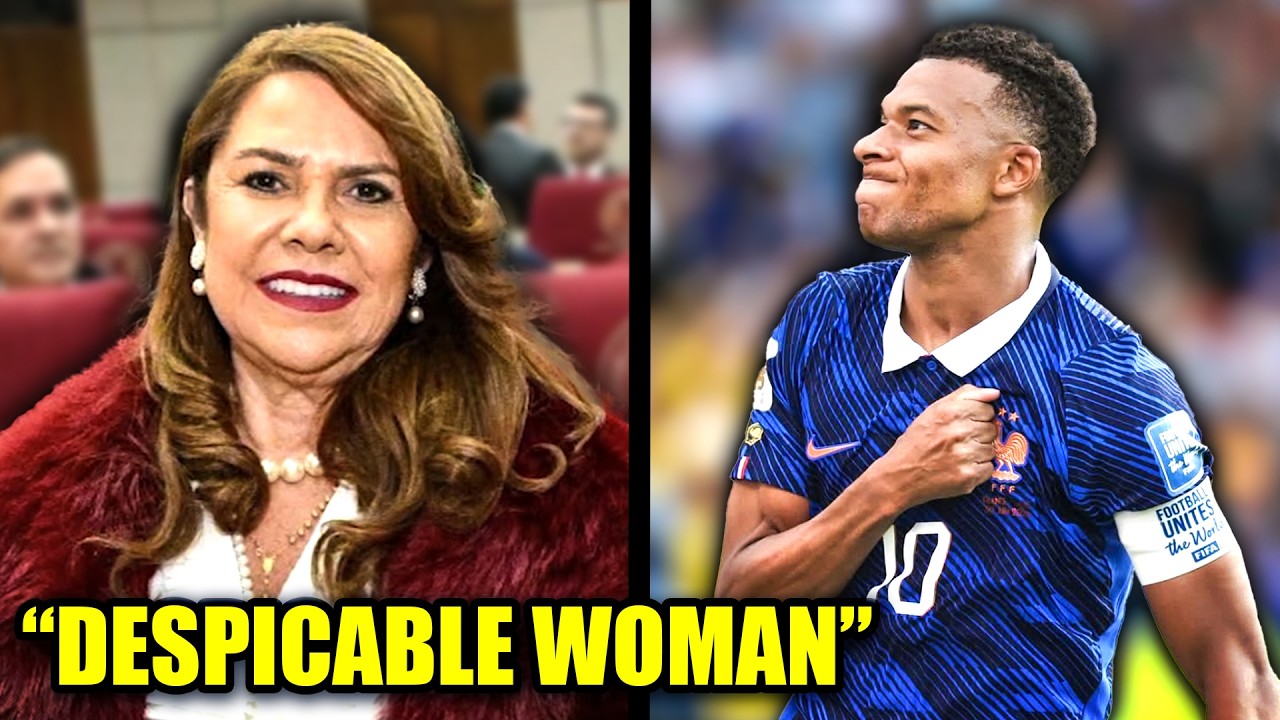
Mbappé did not stoop to her level of petty name-calling. Instead, he addressed her directly and professionally: “Madame Celeste Amarilla, you are a despicable woman and unworthy of your position.” In one sentence, he completely stripped her of her perceived authority. But Mbappé’s response went even deeper; he brilliantly weaponized her own country’s pride against her. He stated, “You do not represent Paraguay, that country which has sweated passion and honor throughout the competition.” By praising the hard work and historic effort of the Paraguayan players, Mbappé isolated the racist senator from the very people she claimed to represent. He exposed her as an “incompetent woman who gives the worst possible image of her country,” and firmly declared that he would never allow people like her the freedom to spread their hatred and racism across the world.
This response was nothing short of legendary. Mbappé demonstrated maturity and leadership that far exceeded his years, contrasting sharply with the childish, hateful tantrum thrown by an elected official. But Mbappé did not have to fight this battle alone. In a highly commendable move, the French Football Federation (FFF) immediately rallied behind their captain. The era of sports institutions issuing weak, generalized public relations statements about “respect” and “diversity” appears to be changing, at least in this instance.
Philippe Diallo, the president of the FFF, came out swinging. The federation unequivocally backed their star player, labeling the comments made by Senator Amarilla as utterly vile and unacceptable. More importantly, the FFF did not just offer words of comfort; they took concrete legal action. Diallo announced that the statements were criminal and condemnable, and as a result, the federation filed a formal complaint with the public prosecutor’s office for the purpose of judicial proceedings. The FFF made it abundantly clear: insulting the players of the French national team is an insult to the nation of France itself. They promised to prosecute this hatred “here and everywhere.”
This decisive legal action is a crucial step forward in the fight against racism in sports. For too long, bigots have hidden behind keyboards and political immunity, facing zero tangible consequences for their abuse. By dragging these hateful comments into the judicial system, the FFF is sending a massive warning shot: racism will not just be frowned upon; it will be actively prosecuted.
As for José Luis Chilavert, his recent comments are unfortunately par for the course for a man who has made bigotry his post-football brand. His history is littered with nasty, hateful rhetoric that spans the entire spectrum of prejudice. He previously ran for president of Paraguay on a platform that masqueraded as “anti-corruption” but was deeply entrenched in extreme conservatism and a staunch opposition to LGBTQ+ rights. Furthermore, this is not the first time he has targeted black football stars. When Brazilian winger Vinicius Jr. was subjected to horrifying racial abuse in Spain—abuse so severe that opposing players were covering their mouths with their kits to hide their insults—Chilavert actually defended the abusers. He mockingly questioned why they wanted to “sacrifice” the abusers in Spain, repeatedly referred to Vinicius as “black-skinned,” and gaslit the Brazilian star by asking why 90% of Real Madrid’s black players never have problems, falsely implying that Vinicius brings the racism upon himself. Chilavert has also weaponized anti-trans slurs against Mbappé in the past, further cementing his status as a serial purveyor of hate.
This recurring theme of high-profile racism demands a deeper reckoning within the global football community. Fans are constantly bombarded with glossy campaigns and well-meaning slogans. We see banners reading “Kick It Out,” “No Room for Racism,” and “End Racism” plastered across stadiums and television broadcasts worldwide. Yet, the lived reality for players like Kylian Mbappé and Vinicius Jr. remains fraught with deeply personal and systemic abuse. Why must these racists constantly conflate a player’s skin color with their worthiness to belong? When critics claim these black players “do not belong,” we must unpack the sinister meaning behind those words: they are actively trying to brand them as outcasts, as lesser human beings, purely because of their race.
The fact that superstars who sit atop the goal-tally lists, side-by-side with legends like Lionel Messi and Erling Haaland, are still subjected to primate comparisons proves that racism is not about logic, merit, or athletic ability. It is a desperate attempt by insecure, hateful individuals to reassert a racial hierarchy that they feel slipping away. It is an outdated, conservative yearning to return to a time when black excellence was not unapologetically celebrated on the world stage.
As the dust settles on this latest controversy, one thing is abundantly clear. José Luis Chilavert and Senator Celeste Amarilla have cemented their legacies, but certainly not in the way they likely intended. They will no longer be remembered solely for their footballing skills or their political achievements. Instead, they will forever be associated with some of the most disgusting, vitriolic racism ever witnessed during a World Cup cycle. By trying to marginalize others, they have instead become the true outcasts of civilized society.
Meanwhile, Kylian Mbappé continues to soar. He remains a global icon, a dominant champion, and a resolute leader both on and off the pitch. By standing tall against the vile hatred directed his way, he has proven that true strength does not come from tearing others down, but from rising above the ignorance and carrying the hopes of a diverse, beautiful nation on his shoulders. The beautiful game still has a very long way to go to permanently eradicate the cancer of racism, but with fearless leaders like Mbappé spearheading the charge, the bigots will ultimately find themselves exactly where they belong: on the losing side of history.