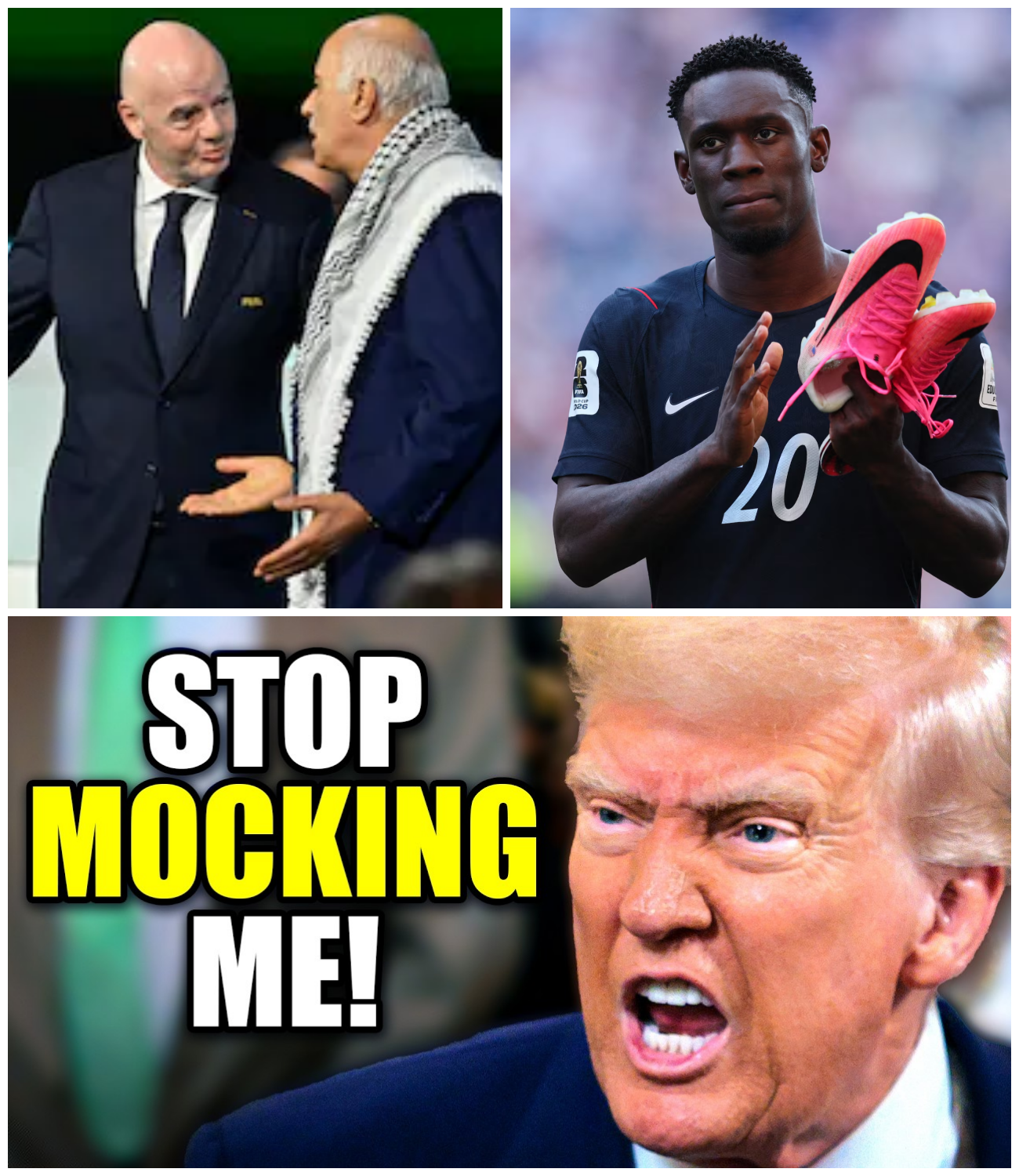
The worlds of global politics and international sports have always maintained a delicate, often fraught relationship. They occasionally brush against one another during grand spectacles like the Olympics or the World Cup, but usually, a strict boundary remains—a line drawn in the sand separating the rule of law in society from the established laws of the beautiful game. However, that line has not just been crossed; it has been completely obliterated in plain sight. In a stunning, unprecedented move that has sent shockwaves across the globe, former U.S. President Donald Trump has successfully flexed his political muscle to overturn a red card suspension for United States Men’s National Team (USMNT) star Folarin Balogun. By directly contacting FIFA President Gianni Infantino, Trump managed to achieve what expensive lawyers, team managers, and official appeals rarely can: a sudden, inexplicable reversal of a major disciplinary action.
The controversy began on the pitch, during a highly contested match where Folarin Balogun was handed a red card following a physical altercation with an opposing player. For soccer purists, referees, and rules analysts, the decision, while perhaps harsh to some observers, was well within the established protocols of the game. It was ruled a foul, followed by a standard suspension that would keep Balogun out of the upcoming, crucial Monday night clash. But Donald Trump saw things differently. Viewing the incident through the lens of a passionate sports fan—and an influential figure who historically refuses to accept defeat—Trump immediately mobilized his immense platform. He argued that the collision was merely the result of “two great athletes” getting entangled, firmly denying that it was an intentional strike, a punch to the face, or a malicious foul. In Trump’s eyes, sidelining one of the best players in the tournament over a contentious call would be a “terrible stain” on the championship.
But Trump did not stop at simply voicing his opinion as a casual observer on social media. Instead, he took extraordinary action that no one saw coming. Reports quickly surfaced from sources familiar with the situation that Trump made a direct phone call to FIFA boss Gianni Infantino. During this conversation, Trump explicitly asked Infantino to review the controversial red card. The implication was heavily felt: the United States, as a major player on the world stage and a massive financial driver for the sport’s global tournaments, had a lot riding on this World Cup, and taking out their star striker was unacceptable to the President. Shortly after this high-stakes political lobbying, FIFA released a baffling statement. They did not admit that the referee made a mistake. They did not officially overturn the foul itself. Instead, through what experts are calling a highly questionable constitutional loophole, FIFA simply opted to “suspend the suspension,” allowing Folarin Balogun to take the field as if nothing had ever happened.
Following the announcement, Donald Trump immediately took to his social media platform, Truth Social, to publicly claim victory. He openly thanked FIFA for “doing what is right and reversing a great injustice.” He later doubled down in public statements, arguing that fans tune in to see the very best players, comparing Balogun to legendary global icons like Lionel Messi, Cristiano Ronaldo, and Harry Kane. “If you take them out of a game because they bump into somebody a little bit harder, you can’t do that,” Trump insisted. For American fans desperate to see their top goalscorer on the field, the move might feel like a massive win for their national squad. But for the global soccer community, the decision has ignited a fiery storm of outrage, absolute disbelief, and outright condemnation.
The backlash from the sports media and football pundits was swift, brutal, and entirely justified. Commentators across major networks voiced their utter disgust, noting that if FIFA had any shred of credibility left, it evaporated the moment this decision was handed down. The primary argument echoing across the sports world is not necessarily whether the red card was too harsh, but rather the catastrophic precedent set by how the suspension was handled. Four days after a game, a rigid disciplinary decision was effectively vetoed by a politician. Pundits rightly pointed out the sheer lawlessness of the situation, accusing FIFA of running amok and treating the sacred global competition like a private enterprise where they can bend the rules at the whims of their most powerful friends.
Prominent figures in the soccer world have expressed deep sorrow over what they are calling the death of the sport’s integrity. While FIFA’s morality has been aggressively questioned for decades—ranging from bribery scandals to human rights abuses regarding migrant workers—fans and players have always clung to the belief that the 90 minutes on the pitch remained sacred. The integrity of the sport itself was the final bastion of hope for millions of supporters. Now, that trust has been completely shattered. “How are we in a place talking about ethics and integrity knowing full well that one politician can make a call or two and have a footballing decision reversed?” one prominent analyst asked during a heated broadcast. The consensus is clear: this is damaging far beyond whether Balogun is legally allowed to play or not. It exposes a deeply rooted system of favoritism where the rules simply do not apply equally to everyone.
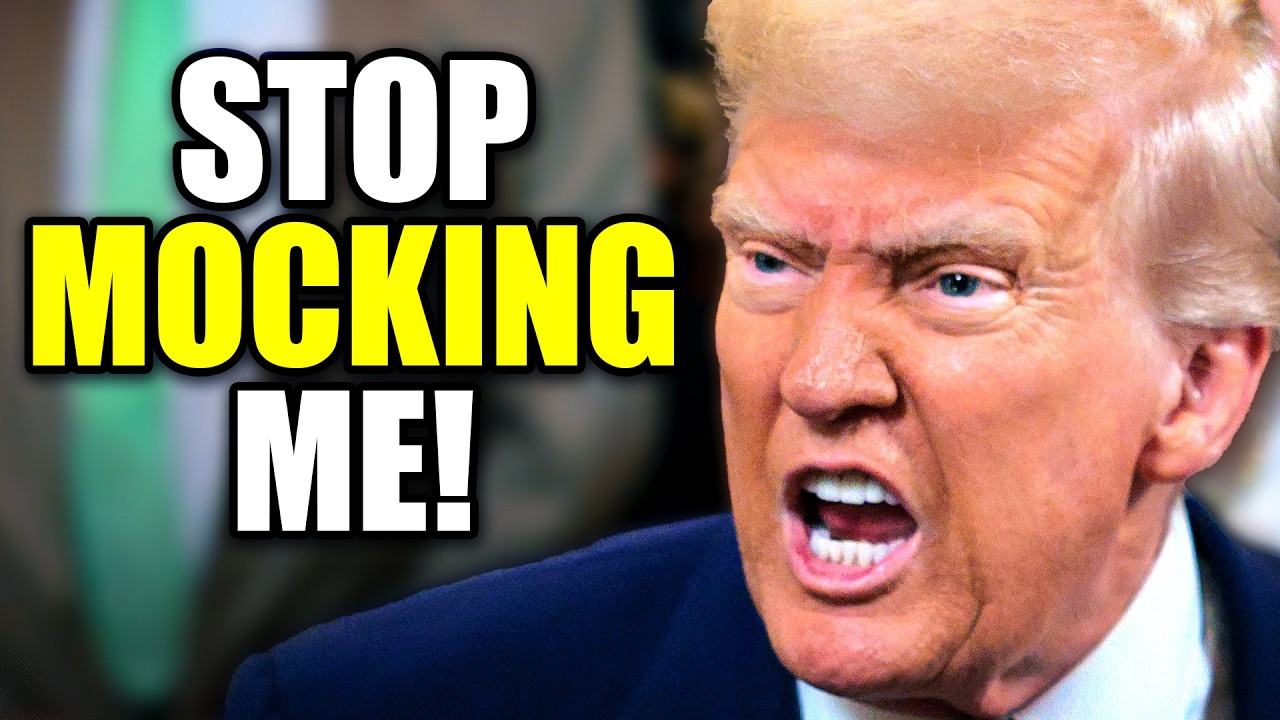
To fully understand how this egregious breach of protocol occurred, one must examine the increasingly cozy, intertwined relationship between Donald Trump and Gianni Infantino. This backroom deal was not a random occurrence; it is the culmination of years of mutual back-scratching and highly publicized political theater. The two men have become virtually tied at the hip, operating as “two peas in a pod” in a world of high-stakes influence and apparent corruption. Infantino has practically flaunted his VIP access to Trump, recognizing the immense power and visibility that comes with aligning himself with the American political titan. In return, Trump has enjoyed the lucrative perks of associating with the world’s most popular sport.
Their bizarre alliance has produced several highly questionable and deeply awkward moments over the years. Infantino famously presented Trump with a shiny FIFA Club World Cup trophy, allowing the politician to bask in the glory of an athletic achievement he had absolutely nothing to do with. When Trump failed to secure a Nobel Peace Prize, a bizarre alternative was arranged: the creation of a supposedly one-off “FIFA Peace Prize,” which was promptly awarded to Trump in a highly criticized ceremony. Infantino has even skipped important meetings with top soccer officials in South America just to accompany Trump on luxury trips to the Persian Gulf. More recently, Infantino has been spending significant time living in Miami, frequently attending political rallies, and showing highly public support for Trump during the lead-up to critical elections. Observers close to Infantino have even noted that the FIFA boss is beginning to sound and act remarkably like the former president.
This relationship is clearly not just about photo opportunities; it directly translates into special favors and tangible results. It has been pointed out that FIFA and Infantino have previously bent over backward for Cristiano Ronaldo—another massively influential figure whom Infantino heavily admires. But bending the rules for a legendary, once-in-a-generation player is one thing; bowing to the explicit demands of a political leader is another entirely. By succumbing to Trump’s pressure regarding the USMNT, Infantino has signaled to the world that FIFA’s rigid rulebook is essentially a menu of gentle suggestions that can be instantly altered if you have enough power, money, or political leverage on speed dial.
As we look toward the future of the game, the implications of this scandal are terrifying for the sport of soccer at large. What is to stop other world leaders from demanding similar treatment? If the President of France, the Prime Minister of the United Kingdom, or the leader of any other powerful nation fiercely disagrees with a referee’s call, can they too simply dial up Gianni Infantino and demand a reversal? The concept of a level playing field has been fundamentally destroyed. Soccer is a sport that prides itself on its universal appeal, a beautiful game where a small nation with limited resources can miraculously triumph over a superpower through skill, raw determination, and strict adherence to a shared set of rules. Trump’s intervention actively undermines this beautiful democratic principle, replacing it with an oligarchy where the most connected, loudest voices dictate the final outcome.
While American fans might loudly cheer as Folarin Balogun confidently steps onto the pitch for the next game, they must also grapple with the heavy, uncomfortable reality of how he got there. This is not a genuine victory for American soccer; it is a hollow triumph bought with cheap political currency and backdoor phone calls. The world is watching, and the world is laughing—not at the initial absurdity of the red card, but at the sheer, unadulterated brazenness of the corruption unfolding in real time. The ultimate “Trump Card” has been successfully played, and while it may have temporarily saved one player’s tournament hopes, it has left an indelible, ugly stain on the beautiful game. The question now is not whether FIFA can somehow recover its long-lost integrity, but whether it ever truly had any to begin with. The beautiful game has officially been compromised, and it will take far more than a presidential decree to fix the catastrophic damage that has been done today.