>> Before the whole world loved him, there was one woman who loved him when he had nothing. And he spent the rest of his life searching for that feeling again. Her name was Gladys Presley. And she was everything. There is a house in Tupelo, Mississippi that most people drive past without slowing down.
Two rooms, a tin roof, a porch that sagged in the middle, like it had grown tired of holding things up. It was the kind of house that made you feel both the tenderness and the cruelty of being poor in America in the 1940s. And it was inside that house, in the particular quiet of an early Mississippi morning, that Elvis Aaron Presley came into the world, arriving just minutes after his twin brother, Jesse, who arrived still and silent into Gladys Presley’s arms.
She never forgot Jesse. And she never let go of Elvis. From the very beginning, >> >> there was something between them that went beyond what mothers and sons usually share, something wound tighter, something that held on harder. Gladys walked Elvis to school every day, long after the other boys walked alone.
She sat in the front row of every church performance. She pressed her hand to his cheek when the world confused him. She was the one constant, the one voice that always said, “You are mine. >> >> And I am yours, and nothing out there is going to change that.” And Elvis believed her >> >> because she had never once given him reason not to.
But that is not the whole story. The truth is that Gladys Presley carried something of her own, a worry so deep that become a part of her breathing. She had watched too many people she loved disappear to poverty, to sickness, to hard luck and harder times. And when the music started pulling Elvis away, when the radio started saying his name, and the girls started screaming and the whole world leaned in toward her boy, Gladys Presley did not feel proud the way everyone expected.
>> >> She felt afraid. She watched Elvis leave for stages and studios and cities she’d never seen. She stood at the door of the house on Audubon Drive in Memphis, the house Elvis bought so she would never have to feel small again. And she watched his car disappear down the road, and something in her chest pulled in a direction she could not name.
Elvis felt it, too. He always felt it. No matter how loud the crowd was, no matter how bright the lights, no matter how many cities passed outside a tour bus window, there was a thread between him and his mother that never went slack. He called her from every city. He sent money before she could ask.
He came home the moment he could. And every time he walked back through her door, he was not Elvis Presley the sensation. He was just her boy, hers still. And that was the only place in the world where he could breathe completely. People talk about Elvis like fame was something he grabbed with both hands.
But the people who knew him best will tell you something different. They will tell you that Elvis Presley looked at fame the way a man looks at a storm he cannot outrun. He ran toward it, yes. His voice demanded it. His talent left him no choice. But somewhere underneath all of that electricity, underneath the smile that lit up every room he walked into, there was a boy from a two-room house in Tupelo who was not entirely sure the world out there was safe.
>> >> And the only person who had ever made him feel safe >> >> was Gladys. By 1958, Elvis Presley was the most famous man in America. His face was on every magazine. His records were breaking every chart. His name was spoken in kitchens and classrooms and drive-in theaters from coast to coast.
And then the United States Army sent him a notice he was being drafted. He was going to Germany, and he was going to leave his mother behind. The night before he shipped out, Elvis sat beside Gladys in the house of Graceland. She was not well. She had not been well for some time, though no one said it plainly.
They sat together in the kind of quiet that only comes between people who love each other so much they don’t need to fill the air with words. He held her hand. She held his. >> >> And whatever they said to each other that night, they said it in the language they had always used, not in sentences, but in the simple, unshakable fact of being in the same room.
He boarded the train the next morning. He tried not to look back, >> >> but he always looked back. The call came in August of 1958. Elvis was in Fort Hood, Texas, still waiting to ship to Germany when a message reached him that his mother had been taken to the hospital. He flew home on emergency leave.
He sat beside her bed. He held her hand. He talked to her in the gentle, low voice he used only when no one else was listening. Gladys Presley died on August 14th, 1958. She was 46 years old. Elvis was 23. The men who were there that day have described what happened in different ways. Some say he went quiet.
Some say he wept in a way that was almost unbearable to witness. Not composed grief, not the dignified sadness of a public figure, but the raw, breaking, helpless grief of a child who has just learned that the one person who made the world make sense is never coming back. He kept saying her name over and over like if he said it enough times she might answer. She didn’t.
And something in Elvis Presley shifted that August, shifted into a place it would never fully come back from the light that had always lived behind his eyes. That reckless, joyful, electric light was still there afterward. But it was different. It was working harder. It was performing.
And underneath it in the place only the people closest to him ever got to see it was a silence where Gladys used to be. He shipped to Germany 6 weeks after her funeral. He carried a photograph with him. He slept with it near his bed. He was 23 years old, alone in a foreign country, and the woman who had been the entire foundation of his emotional world was gone.
The army gave him a uniform and a schedule and a bunk and a rifle. What it could not give him was what he needed. What no one, not his father, not his friends, not the girls who sought him out in Friedberg and Bad Nauheim, what none of them could give him was Gladys. The years that followed were, by every external measure, extraordinary.
He came home from Germany in 1960 to a country that had not stopped waiting for him. He made films. He made records. He made people happy in the particular way only he could make them happy. With a voice that carried both hunger and tenderness in the same breath, both swagger and aching vulnerability, all at once.
>> >> He bought Graceland and filled it with people. He was rarely alone in the physical sense. But the people around him could feel it. The ones who loved him most could feel it. Elvis was looking for something. He was always looking for something. >> >> He was kind. He was generous, more generous than anyone had a right to be, giving away cars and jewelry and money with a kind of almost desperate openness, as though he could love his way back to something he had lost.
He was funny and warm and capable of making a room feel like the only room in the world. But late at night, when the guests had gone and the house had settled in and the Memphis air had turned cool and quiet, Elvis Presley would sit alone in the rooms of Graceland and feel the weight of an absence that no amount of fame or company could fill.
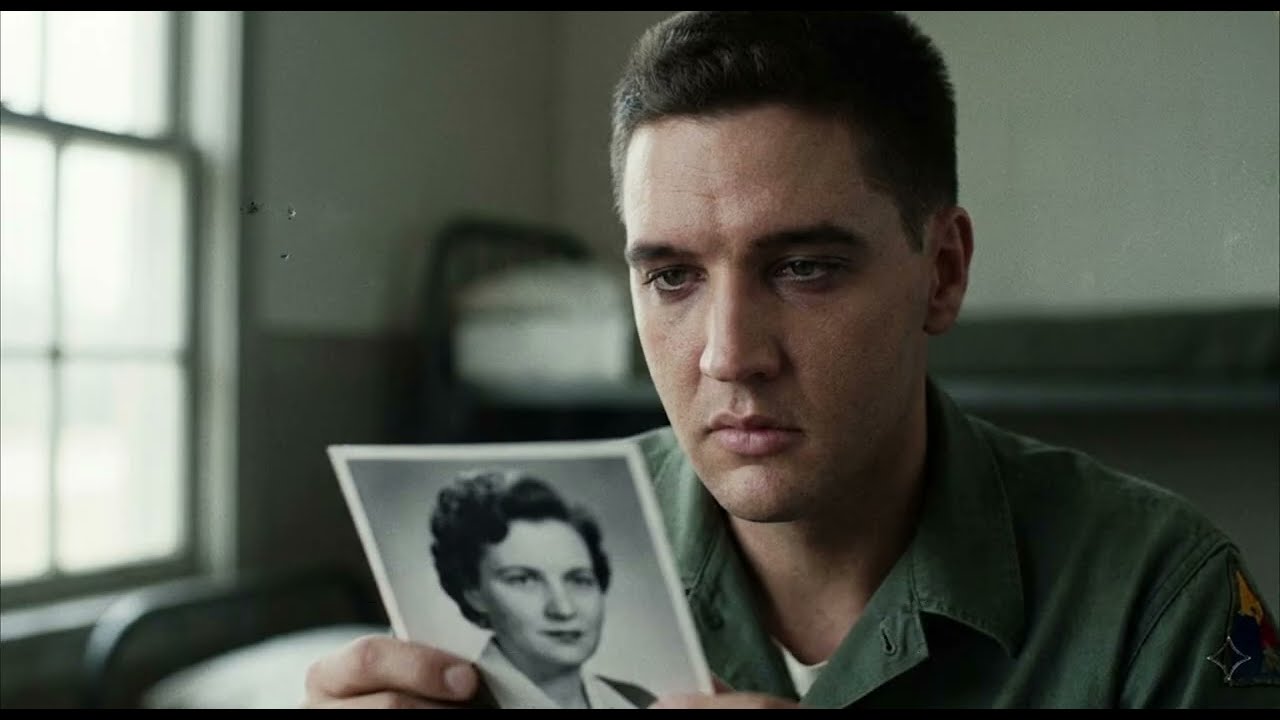
>> >> He could fill any arena on Earth, but he could never fill the silence his mother left behind. >> >> The story of excess. The Hollywood films he privately found hollow. The Las Vegas years, the rhinestone suits, the sold-out shows, the slow and terrible unraveling of his health. It is easy to look at the end of his story and see only the tragedy.
But that is not the whole story. The whole story is this. Elvis Presley was a man who loved deeply and was loved deeply, and who nonetheless spent most of his adult life searching for a kind of safety that had only ever existed in one place. In a two-room house in Tupelo, in a mother’s arms before the world learned his name.
In the specific warmth of Gladys Presley’s voice saying, “You are mine and I am yours and you are going to be all right.” He gave America everything it asked for, his youth, his body, his talent, his grief, his voice night after night, year after year in arenas and theaters and television studios and Las Vegas showrooms. He gave it all.
>> >> And America loved him for it. America needed him. America made him a king. But kings are lonely in ways that ordinary men are not. And Elvis was always, underneath everything, just a boy from Tupelo who missed his mother. Priscilla understood this. >> >> Even when she could not say it plainly, she had come to Graceland as a young woman full of love and patience, and she had watched Elvis look through her, not unkindly, not cruelly, but with the distracted gaze of a man who
is always searching the middle distance for something he cannot find. She stayed longer than most people could have. She loved him truly. But she could not be what he needed. No one could. Lisa Marie could reach him in the final years in the way only a child can reach a parent with a simple, total, unconditional love that asked for nothing back.
He would light up when she came into a room, truly light up. The way that reminded the people who loved him of the old light, the young light, the Tupelo light. And for a few hours at a time in the rooms of Graceland with his daughter in his arms, Elvis Presley was not haunted. He was just a father.
Just a man. Just loved. >> >> But Lisa Marie would go back to her mother. And the quiet would return. And the pills were there as they always were. Not because Elvis Presley was weak. He was not weak. But because the pain was real, and the silence was real, and some wounds do not close, no matter how many people tell you that you are wonderful.
On August 16th, 1977, Elvis Presley was found at Graceland. He was 42 years old. The world stopped millions of people. Women who had grown up with his voice as the soundtrack of their most tender memories. Women who had cried at his films and danced alone in their bedrooms to his records.
Those women wept in a way that surprised even themselves. They were not only mourning a star. They were mourning something they had felt through him. Something true and simple and heartbreaking. The feeling of being fully, completely, recklessly alive. The feeling of a voice that understood you before you had the words for what you were feeling.
He had given them that. He had given America that. And what America could not give him back was the one thing he had lost in August of 1958 in a Memphis hospital. >> >> The sound of his mother’s voice telling him that everything was going to be all right. If you listen closely to his music, not the big anthems, not the arena performances, but the quiet ones, the tender ones, the ones where his voice drops low and soft and the world goes still.
You will hear it. >> >> The searching, the ache, the boy underneath the king. He never stopped looking for her. He never stopped. And in some way that is impossible to explain, but very easy to feel, that is why his voice still reaches us. >> >> Because he was singing from the deepest place a human being can sing from.
From the place where we have all, at some point, stood alone in the quiet and wished for someone who was gone. If the story moved something in you, >> >> stay with us. Subscribe to Elvis Presley, The Untold Heart. There are more chapters to tell, more rooms to enter, more quiet mornings at Graceland, where the truth is waiting, patient, >> >> tender, real, just behind the name everyone thought they knew.