The Tragic End of Barbara Hutton: The Woolworth Heiress Who Died Alone With $3,500
Beverly Hills, California. May the 11th, 1979. A woman dies alone in a king-sized hotel bed, surrounded by half empty glasses of warm Coca-Cola and a scattering of paperbacks. She never finished. The morttery attendants who wheel her body out are never told her name. Her bank account, according to the biographer who reviewed her papers, holds $3,500, about $15,000 in today’s money.
46 years earlier, on her 21st birthday, that same woman had inherited a fortune. Adjusted for inflation, it was worth roughly $900 million. Some historians push the figure past 2 billion. Her name was Barbara Woolworth Hutton and the very first person she ever loved. She found dead on the floor of a locked bedroom when she was 4 years old.
Welcome. Thank you for being here. Before we go on, we’d like to ask you something small. Write in the comments one single word that you feel when you hear the name Barbara Hutton. just one word. It helps us understand what her story still means to people decades after the last flashbulb went out. This is not the story of a girl who wasted a fortune.
It is the story of a girl who was taught at 4 years old that love was something that could be taken away in a single afternoon and who spent the next 62 years, seven marriages, and the entire Woolworth inheritance testing whether anyone in this world would ever love her back. To understand why Barbara Hutton became who she became, you first have to understand her grandfather.
Frank Winfield Woolworth, born in 1852 on a hard farm in upstate New York. A shy, awkward boy who failed at his first job in retail, failed at his first store to a small shop in Utica that closed in a matter of weeks. And then in 1879 in Lancaster, Pennsylvania, he tried again. A five and dime fixed low prices direct from the manufacturer.
No clark between the customer and the merchandise. This time it worked. By 1900 he had 59 stores. By 1912, Goldman Sachs took Woolworth public after most other underwriters had turned him down, calling it undignified to be associated with a chain of discount stores. By the time he died in 1919, Frank Woolworth was worth roughly $76 million, about one out of every $1,200 of the entire American economy.
He also died without a will. His fortune passed to his daughters. And one of those daughters was Edna. Ednner Woolworth Hutton. Beautiful, quiet, restless. Married to a Wall Street broker named Franklin Hutton, who spent most of his marriage chasing other women. On November the 14th, 1912, Ednner gave birth to a daughter in a townhouse on the Upper East Side of Manhattan.
They named her Barbara. 4 and a half years later, in May of 1917, that little girl went looking for her mother. She found her on the floor of her locked bedroom. Edna was 33 years old. She was dead. The official cause was suffocation from complications of a chronic ear infection called mastoiditis. The persistent rumor then and now is that Edna took her own life with poison driven.
Some believed by her husband’s affairs. No autopsy was performed. The biographer C. David Haymon later wrote that city officials were paid off to keep the file closed. No one really knows. Barbara knew though because Barbara had been the one to find her. And Barbara, who was four, would remember the shape of that locked room and that stillness and that carpet for the rest of her life.
Her father, Franklin, showed almost no interest in raising her afterwards. She was shuttled between relatives. Eventually, she was sent to the Woolworth family estate on Long Island called Winfield Hall, a marble palace with 56 rooms. Inside that palace waited a broken family. Her grandfather, by then also gone, had been replaced by relatives suffering from what today we might call latestage paranoid delusion.
Her grandmother, according to Haymon’s biography, sat mute in a white wicker chair, rocking under permanent medical supervision. Barbara herself would later describe those years in one sentence as heartbreaking and dreadful. And then one afternoon at Winfield Hall in a story repeated by nearly every biographer, a family butler leaned toward the small girl and told her something.
He told her that she was too fat and too plain for any man to ever want to marry her for anything besides her money. Barbara was at that time somewhere between 9 and 11 years old. She would carry that sentence unchanged into every romance and every marriage of her adult life. 1924. She is 12 years old. On her 12th birthday, roughly $28 million is transferred from her grandmother’s estate into a trust in her name.
In today’s money, more than $500 million. For a girl who had grown up in silent rooms, it changed nothing at all and everything. 6 years later, she was ready to be introduced to society. The Ritz Carlton Ballroom in Manhattan, December of 1930. Four orchestras, silver birches trucked in from the Aderondax. Reportedly, a young Rudy valet sang for the guests.
The party cost $60,000 over a million today. Outside, in the streets of the same city, unemployed men were selling apples for 5 cents each. The Great Depression was one year old. The press coined a nickname that would stick to her like tar. Poor little rich girl. It was meant at first as an insult.
It became in time the truest thing anyone ever said about her. On her 21st birthday in 1933, the rest of the trust unlocked. Roughly $50 million in cash and stock. In today’s money, most historians place her fortune around 900 million. Some go past 2 billion. She was, without any exaggeration, one of the richest young women in the world.
Within months, she was married. The husband was a self-styled Georgian immigrate called Prince Alexis Mivani, one of the so-called marrying Medivvenist brothers and sisters who had made a small career out of marrying rich western women. According to a widely reported anecdote, one that biographers treat as story rather than court record, his own sister helped set up a compromising encounter, one in which staff conveniently walked in on Barbara and Alexis together so that a public scandal could be avoided only by marriage.
On their wedding night, according to Haymon and others, Alexis looked at his 5’4, 148-lb bride and told her she was too fat. Biographers link that single sentence to the lifelong eating disorder that would eventually leave her weighing less than £100. Alexis went through her milliondoll dowy, then millions more in ponies and jewelry and villas, and then he was gone.
Divorced by 1935. Then came a Danish count, Curt Hogwitz Revent. That marriage produced her only child, a son named Lance, born in 1936. It also produced police reports, verbal and physical abuse severe enough that Barbara was hospitalized on at least one occasion. Revent convinced her to sign what he called an oath of renunciation, effectively giving up her American citizenship, ostensibly to protect her fortune from US inheritance tax.
When they divorced, he fought her for years over custody of Lance. And then in 1942, she married a movie star, Carrie Grant. The press had a new nickname ready inside of a week. Cash and Carrie. The joke was cruel and this time also inaccurate. Carrie Grant, by every credible account, did not ask her for money and did not receive any in their 1945 divorce.
The marriage still failed. Barbara herself explained why years later, in a line that reads almost like a self diagnosis. If one more phony earl had entered the house, I would have suffocated. There would be four more husbands. A Russian prince named Igor Troubetskcoy in 1947 divorced within 4 years. Then in 1953, the marriage that broke even her own family’s patience.
His name was Pfiio Rubarosa, a Dominican playboy diplomat previously married to the daughter of a dictator to a French film star and worth noting to another American ays named Doris Duke. Two of the wealthiest single women in the world, both married in turn to the same man. When Barbara’s uncle, the stock broker EF Hutton, heard the news, he telephoned her directly.
Have you gone out of your mind, Barbara? Do you know what this man is? And do you realize what that makes you? She married Rubar Roa. Anyway, a gossip columnist writing about the ceremony the next morning put the whole marriage into a single sentence that has outlived them both. The bride for her fifth wedding wore black and carried a scotch and soda.
The marriage lasted 53 days. During most of them, according to later reporting, Rubarosa was already seeing the actress Ja Jagabore. Then a German tennis player. Baron got freed von in 1955. Four years then divorce. Then in 1964, the strangest of them all, a Vietnamese French chemist named Raymond Don. For that final marriage, Barbara, according to multiple biographies, purchased a royal title for her husband through a le oceanian broker so that he could be presented in the press as Prince Raymon Don.
He was not a prince. She bought him a crown so she could keep believing in fairy tales. That one lasted about 2 years before separation. Seven weddings, seven divorces or de facto endings. Not one of them lasted a full decade. Behind the marriages, something worse was happening inside her body. By the mid 1950s, biographers and close friends describe a daily regimen that reads like a hospital chart.
Codine, morphine, Valium, as many as 20 vodka spiked Coca-Cas a day, according to Haymon, amphetamine injections in the morning, so-called mega vitamin shots in the afternoon. Her anorexia deepened. At times, her weight, according to those who saw her, dropped below 100 lb. She also gave money, jewelry, cars, houses, not to charity, though she did that too, but to strangers, hangers on, hotel staff, people who had smiled at her once.
She had been told at 9 years old that no one could love her for anything but her money. So she kept trying to buy the answer. And while she was giving her fortune away by the fistful, her longtime lawyer, a man named Graeham Matson, was, according to multiple biographers, managing what remained in a way that most sources describe at best as grossly negligent.
No one has ever produced a full accounting. By the mid 1970s, most of her fortune was gone, and she still had one more loss to face. July of 1972, Barbara is 59 years old. Her son, Lance Ravenlo, by then a race car driver in his mid30s, boards a small plane over the mountains of Colorado. The plane crashes. Lance is 36.
His body, according to contemporary reporting, was identifiable only by the initials on the collar of his shirt. Barbara refused to attend the funeral. For years afterward, she spoke of him in the present tense as if he had walked out to buy cigarettes and forgotten to come back. She told visitors quietly that she blamed herself, that if she had been a better mother, he would still be alive.
No one who visited her in those years contradicted her, perhaps because no one knew how. By the mid70s, she was selling jewelry to pay her bills. She had already given her London mansion, Winfield House, to the United States government, where it still serves to this day as the residence of the American ambassador to the United Kingdom. It was a generous gift.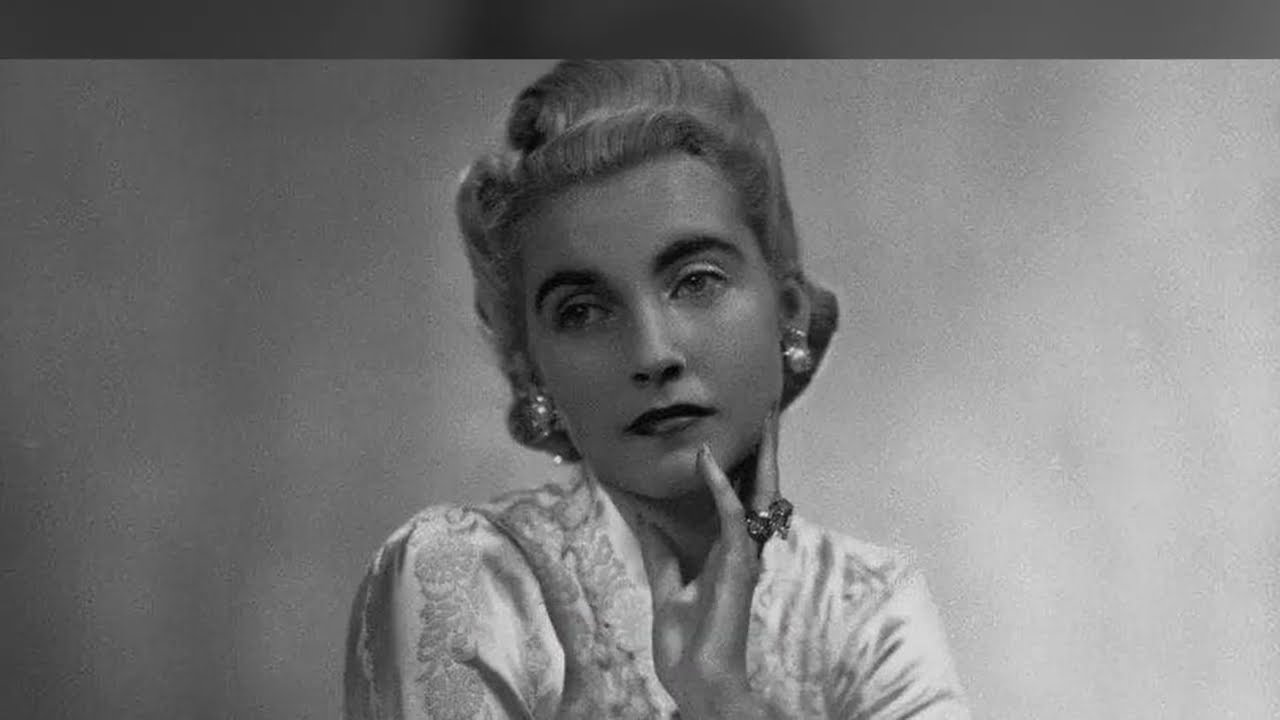
It was also, in retrospect, one of many she could not afford. She moved into a suite at the Beverly Wilshire Hotel in Beverly Hills and she stopped getting out of bed. Not because she couldn’t, because she wouldn’t. Her cousin, Dena Merrill’s husband, the actor Cliff Robertson, was one of a small group of visitors who saw her in those final years.
He described a suite where the curtains stayed closed, where nurses moved silently, where a king-sized bed had become the entire visible world. She read paperbacks. She drank Coca-Cola. She spoke of the past as if the present had already ended. On May the 11th, 1979, a heart attack finished a job that decades of pills and vodka and starvation had almost finished on their own. She was 66 years old.
According to biographer C. David Haymon, whose figures some people close to her later disputed as slightly exaggerated, there was $3,500 in her bank account at the time of her death. Even skeptics agree the number was small. Even skeptics agree the collapse from something like 900 million in today’s dollars down to a hotel bill and a heart attack is not really in question.
Her funeral was small, between 10 and 16 mourners depending on the source. There were no press photographers at the graveside. The morttery workers who had prepared her body, according to reporting at the time, were not told they were preparing the most photographed woman of her generation. She was quietly interred in the Woolworth family mosalem at Woodlorn Cemetery in the Bronx, a short train ride, in the end from the townhouse where she had been born.
Somewhere in her 50s, Barbara Hutton said a sentence that reads in retrospect like her own epitap. I have never seen she said a Brinks truck follow a hearse to the cemetery. And on another occasion quieter to a friend, I inherited everything but love. She was born into a family that had turned pocket change into an empire.
She was told before she was 10 that no one would ever want her for herself. She spent 46 years testing whether that was true. And she died alone in a rented room with the shape of a locked bedroom from 1917 still waiting for her somewhere behind her eyes. >> [music]