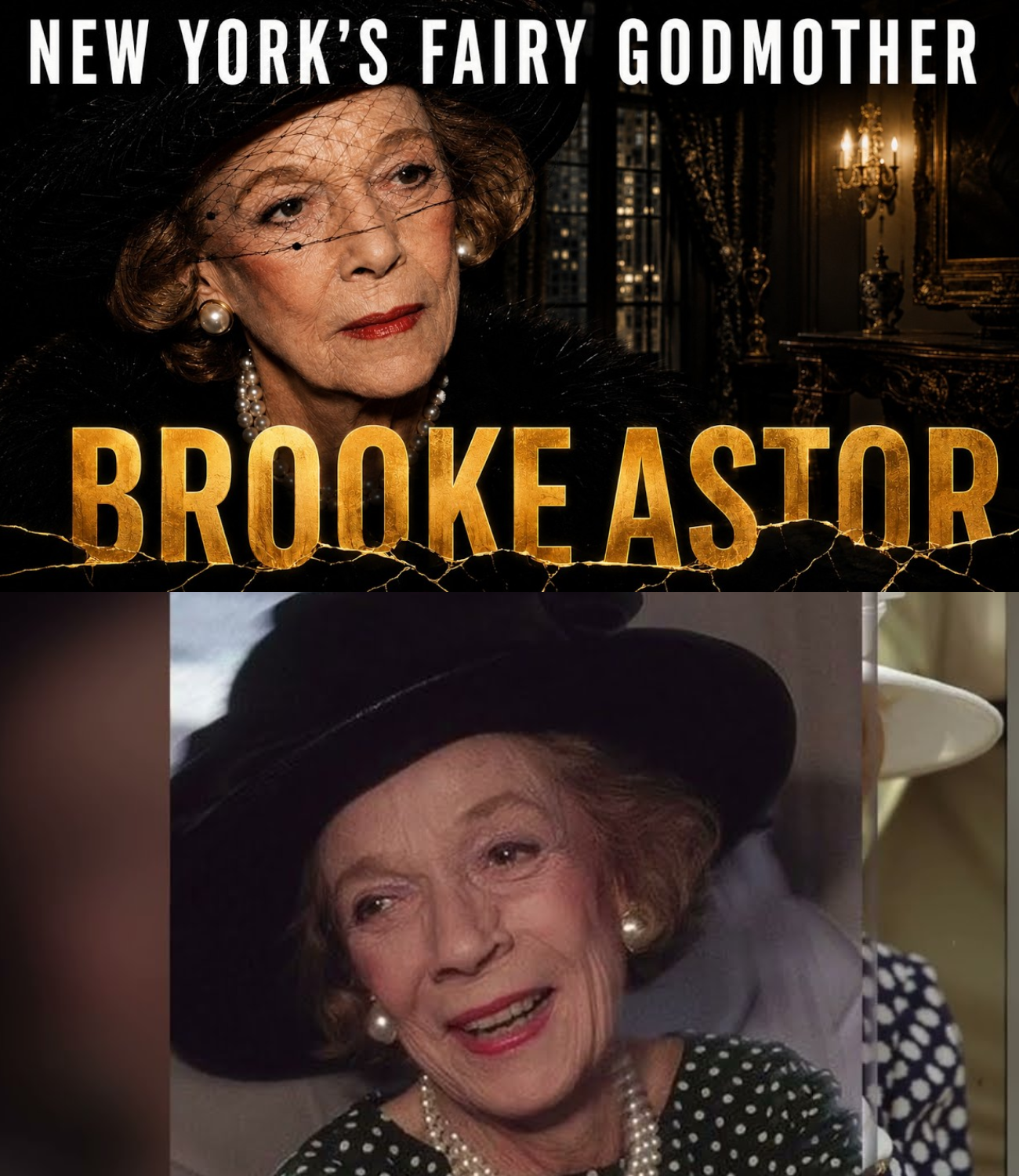
The Tragic Story of Brooke Astor: How New York’s Fairy Godmother Was Robbed by Her Own Son
They had everything. A fortune older than the country itself. A duplex on Park Avenue. A mansion called Holly Hill perched on a hill above the Hudson. $200 million given away to the libraries and parks of New York City. Friends named Rockefeller. Kissinger Anan. And then in a windowless office on Park Avenue, an estate lawyer practiced her signature.
The woman who had once jumped out of her wheelchair to outshine the wife of the president of China was now being fed pureed carrots from a paper cup. Her bedroom was too cold. Her dogs were in the next room. Her butler was paying for her slippers out of his own pocket. She did not know who was running her affairs.
She did not know that the man running her affairs was her only son. This is the story of Brooke Aster and the family that waited for her mind to disappear. This is not a story about wealth. It is a story about what happens when the people closest to you. Start counting the days until your mind goes. She was born Roberta Brookke Russell on March 30 92 in Portsmouth, New Hampshire.
a Marine Corps daughter, sharp eyed, sharp tonged, raised on bases that moved her every few years before she could put down roots. In 1919, she was 17. She married a man named John Dryden Cuser. The marriage lasted 11 years. The bruises lasted longer. She did not talk about him publicly. She would decades later write around him in her memoir.
The way people write around things they cannot say out loud. He drank. He raised his hand. He had money and a family name in New Jersey. And in 1919 that was enough. In 1924, she had a son, Anthony, the only child she would ever have. By the time she was old enough to know how to be a mother, he was old enough to be sent to boarding school.
By 1930, the marriage was over. Two years later, she married Charles Marshall. buddy. Everyone called him a stock broker. Funny, kind. He gave Antony his last name. He was, by every account that survived her, the only one of her three husbands she actually loved. In 1952, he sat down to dinner. He had a heart attack.
He never got up. She buried him in the spring. 11 months later, 11 months, she married Vincent Aster. He was the richest of the three. He was also the coldest. He was the heir of the Aster fortune, a fortune built by a butcher’s son named John Jacob, who arrived in New York in 1784 with seven flutes and ended up the richest man in America.
By the time Vincent inherited it, the family money had passed through the Titanic, through three generations of Manhattan landlords, through a cascade of marriages and accidents. Their marriage lasted six years. When Vincent died in 1959, he left Brooke $60 million in personal money and another60 million sitting inside a foundation.
He told her near the end that she would have fund spending it. She would spend the next 40 years giving it away. Her son would spend the next 40 years watching. You have to understand what the Vincent Aster Foundation actually was in the 1960s. It was a private fortune the size of a small government and it sat in the hands of a 57year-old widow who had just been handed the keys to it.
What she did with it, by any honest accounting, is one of the largest acts of civic generosity in the history of New York City. She gave to the libraries. She gave to the zoos. She gave to the parks. She gave to Harlem, which she walked through personally in jewelry, in a hat. because she said if she didn’t dress up the people would feel she was talking down to them.
She gave to the Metropolitan Museum and the Bronx high schools in the same week. She gave nearly $200 million over four decades. She used to quote Thornton Wilder. Money is like manure. She would say it should be spread around and she meant it. There is a story Henry Kissinger told from the witness stand years later that captures who she actually was.
At her 80th birthday party, he raised a glass and made the mistake of mentioning her age. She shot up from her chair mid-sentence and denied that she was 80. He had to send flowers the next day. He had to write a letter explaining that the Chinese counted years differently. Only then was he forgiven. She had friends, real friends.
David Rockefeller, Annette Darrena, Barbara Walters, Louie Oringclass. They dined at the Nicerocka Club at 21 in the gardens of Holly Hill. They knew her at 90 the day she was at the Met and a wheelchair was wheeled toward her because the wife of the Chinese leader Sunungme was passing by and Brooke pushed the wheelchair away and stood up.
90 years old. She would not be outranked. The thing nobody outside her circle knew was that the fortune she was spreading around had a darker source. John Jacob Aster one her late husband’s great greatgrandfather had made his money in beaver pelts and tenementss the slums on the lower east side the kind of buildings that flooded and burned and killed children.
He had refused to take responsibility for any of it. Vincent Aster in his lifetime had sold those tenementss back to the city of New York at below market prices to clean the name. Brookke spent the rest of her life spreading the rest of the money around because somewhere underneath she knew where it had come from.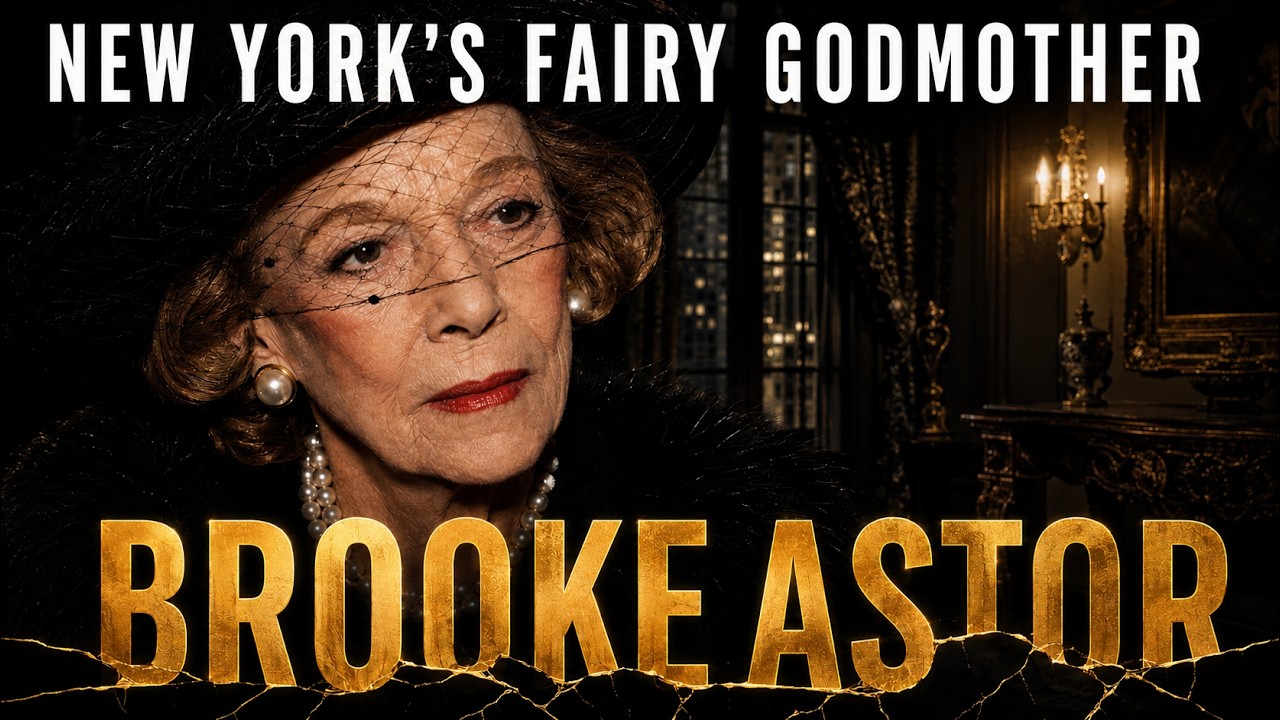
At 90 she could still spring out of a wheelchair. By 92, she was forgetting the name of a man who had pruned her roses for 37 years. It started in the early 1990s. Small things. A name forgotten at a dinner party. A secondhand greeting at a charity gala. The kind of small slip you make excuses for the first time, the second time, and then you stop counting.
In 1992, her son did something she could not forgive. Anthony was 68 years old. He had been married. So had the woman he met that summer in Northeast Harbor, Maine, a small village where the Aster family had a summer estate. Her name was Charlene Gilbert. She was the wife of the local Episcopal minister. She was 21 years younger than Anthony.
She left her husband. Anthony left his wife and by the end of the summer, the scandal had emptied the pews of a small church in Maine and made its way to Park Avenue. Brooke called Charlene an opportunist. She used the word Lady McBth privately more than once. She did not invite her to dinner. She did not, in the words of one friend, ever pretend to like her.
Then came February of 1,997. Henry and Nancy Kissinger had thrown a dinner. Brooke had attended, perfectly dressed. Afterward, she stood on the sidewalk outside the apartment building. She did not know where she lived. She did not know where she was. A Dorman recognized her and called for help. The diagnosis came not long after.
Alzheimer’s confirmed, stamped. Anthony was told. So was her lawyer. So was her housekeeper, her secretary, the dorman at her building. The people she had called her friends for 40 years were not told. In 2002, her hands began to shake when she tried to write thank you notes. She cried one afternoon because she could not remember the name of the gardener at the main house.
37 years he had worked for her. She could see his face. She could not find the word for it. That January, January of 2002, she hosted a dinner. The guest of honor sat to her right. She had personally invited him. Halfway through the meal, she turned to Kissinger on her left and asked quietly, “Who is the black fellow sitting next to me?” The man on her right was Kofia Nern, the Secretary General of the United Nations, the guest of honor she had invited.
Kissinger told that story six years later from a witness stand. While she was forgetting his name, three men were writing her will. This is the part that when her grandson read it back to himself, made him pick up the phone and call a lawyer. Brooke Aster was no longer sleeping in her own bedroom. Her bedroom on the upper floor of the Park Avenue duplex was kept cold for reasons that were never quite explained at trial.
Instead, she was being put to sleep on a couch in the television room. The couch, according to multiple sworn statements, smelled of dog urine. Her two ducks, Boisey and Girlsy, animals she had loved for years, were kept in another room. They were not allowed near her. Her dinners had become for months at a stretch oatmeal and pureed peas, mashed carrots, mashed liver, baby food prepared in the kitchen of a duplex that had 20 years earlier hosted the wife of a French ambassador.
Her medications had been cut. Procrit for anemia was no longer being filled. Her butler, Chris Elely, was paying for her slippers with his own money. He bought her an electric blanket. He bought her hand cream. He kept receipts in a drawer in his apartment because something in him had begun to understand that one day someone would ask.
Annette Delarenta came to visit. She found Brooke alone on the dirty sofa wearing a wig and gloves. Makeup carefully applied to hide a small skin cancer on her face. When Annette mentioned that Holly Hill, the country estate Brooke had loved for 60 years, had been closed. Brooke began to cry. She said quietly over and over again, “It’s not right. It’s not right.
While this was happening on Park Avenue in offices across Midtown, Anthony Marshall and a man named Francis Moresy were rewriting her will. The first Kodasil was drafted in 2003. The second in 2004. Both of them were signed at a time when according to court records, Brooke Aster lacked the legal capacity to understand what she was signing.
The third codicil was a forgery. Francis Moresy forged her signature in his own hand. The will, as rewritten, moved tens of millions of dollars away from the libraries and parks and zoos she had spent her life feeding and into the personal accounts of Anthony Marshall and Charlene. He took her main mansion, Cove End, valued at $5.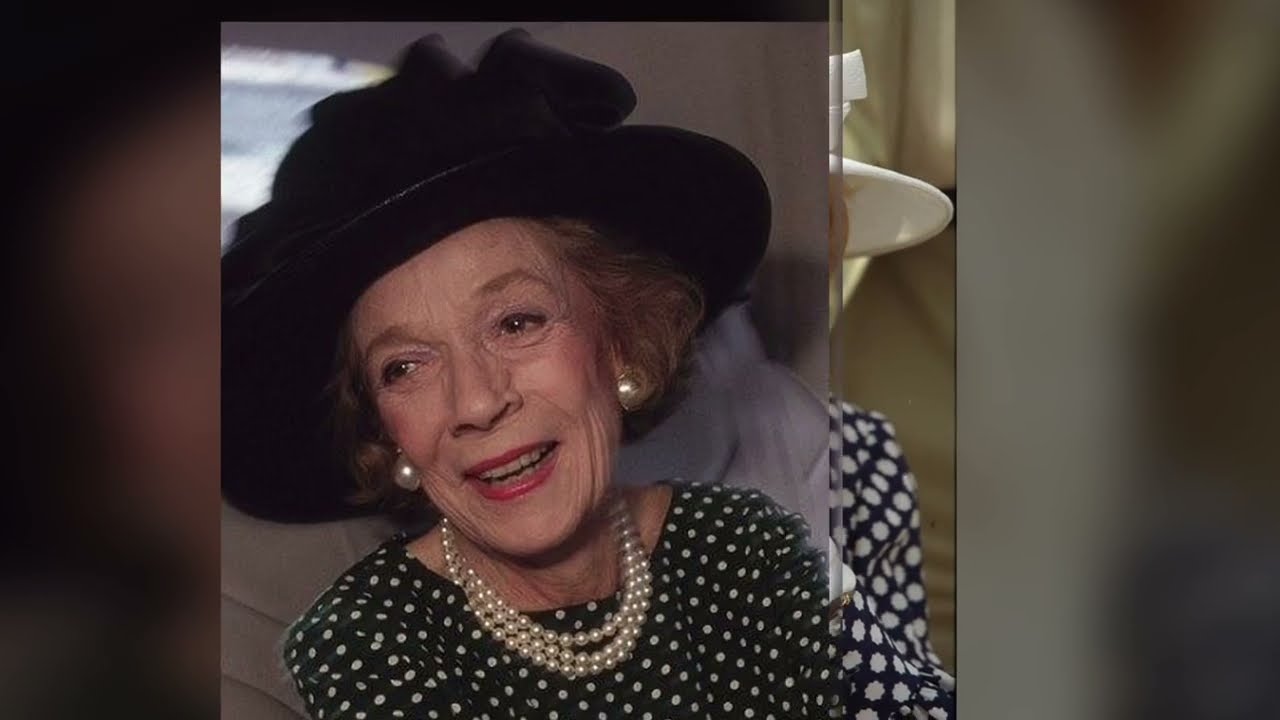
5 million, and transferred it to Charlene 6 months after she gave it to him. He moved roughly $900,000 of her money into his own Broadway production company. He won two Tony Awards in 2003 and 2004. He thanked his wife from the stage. By the spring of 2006, the news reached Philip Marshall. Brook’s grandson, Antony’s son, a professor of historic preservation at Roger Williams University in Rhode Island.
On July 24, 2006, Philip walked into a New York court and filed a petition against his own father. The petition asked one question. Why is my grandmother, who is accustomed to hosting world leaders and dining at the 21 club and the Nickera Club, being forced to eat oatmeal and pureed vegetables everyday for months on end.
The court stripped Anony’s guardianship in October. Annette Dearenta took her place. Brooke Aster died of pneumonia on August 13, 2007 at Holly Hill at the age of 105. The words she had asked to be engraved on her stone read, “I had a wonderful life.” Two years later came the trial. The press called it the battle of the blue bloods.
Five months. Barbara Walters wept on the stand. Kissinger told the Kofian story to a quiet courtroom. Philippe De Monttoello, the former director of the Metropolitan Museum testified. Louisie Oranc testified. Philip Marshall testified. His twin brother, Alec Marshall, testified. Two sons walked into a courthouse to testify against their father.
On October 8th, 2009, a jury convicted Anthony Marshall on 14 felony counts, including firstderee grand lasseny. Francis Morrisy was convicted on six counts, including forgery. Whoopy Goldberg wrote the judge asking for leniency. Al Roka did, too. The judge gave the minimum 1 to 3 years. Anthony Marshall served about 2 months at Fishkill Correctional Facility before he was released on medical grounds.
He was 85 years old. In 2012, a court reduced Charlene’s inheritance from $31.5 million to 14.5. $17 million went back to the New York charities Brooke had spent 50 years building. Anthony Marshall died in 2014. Airmail wrote in a single sentence that he died a thoroughly broken man. The National Center on Elder Abuse estimates that as many as 2 million Americans over the age of 65 are victims of abuse or neglect every year.
60% of the time the abuser is a member of the family. The money found its way home. The libraries got it. The schools got it. The parks she walked through in jewelry got it. And on a quiet hillside at Sleepy Hollow Cemetery, six words. I had a wonderful life.