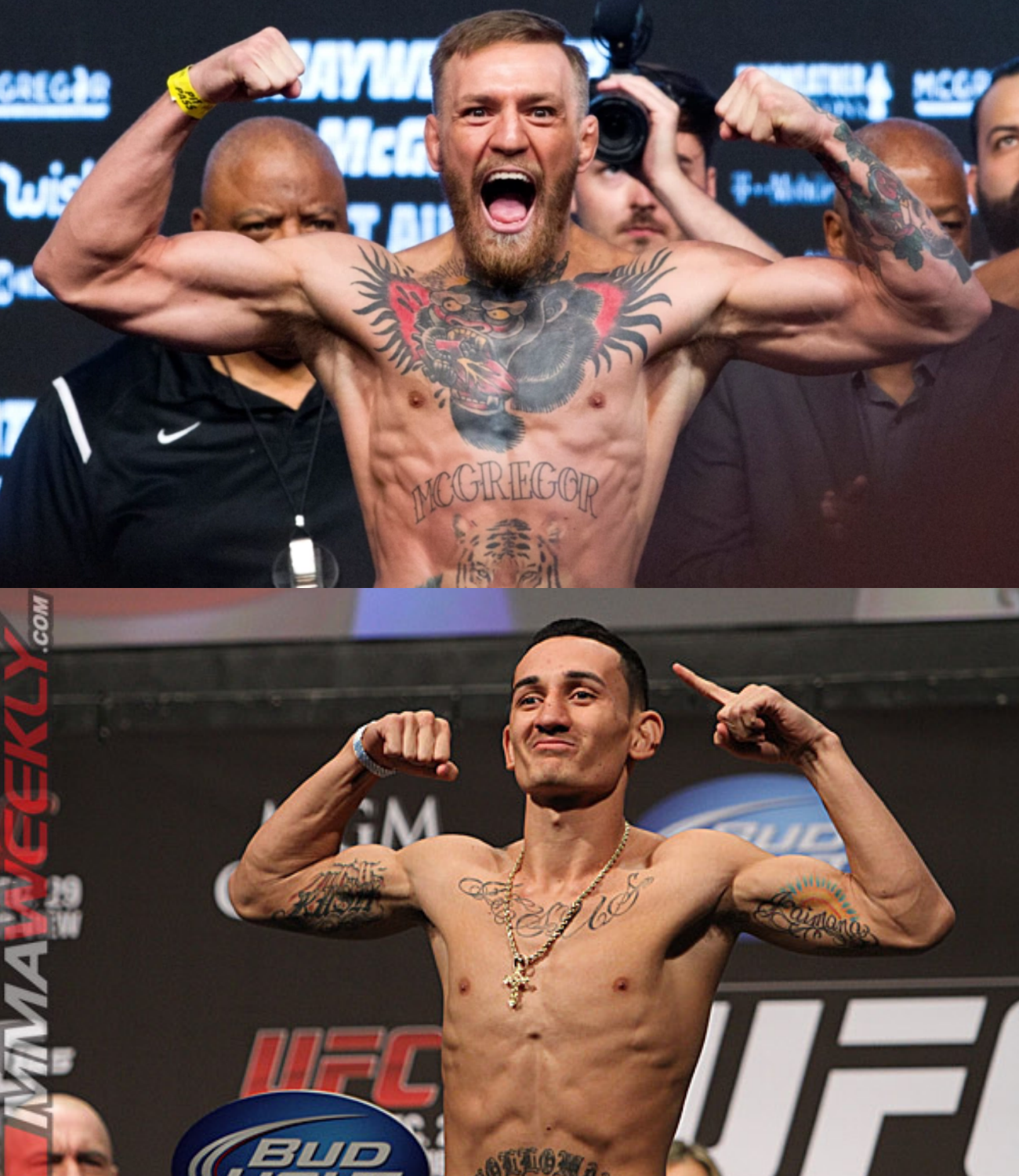
The mixed martial arts world is no stranger to hyperbole, but when a single promotional clip from a UFC Countdown episode can cause an entire global fanbase to collectively hold its breath, you know you are dealing with an event of seismic proportions. With UFC 329 rapidly approaching on July 11th, the combat sports ecosystem has been thrown into an absolute frenzy over the highly anticipated, deeply polarizing return of Conor “The Notorious” McGregor. Standing across from him in this welterweight blockbuster is an old rival with an elite pedigree: the incredibly durable, high-volume striking savant, Max “Blessed” Holloway. It is a rematch over a decade in the making, dating back to their early featherweight encounter in 2013, but the stakes, the physics, and the psychological frameworks of both men have completely transformed.
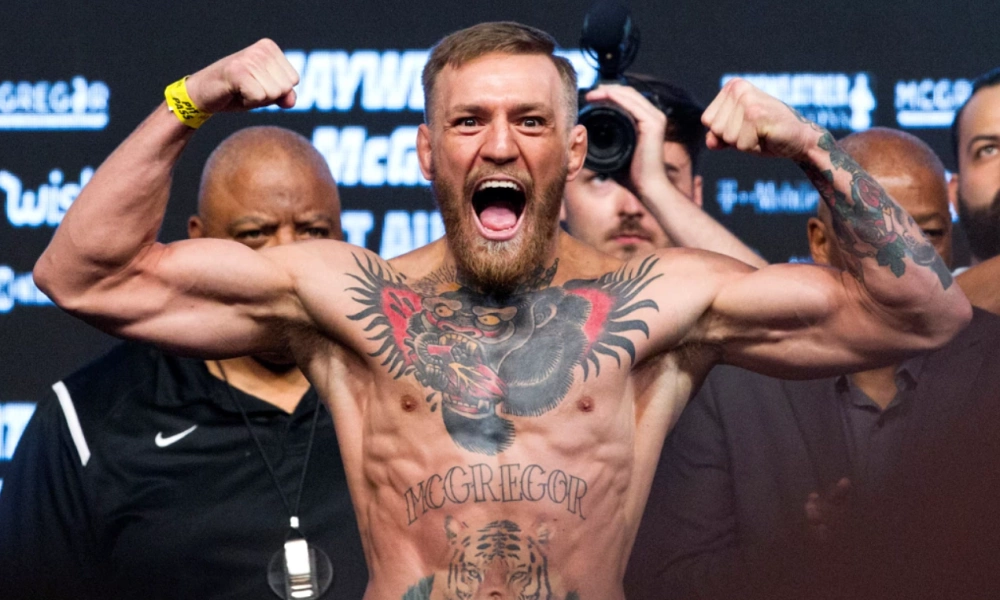
The initial spark that ignited the recent online panic stems directly from glimpses of McGregor’s training footage back home in Dublin, Ireland. Fans and pundits alike have been dissecting every frame of the multi-millionaire superstar as he prepares under the watchful eye of his longtime head coach, John Kavanagh. In the footage, McGregor projects his signature unshakeable bravado, looking into the camera to declare that he is stepping into the cage at absolute full capacity. He dismissed any ideas of limitations, stating emphatically that he is entering this contest as “100% Conor McGregor.”
Despite the confidence radiating from “The Notorious,” the visual evidence has left the MMA community deeply divided. For a large portion of the fanbase, there is an underlying sense of dread and anxiety. McGregor has not competed in a professional mixed martial arts bout in a staggering five years. Half a decade away from the absolute highest echelon of combat sports is an eternity. Ring rust is a very real, documented psychological and physical phenomenon, and trying to shake it off against someone as structurally unrelenting as Holloway is a monumental task.
Furthermore, McGregor’s physical evolution has added another layer of profound uncertainty. He is openly campaigning at 170 pounds, proudly asserting that this heavier welterweight frame represents his natural build these days. McGregor took a direct swipe at his lightweight contemporaries, mocking the grueling weight cuts of fighters like Charles Oliveira and Justin Gaethje, joking that there is nothing truly “Bad Motherf***er” about starving oneself in a sauna just to make a lower division limit. While a heavier, thicker McGregor undoubtedly carries devastating, fight-ending power, it raises massive questions regarding his cardiovascular endurance, foot speed, and overall mobility over a potential five-round distance.
Prominent figures within the sport have wasted no time offering their deeply analytical and often conflicting predictions. Current UFC star Sean O’Malley has expressed genuine awe and excitement regarding the sheer spectacle of the return, admitting that he harbored doubts about whether McGregor would ever actually fight again given his immense wealth. O’Malley is leaning heavily toward a spectacular knockout victory for the Irishman, arguing that while Holloway has absorbed a legendary amount of damage throughout his storied career, McGregor’s long layoff means his body has faced a entirely different set of wear and tear. According to O’Malley, a knockout or a dominant decision victory over someone as notoriously difficult to finish as Holloway would immediately catapult McGregor right back to the top of the sport’s global hierarchy.
Conversely, elite welterweight contender Belal Muhammad views the matchup through a much more tactical, high-risk lens. Muhammad believes that McGregor’s entire win condition rests entirely on a high-stakes, all-in gamble during the opening five minutes. In Muhammad’s estimation, McGregor knows his gas tank is an uncertainty, meaning he must press forward immediately, trap Holloway against the fence, and hunt for a clean connection with his devastating left hand. The myth of Holloway’s unbreakable chin was recently shattered by Ilia Topuria, proving to the world that “Blessed” can indeed be stopped if caught cleanly. Muhammad notes that due to McGregor’s previous leg injuries, the Irishman will likely abandon his classic array of spinning and side kicks, relying almost exclusively on a heavily bladed, boxing-centric approach.
This structural boxing stance, however, could prove to be McGregor’s ultimate undoing if Holloway plays his cards right. Pundits like the Barnhill brothers have highlighted how Dustin Poirier previously exploited McGregor’s heavily forward-weighted, bladed stance by methodically chopping away at his lead leg with calf kicks, leaving the former double-champion with what they described as unstable “Bambi legs.” If Holloway utilizes similar low kicks to disrupt McGregor’s rhythm and movement, the dynamic of the fight changes instantly. Additionally, Holloway’s lateral footwork, unmatched striking volume, and ability to weave subtle takedowns into his transitions could easily drag an exhausted McGregor into deep, suffocating waters in the later rounds.
Beyond the immediate mechanics of gloves hitting faces, the narrative arcs of both fighters heading into UFC 329 are nothing short of theatrical. Longtime coach John Kavanagh reminds the public of McGregor’s underlying, stubborn competitive pride. Kavanagh recalled early career bouts, such as McGregor’s clash with Dave Hill, where critics claimed Conor would be outmatched on the mat. Instead of playing it safe on the feet, a proud McGregor deliberately chose to grapple just to prove a point, eventually securing a submission. That innate, stubborn refusal to back down is what made McGregor a global icon, but at 37 years old, playing a high-risk game of pride against an elite modern contender is a dangerous roll of the dice.
Interestingly, those close to McGregor’s camp view his personal evolution as his greatest asset. Striking coach Tim Welch noted that over the last five years, McGregor has had to battle the internal demons that naturally come with absolute, unrestricted wealth and global fame. Welch pointed out that McGregor’s recent public embrace of his faith and his proclamations of having “found the Lord” are incredibly positive indicators. For a man who already has all the money, accolades, and power one could ever dream of, finding a deeper spiritual grounding might be the exact anchor he needs to rediscover the hyper-focused discipline required to win a world-class dogfight.
For Max Holloway, this fight represents a critical escape from a frustrating professional purgatory. As legendary analyst Chael Sonnen pointed out, Holloway finds himself in a bizarre structural limbo despite coming off historic performances, such as his iconic victory over Justin Gaethje. Shut out of immediate title shots due to divisional logjams and timing, Holloway is treating the July 11th showdown as far more than just a massive, lucrative payday. It is his golden opportunity to completely hijack the sport’s narrative. A victory over McGregor doesn’t just settle an old eleven-year-old receipt; it elevates Holloway’s star power to an entirely new stratosphere, making it mathematically and promotionally impossible for the UFC to ignore his claim to a world championship shot.

When the cage door clicks shut at UFC 329, all the speculation, the fan panic, the training clip breakdowns, and the theoretical tactical equations will instantly vanish, leaving behind two of the defining icons of modern mixed martial arts history. Will Conor McGregor silence the legions of vocal doubters, prove that his newly acquired welterweight power is absolute, and orchestrate the greatest comeback story combat sports has ever witnessed? Or will Max Holloway’s legendary durability, relentless pace, and tactical maturity finally exact a decade’s worth of revenge, proving that the game has firmly passed “The Notorious” by? No one can say for certain, but the world will absolutely be watching.