The world of combat sports often exists in the delicate balance between genuine competition and carefully curated spectacle. For years, the rise of influencer boxing has blurred these lines, creating a space where massive paydays, viral moments, and aggressive marketing took precedence over the blood-and-grime reality of professional boxing. However, there is a limit to how far reality can be stretched before it snaps back with unforgiving force. That threshold was reached recently, and the resulting fallout has left the entire boxing ecosystem reeling.
The turning point was not merely a single punch; it was a psychological earthquake. For months, the narrative surrounding crossover fights had been dominated by the idea that personality and reach could equate to professional legitimacy. That facade was dismantled in the ring during a bout that many viewers are now re-examining with a much colder, more critical eye. When Anthony Joshua stepped into the ring against Jake Paul, he was not just fighting an opponent; he was executing a professional correction. The surgical precision with which Joshua ended the contest—resulting in a broken jaw and a stark reminder of the physical realities of the heavyweight division—acted as a mirror for the entire industry.
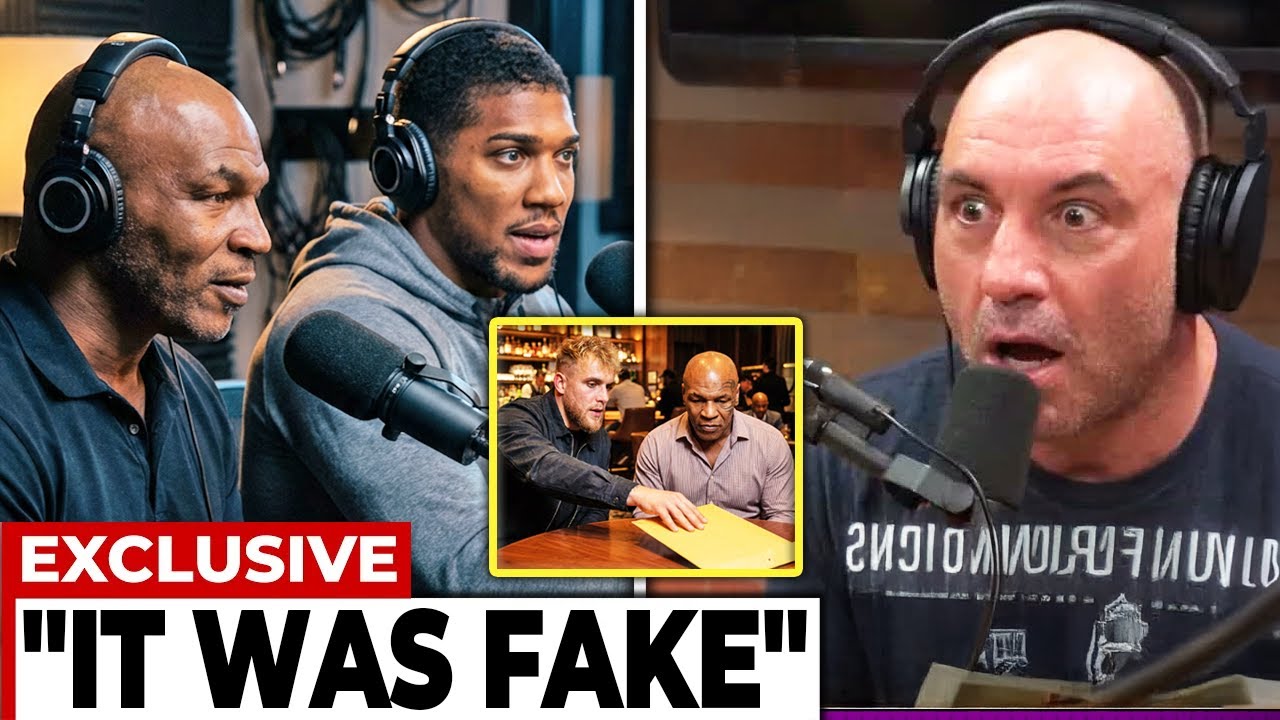
Perhaps the most unsettling element of this shift has been the reaction from legends of the sport. Mike Tyson, an icon whose career is defined by ferocity and power, recently sat down and offered a reflection that sent shockwaves through the community. Admitting to a sense of deep, gnawing regret about his own recent exhibition, Tyson spoke of “selling his soul” and waking up the next day asking his wife, “Why did I do that?” These are not the words of a man who enjoyed the spectacle; they are the words of someone who realized, too late, that he had traded his hard-earned legacy for a theatrical performance.
This confession provides a terrifying context for the Joshua-Paul fight. As fans watched Joshua methodically dismantle Paul, they couldn’t help but look back at Tyson’s earlier bout and ask the forbidden question: Why didn’t he do this? The realization that Tyson, even at his age, could have ended his own exhibition at any moment—yet chose not to—reveals the degree to which the sport has been influenced by scripts, agreements, and the pressure of the bottom line. The contrast between a real fighter protecting the sanctity of the sport and a spectacle designed for mass consumption has never been clearer.
The consequences of this moment are beginning to ripple outward, affecting everyone from promoters to the fighters themselves. Eddie Hearn, a seasoned promoter, remarked that AJ had given Paul his debut and subsequently his final fight. This was not the usual pre-match bravado; it was a cold assessment that the door has been closed. Behind the scenes, there is a scramble to contain the damage. The realization that years of hype can be undone in a single, six-round dismantling by a genuine heavyweight has exposed just how fragile the entire influ, and every outcome that seemed a little too convenient. Once the audience starts viewing a sport through the lens of a “fixed” narrative, it becomes nearly impossible to regain their trust. The “titanium plates” and the stark medical reality of the injuries sustained in the ring served as a violent reminder that boxing is not a movie; it is a discipline where the consequences are biological, permanent, and indifferent to social media followings.
Furthermore, the calm demeanor displayed by Anthony Joshua during the fight was perhaps the most damaging aspect for the narrative. While his opponent relied on noise and promotion to maintain relevancy, Joshua relied on silence and strategy. In the world of elite athletics, calm is a marker of absolute truth. It signaled that he was not chasing glory or a viral clip; he was fulfilling a duty to the sport. The silence that followed the knockout was deafening, acting as a testament that the truth of his performance was simply too obvious to spin.
As the industry moves forward, the question remains: Can the spectacle survive this awakening? The hunger for authenticity is becoming a dominant force in sports media. Audiences, though often distracted by flashy lights, possess an innate ability to recognize the difference between a real clash and a staged production. This recent event has drawn a hard line in the sand between those who have endured the damage of the sport and those who have merely borrowed its credibility.
The psychological damage to those who attempted to bridge this gap may be irreversible. Doubt has crept in, and it is an opponent that no amount of conditioning or wealth can defeat. The fallout from this fight is where careers will pivot, where managers will be forced to reconsider their strategies, and where the sport will likely begin the painful, necessary process of recalibration.
There is a strange, quiet irony in the fact that the pursuit of legitimacy actually accelerated the loss of illusion. By forcing the hand of real competition, the spectacle finally met the standard it claimed to aspire to, and it failed the test. What happens next is uncertain, but one thing is clear: the era of unchecked hype is facing a severe reality check. The tectonic plates of boxing have shifted, and the aftershocks are still coming. As the dust settles, the sport is being reminded that while theater can sell tickets, only authenticity can build a legacy. For now, the loud voices of the promoters have gone quiet, leaving only the sound of professional standards returning to the center stage. The warning shot has been fired, and it is unlikely that the industry will ever look the same again.