
A quiet but profound shift is currently rippling through the landscape of American political and economic discourse. For nearly a decade, a highly polished, emotionally charged narrative has dominated mainstream media, progressive campaign trails, and viral social media feeds. The core tenets of this playbook are simple, repetitive, and deeply populist: the American economic system is fundamentally rigged, substantial wealth is inherently a byproduct of exploitation, and the ultimate solution to all societal ills—from underfunded public schools to broken healthcare systems—is to aggressively tax and “eat the rich.”
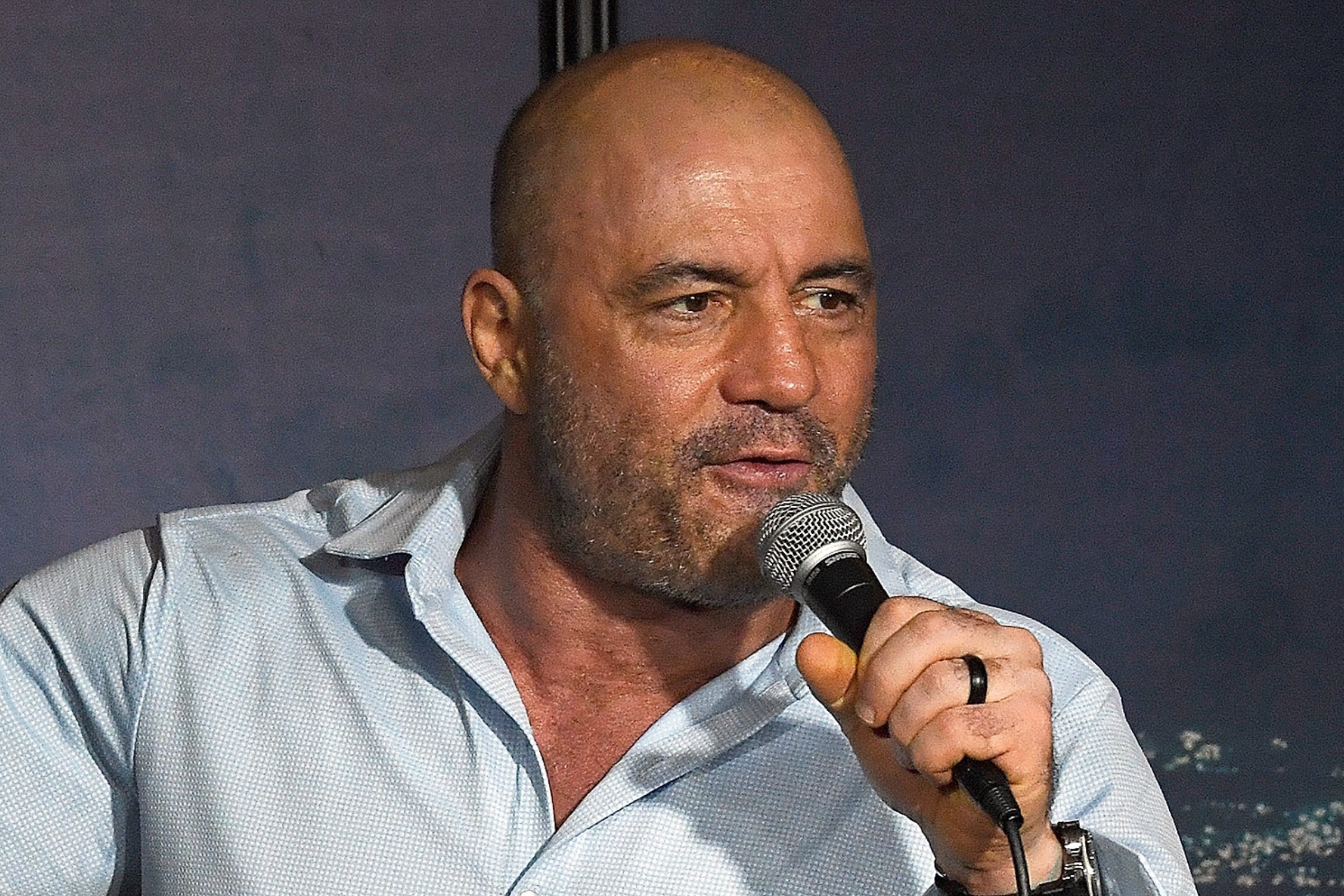
However, that long-standing narrative recently hit an immovable wall of mathematics, logic, and real-world results. The friction did not begin with partisan shouting matches or standard late-night political theater. Instead, it accelerated when cultural powerhouse Joe Rogan leaned into his microphone and calmly articulated the exact data points that modern progressive strategists have spent years trying to obscure. Coupled with a shocking, real-time reality check from veteran liberal comedian Bill Maher, the populist economic illusion is unraveling before a massive global audience.
The Reality of the Tax Base
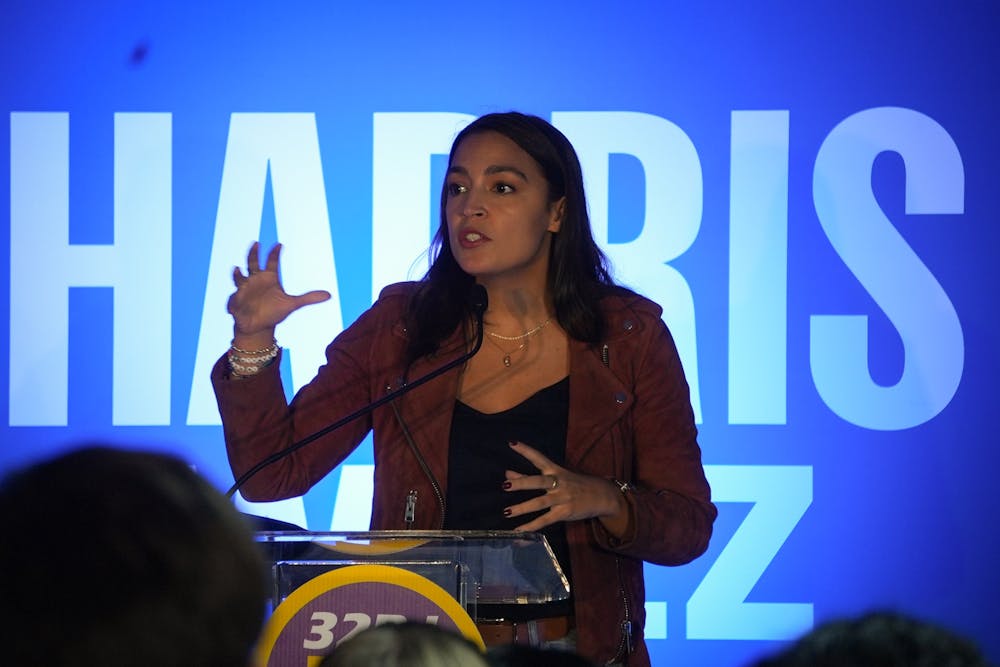
The bedrock of the progressive economic argument, frequently championed by high-profile figures such as Representative Alexandria Ocasio-Cortez and Senator Bernie Sanders, relies on the assertion that billionaires and high earners do not pay their fair share of taxes. Yet, when one examines the actual receipts provided by federal fiscal data, the popular talking points diverge sharply from reality.
During a recent discussion, Rogan pointed out a reality that progressive social media platforms actively avoid putting on the trending tab: the top 1 percent of income earners in the United States do not merely contribute to the system; they carry nearly 40 percent of the entire federal income tax burden on their backs. When expanding the view to the top 10 percent of earners, that single demographic finances an astonishing 72 percent of all federal income taxes. Conversely, the bottom 50 percent of earners collectively contribute approximately 3 percent to the federal income tax pool.
These numbers introduce a severe logical crisis for populist campaigns. If the mathematical reality demonstrates that a microscopic fraction of the population is already funding the overwhelming majority of federal operations, the claim that the wealthy are escaping their societal obligations collapses. The math simply does not care about follower counts, viral videos, or clever campaign slogans. The moment these verified metrics are brought into the light, the “eat the rich” mantra begins to look less like authentic grassroots activism and far more like a highly coordinated political marketing campaign designed to stoke class resentment rather than solve systemic issues.
The Anatomy of Success and the Fallacy of Victimhood
Beyond the raw data of tax percentages, the cultural critique levied by Rogan digs straight into the changing philosophy of the American Dream itself. A prominent narrative popularized by democratic socialists asserts that no individual can achieve substantial wealth without somehow victimizing others. Under this worldview, financial success is treated as a zero-sum game where one person’s gain is automatically another person’s loss, effectively transforming personal ambition and historic business triumphs into moral failures that require public apologies.
To dismantle this premise, commentators have pointed to the very figures progressives love to cast as corporate villains, most notably Amazon founder Jeff Bezos. In the prevailing populist rhetoric, Amazon is routinely depicted as an economic bulldozer that thrives solely by destroying local economies. In reality, however, the platform has acted as one of the most expansive small-business launchpads in human history.
Before the digital marketplace era, a small business operating out of a rural town was strictly limited by local geography and massive corporate distribution barriers. Today, through integrated logistics systems, an independent artisan selling handmade goods from a small town can seamlessly market, sell, and ship products to consumers in international capitals like Tokyo or London before their morning coffee gets cold. Millions of independent sellers currently utilize this infrastructure to out-voted legacy corporations. Transforming a global small-business accelerator into a supervillain origin story requires completely ignoring the tangible benefits delivered to both everyday consumers and independent entrepreneurs who save time, conserve capital, and gain unprecedented market access.
When Liberals Look at the Receipt
Perhaps the most devastating blow to the progressive economic playbook did not come from a conservative traditionalist, but rather from within the legacy liberal establishment itself. Bill Maher, a lifelong democrat who has spent more than three decades lambasting conservative policies on national television, recently delivered a fierce reality check that stunned the progressive base.
Maher revealed that when factoring in federal income taxes, state taxes, local sales taxes, property fees, and healthcare mandates, nearly 60 percent of his total earnings vanishes directly into the hands of the government. “More than half of everything I earn, every joke I write, every show I hosts, is funneled directly to the government,” Maher noted, adding that while the ultra-wealthy employ armies of specialized accountants to navigate loopholes, regular high earners are paying massive amounts of revenue into public coffers with zero acknowledgment.
Maher’s admission forces a critical, non-partisan question into the public arena: If the state is already collecting upwards of 60 percent of the wealth generated by top creators and professionals, why do public schools remain chronically underfunded, why are transit systems collapsing, and why do humanitarian crises continue to expand on city streets?
The inescapable conclusion is that the United States does not suffer from a revenue collection problem; it suffers from a catastrophic resource allocation and leadership crisis. The funds are being extracted, but they are consistently swallowed by an insatiable, highly inefficient bureaucratic black hole. If a system takes more than half of a citizen’s production and still fails to deliver baseline public services, demanding even higher taxes is not a viable economic strategy—it is a refusal to audit a broken machine.

The High Cost of Punitive Taxation
The laws of economics are fundamentally governed by human behavior, and human behavior responds predictably to incentives. When a government treats its most successful builders, entrepreneurs, and taxpayers like fiscal criminals, those individuals do not simply sit still and accept endless penalties. They utilize their mobility.
This geographical migration is no longer a theoretical warning; it is an active phenomenon reshaping the American map. States like California and New York, which have served as the premier testing grounds for high-tax, progressive policy frameworks, are currently witnessing an unprecedented exodus of capital, corporate headquarters, and middle-class families. Decades of heavy regulations and punitive tax structures have transformed once-thriving hubs into cautionary tales marked by staggering deficits, stalled infrastructure projects, and massive outward migration.
Meanwhile, states like Texas and Florida are rapidly collecting the economic spoils. When billionaires, corporations, and high-earning professionals flee hostile tax environments, they do not suffer. They possess the resources to land softly anywhere in the world, shifting their fortunes to places like Miami, Austin, Dubai, or Singapore.
The true victims of punitive taxation are the working-class citizens left behind. When a massive fortune or a major corporate headquarters exits a state, the immediate casualties are the local contractors, the dry cleaners, the restaurant servers, the tech assistants, and the construction workers who comprised the surrounding economic ecosystem. Squeezing the rich too hard does not fund a progressive utopia; it quietly starves the local working-class economy.
A Broken Compass
The tragic irony of the modern welfare state is perfectly illustrated by the enduring failure of massive public programs. Decades after grand promises of universal coverage and centralized solutions, working-class communities in rural America still find themselves waiting in mile-long lines for traveling medical charity vans just to receive basic dental care and teeth extractions.
In a nation capable of landing advanced rovers on Mars, photographing deep-space black holes, and engineering supercomputers that fit into a coat pocket, the reality that regular citizens must rely on pop-up humanitarian NGOs for fundamental health services is a damning indictment of state efficiency. It proves definitively that throwing more billions into a broken bureaucratic apparatus will never yield a functioning system.
Everyday voters across the nation are beginning to look closely at the widening chasm between political slogans and actual receipts. They see the soaring prices at the grocery store, the boarded-up storefronts in heavily taxed cities, and the glaring hypocrisy of politicians who scream about corporate greed while utilizing private aviation.
Joe Rogan and Bill Maher did not mount a campaign of rage or partisan insults to challenge the status quo. They simply did something far more potent: they presented the math, highlighted the reality, and let the public read the receipt. Ultimately, a movement can out-shout its critics, dominate social media algorithms, and out-fundraise its opponents, but no political movement can outrun basic arithmetic forever. The cultural tide is turning because the public is finally reading the data for themselves.