
In the arena of modern American politics, image is often treated as the ultimate currency. Few leaders have understood and utilized this principle quite like California Governor Gavin Newsom. On paper and on screen, he has long represented the quintessential modern progressive prince—boasting flawlessly styled hair, perfectly tailored suits, a sophisticated vocabulary, and a natural ability to treat every media microphone like a high-fashion runway. For years, the narrative surrounding the Golden State was sold as a premium, luxury brand of American progressivism: a sun-drenched haven of high-tech innovation, social tolerance, and limitless prosperity. Yet, during a recent live broadcast, late-night host and political commentator Greg Gutfeld delivered a surgical, slow-motion dismantling that did not merely feel like a standard comedic roast; it felt like a definitive political verdict.
Armed with nothing more than a mug of coffee, a knowing smirk, and an unyielding list of factual receipts, Gutfeld bypassed the usual comedic warm-up routines to expose the widening chasm between California’s glossy public relations campaign and its harsh material reality. The commentary served as a brutal awakening, slicing directly through years of carefully managed messaging and leaving one of the Democratic Party’s most prominent figures looking remarkably vulnerable in his own highlight reel.

The core of the critique centered heavily on a sudden and dramatic shift in Governor Newsom’s executive stance regarding the state’s escalating urban crises. After years of defending progressive criminal justice and social welfare models, the governor recently made headlines by calling the state’s widespread sidewalk and park encampments entirely unacceptable, actively urging local municipalities to ban them from public spaces. Gutfeld was quick to highlight the deep irony of this sudden realization, pointing out that the very encampments now labeled as unacceptable were fostered under the governor’s own long-term policy framework. By turning metropolitan sidewalks into spaces where open drug use, retail theft, and homelessness became normalized, the administration effectively institutionalized the disorder it now claims to fight. The commentator colorfully likened this late-stage executive action to attempting to implement preventative measures long after the damage had already been entirely sustained, framing the move as an act of political survival rather than genuine administrative reform.
According to the broadcast, the governor’s sudden frustration is not rooted in the tragic existence of urban decay or rising crime rates themselves, but rather in the inconvenient reality that the American public has collectively noticed the decline. The commentary suggested that the administration is acting less like a reformed leader and more like an individual regretful only because their long-standing operational failures have finally caught up with them in the court of public opinion. This man-made crisis, comparable in its avoidable systemic failure to historic industrial disasters, represents a profound breakdown of basic municipal governance. While the governor historically utilized his massive media platform to lecture middle America, Texas, and Florida on their governance and societal values, his own backyard was transitioning into an environment reminiscent of a dystopian film setting managed by corporate elites. Gutfeld calmly presented these contradictions not with loud outrage, but with the quiet authority of an observer who has watched the evidence accumulate for years.
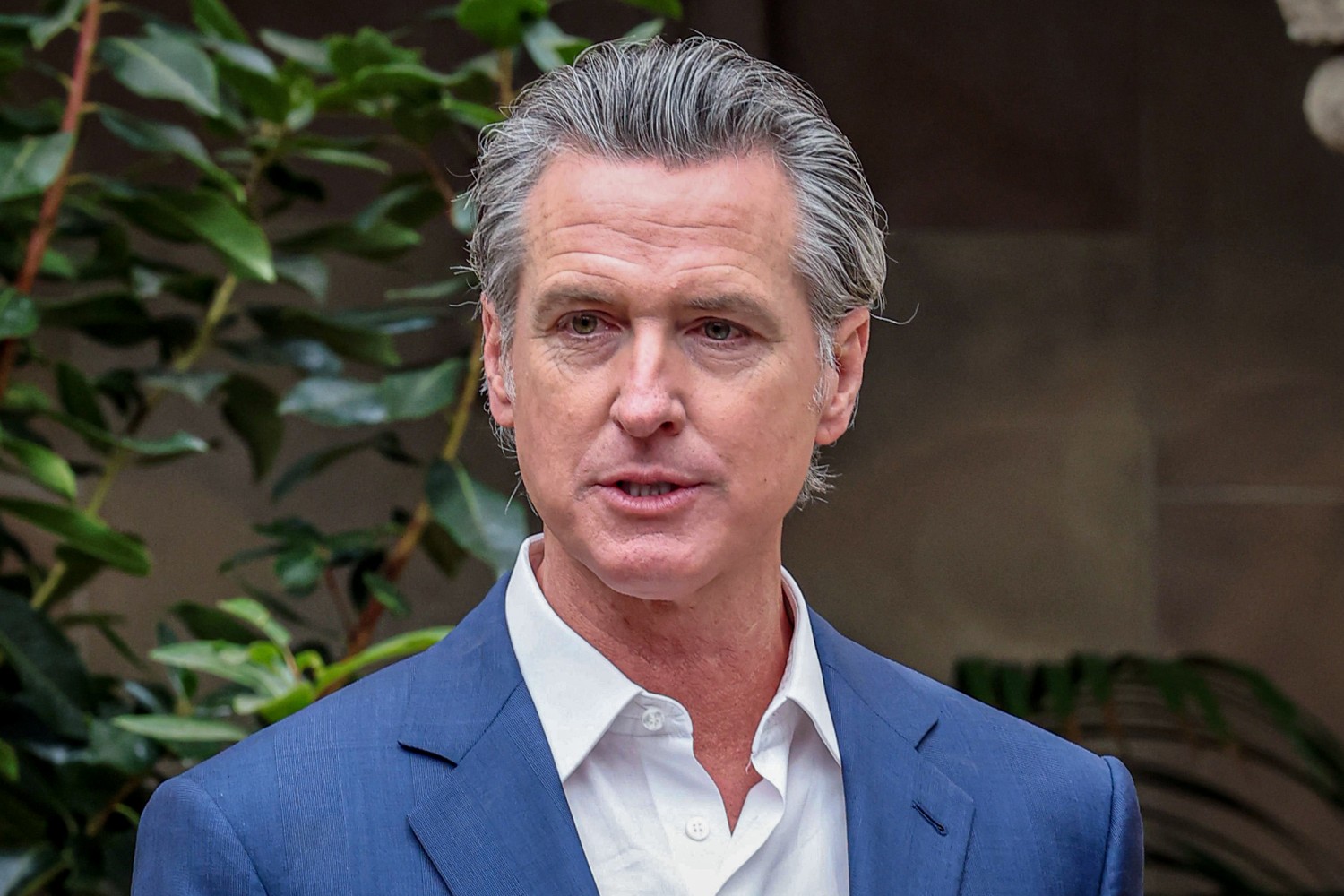
The critique then pivoted toward the profound demographic and economic shifts defining modern California. For decades, the state was an absolute magnet for the ambitious, the creative, and the entrepreneurial classes. Today, however, that dream is being quietly repossessed. Gutfeld remarked that California is no longer just losing residents; it is fundamentally losing its believers. The iconic tourist maps that once proudly displayed the glamorous estates of Hollywood celebrities have been replaced by a reality where everyday citizens must navigate hazardous city streets simply to protect their personal health and safety. When ordinary working-class residents voice their legitimate complaints regarding safety and sanitation, they are frequently met with ideological scolding from elite circles, who label their concerns as cruel or lacking in empathy.
Meanwhile, the economic backbone of the state—the middle class, small business owners, and multigenerational families—are noticeably absent from the state’s glossy promotional videos. Instead, they are found driving U-Haul trucks eastbound across the state line, fleeing past gas stations charging exorbitant prices per gallon and escaping an environment where the cost of living has rendered the American Dream entirely unsustainable. The flight is no longer restricted to a few disgruntled citizens; it includes the rapid departure of major tech firms, aerospace industries, and Hollywood production entities, all pushed out by an aggressive tax structure and an increasingly hostile regulatory environment. Gutfeld pointed out the staggering failure of spending over three billion dollars ostensibly to solve the homelessness crisis, only for the administration to deflect accountability onto local mayors once the initiatives failed to produce meaningful results.
This deep-seated institutional decay has fundamentally altered the national perception of the state. California, Gutfeld argued, has ceased to function as a model blueprint for the rest of the country; instead, it has transformed into a profound national warning label. The primary objective of the governor’s extensive public relations apparatus has become an exercise in ensuring that the broader American electorate never reads the fine print of that warning label. This reality becomes particularly critical as national observers watch the slow-motion, poorly concealed auditions for the national stage. The shadow debates, the high-profile cross-country travels, and the carefully manicured cable news town halls all carry the distinct scent of a future presidential campaign. Yet, Gutfeld posed the fundamental question that conventional media outlets routinely avoid: if the current state of California serves as the primary demo tape for executive leadership, why would the American electorate ever choose to pre-order the full national album?
The political desperation underlying this public relations crisis has manifested in recent, highly calculated legislative maneuvers. Facing overwhelming national polling data indicating that the vast majority of the American public rejects extreme cultural agendas, particularly regarding minors, the governor recently executed swift vetoes on controversial state legislation. When a highly contested custody bill threatened to alienate moderate voters nationwide, it was quickly struck down by the executive office. While the ideological left expressed intense outrage over the veto, mainstream commentators noted that the move was a transparent attempt to scrub the record ahead of future national campaigns. This frantic effort to distance the executive brand from the party’s most unpopular, highly experimental ideas reveals a deep anxiety regarding the upcoming political landscape. Following a cycle where the party suffered significant losses in both the popular vote and the Electoral College, the need for political humility and a forensic understanding of voter dissatisfaction has become undeniable.
Ultimately, Gutfeld’s broadcast highlighted the moment the political illusion officially shattered. By comparing the state to a magnificent Beverly Hills mansion that looks breathtaking from the curb but suffers from severe structural failure, leaking pipes, and a cracking foundation held together only by press releases, the commentary gave voice to what millions of citizens had been quietly observing for years. The segment concluded by highlighting that when structural failures become this advanced, no amount of media training, rehearsed outrage, or strategic hair gel can obscure the truth. The cracks in the elite progressive brand have become entirely visible, and for Governor Newsom, the bill for years of prioritizing theater over tangible leadership has finally come due.