The political landscape of Los Angeles has been rocked to its very core following a primary election result that has sent shockwaves through the halls of the established elite. In a stunning turn of events, political outsider Spencer Pratt has defied all conventional projections, securing a massive primary performance that guarantees him a high-stakes, head-to-head runoff against incumbent Mayor Karen Bass this coming November. For months, legacy media outlets and traditional political analysts dismissed Pratt’s campaign as a populist anomaly, a sideshow incapable of disrupting the deep-rooted progressive apparatus governing California’s largest metropolis. However, as the ballots were counted, the reality became undeniable: a rapidly growing coalition of Republicans, Independents, and even lifelong Democrats have united under a simple, resonant banner of basic quality of life and common sense. The political establishment is officially in a state of absolute meltdown, scrambling to understand how a candidate running on unapologetic law-and-order and structural accountability could dismantle their carefully manicured narrative so completely.
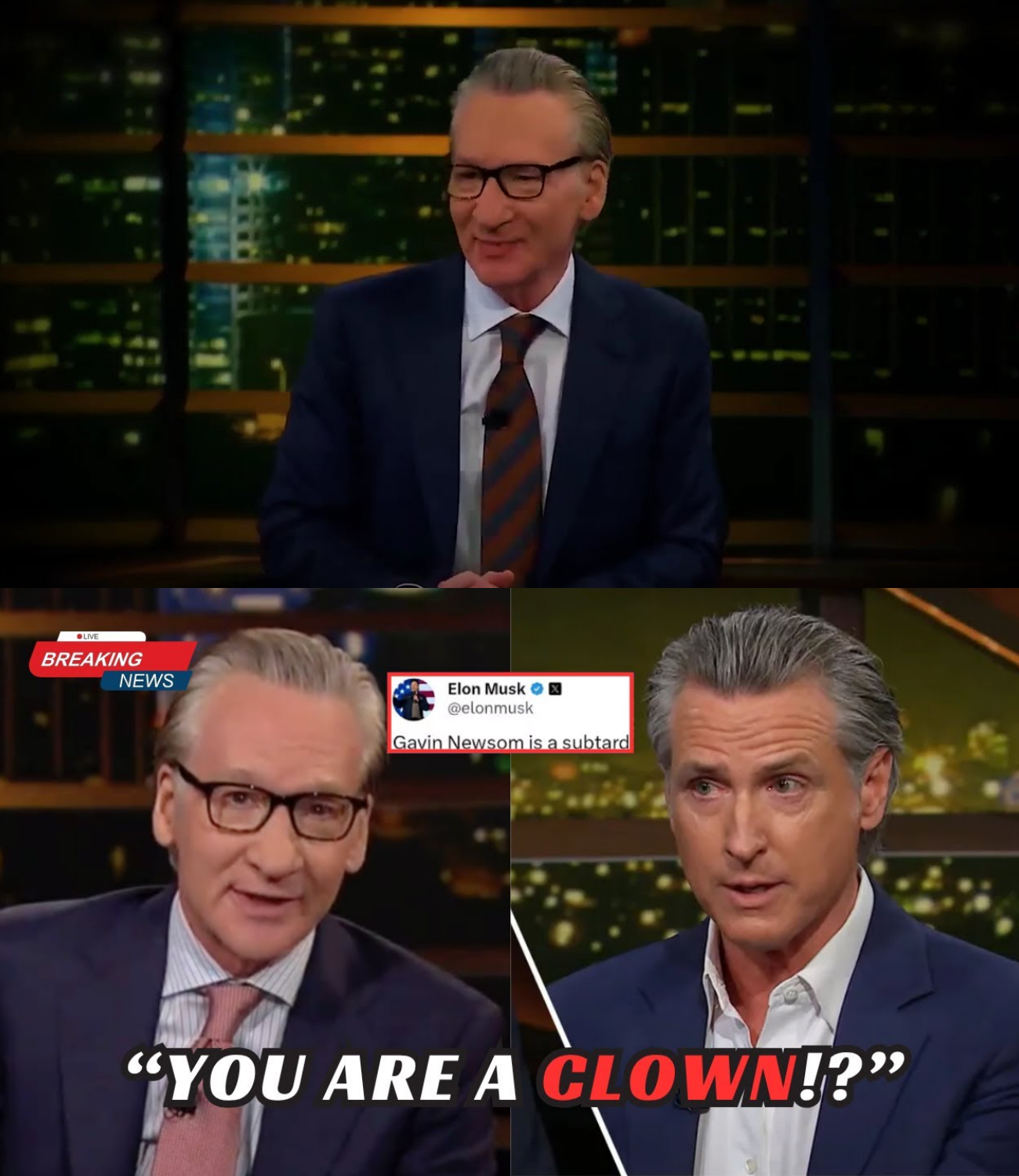
Nowhere was this ideological clash more vividly illustrated than during a recent, viral appearance by Spencer Pratt on Bill Maher’s talk show. Maher, a veteran political commentator known for challenging institutional absurdity, found himself completely stunned and uncharacteristically silent as Pratt systematically dismantled the priorities of modern city governance. The exchange began with Maher complaining about the state’s notorious over-regulation, noting that it took him three agonizing years just to get solar panels turned on at his property, only for the state to begin taxing residents for implementing the very green energy solutions they claim to champion. While Maher’s grievance was valid, Pratt used the moment to highlight a massive, systemic disconnect in how city leaders view their responsibilities. When Maher suggested that a mayor needs to deeply understand and micromanage complex bureaucratic issues like solar initiatives, Pratt delivered a heavy dose of reality that stopped the veteran host in his tracks.

Pratt made it clear that basic civic survival must always take precedence over elite, forward-looking regulatory pet projects. He asserted that a mayor’s job is to build a competent team, delegating issues like solar panels to a deputy mayor so that the chief executive can focus entirely on the compounding crises threatening everyday citizens. Pratt argued that Los Angeles is currently years away from prioritizing luxury regulatory debates when the most basic elements of public safety and human decency have completely collapsed on the ground. He pointed out the horrific reality that ordinary families are forced to navigate sidewalks occupied by naked drug addicts experiencing severe psychotic episodes, step over human feces, and live in constant fear of brutal home invasions occurring on a nightly basis. Pratt’s core message was painfully simple: you cannot expect citizens to care about elite environmental compliance when they cannot even walk their children to school safely. He noted that the state of Los Angeles has become so dysfunctional that city leaders cannot walk and chew gum at the same time, prompting him to tell the establishment to spit the gum out and fix the foundational issues first.
This pragmatic focus on immediate, tangible solutions is exactly why Pratt’s message is resonating across traditional party lines. In testimonies gathered from the ground, everyday Angelenos are expressing a profound sense of exhaustion with the empty promises of the political class. One particularly moving endorsement came from a resident who recounted his own journey of surviving homelessness and achieving ten years of sobriety. This voter explained that Pratt’s realistic approach to street level intervention and substance abuse services is exactly what saved his own life years ago. Unlike current politicians who view homelessness as an abstract policy issue to be solved with endless academic studies and specialized committees, Pratt treats it as an urgent humanitarian emergency requiring immediate, structured action. Other local voters echoed this sentiment with raw frustration, openly declaring that they felt utterly betrayed by current Mayor Karen Bass. The prevailing sentiment among the working class is that they were tricked once by progressive rhetoric, but they will not allow themselves to be fooled a second time.
Pratt has also directed fierce, direct criticism toward other prominent figures within the city’s administration, most notably Councilmember Nithia Raman, who serves as the chair of the homeless housing department. Pratt held Raman directly accountable for the worsening state of local neighborhoods, pointing out her controversial public stances where she actively fought against concerned mothers who wanted drug encampments removed from the immediate vicinity of public schools. Pratt criticized the absolute absurdity of officials arguing on camera that there is no meaningful difference between allowing naked, actively using drug addicts to camp one foot away from a school versus five hundred feet away. He labeled this level of governance as absolute lunacy, noting that it shows a complete lack of basic protective instinct for vulnerable children. This relentless accountability has had a devastating impact on the political futures of these incumbent leaders. Following a series of debates, Raman’s standing in political betting markets plummeted catastrophically from a commanding sixty-five percent down to a virtually irrelevant five percent, a clear sign that the public is actively rejecting leaders who substitute genuine compassion with destructive enablement.
As the race narrows to a direct showdown between Pratt and Mayor Karen Bass, the financial mismanagement of the current administration has taken center stage. For months, mainstream media networks have attempted to damage Pratt’s credibility by hyper-focusing on his personal financial history, specifically pointing out that he spent ten million dollars of his own wealth during his early twenties as a reality television star. Pratt addressed these criticisms with refreshing candor, turning the tables entirely on his political opponents. He rightly noted that the ten million dollars he spent as a twenty-three-year-old was his own private money, earned through commercial success, which he used to buy dinners, support local businesses, and fund aspiring musicians, artists, and athletes. He contrasted his private spending with the truly staggering waste of public funds overseen by Mayor Bass. Pratt revealed that last year alone, the Bass administration spent an astonishing four hundred million dollars of taxpayer money under the guise of combating homelessness, yet managed to house a meager fourteen hundred individuals. This jaw-dropping ratio of public spending to actual results highlights a profound level of bureaucratic incompetence, leaving taxpayers to wonder where hundreds of millions of dollars are actually disappearing while the crisis on the streets grows exponentially worse.

The sheer desperation of the local populace has reached a threshold where even traditional socio-political barriers are completely breaking down. In an unprecedented acknowledgment of the city’s security crisis, community commentators noted that public safety has deteriorated to such an extreme degree that even members of notorious street organizations, like the Crips, have expressed a willingness to sit down and communicate with a common-sense conservative candidate like Pratt. When individuals entrenched in the street economy are openly admitting that the chaos and violent crime have spun completely out of control, it serves as an undeniable indictment of Mayor Bass’s failed leadership. It proves that the collapse of basic law and order does not just harm wealthy enclaves; it actively devastates the most vulnerable, working-class communities who are left entirely unprotected by the state.
Despite the undeniable reality on the ground, the establishment has relied heavily on mainstream media allies to engage in strict narrative control and outright censorship. This media bias was captured live on television when an MSNBC journalist was interviewing voters at a local gathering. The moment an enthusiastic Spencer Pratt supporter began to articulate his support by criticizing the creeping spread of destructive ideological policies in Los Angeles, the reporter abruptly cut him off mid-sentence, turning away from the camera to silence his perspective. This blatant act of broadcast gatekeeping perfectly illustrates why public trust in legacy journalism has utterly evaporated. Rather than reporting the facts objectively and allowing viewers to weigh both sides, institutional media outlets actively suppress the voices of ordinary citizens who refuse to adhere to the approved political script.
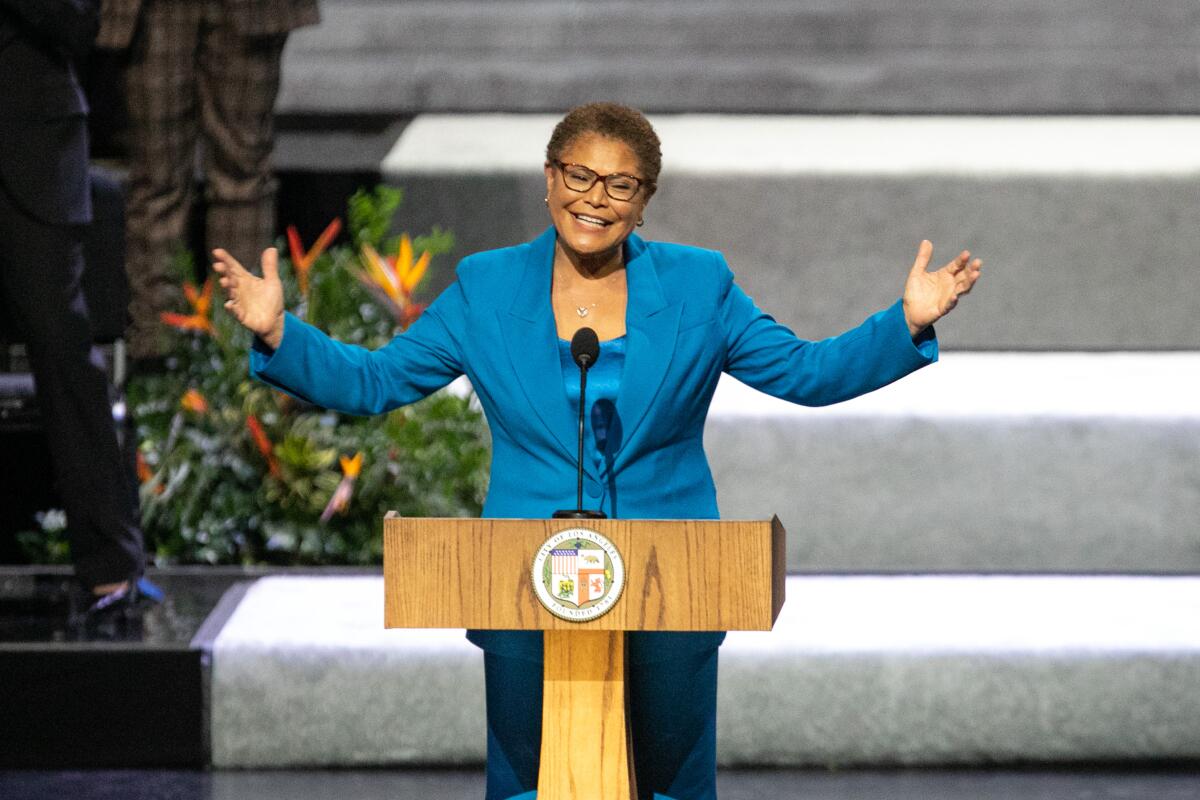

Furthermore, the administration’s failures extend far beyond social issues into critical infrastructure and disaster preparedness. Following devastating wildfires that ravaged local neighborhoods, including areas where Pratt’s own family suffered displacement, both Mayor Bass and Governor Gavin Newsom publicly promised that the region’s water reservoirs would be kept full, maintained, and fully prepared for future emergency operations. However, recent investigative footage has exposed the terrifying truth: eighteen months after those grand public assurances, the vital reservoirs sit completely empty and bone-dry. This failure to maintain basic emergency infrastructure demonstrates a reckless disregard for public safety, leaving thousands of homes entirely defenseless against the next inevitable natural disaster while the administration focuses its energy on public relations campaigns.
Looking forward to the next five months of the campaign, Spencer Pratt remains completely undeterred by the immense institutional power arrayed against him. Embracing the challenge with fierce enthusiasm, Pratt declared that he was quite literally “born for this” role, expressing immense excitement at the prospect of debating Mayor Bass as frequently as possible to continue putting her record on trial. He has laid out a clear strategy to spend the coming months building an inclusive, powerful coalition composed of traditional heavy hitters, independent citizens, and disillusioned voters from across the entire political spectrum. Pratt’s surging momentum stands as a powerful testament to a simple truth that the political elite consistently fail to grasp: when you deprive citizens of basic safety, clean streets, functional roads, and honest governance, they will eventually look past partisan labels and choose a leader who promises nothing more, and nothing less, than fundamental common sense.