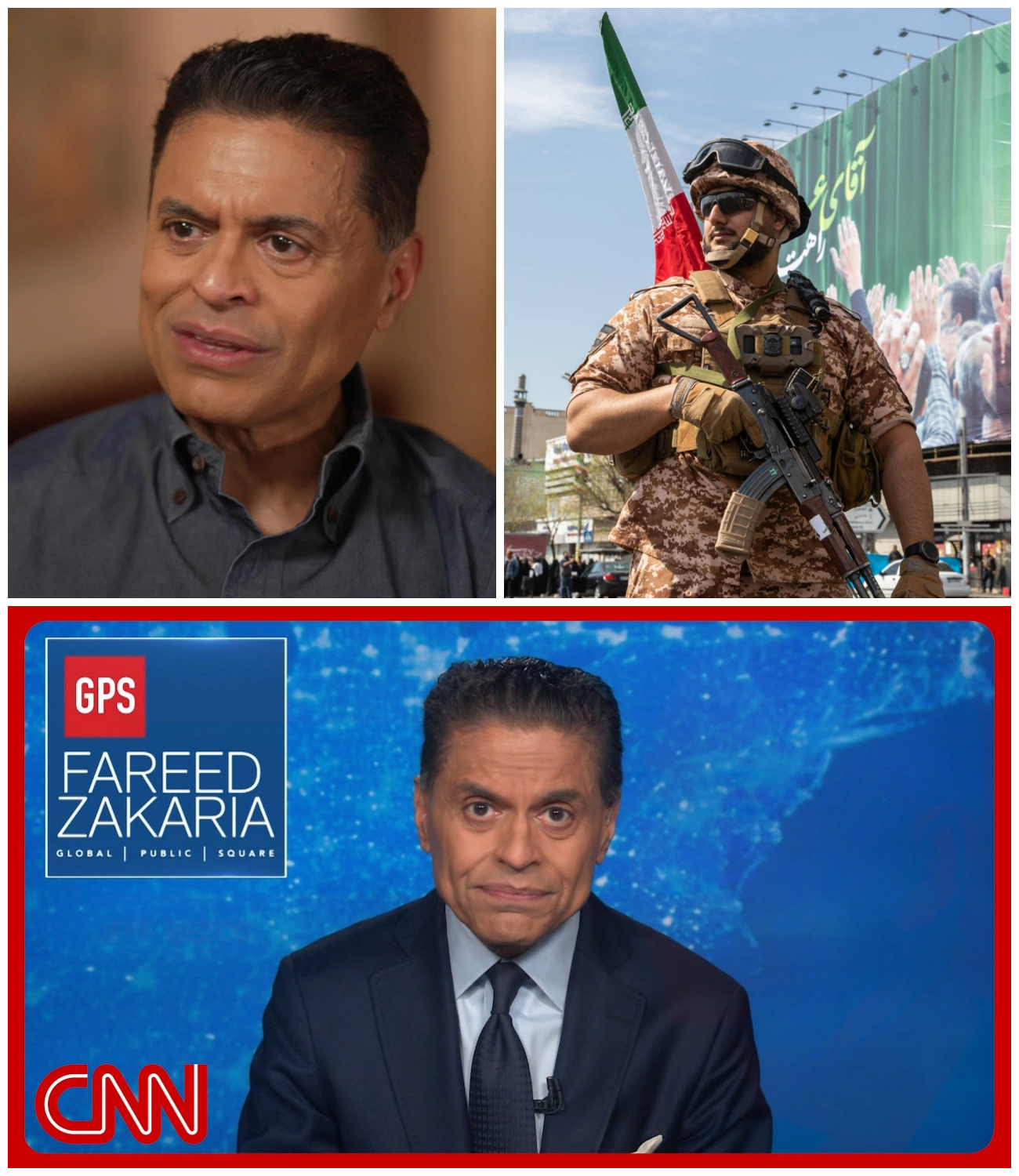
The intricate dance of international diplomacy is rarely a simple affair, but few pairings in the modern era possess the combustible complexity of the relationship between the United States and Iran. It is a connection defined by decades of mistrust, transformative historical shifts, and, more recently, a series of bold, often unpredictable, policy moves that have left geopolitical analysts scrambling to make sense of the new status quo. In a recent analysis, Fareed Zakaria dissected this volatile landscape, pinpointing how current actions by American leadership—set against the backdrop of long-standing tensions with China and Iran—are fundamentally recalibrating the stages of global engagement.
To understand where we are, we must first appreciate the weight of history. For over forty-seven years, the relationship between Washington and Tehran has been characterized by cycles of hostility, brief windows of tenuous dialogue, and persistent, deep-seated grievances. From the 1979 revolution that fundamentally altered the region’s power dynamic to the landmark nuclear negotiations of 2015, the path has been anything but linear. Yet, today’s environment feels distinct, marked by a level of directness and a departure from traditional diplomatic norms that demands close scrutiny.
The recent discourse surrounding U.S. policy towards Iran has been dominated by a shift toward more assertive, confrontational rhetoric. Statements from high-level American officials, including President Donald Trump, have signaled an impatience with established protocols, favoring instead a strategy that emphasizes “total regime change” and a complete overhaul of existing diplomatic agreements. This approach represents a significant departure from the more gradual, multilateral efforts of previous administrations, which often sought to leverage international coalitions—such as the P5+1 framework—to manage Iran’s regional influence and nuclear ambitions.
This shift does not occur in a vacuum. It is deeply intertwined with the broader American strategy regarding China, which remains the central focus of U.S. foreign policy in the 21st century. The competition between Washington and Beijing creates a shadow over every other diplomatic endeavor. When the U.S. pursues a hardline policy against Iran, it must constantly weigh the potential for destabilizing the broader Middle East, which in turn could grant China a strategic opening to expand its own influence through infrastructure investments, energy deals, and diplomatic brokering.
The argument often presented by proponents of this more aggressive stance is that decades of engagement have failed to meaningfully moderate Iranian behavior. From their perspective, the only language that is truly understood by the leadership in Tehran is one of strength and existential threat. This school of thought posits that by maximizing pressure—economic, military, and diplomatic—the U.S. can force a fundamental realignment, potentially leading to a more cooperative or, at the very least, less threatening regime.
However, critics, including many seasoned foreign policy experts, warn of the extreme peril inherent in such a strategy. They argue that backing a state into a corner, particularly one with the regional capabilities and domestic resilience of Iran, risks triggering a catastrophic conflict that would yield no winners. Furthermore, this approach risks alienating key European and Middle Eastern allies who remain committed to de-escalation and believe that diplomatic engagement, however frustrating, is the only sustainable pathway to long-term stability.
One of the most critical aspects of this current moment is the perception of “regime change” as a viable policy goal. While it has long been a whispered aspiration in certain corridors of power, it is now being openly touted. But the history of regime change in the region—and beyond—is fraught with disastrous outcomes. From the instability following the 2003 invasion of Iraq to the chaotic aftermath of interventions in Libya, the track record is not one that invites confidence in the ability of external actors to engineer a positive democratic transition from the outside.
As we look toward the future, the question remains: what does a successful outcome actually look like? If the goal is a more peaceful and stable Middle East, the current trajectory suggests a period of heightened friction. The challenge for the U.S. is to define a clear, achievable strategy that addresses legitimate security concerns—such as nuclear non-proliferation, missile development, and the activities of regional proxies—without inadvertently sparking a wider war.
This requires a delicate balancing act. It necessitates maintaining credible military deterrence while simultaneously keeping the door to diplomatic discourse open, even if only through third-party intermediaries. It also requires a sophisticated understanding of Iranian internal politics, which, far from being a monolith, are characterized by competing factions and deep debates about the country’s future direction.
The role of China in this equation cannot be overstated. Beijing’s strategy has been to present itself as a responsible, neutral mediator, offering an alternative to what it portrays as American “meddling.” By deepening its economic and security ties with Tehran, China is positioning itself as a vital stakeholder in the region. This complicates the U.S. calculation, as any policy towards Iran must now account for the reality that Washington no longer possesses the same uncontested influence it once did in the Middle East.
Furthermore, the technological and ideological dimensions of this conflict are evolving. The role of information warfare, cyber capabilities, and the manipulation of narratives has become central to the struggle for influence. Both sides are acutely aware that the battle is fought not just on the ground or in the skies, but in the minds of the global public. The rhetoric used by leaders is carefully calibrated to mobilize domestic support while signaling resolve to adversaries and reassurance to allies.
Ultimately, the situation underscores the profound interconnectedness of today’s geopolitical world. A crisis in Tehran sends shockwaves through energy markets, shifts the calculus in Brussels, and presents new strategic opportunities in Beijing. It is a reality that defies simple solutions or slogans. The path forward demands a level of strategic patience, nuance, and diplomatic dexterity that is currently in short supply.
As the international community watches these developments unfold, it is clear that we are entering a new, less predictable phase in U.S.-Iran relations. The traditional tools of diplomacy are being tested as never before, and the willingness of leaders to gamble on high-stakes strategies is at an all-time high. Whether this leads to a fundamental breakthrough or a deeper, more dangerous divide remains the defining question of our time.
In reflecting on Fareed Zakaria’s analysis, it becomes evident that the most significant risks are not necessarily the known threats, but the unforeseen consequences of actions taken in the heat of the moment. Geopolitical history is littered with decisions that seemed logical at the time but proved to be disastrous in hindsight. The caution, therefore, is not merely a matter of temperament but a fundamental requirement of responsible governance.
The focus must remain on the long-term objective: a region that is more secure, more prosperous, and less prone to the cycle of violence that has defined the last half-century. Achieving this will require moving past the rhetoric of the moment and engaging with the complex realities of the region, understanding that every action carries a reaction, and that in the world of high-stakes geopolitics, the most effective strategy is often the one that prevents conflict before it starts.
We find ourselves at a juncture where the choices made in Washington, Tehran, and Beijing will resonate for generations. The stakes, while always high, feel particularly acute today. The call for an informed, clear-eyed, and critical public discourse has never been more important. It is only through such engagement that we can hope to hold our leaders accountable and navigate these uncertain, shifting sands of global power.
As we continue to monitor the situation, one thing is certain: the story of U.S.-Iran relations is far from over. It is a narrative that will continue to evolve, shaped by the actions of those in power and the pressures of a world in transition. Staying informed, understanding the historical context, and critically evaluating the arguments presented by all sides is the best defense against the simplifications and misinformation that often cloud the true nature of these vital issues.
In conclusion, the complexity of this relationship serves as a stark reminder of the limits of power and the necessity of diplomacy. In an increasingly interconnected and volatile world, the ability to engage with adversaries, manage deep-seated differences, and forge pathways to stability is the hallmark of true leadership. Whether the current leaders are up to this monumental task remains to be seen, but the urgency of the moment leaves little room for error. We must be prepared for a long, difficult, and delicate road ahead, where the only certainty is the need for constant, vigilant, and thoughtful engagement.
This analysis is not about choosing sides but about understanding the immense forces at play. It is about recognizing that beneath the headlines and the soundbites lies a struggle that has real, tangible consequences for millions of people. It is a story about the intersection of history, power, and the future of global stability. And it is a story that requires our attention, our patience, and our commitment to understanding the complexities of the world we inhabit.
As we look ahead, let us remain focused on the bigger picture, remembering that behind every policy decision is a human cost. The pursuit of peace and stability is not just a diplomatic objective; it is a moral imperative. And in the face of such complex and daunting challenges, it is more important than ever to remember the shared humanity that connects us all, regardless of the political divides that separate us.
In the final analysis, the situation remains fluid, demanding constant re-evaluation. The stages of this conflict, as identified by Zakaria, are not static; they are in constant motion, influenced by domestic pressures, regional dynamics, and global trends. Understanding this, and remaining informed as the situation develops, is the responsibility of every global citizen in these complex times.
The path to a more stable future is fraught with obstacles, but it is not impossible. It requires a commitment to dialogue, a rejection of simplistic narratives, and a dedication to finding common ground, even in the most challenging of circumstances. It is a long game, and one that requires the steady, informed, and critical engagement of all those who believe in a more peaceful and prosperous world.
The challenges we face today are immense, but they are not insurmountable. By leaning into the complexity, asking the tough questions, and demanding more from our leaders, we can contribute to a more informed and engaged public discourse. This, ultimately, is the first step toward a more secure and stable world for all.
Let us, then, approach the coming months and years with the attention and critical engagement this situation demands. The history of the future is being written today, and it is up to us to ensure that it is a history we can be proud of—one that prioritizes stability, diplomacy, and the common good over conflict and division.
As we conclude this overview, let us keep in mind the lessons of history, the gravity of the present, and the potential of the future. The relationship between the U.S. and Iran will continue to be one of the defining stories of our time, and the more we understand its nuances, the better equipped we will be to navigate the challenges that lie ahead.
The situation is dynamic, the stakes are high, and the path forward is uncertain. But through engagement, inquiry, and a commitment to truth, we can navigate these challenging times. Stay tuned for further developments, and continue to seek out the deep, thorough analysis that helps cut through the noise of the day.
We are all participants in this unfolding history, and our informed participation is the most powerful tool we have in shaping a better future. Let us continue to watch, learn, and engage.
The journey ahead will be complex, but it is one that we must undertake together, with our eyes wide open and our commitment to peace and understanding stronger than ever. The world is watching, and it is waiting to see how we respond to the challenges of our time.
In closing, the analysis provided here is intended to serve as a foundation for your own thinking and inquiry. Use it as a starting point, explore further, and join the conversation. The issues at stake are too important to leave to anyone else.
Final thoughts: Keep questioning, keep reading, and keep engaging. The future is not something that happens to us; it is something we create together. And it starts with understanding the world as it truly is, not as we might wish it to be.
The road ahead is long, but it is one we must travel with care, with courage, and with an unwavering commitment to the truth. Let us proceed with that in mind, and together, we can work towards a future that is more stable, more secure, and more just for all.
The complexities of the U.S.-Iran relationship are vast, but so is our capacity to understand and address them. Let us continue to do so, with vigor, with intelligence, and with hope.
This concludes our analysis for now, but the conversation is far from over. Please continue to check back for updates, and share your thoughts. Your participation is what makes this dialogue so vital.
Thank you for your engagement and your commitment to understanding our complex world. Together, we are better prepared for whatever the future may hold.
The journey continues, and we look forward to exploring the next chapters with you. Until then, stay informed and stay engaged.
Final reflection: The world is complex, the stakes are high, and the future is ours to shape. Let us do so with the wisdom and the caution that such a responsibility demands.
The U.S.-Iran story is one of many that will define our century. By focusing on it with the seriousness it deserves, we take a small but significant step towards a better, more peaceful future.
We invite you to delve deeper into these topics in the comments, share your perspectives, and join us in this ongoing exploration of our world. Your voice matters.
Stay tuned for more in-depth coverage, analysis, and discussion on the issues that truly matter. We are committed to providing you with the insights you need to navigate these turbulent times.