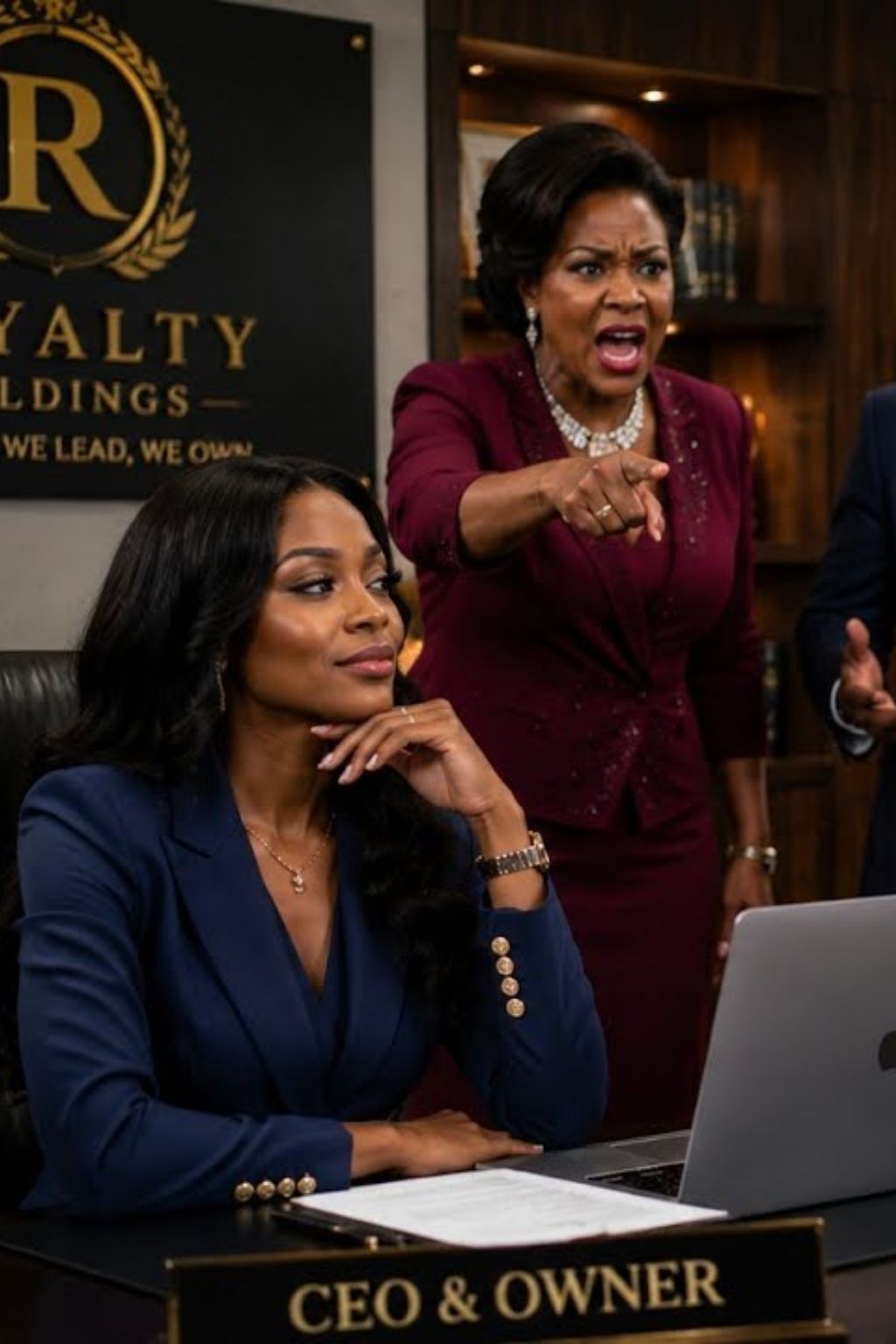
I’m 27 years old and I’ve spent most of my life trying to disappear inside my own family. That probably sounds strange. Most people try to be seen. I tried to shrink. Not because I was shy, but because in the Merritt household, being noticed usually meant being compared. And the comparison never went in my favor. My name is Callie.
I grew up in Columbus, Ohio in a house that looked perfectly normal from the outside. Three bedrooms, a two-car garage, a mom who baked things for the neighborhood block party and smiled at everyone’s kids. But inside that house, there was a ranking system and I was at the bottom of it. My brother Brandon set the standard for everything.
He was the kind of son parents brag about at every dinner. Honor roll, debate team captain, full scholarship to law school, now engaged to a girl whose family owns half a county in northern Ohio. Brandon wasn’t cruel to me. He just existed in a way that made everything I did look smaller by comparison. And my mother made sure nobody forgot it.
My dad, Dennis, worked long hours at a real estate development firm downtown. He was a mid-level manager who’d been chasing a promotion for years. He was a good man, tired, distracted, but good. He loved me in the way fathers do when they don’t have the energy to fight for you. Quietly, from a distance. My mother, Renee, was a different story.
Renee cared about one thing more than anything else, how the family looked to other people. What we wore, where we worked, who we knew, what we could say at a dinner party. She wasn’t evil in the dramatic sense. She was the kind of woman who could smile while she cut you and then look confused when you bled. Three years ago, I dropped out of my business degree.
I had reasons, real ones, but I didn’t explain them to my family at the time. And the moment I left that school, I stopped being a daughter to my mother and became an embarrassment she had to manage. She stopped asking about my life. She started sighing when I walked into rooms. She’d introduce Brandon to people and then gesture vaguely in my direction, like I was a piece of furniture she hadn’t gotten around to replacing. I told myself it would pass.
I told myself she just needed time to adjust. I was wrong. It didn’t pass. It got worse. Right up until the night everything finally broke open. It was a regular Friday evening when my dad walked through the front door looking like a different person. He had this energy about him, almost nervous, almost giddy.
The kind you don’t usually see on a man who spent 15 years being steadily overlooked at the same company. He set his bag down, loosened his tie, and called us all into the living room like he had an announcement. Gerald Whitmore was coming to Columbus. If you didn’t know who that was, you weren’t in our world.
Gerald Whitmore owned the firm where my dad had worked since before I was born. He was the kind of man who existed mostly in rumor, private, rarely seen in person, someone whose name got spoken carefully. And he had personally invited a small group of senior managers and their families to a formal dinner at the Whitmore Group’s private event space downtown.
My dad’s hands were actually shaking a little as he talked about it. This was his moment. 15 years of early mornings and late nights and passed over promotions. And finally he was in the room where it counted. Regional director was within reach. He could feel it. My mother shifted into a version of herself I recognized immediately.
Pure performance mode. Within 20 minutes she was on the phone about a dress, had an appointment booked for her hair, and was already coaching Brandon on talking points. What to mention, what to leave out, how to make the whole family look polished and successful. I waited for a pause and asked quietly if I was invited, too.
My dad’s face lit up. He said, of course, absolutely. He wanted all of us there. My mother’s expression didn’t light up. It tightened. She didn’t say anything in that moment, just smiled in a way that didn’t reach her eyes and moved on to the next item on her mental checklist. That night I couldn’t sleep and around midnight I got up for water.
I heard their voices in the kitchen before I reached the hallway. Low, but not low enough. My mother was telling my dad that bringing me was a mistake. That I had nothing to show for myself. That people would ask questions and what were they supposed to say? She said it the way she said most things about me. Not with heat, but with this flat, tired certainty.
Like my being a disappointment was just a fact of life they both had to manage. My dad pushed back. Softly. Not enough. I stood in that hallway with my hand against the wall and didn’t move. Then I decided I was going to that dinner. The event space was the kind of place that made you stand up a little straighter just by walking into it.
Exposed brick walls, warm golden lighting, round tables dressed in white linen. It wasn’t loud or flashy. It was the kind of elegant that didn’t need to try. About 30 people filled the room. All of them dressed carefully. All of them aware that tonight mattered. My dad was nervous in a way he couldn’t hide. He kept adjusting his jacket and checking the room.
Brandon moved through the guests like he’d been born for exactly this. Shaking hands. Laughing at the right moments. Making everyone feel like he was genuinely interested in them. Maybe he was. That was always Brandon’s gift. My mother worked the room differently. Every smile was calibrated. Every laugh landed one beat after it should have.
Like she was monitoring herself in real time. She was performing and she was good at it. I sat at our table and watched. That was what I did best in rooms like this. Then the energy shifted. Gerald Whitmore walked in and you felt it before you saw it. Not because he made an entrance. He didn’t. He was quiet about it.
Silver-haired, measured. Wearing a dark suit that fit him the way expensive things do when money stopped being a concern a long time ago. He moved through the room steadily, stopping at each table unhurried. When he reached ours, my dad stood up almost too fast. Gerald shook his hand warmly, said something kind to Brandon, and then his eyes moved across the table and landed on me. He stopped.
It was only a second or two, but it was noticeable. He looked at my face with an expression I couldn’t read. Not confusion, not surprise exactly. Something more like recognition. Like he was checking something against a memory. Then he said, “You look just like your grandfather.” I didn’t know what to say. I didn’t say anything.
My mother laughed, that quick covering laugh she used when she needed to smooth something over fast. She said I got that sometimes, and then kept going, telling Gerald that I was the quiet one in the family, that I hadn’t quite found my footing yet. She said it pleasantly, the way you’d describe a minor inconvenience.
Gerald didn’t look at her while she said it. He kept looking at me. When she finished, he said calmly and without any particular emphasis, “I know exactly who she is.” The table went silent. Nobody laughed. Nobody filled the space. Gerald moved on to the next table, and the four of us just sat there, not looking at each other, not knowing what had just happened.
The cocktail hour was in full swing when I slipped away. I needed a minute away from the noise and the smiling and the careful performance of being a Merritt family member in public. I found a quieter spot near the side hallway. Not outside, just far enough from the main room that the voices softened into background hum.
That’s when I heard my mother. She was around the corner, close enough that I could hear her clearly, but couldn’t see her. She wasn’t talking to another wife or making small talk. Her voice had that particular tone she used when she was working towards something. Smooth, warm, carefully constructed. She was talking to Gerald Whitmore.
I pressed myself against the wall and didn’t breathe. She was telling him about my dad, how brilliant he was, how dedicated, how he had given everything to this company for 15 years and never once complained. And then she pivoted, the way she always did, and my name came out of her mouth. She told Gerald that Dennis carried a lot of family stress, that I was the source of most of it.
She called me a dropout, said I drifted, said I refused to take life seriously no matter how many chances I’d been given. She said my dad worried about me constantly, that it weighed on him, that it was honestly the one thing holding him back from being the man he was capable of being at work. Every word was delivered with the practiced softness of someone who wanted to sound like a concerned mother, but it wasn’t concern. It was strategy.
She was using me as a prop, a sob story to make my dad look noble and burdened and deserving of reward. I had heard her say versions of these things before, in the kitchen, in passing, under her breath. But standing in that hallway, hearing her say them to Gerald Whitmore, this man who had looked at me across a dinner table like he knew something I didn’t, it was a different kind of pain.
The humiliation of it went somewhere deep. I was about to walk away. I didn’t want to hear any more. Then Gerald spoke. His voice was quiet, almost gentle. He said, “Mrs. Merritt, that young woman you’re describing owns 22% of my company.” The hallway went completely silent. Then he said, “I think you should stop talking now.
” I stood there with my back flat against the wall, heart pounding so hard I could feel it in my throat. I didn’t move. I didn’t make a sound. I had no idea what any of it meant, but something had just cracked wide open. I didn’t go back to the table. I found an empty chair near one of the side windows, away from everyone, and I sat down.
My hands were in my lap, and they wouldn’t stay still. I kept turning Gerald’s words over in my mind, looking at them from different angles, trying to make them make sense. 22% of his company. I had never met Gerald Whitmore before that evening. I had never worked for him, never spoken to him, never been in the same room as him until tonight.
I was a college dropout living in Columbus with a part-time job and a mother who used me as a cautionary tale at dinner parties. What possible connection could I have to a man like that? I sat by that window until the evening wound down and my family found me. Nobody asked where I’d been.
We drove home mostly in silence. I didn’t sleep. The next morning my phone rang from a number I didn’t recognize. The woman on the other end introduced herself as Gerald Whitmore’s personal assistant. She said Mr. Whitmore would like to meet with me privately at my earliest convenience, if I was willing. I asked how she got my number. She said Mr.
Whitmore would explain everything in person. I said yes before I’d even finished thinking it through. We met at a small restaurant across town, the quiet kind, with booths and good coffee and nobody paying attention to anyone else. Gerald arrived alone, no assistant, no entourage. He ordered coffee, settled into the seat across from me, and didn’t waste time.
He started with a name I hadn’t heard in years. Robert Aldus. My grandfather, my mother’s father, who died when I was 19. Gerald told me that Robert Aldus was his original business partner. Not a colleague, not an investor, his partner. The man who believed in him before there was anything to believe in, who gave him the starting capital and the guidance to build the Whitmore Group from the ground up 40 years ago.
Gerald said he owed Robert everything and that he meant that without any exaggeration. When Robert died, he left his stake in the company to his youngest grandchild through a private trust. The trust had one condition attached to it. The grandchild had to reach the age of 27 before Gerald could make formal contact.
I turned 27 3 months ago. Gerald looked at me steadily and said he had assumed my family told me. He said it was clear from my expression that they hadn’t. He set down his coffee cup and said very carefully that we had a great deal to talk about. I gave myself one day to process what Gerald had told me.
Then I drove to my parents’ house and asked my mother to sit down. I didn’t go in angry. I went in wanting to be wrong. Some part of me was still hoping there was an explanation that made sense, a misunderstanding, a paperwork error, something that would let my mother off the hook. I watched her face as I said my grandfather’s name and mentioned the trust. She knew.
I could see it the moment the words left my mouth. Her expression didn’t collapse into shock. It tightened. That small controlled tightening she did when she was deciding how much to admit. She knew. She had always known. My grandfather Robert had seen my mother clearly for a long time. He loved her.
She was his daughter, but he wasn’t blind to what she was. He watched her spend years chasing appearances, measuring her worth by other people’s opinions, making every decision based on how it would look rather than what was right. He didn’t trust her with money. Not because he was cruel, but because he understood exactly what she would do with it.
So, he left her nothing directly. He put his stake in Gerald’s company into a trust and he gave it to me. He believed I had something in me that reminded him of himself, some quiet, patient quality that he thought money would suit better than it would ruin. My mother had known this since I was a teenager. She told my dad only fragments of it.
Twisted enough that he believed the trust was tied up in some kind of legal dispute and essentially unreachable. She buried it. For years she buried it and said nothing. Then I told her why I really left college. 3 years ago my grandfather was sick. The bills were real and they were large and nobody in the family was handling them.
My mother was spending what little cushion the family had on things that kept up appearances. I was working part-time and I started putting my paychecks toward his medical costs. I didn’t tell anyone. I didn’t want to embarrass her. I just quietly paid what I could for as long as I could and eventually I couldn’t keep up with school at the same time, so I left.
I watched my mother’s face while I said it. She didn’t apologize. I walked out to my car and sat there in the driveway with the door closed. And for the first time in a very long time, I let myself cry. Not because I was broken, but because I finally understood everything. And understanding, even when it hurts, feels something like being free.
The legal meeting was set for the following week. Gerald’s team was thorough and professional and they had arranged for me to bring my own representation. Her name was Diane Okafor, attorney a colleague of Gerald’s had recommended, sharp and straightforward in a way I liked immediately. She reviewed every document before I signed anything and explained each piece in plain language without making me feel small for not already knowing it.
Everything was legitimate, airtight. My grandfather had done this carefully and deliberately, the way he apparently did most things. I was a significant minority stakeholder in a company worth hundreds of millions of dollars. I didn’t have controlling interest. I want to be clear about that. But I had a real seat at the table.
Quarterly dividends, a formal voice if I chose to use it. Gerald made an offer at the end of the meeting. A position on the company’s advisory board. He was careful about how he said it. He told me it had nothing to do with the trust, that the trust was already mine regardless. He wanted me there because in the short time we’d spoken, he kept seeing my grandfather in the way I listened, the way I thought before I spoke, the way I asked questions that went to the center of things.
He said Robert would have been proud. I accepted. I started quietly. No announcements, no explanations. I went to my first advisory meeting and I sat and I listened and I learned. I didn’t perform. I didn’t try to prove anything to anyone in that room. I just showed up and paid attention, which had always been what I did best.
Around that same time I found an apartment. Nothing dramatic, a clean modest place across town with good light and a kitchen I liked. I packed my things over a weekend and I left. My dad called a few days later confused, asking if everything was all right. I told him I was fine and that I just needed my own space. He sounded hurt, but he didn’t push hard.
Brandon called too, worried in that slightly performative way of his, asking what was going on. I told him the same thing. My mother didn’t call. That said more than anything she could have spoken out loud. The first morning in my apartment, I woke up without an alarm. I made coffee in my own kitchen in complete silence.
No tension waiting for me in the next room. No sighing. No weight of someone else’s disappointment pressing down on the air. I stood at my window with that cup of coffee and felt something I genuinely struggled to name at first. It was peace. Simple, plain, uncomplicated peace. Three months in the quiet ended.
A mutual acquaintance, someone who moved in commercial real estate circles and apparently knew both Gerald’s world and my father’s, had spotted me at a Whitmore Group meeting and mentioned it to someone who mentioned it to someone else. By the time it reached my family, it had already taken on a life of its own. Brandon called first.
His voice was doing that thing where it couldn’t decide what it wanted to be, hurt one sentence, demanding the next. He wanted to know why I hadn’t told them, why I was shutting the family out, why he had to hear about his own sister through a third party. He used the word betrayal, which I found interesting coming from him. I let him finish.
Then I told him everything. The trust, our grandfather’s reasoning, the medical bills I had been paying quietly three years ago while our mother spent money on keeping up appearances. And what I heard in that hallway at the dinner, my mother’s voice, smooth and deliberate, telling Gerald Whitmore that I was a failure and a burden while he already knew exactly who I was.
Brandon went quiet in a way I hadn’t heard from him before. Not the quiet of someone gathering their next argument. The quiet of someone actually absorbing something. He said he didn’t know about any of it. I believed him. Brandon’s worst qualities were always vanity and obliviousness. He moved through life assuming things were fine because nobody directly told him otherwise. He wasn’t cruel.
He just never looked hard enough to see what was happening beneath the surface of our family. He said he was sorry. It wasn’t enough to undo years of being invisible in my own home, but it was real, and I accepted it for what it was. My dad called that evening. That conversation was harder.
I could hear the shame in his voice before he said a single word. The particular heaviness of a man who understood he had stayed quiet too many times for too long. I didn’t want to punish him. I told him I loved him, and that I just needed space right now. He said he understood. I think he meant it. Then my mother’s name appeared on my screen. I let it ring.
When the voicemail notification came, I waited an hour before I listened to it. She didn’t apologize. Her message was measured and calm, and it was entirely about the family. What this was doing to everyone, how she hoped I would think about the bigger picture, how these things had a way of getting out of hand.
I deleted it and set my phone face down on the counter. I want to be honest about something. I never planned any of what happened next. I didn’t make calls or pull strings or engineer anything. I just showed up and did the work, and the truth did the rest on its own. Within a few months on the advisory board, I had found my footing.
I studied the company’s portfolio the same way I used to study everything I genuinely cared about, carefully, thoroughly, without rushing to have an opinion before I’d earned one. I asked questions that sometimes made the room pause. I caught things in the numbers that others had moved past too quickly. Gerald noticed. Diane noticed.
Eventually, the broader team noticed. By the end of my first year, I was contributing to real decisions. Acquisition conversations, portfolio evaluations, things that actually moved the company forward. Nobody handed me that. I worked for every inch of it. While I was building something quietly across town, other things were shifting on their own.
My dad’s promotion never came through. The regional director position he had spent 15 years chasing, the one that dinner was supposed to finally unlock, it stalled. Nobody announced a reason. These things rarely come with explanations. But Gerald Whitmore had now seen the Merit household up close, and I think he was a man who paid attention to character.
My dad stayed exactly where he had always been. Brandon’s law firm lost the Whitmore group as a client around the same time. It wasn’t personal. Diane had recommended a different firm during a routine conflict of interest review. “Cleaner separation,” she said, “given my position with the company. It was the professional thing to do.
” Nobody sat in a room and decided to punish Brandon. It just happened the way things do when the pieces finally settle into their true arrangement. I found out about both through passing conversations. I didn’t feel satisfaction exactly. It was something quieter than that. More like watching a scale slowly level out after years of being tipped too far in one direction.
The revenge people imagine in stories, like mine, usually involves a speech. A moment where the person who was underestimated stands up and says something that makes everyone in the room understand what they got wrong. That’s not what this was. One afternoon, I stood at my office window and looked out over the Columbus skyline, a city I had grown up in feeling like I didn’t quite belong anywhere in it.
And I noticed something I hadn’t felt in as long as I could remember. The ground under me felt solid. Not lucky. Not temporary. Solid. Like I had finally stopped waiting for someone to tell me I was allowed to take up space. It came on a Tuesday morning, tucked between a utility bill and a piece of junk mail. A plain envelope, slightly worn at the edges, with my name written in handwriting I didn’t recognize at first.
The return address was my grandfather’s old house. The one that had been handled by his estate for years. There was a small sticker in the corner from an attorney’s office with a handwritten note that said simply, “To be forwarded upon trust activation.” I sat down at my kitchen table before I opened it.
It was a letter, written by Robert Aldis, my grandfather, years before he died. His handwriting was steady and careful, the kind that belonged to a generation that was taught to mean what they put on paper. He said he always saw me. Not who he hoped I would become, or who he wanted me to be. He saw who I already was, even when I was young.
He said he knew what his daughter was, and that he carried guilt for not finding a way to shield me from it more directly while he was still alive. He explained his decision not as a reward, but as an act of trust. He didn’t choose me because I was the easiest option, or the most obvious one. He chose me because in all the people he had known across a long life, I reminded him most of himself.
He ended the letter with one line. “You never needed anyone to believe in you, sweetheart. You just needed time.” I read it twice. Then I folded it carefully along its original creases, and sat quietly for a while. I had it framed the following week. I hung it on the wall across from my window, where the morning light hits it first thing.
I won’t tell you I’m fully healed. That would be a clean ending, and real life doesn’t work that way. I still have mornings where I feel the absence of the family I thought I had. Not the one that actually existed, but the one I spent years believing was just around the corner if I could be patient enough or small enough or good enough.
I’m done being small. I have breakfast alone most mornings and I don’t rush it. I sit with my coffee and the light comes through the window and lands on my grandfather’s words and I think about what it means to be trusted by someone who understood you completely. I’m not doing this for him.
I’m not doing it for Gerald or for anyone who doubted me or anyone watching now. I’m doing it for myself. That’s new. And it turns out that’s more than enough.