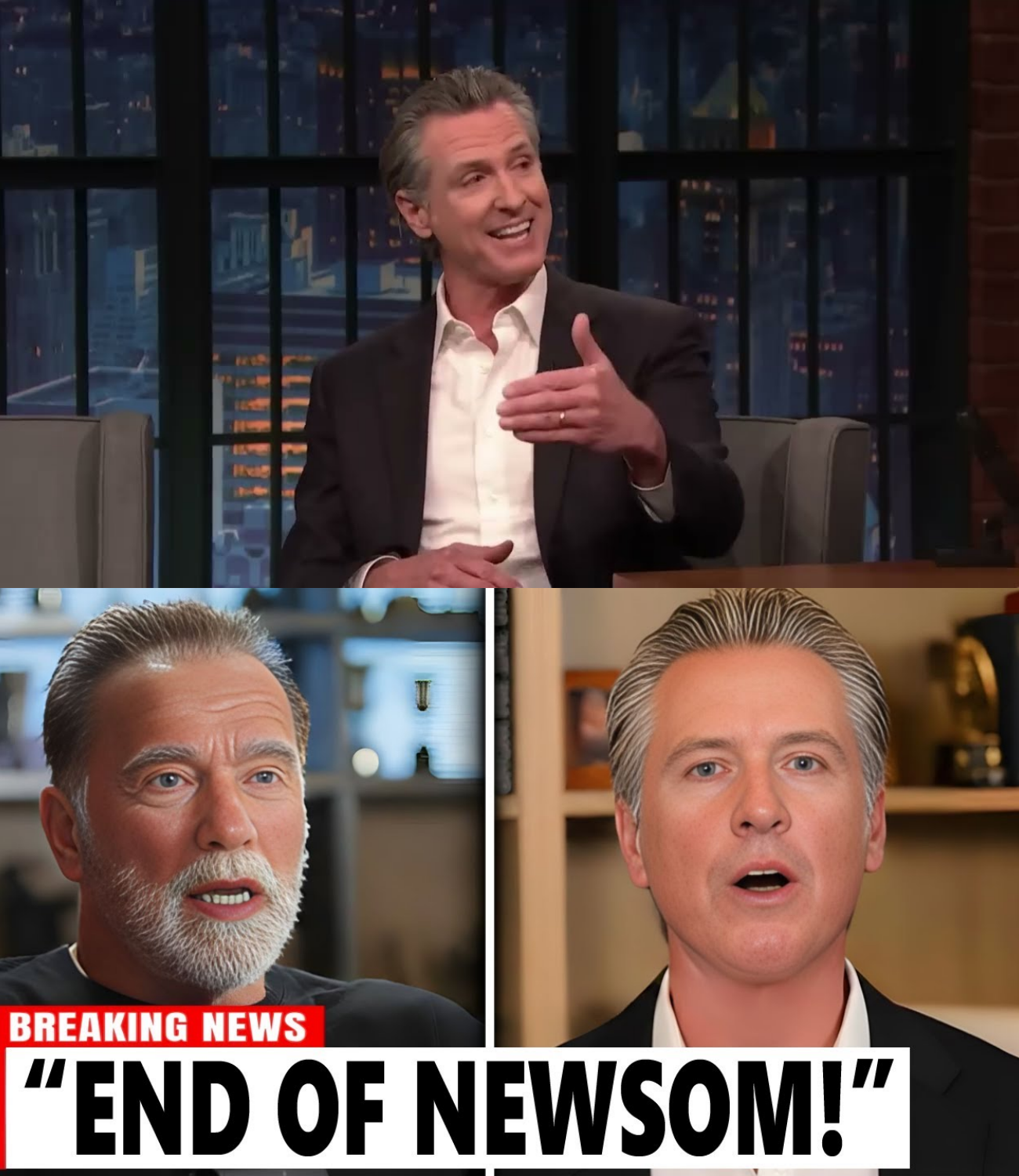
A Clash of Titans in the Golden State
California has long been a stage for dramatic political theater, but few moments have matched the intensity of the recent confrontation between former Governor Arnold Schwarzenegger and the current occupant of the statehouse, Gavin Newsom. It was a moment that felt less like a standard policy debate and more like a cinematic confrontation, with Schwarzenegger—the legendary action hero turned politician—delivering a critique that sent shockwaves through the corridors of Sacramento.
The tension stems from a move by Governor Newsom regarding the state’s independent redistricting commission. For many, this commission represents a hard-won victory for democratic fairness, designed to keep the power of drawing electoral maps out of the hands of partisan politicians. However, Newsom’s recent plans have been perceived by critics as a tactical maneuver to regain influence over these maps, a move Schwarzenegger labeled as fundamentally dangerous for the democratic process.
The Terminator’s Critique
When Schwarzenegger stepped into the spotlight to address these developments, he did not mince words. Known for his “people-first” approach during his own time as governor, he characterized the current political climate in California as a struggle where politicians are far more interested in hoarding power than in serving the public interest [00:13]. He argued that the current administration’s push to dismantle established independent systems, under the guise of fighting national political opponents, is a misstep that threatens the very foundation of fair elections [02:42].
Schwarzenegger’s perspective is rooted in his own experience governing a state known for its complex, often volatile, political landscape. He noted that he found more success by bridging the divide, working with Democrats, and treating them as partners rather than enemies [09:00]. This contrast between the current state of affairs and his own past governance has fueled a perception among voters that California’s leadership is becoming increasingly detached from the practical, everyday needs of its residents.
Style vs. Substance: The New Political Reality
The feud has highlighted a growing frustration among Californians: the feeling that their government has prioritized “image” and “branding” over the hard, unglamorous work of fixing infrastructure and solving local crises. Critics of Newsom have long argued that his administration functions more like a PR agency, emphasizing innovation and national ambition while constituents struggle with housing affordability, rising costs, and infrastructure failures [03:46].
Schwarzenegger, by contrast, brings a brand of blunt, unfiltered showmanship that resonates with voters tired of bureaucratic jargon. His criticism hits home because it challenges the entire aesthetic of modern politics, where leaders often sound more like motivational speakers than effective administrators [10:40]. As the state navigates ongoing challenges, Schwarzenegger’s willingness to call out these issues has repositioned him as a significant, albeit unconventional, voice of opposition.
The Broader Political Landscape
This conflict is not happening in a vacuum. It reflects a wider, national concern about gerrymandering—the practice of drawing district lines to favor one party over another. With both Republican and Democratic factions engaging in these tactics across various states, the issue has become a flashpoint for debate. Schwarzenegger, however, has taken a firm, bipartisan stance against it, even going as far as to use the word “evil” to describe the manipulation of district lines regardless of which party is responsible [16:16].
For Newsom, the situation is delicate. Being publicly roasted by a pop-culture icon and former governor is a political challenge that cannot be easily brushed off with a rehearsed soundbite. The optics are difficult; it casts him in the role of the “establishment” politician being schooled by the “man of the people,” even if that man is one of the most famous celebrities on the planet.
The Verdict from the Public
The response from the public has been as polarized as the politics themselves. On platforms like X (formerly Twitter), the discourse has been frenetic. Supporters of Schwarzenegger praise his boldness, seeing him as a rare voice of truth in a system they believe has become overly insular and petty [06:13]. Conversely, defenders of the current administration argue that these criticisms are part of a larger, partisan narrative that ignores the complexities of governing a state as diverse and massive as California.
Ultimately, the spectacle serves as a poignant reminder of how entertainment and politics have become inextricably linked in the 21st century. Whether or not Schwarzenegger’s intervention leads to a shift in policy remains to be seen. However, he has successfully inserted himself back into the center of the conversation, proving that while times change, his ability to capture the public’s attention remains undiminished.
As the political cycle continues, the memory of this confrontation will likely linger. It serves as a stark testament to the state of California, where the drama is as real as the challenges, and where the most powerful voices often belong to those who know how to command the stage. For now, all eyes remain on Sacramento to see how the current administration navigates the fallout of this very public, very cinematic, and very intense clash.
Full video: