
In a political maneuver that has sent shockwaves through the halls of Washington, Senate Majority Leader Chuck Schumer has taken a step that could fundamentally alter the landscape of accountability in the United States. By filing a new amendment to the National Defense Authorization Act (NDAA), Schumer has effectively challenged the long-standing wall of silence surrounding the Jeffrey Epstein case. This is no longer a request for cooperation; it is a direct demand for the Attorney General to release every single document, every name, and every secret linked to the Epstein network. For years, the public has been told that these files must remain sealed due to ongoing investigations or privacy concerns. Schumer is now signaling that the time for such excuses has come to an end.
A Demand for Total Transparency
The proposed amendment is sweeping in its scope. It requires the Attorney General, currently Pam Bondi, to release all documents tied to Epstein’s network without redactions or summaries. Schumer’s message is clear: the American people, regardless of their political affiliation, are tired of the obfuscation and the “filtered truth” that has characterized the handling of this case since Epstein’s death. By utilizing the NDAA—a critical piece of legislation—Schumer has ensured that this issue cannot be easily dismissed or sidelined. It forces an immediate, binary choice for lawmakers: vote for the full disclosure of facts, or vote to maintain the culture of secrecy that has defined this scandal for years.
The timing of this move is hardly coincidental. Public frustration with the Epstein case has reached a fever pitch, fueled by years of conspiracy theories, doctor-drawn images, and a lack of official answers. As Schumer noted during his announcement, the American people are tired of being lied to. When asked why Democrats hadn’t pushed for this level of disclosure earlier, Schumer’s response was blunt: the current demand for transparency has simply become too great to ignore. The persistent voices of survivors, investigative journalists, and an increasingly skeptical public have finally made it politically impossible for the establishment to keep the lid on the files.
The Spotlight on Attorney General Pam Bondi
The amendment places immense pressure on Attorney General Pam Bondi. As the individual responsible for the Department of Justice, she sits at the center of this storm. If the amendment passes, Bondi will be the one tasked with overseeing the release of these files. Given the history of criticism regarding her handling of high-profile cases, she now faces a defining moment in her tenure. Will she prioritize transparency and demonstrate a commitment to the truth, or will she lean into the existing bureaucratic machinery that has long protected political allies and powerful figures?
The reaction from some corners of the Republican party has been swift, with some labeling the move a “hostile act” and expressing fears that it could derail ongoing negotiations. However, this defensive posture has only raised more questions. Critics of the current system are quick to point out a fundamental irony: if a policy of transparency is viewed as a threat to one’s political agenda, what does that imply about the nature of those deals? The sentiment among those advocating for the release is that transparency is not a threat to justice—it is the very foundation of it.
Exposing the Machinery of Power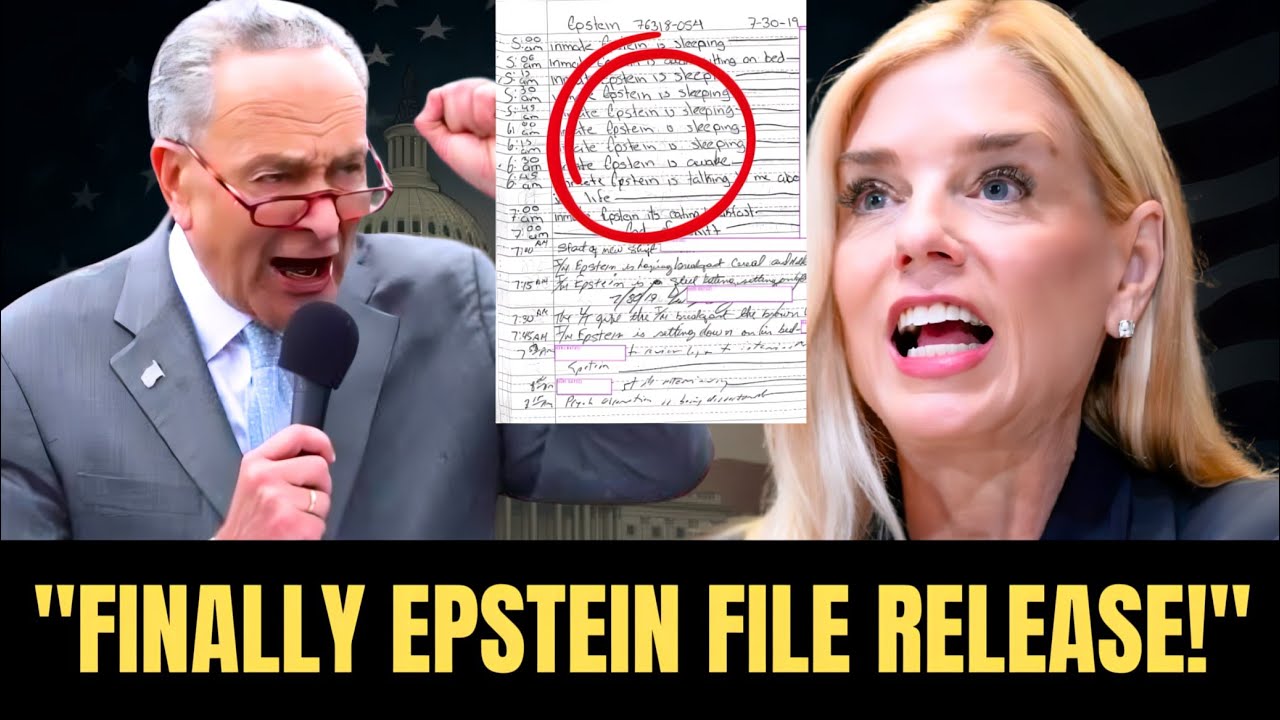
At its core, the Epstein saga has always been about much more than the crimes of one individual. It has been a litmus test for how American institutions react when the interests of the powerful are at stake. For decades, the case has been a mirror reflecting the ugliness of a system where wealth and connections could seemingly provide a shield against the consequences of abuse. The files in question are expected to reveal not just evidence of criminal acts, but also the network of individuals who facilitated them, protected them, and looked the other way.
Schumer’s amendment is an attempt to expose the machinery that allowed these behaviors to go unchecked. It seeks to uncover who intervened, who made the decisions to redact critical information, and who ultimately ensured that the full scope of the operation remained hidden. By forcing these documents into the public view, the amendment could initiate a much-needed reckoning across multiple institutions, potentially exposing patterns of corruption that have operated in the shadows for far too long.
Addressing the Counter-Arguments
Opponents of the immediate release often cite concerns over individual privacy or the potential for misinformation to run wild. They argue that releasing raw documents could reignite conspiracies or cause unnecessary damage to reputations. Proponents of the amendment, however, argue that these concerns are misdirected. They point out that the current lack of transparency is the very factor that fuels conspiracy theories. When the public is only fed carefully curated summaries, they are left to fill in the blanks themselves. The only reliable cure for the current climate of misinformation is the sunlight of total, unfiltered transparency.
Furthermore, the argument that privacy outweighs the public’s right to know holds little weight when the subject involves the systemic protection of criminal behavior. When the powerful are involved, the standard of accountability should be higher, not lower. If the files contain evidence of wrongdoing, the public deserves to know the extent of the rot. If they do not, then their release should be a matter of routine. The fact that there is so much resistance to their release is, for many, the most telling evidence that there is something significant to hide.
A Moral and Political Crossroad
The fight over these files is ultimately a moral one. It challenges society to decide whether it truly believes in the principle of equality under the law, or whether it accepts that some individuals are, by virtue of their status, above that law. By forcing this vote, Schumer has effectively narrowed the battlefield. There is no middle ground: lawmakers are now being asked to declare whether they stand for the uncomfortable truth or the comfortable silence of the status quo.
As this debate continues, the nation will be watching. The potential ripple effects of such a disclosure are enormous. Investigators, historians, and victims will have a new wealth of information to examine. The implications could go beyond individual embarrassment; they could force institutions to confront the systemic failures that allowed a predator to operate for so long.
The Path Forward
Whether or not this amendment ultimately passes, the act of introducing it has fundamentally changed the conversation. The demand for truth is now a formal part of the legislative agenda, making it increasingly difficult for officials to ignore the issue. The Epstein case has long been a symbol of institutional failure, but it is now being transformed into a test of institutional integrity.
For those who have been calling for accountability, this represents a significant victory in the ongoing struggle for transparency. It serves as a reminder that power, when left unchecked, will always move to protect itself, and that the only effective check on that power is an informed and vocal citizenry. The fight for these files is not just about the past; it is about the future of American justice and whether the system can eventually reform itself to ensure that the truth is no longer treated as a commodity to be buried, but as a right to be upheld. As the standoff continues, the message from the public remains clear: no more hiding, no more secrets, and no more excuses. The time for the truth has come.
Full video: