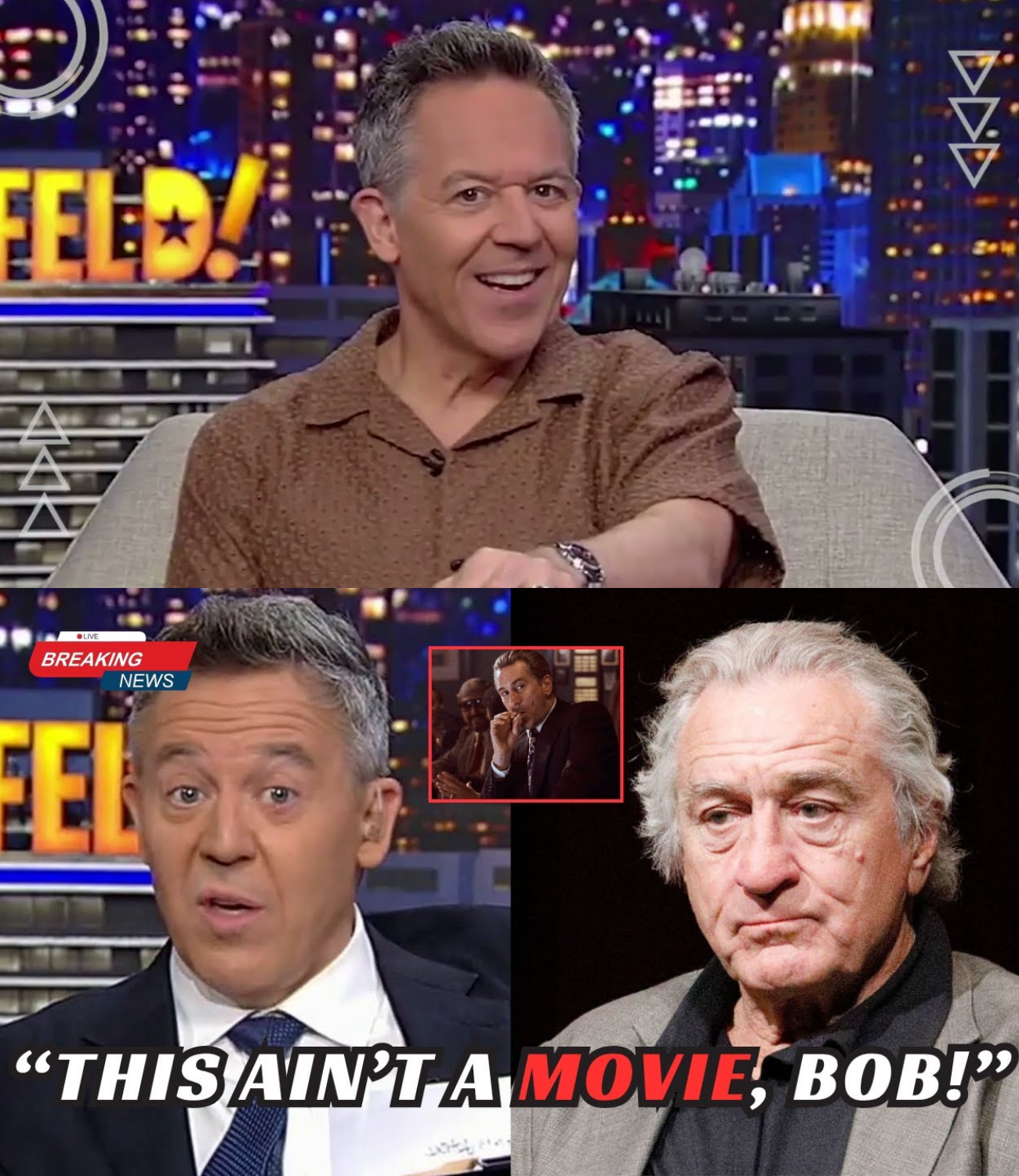
In the golden era of cinema, Robert De Niro didn’t need a monologue to dominate a scene. He owned the room with a mere shift of his eyes, a subtle grimace, or a chilling silence that left audiences breathless. From the gritty streets of Taxi Driver to the explosive intensity of Raging Bull, De Niro was the gold standard—a performer who understood that true power lies in precision and restraint. Yet, as the years have passed, that legendary intensity has undergone a bizarre and tragic transformation. Today, rather than captivating audiences with his craft, De Niro finds himself center stage in a different kind of production: a continuous, unscripted series of public outbursts that have left even his most devoted fans cringing.
The shift has been both palpable and jarring. The man who once whispered “You talking to me?” and became an American icon has, in recent times, traded the nuance of the silver screen for the high-decibel volume of political outrage. This evolution was recently put under the microscope by Greg Gutfeld, who didn’t need to resort to insults to dismantle the actor’s credibility. Instead, Gutfeld used a far more dangerous tool: raw, undeniable reality.
The Death of the Method Actor
For decades, De Niro was the face of the “method” acting movement. He embodied his characters so completely that the line between actor and role evaporated. Whether he was the psychopathic Travis Bickle or the volatile Jake LaMotta, he brought a haunting authenticity to the screen. But somewhere along the way, that dedication to craft was replaced by a dedication to activism, and not the kind that changes minds.
Observing De Niro in recent interviews is like watching a man who has forgotten how to function without a script. When stripped of a director’s vision and a writer’s dialogue, he often appears powerless, unable to articulate his frustrations in a way that resonates with those outside his own bubble. The “De Niro of old” was a force of nature; the “De Niro of now” is often viewed as a man who mistakes volume for impact. It is a cautionary tale of what happens when an artist loses touch with the very audience that elevated them to stardom.
Greg Gutfeld’s Surgical Takedown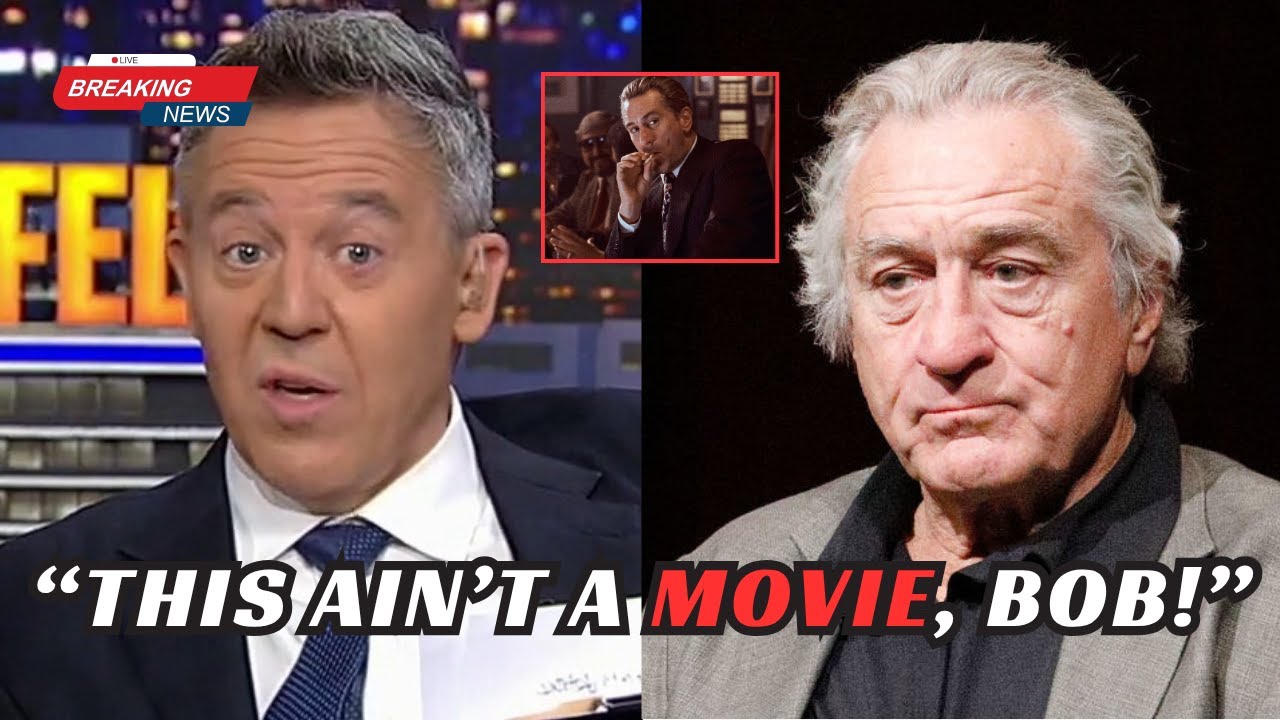
The clash between Robert De Niro and the cultural discourse of our time reached a boiling point when Greg Gutfeld decided to showcase the actor’s latest televised tirades. Gutfeld, known for his acerbic wit and ability to cut through media noise, didn’t need to mount an aggressive attack. He simply played the footage.
As viewers watched the clips of De Niro’s frantic, often incoherent rants during award shows and news appearances, the contrast was devastating. Gutfeld pointed out the obvious irony: while De Niro believes he is leading a charge of “truth-telling,” the public is seeing something far more mundane—a man struggling to accept that his influence is waning. By letting the footage run, Gutfeld highlighted the contradictions in De Niro’s current behavior. He oscillates between quoting the Constitution with gravity and descending into juvenile profanity, creating a spectacle that feels less like a political statement and more like a performance art project gone wrong.
The Trap of Political Obsession
At the heart of De Niro’s current dilemma is a profound disconnect. He appears trapped in an ideological echo chamber, seemingly convinced that his fame grants him an inherent authority on complex political issues. However, the modern electorate has proven to be less susceptible to celebrity lecturing than in previous decades. When De Niro screams into a microphone, he isn’t swaying the undecided or building bridges; he is merely preaching to a room that has already agreed with him, while alienating a broader audience that simply wants to see the actor they remember from the big screen.
Gutfeld noted that this behavior reflects a deeper, perhaps more painful reality for Hollywood: the realization that their cultural currency is rapidly devaluing. When actors feel their relevance slipping, they often turn to louder protests, hoping that sheer volume will mask the fading applause. But as Gutfeld sagely observed, this strategy is backfiring. Instead of appearing brave or principled, the outbursts come across as desperate.
A Legacy Drowned in Noise
The tragedy of this transition is that it threatens to overshadow a truly remarkable career. A library of legendary performances—films that defined a generation—is now being bookended by clips of the star shouting at reporters and delivering garbled, fury-filled monologues. It is the classic case of a legend failing to exit the stage at the right time.
Watching De Niro today is like observing a rock legend who has forgotten the lyrics mid-song but refuses to stop screaming into the microphone. He continues to storm stages as if every interview is a dramatic climax in a Scorsese film, but the audience has moved on. The silence that once made him dangerous has been replaced by a constant, static noise of indignation that lacks both arc and purpose.
The Final Act
Ultimately, Greg Gutfeld’s “roast” of De Niro wasn’t about politics—it was about clarity. By holding up a mirror to the actor’s behavior, he exposed the emptiness behind the rage. De Niro’s outbursts are no longer shocking; they are predictable. They are a routine that has become tired and, to many, quite sad.
As the cameras dim and the viral clips make their rounds across social media, the legacy of Robert De Niro stands at a crossroads. He can continue to chase the temporary, toxic validation of the outrage cycle, or he can recognize that his true power—the power that made him a legend—was always in his craft, not his commentary. For now, however, it seems the cycle continues, with each new rant simply adding another layer of dust to the cinematic cathedral he built so many years ago.
In the end, the most brutal critique wasn’t something Gutfeld said; it was the simple, unobstructed playback of the man himself. Sometimes, when a person is determined to dismantle their own pedestal, the kindest thing an observer can do is simply hand them the hammer and watch.
Full video: