The Empty Promises of the Elite
Every four years, as the political temperature rises in the United States, a familiar ritual begins. High-profile celebrities, media personalities, and cultural influencers take to social media with grand, emotional declarations: “If this candidate wins, I am leaving the country.” These proclamations are designed to generate headlines, secure social media validation, and signal moral superiority. Yet, as Bill Maher recently highlighted in a blistering critique, the pattern is as consistent as it is predictable: the speeches go viral, the hashtags trend, but the plane tickets never appear.
For Maher, this cycle isn’t just a political disagreement; it is a display of performative entitlement that reveals a deep disconnect between the elite and the reality of the world. “Complaining is easy,” Maher remarked, pointing out that while celebrities portray America as oppressive or unbearable, they rarely follow through on their threats to abandon their comfortable lives for a foreign land [01:00].
The Hypocrisy of the “Dystopian Hellscape”
The core of the issue, according to Maher, is a profound lack of perspective. Many of these public figures characterize the United States as a dangerous, dystopian place. Yet, Maher asks a logical question: if the country is truly as intolerable as they claim, why do millions of people from around the world risk everything—often their lives—just to reach its borders [02:43]?
The irony is particularly sharp when viewed through the lens of individual rights. Maher noted the recent media coverage of individuals expressing fear about living in American cities, claiming they need to “escape.” He countered this by noting that there are 66 countries where merely being gay is a criminal act, sometimes punishable by death [04:28]. When placed against the reality of global regimes where dissent or personal identity can lead to incarceration or worse, the complaints of Western celebrities often ring hollow. They live in a nation that provides safety, legal protections, and freedoms that are considered a rare luxury in much of the world, yet they treat minor inconveniences or political disagreements as equivalent to state-sponsored persecution [04:13].
Privilege Versus Patriotism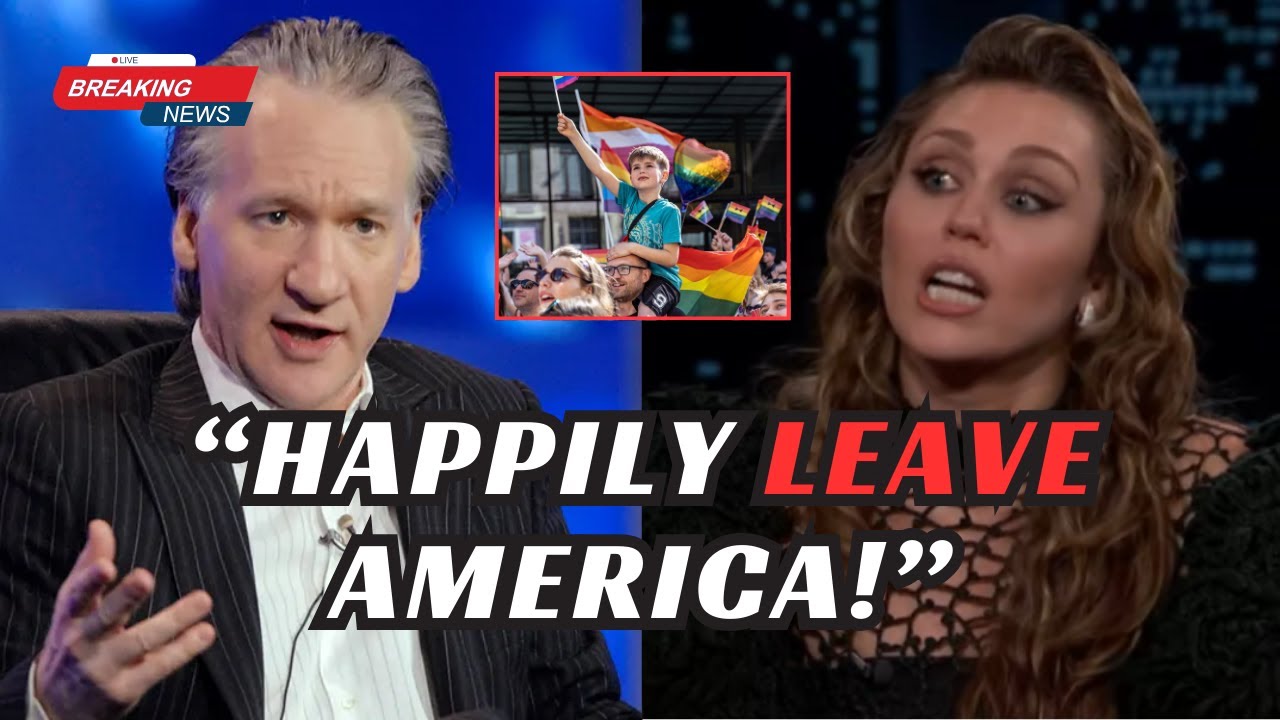
Maher argues that this behavior isn’t motivated by a genuine desire for social change, but rather by the need for “clout and optics” [07:12]. It is a form of virtue signaling that requires no personal sacrifice. True patriotism, in contrast, is the difficult, often unglamorous work of staying in a country and engaging in the hard labor required to fix its flaws.
“We don’t need quitters. We need people who will stay and fix it,” Maher stated, acknowledging that the United States is far from perfect [05:57]. He readily cites the country’s significant challenges, such as issues with infant mortality, literacy gaps, and female political representation [05:33]. However, he maintains that the solution to these systemic problems is found in active civic participation, not in empty threats to move to a different country [05:08].
The Disconnect from Everyday Struggle
Perhaps the most biting part of Maher’s critique is the exposure of the lifestyle gap between these celebrities and their audience. He pointed out that many of these stars are fundamentally detached from the daily struggles of the average American. While millions of citizens are balancing medical bills, worrying about mortgage payments, or stretching a paycheck to cover basic needs, the “hardship” for these celebrities often looks like a choice between different classes of air travel [06:12].
This detachment leads to a strange irony: these same voices, while claiming they want to leave, often advocate for policies that encourage others to come to the U.S. to experience the “good life.” If the country were truly the disaster zone they describe, wouldn’t it be an ethical responsibility to warn people away? The lack of consistency suggests that their declarations are about the spectacle rather than the substance [06:41].
A Call for Reality
Maher’s takedown serves as a reminder that discourse in the age of social media is often dominated by the loudest voices, rather than the most grounded ones. By framing the American experience as a binary of either total utopia or total nightmare, critics lose the ability to have a nuanced conversation about how to improve a flawed but functional society.
The “New American Dream” of escaping the country is, according to Maher, a myth perpetuated by those who have never had to face the consequences of actually living without the very freedoms they criticize. At the end of the day, the joke isn’t on the country—it is on those who pretend to hate it while continuing to enjoy the prosperity it provides [07:51].
For anyone truly concerned about the state of the nation, the message from Maher is clear: stop the theatrics, acknowledge the privilege of living in a free society, and get to work. The country doesn’t need people who are constantly looking for the exit; it needs citizens who are committed to the long, difficult, and necessary process of improvement.
Ultimately, the spectacle of the “celebrity exodus” serves as a mirror for our current cultural climate—one where performative outrage is rewarded, and quiet, sustained action is forgotten. It is time to move past the viral rants and focus on the substantive work of nation-building, realizing that for all its imperfections, America remains a place that millions are still trying to enter, not leave [03:42]
Full video: