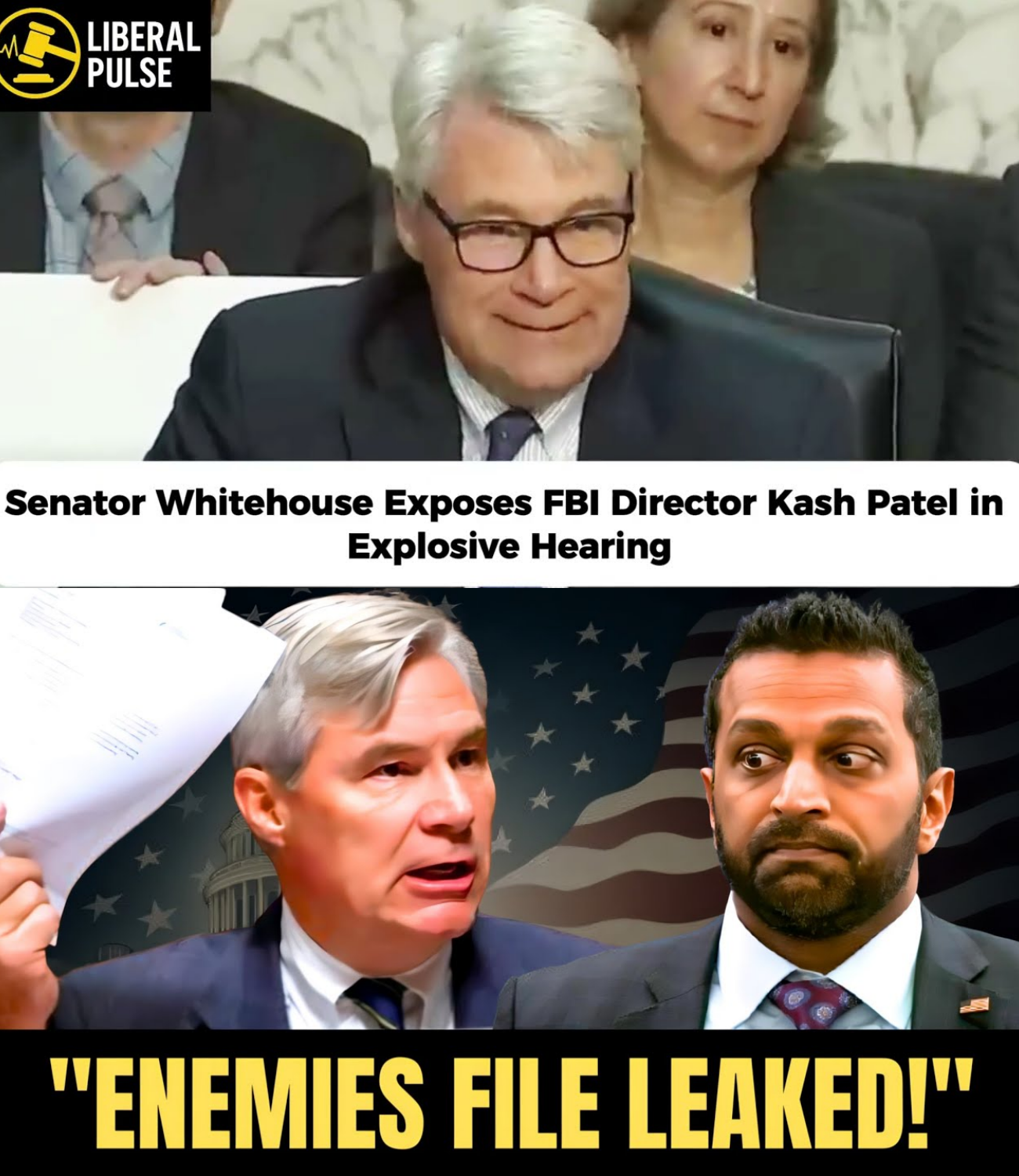
In a high-stakes oversight hearing that has sent ripples of concern through Washington, Senator Sheldon Whitehouse recently confronted FBI Director Kash Patel in a session that was as much about the integrity of American institutions as it was about the individuals in the room. The exchange, which touched upon everything from secret “enemies lists” to the potential politicization of career law enforcement agents, has ignited a fierce debate about the current direction of the FBI [00:16].
The Mystery of the Eight-Day Pause
The hearing began with an immediate focus on a critical, yet unexplained, procedural anomaly: an eight-day pause in FBI background investigations. Senator Whitehouse did not mince words, pressing Director Patel on whether he was informed about this sudden halt when he took office on February 20th. According to allegations brought forward by terminated FBI agents, a directive had been issued to freeze all background checks for Trump nominees until Patel was officially confirmed.
When asked if anyone had briefed him on this pause, Patel offered a flat denial, claiming no recollection of such a briefing [11:45]. For an agency defined by its rigorous investigative standards, a multi-day blackout is highly irregular. Whitehouse argued that such a void in transparency is a major red flag. If background checks can be stopped on a whim without a clear explanation, the security and vetting process—which serves as a bedrock for national trust—effectively becomes a tool for political maneuvering rather than a safeguard [15:26].
The Alleged “Enemies List”
Perhaps the most startling accusation brought to light involved what Whitehouse described as an “enemies list” [01:12]. The Senator pointed to data suggesting that approximately 20 of the 60 people on this list had already faced adverse personnel actions within just seven months of Patel’s tenure. At this rate, Whitehouse warned, the entire list could be purged within 14 months [01:21].
Patel vehemently denied the existence of an “enemies list,” insisting that all personnel decisions at the FBI are based strictly on merit, qualifications, and the ability to uphold one’s constitutional duty [01:37]. However, the Senator’s line of questioning highlighted that patterns in government staffing often tell a story that goes beyond official denials. Whether or not such a list exists in writing, the perception that career employees are being targeted for political reasons poses a catastrophic risk to the agency’s internal morale and objective mission [12:44].
Transparency and Legal Obfuscation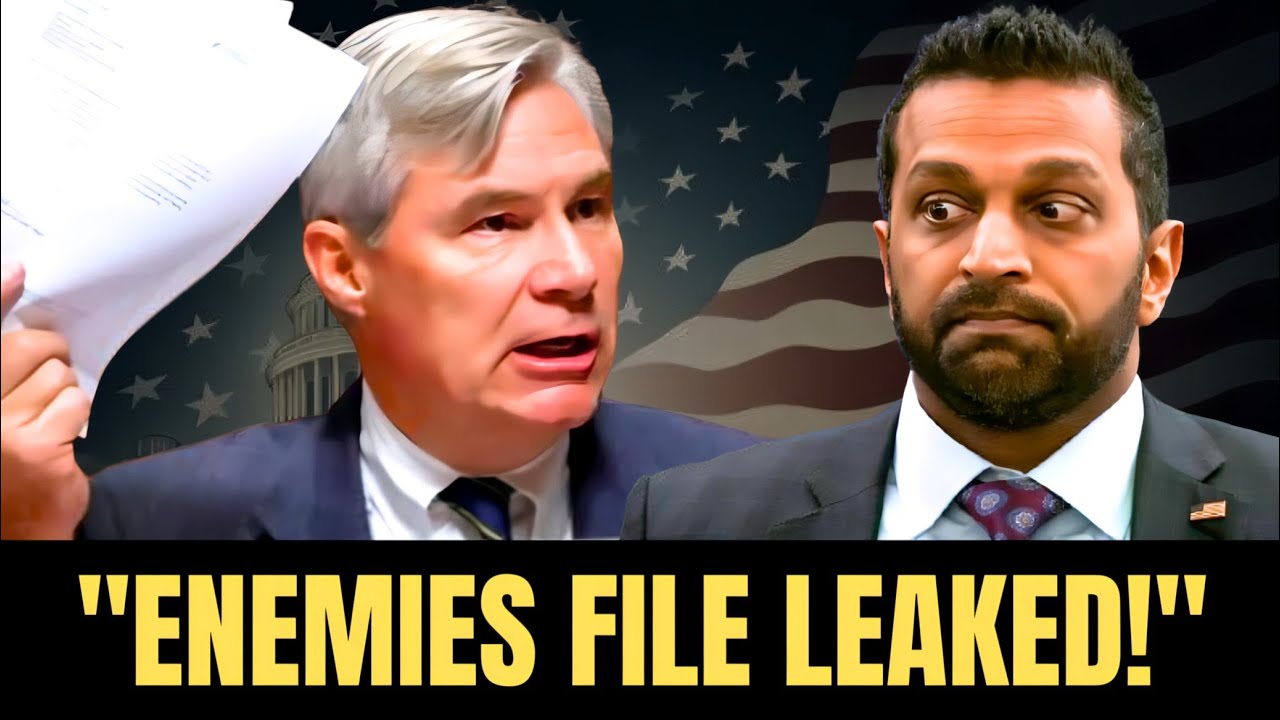
The hearing also saw a clash over Patel’s previous assertions regarding his grand jury testimony. Previously, Patel had suggested that he was barred by a court order from discussing certain details of his testimony. However, Chief Judge James Boasberg had already clarified that Federal Rule of Criminal Procedure 6E allows witnesses like Patel to disclose their own testimony [03:08].
When confronted with this fact, the situation turned awkward. It begged the question: Was the Director genuinely confused about the law, or was he utilizing a technical, inaccurate excuse to evade scrutiny from the oversight committee? This discrepancy further eroded the atmosphere of trust between the FBI leadership and Congress, as lawmakers struggle to determine if they are receiving honest answers or carefully constructed legal walls meant to hide the truth [13:31].
The Vetting of Nominees
The conversation shifted to the vetting process, specifically regarding the nomination of Janine Pirro. It was noted that Fox News executives had previously described her in derogatory terms, citing concerns about her temperament and alleged penchant for conspiracy theories [04:37]. Whitehouse questioned whether the FBI’s background check had uncovered these reports.
Patel’s response was characteristically evasive, maintaining that background checks are handled by career professionals and that he does not involve himself in individual adjudications [06:29]. Whitehouse offered three distinct possibilities for the situation: either the FBI missed the information, they found it and buried it, or they reported it and the administration proceeded anyway [06:16]. Each scenario presents a damning failure in the system, suggesting that the standards used to vet potential officials may be compromised or ignored when it suits political ends [15:01].
Loyalty Tests and the Future of the Bureau
Perhaps the most unsettling allegation was the report that internal FBI employee reviews included questions about how agents voted in the 2024 election [08:27]. For a federal agency that claims to be nonpartisan, the mere suggestion that political affiliation could influence promotions or terminations is radioactive.
Patel categorically denied that such questions were asked under his leadership, labeling the allegation “improper and offensive” [09:39]. While he defended the integrity of his tenure, the fact that such reports reached the level of a Senate hearing illustrates a deep-seated anxiety regarding the politicization of the FBI. If agents even suspect that their private political beliefs could jeopardize their careers, the agency’s commitment to impartial justice becomes nothing more than a talking point [16:13].
The Broader Implications for Democracy
As the hearing concluded, the takeaway was clear: the public is witnessing a clash between those who believe the FBI is being transformed into a political machine and those who maintain it remains a steadfast pillar of law enforcement. Senator Whitehouse’s interrogation was not merely an exercise in political theater; it was a necessary demand for accountability in an era where institutional trust is at an all-time low [19:16].
When transparency is dodged, when background checks are paused without explanation, and when career paths are allegedly tied to political loyalty, the foundation of justice begins to wobble. For the average citizen, these are not just abstract, high-level political squabbles. They are fundamental questions about whether the government works for the people or for those currently holding the levers of power [17:41].
The integrity of our institutions depends entirely on our ability to look behind the curtain, demand answers, and hold figures in high office responsible for their actions. As this story continues to develop, it serves as a stark reminder that democracy is not a self-sustaining machine. It requires constant vigilance, active oversight, and a citizenry that is willing to keep asking the difficult questions until real accountability is achieved.
Full video: