When Dan Brown’s The Da Vinci Code first hit bookshelves, it didn’t just become a bestseller; it ignited a global firestorm. The premise was intoxicating: a high-stakes thriller where ancient, forbidden secrets about the Catholic Church and the true lineage of Jesus Christ were encoded within the works of Leonardo da Vinci. For years, the public has struggled to disentangle the gripping fiction from the historical claims embedded within the narrative. As Brown asserted in his opening pages that “all descriptions of artwork, architecture, documents, and secret rituals in this novel are accurate,” it left readers wondering: what if the foundation of Western civilization is built on a lie?
To understand the endurance of these myths, one must first recognize the power of institutions like the Catholic Church. With its own sovereign state, vast real estate holdings, and centuries of political maneuvering, the Church is undoubtedly one of the most influential entities in history. Its power is not merely economic; it is the moral compass for billions. Yet, this very influence makes the Church a prime target for theories of conspiracy. When an institution holds such immense control, curiosity about what happens “behind the scenes” is inevitable.
The core of The Da Vinci Code narrative revolves around the Priorato de Sion, a secret society allegedly tasked with protecting the “true” history of Jesus and Mary Magdalene. According to the novel’s lore, Jesus was married to Magdalene, and their bloodline—the “Sang Real” or Royal Blood—survives to this day. It is an enticing story. However, historical scrutiny reveals a different reality. The Priorato de Sion was not an ancient order; it was a hoax created in 1956 by Pierre Plantard, who forged documents to give his “society” a sense of historical weight. Plantard’s fabricated history was later popularized in the book The Holy Blood and the Holy Grail, which Dan Brown used as a cornerstone for his own narrative.
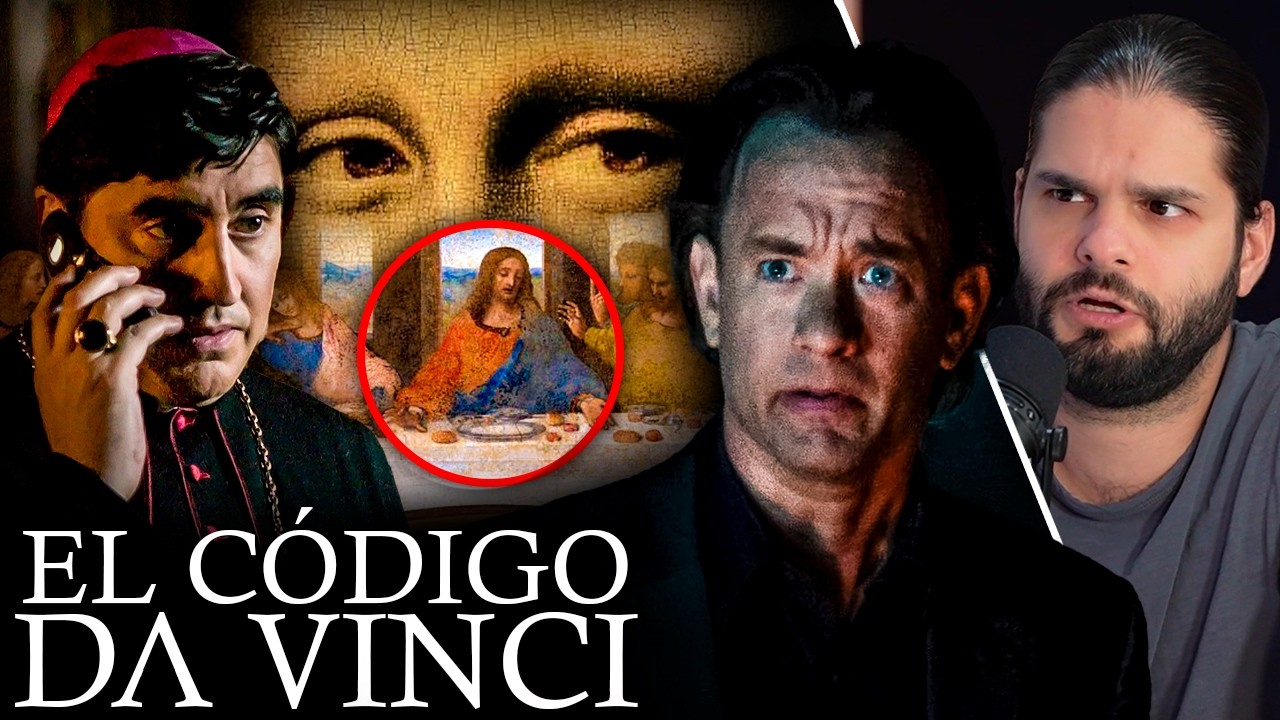
The conflation of truth and myth is perhaps most visible in the interpretation of Leonardo da Vinci’s The Last Supper. The novel argues that the absence of a chalice in the painting, and the “feminine” appearance of the figure of John, are deliberate codes pointing toward Mary Magdalene and a denial of the traditional Eucharist. Historians, however, offer a more grounded perspective. Da Vinci was an innovator who sought to break from the static, formulaic representations of his era. His choices were aesthetic and compositional, not esoteric. The figure of John, often depicted with delicate, youthful features, was a standard convention in 15th-century religious art representing innocence—not gender.
The linguistic gymnastics required to transform the “Holy Grail” (sanctum gradale, or “holy vessel”) into “Sang Real” (“royal blood”) is another point of contention. While the etymological link is a clever literary device, it holds no ground in medieval Latin or Old French studies. The Grail, throughout much of its literary development, shifted from a magical dish in early fantasies to the cup of the Last Supper in later religious texts. It was never a coded reference to a biological bloodline in the original texts.
Furthermore, the figure of Mary Magdalene herself is subjected to a modern revisionism that does not match the historical record. While texts like the Gospel of Mary Magdalene exist, they do not depict her as the wife of Jesus, nor do they confer upon her the political leadership of the early Church over Peter. They reflect the theological and structural debates of the early Christian communities, not a historical account of a secret marriage. By stripping these texts of their context, the novel transforms them into weapons of conspiracy, appealing to a modern skepticism of organized religion.
Ultimately, the phenomenon of The Da Vinci Code serves as a poignant lesson on the nature of information in the modern age. It highlights how data—taken out of context and woven into a narrative—can be perceived as truth when it is presented with conviction. When Dan Brown claimed his work was “accurate,” he tapped into a desire for hidden meaning in a world that often feels chaotic.
We live in an era where the boundary between information and misinformation is dangerously porous. When we consume media—whether it is a thriller, a documentary, or a social media post—the responsibility to question and verify is paramount. The allure of a secret history is strong, but the actual history of our institutions, our art, and our faith is often far more complex and interesting than the conspiracy theories that attempt to simplify them. The real mystery isn’t hidden in a cryptex or a code in the Louvre; it is found in the ability of human beings to distinguish between what we want to be true and what is supported by the weight of history.