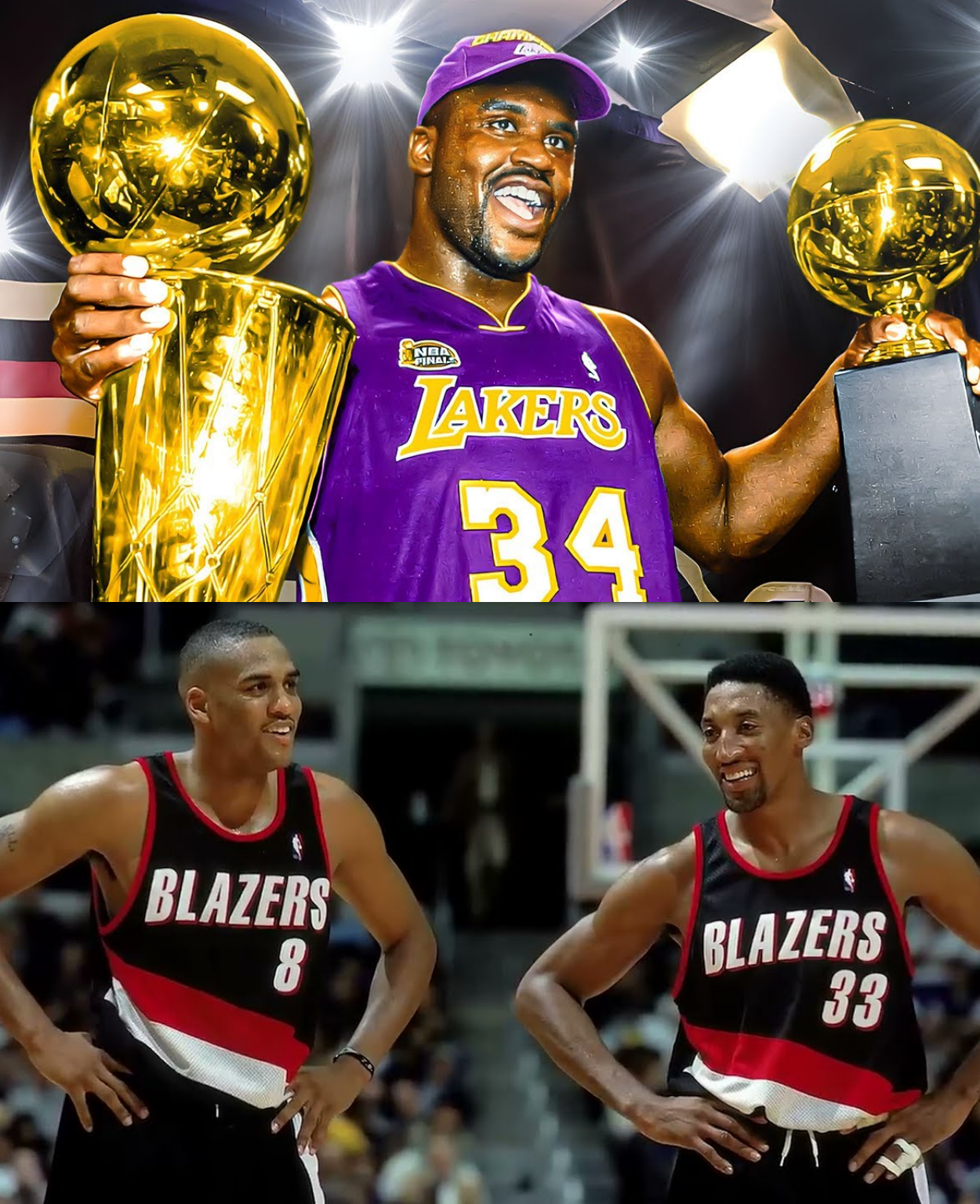
In the annals of professional basketball, few names command the sheer, visceral gravity of Shaquille O’Neal. Standing at 7-foot-1 and weighing nearly 300 pounds in his prime, with a 7-foot-7 wingspan and size 23 shoes, Shaq was not merely an athlete; he was a geological event. He was a force of nature so uniquely destructive that the National Basketball Association was forced to reinforce its backboards and upgrade its baskets just to ensure the equipment could survive his presence. Yet, to categorize Shaq simply as a “physical freak” is to ignore the most fascinating aspect of his career: the paradox of a man who was simultaneously the most unstoppable player in the league and, by his own admission and his coaches’ accounts, the laziest superstar in NBA history.
Shaq’s journey to the pinnacle was paved with military-grade discipline, thanks to his stepfather, Sergeant Philip Harrison. Harrison’s tough love and the rigid structure of military life likely saved a young, troublemaking O’Neal from a much darker fate. By the age of 13, Shaq had already hit 6-foot-7, and his sheer presence on the court was so startling that legendary LSU coach Dale Brown offered him a scholarship on the spot. At Louisiana State University, O’Neal blossomed into a collegiate monster, averaging 25 points, 14 rebounds, and five blocks per game over his final two seasons. When he was drafted first overall by the Orlando Magic in 1992, he brought with him a level of anticipation rarely seen in the history of the sport.
He did not disappoint. Shaq’s rookie season was a blur of backboard-shattering slams and pure, kinetic dominance. He was the first rookie selected to the All-Star game since Michael Jordan and was the near-unanimous Rookie of the Year. However, the early years in Orlando also highlighted the fundamental tension that would define his career. Despite teaming up with the brilliant Penny Hardaway—a partnership that many believed would be the next Magic Johnson and Kareem Abdul-Jabbar—the Magic repeatedly fell short of championship glory. Shaq later admitted that his youthful immaturity, characterized by excessive partying and a lack of professional preparation, played a significant role in their failures, particularly during their sweep at the hands of the Hakeem Olajuwon-led Houston Rockets in the 1995 Finals.
In 1996, feeling disrespected by the Orlando organization during stalled contract negotiations, Shaq took his talents to Los Angeles. It was a match made in Hollywood heaven. O’Neal leaned into his outsized personality, exploring movie roles, music, and the celebrity culture of LA. Yet, for the first few years in purple and gold, the championship remained elusive. The breakthrough arrived in 1999 with the hiring of Phil Jackson. The legendary coach implemented a rigorous structure that finally forced O’Neal to channel his massive gifts. Shaq responded by getting into the best shape of his life, leading the NBA in scoring and field goal percentage, and coming within a single vote of becoming the league’s first unanimous MVP.
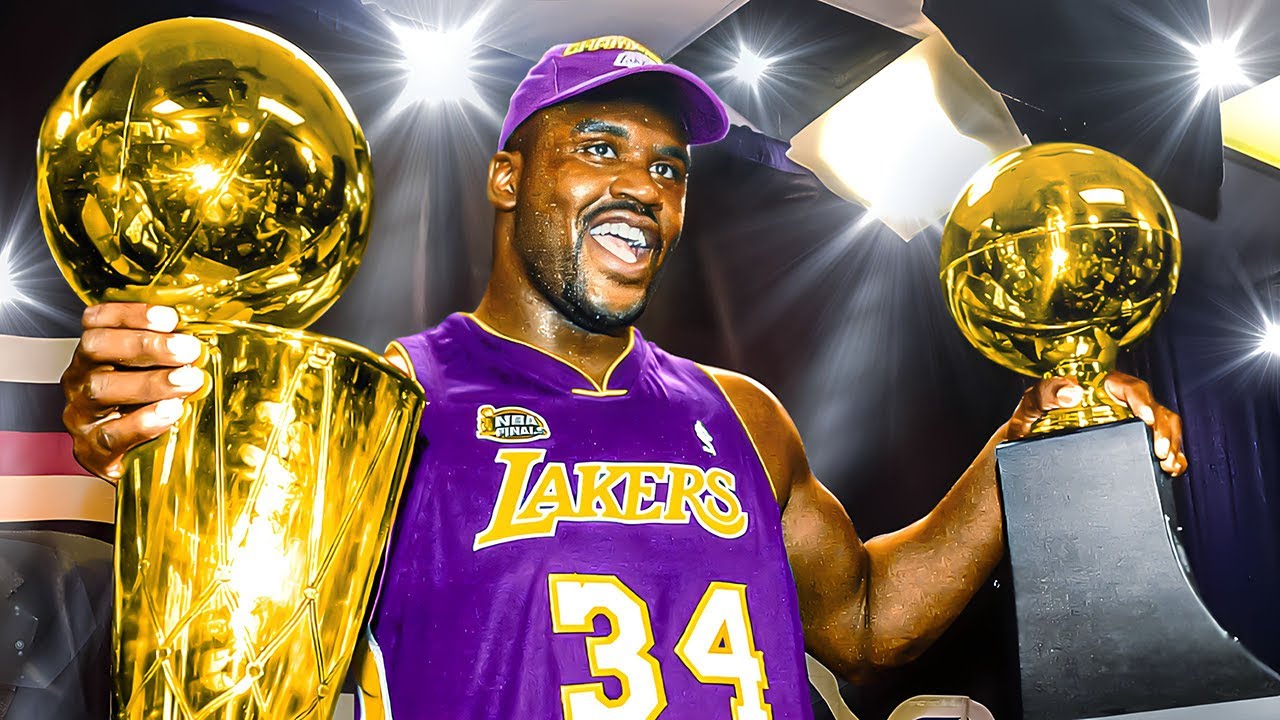
The ensuing three-peat (2000–2002) was the apex of O’Neal’s dominance. Between 2000 and 2002, he averaged 30 points, 15 rebounds, and three blocks per game in the postseason. He was a singular defensive and offensive anchor, a player who made the concept of “team defense” against him entirely moot. Yet, even during this historic run, the seeds of his inevitable downfall were being sown. The friction between Shaq and his young, hyper-competitive teammate Kobe Bryant reached a boiling point. Bryant’s work ethic stood in stark contrast to O’Neal’s, who often arrived at training camp noticeably out of shape after spending his summers enjoying the spoils of his previous title.
The Lakers’ dysfunction finally exploded in 2004 following a stunning loss to the Detroit Pistons in the NBA Finals. By the end of his time in LA, Shaq had ballooned to nearly 400 pounds. The subsequent trade to the Miami Heat was a desperate attempt to prove he could still dominate, and he largely succeeded, winning a fourth championship alongside Dwyane Wade in 2006. However, the physical toll and the lingering habits of his earlier years—the refusal to work on his free throws, the conflicts with coaches like Pat Riley, and the waning commitment to conditioning—began to catch up with him. By the time he bounced through Cleveland and Boston in the final years of his career, the “Big Diesel” had become a veteran role player, eventually retiring after a series of injuries in 2011.
Where does Shaq rank in the pantheon of basketball giants? His resume is unassailable: four championships, three Finals MVPs, a regular-season MVP, and an unprecedented level of dominance over his contemporaries. Critics, including Phil Jackson, frequently argued that had Shaq approached the game with the same obsessive, minute-by-minute intensity as a Kobe Bryant or a Michael Jordan, he could have easily won ten championships and five MVPs. They argue his legacy is one of “what could have been.”
But there is a counter-argument to the criticism of his laziness: Shaq did it his way. He remained true to his personality, enjoyed every facet of his life to the fullest, and still managed to become one of the 20 greatest players to ever lace up a pair of sneakers. He was the most fun the NBA had ever seen, a giant with the heart of a showman. Perhaps Shaq’s greatest accomplishment was not the championships he won, but his ability to dominate the game entirely on his own terms. He was a force of nature who arrived, broke everything in his path, lived life at full volume, and redefined the center position forever. Whether one views him as a wasted opportunity or the greatest of all time, the truth remains the same: there will never be another Shaquille O’Neal.