In the summer of 2010, the NBA underwent a seismic shift. When LeBron James announced his departure from the Cleveland Cavaliers in a nationally televised broadcast dubbed “The Decision,” he became, almost overnight, the most despised athlete in professional sports. The backlash was immediate and vicious; fans across Ohio burned his jersey in the streets, and critics labeled him as a man without loyalty or a “clutch gene.” When his inaugural season in Miami ended in a stunning collapse against the Dallas Mavericks, it appeared the skeptics were correct. LeBron had been exposed as a passive, rattled superstar who crumbled under the weight of his own sky-high expectations.
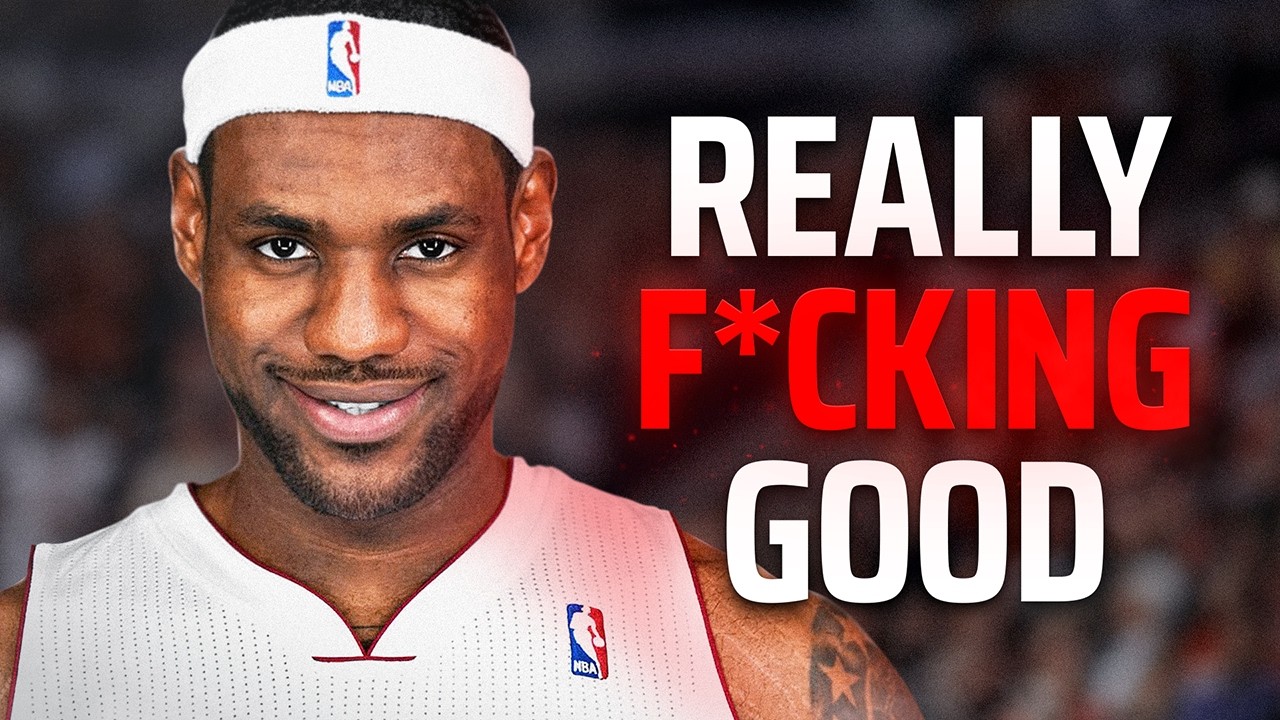
Yet, that humiliating defeat in 2011 did not break LeBron James. Instead, it triggered the most significant evolution of any athlete in the history of the sport. The version of LeBron that emerged from that wreckage was not just a basketball player; he was a physical and mental anomaly, a 270-pound juggernaut who possessed the passing vision of a point guard and the defensive versatility to guard every position on the floor.
To understand the sheer magnitude of the Miami Heat era, one must look at the brutal failure that preceded it. Against Dirk Nowitzki and the Mavericks, LeBron was unrecognizable. He was tentative, passive in the fourth quarter, and repeatedly stymied by Dallas’s defensive schemes. He was held to a career-low eight points in Game 4 and essentially vanished when the game was on the line. The public humiliation was absolute. Following the loss, LeBron retreated into total isolation for two weeks, refusing to leave his room or speak to anyone. It was, by his own admission, the lowest point of his professional life.
When he finally emerged, he did so with a singular, ferocious purpose. Recognizing that his lack of a post game had been exploited by defenders, he sought out the legendary Hakeem Olajuwon. Under the tutelage of the NBA’s greatest post-scorer, LeBron underwent a transformation. He didn’t just learn a few tricks; he seemingly downloaded a comprehensive database of elite footwork, spin moves, and fadeaways. By the time the 2012 season began, he was no longer drifting into low-percentage perimeter shots. He had become a master of the painted area, capable of bullying smaller defenders and navigating double-teams with ease.
Simultaneously, Miami Heat head coach Erik Spoelstra was undergoing his own metamorphosis. Rejecting the constraints of traditional positions, Spoelstra implemented a radical “pace and space” philosophy inspired by college football’s spread offenses. He created a system without a designated center or point guard, placing the ball in the hands of LeBron James and Dwyane Wade to act as playmaking engines. It was a revolutionary style of “positionless” basketball that the league was completely unprepared to defend.
The results were terrifying. During the 2012 and 2013 seasons, LeBron James reached an offensive and defensive peak that remains largely unrivaled. He was shooting career-best percentages from the field, controlling the tempo of every game, and anchoring a defense that switchable and stifling. In the 2013 Eastern Conference Finals against the Boston Celtics, with his team trailing 3-2 and his legacy on the brink of total collapse, LeBron delivered perhaps the greatest performance of his career. He scored 45 points, grabbed 15 rebounds, and shot an absurd 73 percent from the field, effectively snatching victory from the jaws of a historic defeat.
His dominance extended well beyond scoring. Throughout his Miami prime, LeBron was arguably the league’s most impactful defender. He could chase elite point guards like Derrick Rose around the perimeter, shut down physical wings, and hold his own against centers in the post. He was the first player in decades to be consistently recognized as a top-three player on both ends of the floor simultaneously. Despite being snubbed for the Defensive Player of the Year award in 2013—a decision that remains a point of contention among analysts—his impact was undeniable. Miami thrived, winning back-to-back championships and cementing themselves as one of the most talented teams in NBA history.
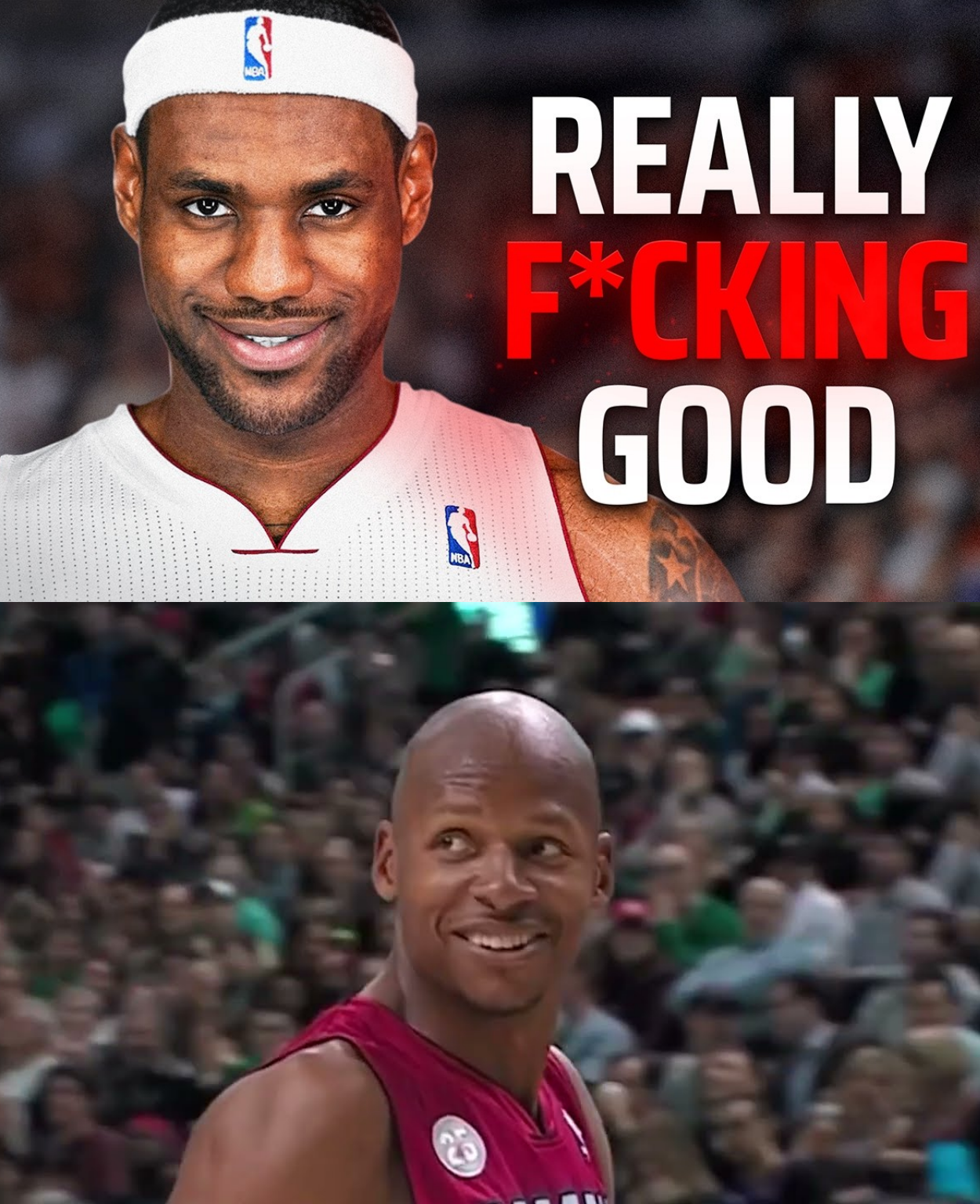
The apex of his Miami tenure came in the 2013 NBA Finals against the San Antonio Spurs. Down 3-2 and trailing late in Game 6, LeBron willed his team back from the abyss. After his three-pointer cut the lead to two, and following a desperate scramble for an offensive rebound, Ray Allen hit the iconic shot that forced overtime. Miami survived, and in the subsequent Game 7, LeBron put the finishing touches on his masterclass. He scored 37 points, hitting the decisive jump shot over Kawhi Leonard to secure his second consecutive title and his second straight Finals MVP.
However, all dynasties eventually face the erosion of time. By 2014, the physical toll on his teammates, Wade and Chris Bosh, had become evident. Their scoring outputs declined, and the Miami roster began to look fragile and aged compared to the youthful, clinical execution of the Spurs. Despite LeBron playing some of the most efficient basketball of his life—shooting 57 percent from the field and over 50 percent from three during that series—the Heat were outmatched. Following a lopsided loss in the Finals, LeBron exercised his opt-out clause, signaling the end of his polarizing and exhilarating tenure in South Beach.

In retrospect, the Miami years represent the absolute pinnacle of LeBron James’ physical and mental dominance. It was the era where he was arguably the strongest, the most agile, and the most tactically astute version of himself. He mastered the post, refined his jump shot, and weaponized his incredible basketball IQ to orchestrate a system that was miles ahead of the rest of the league. If the three-point revolution had arrived just a few years earlier, the Miami Heat might have been even more lethal. As it stands, that era remains a testament to what happens when supreme physical gifts are finally harnessed by a mind entirely dedicated to perfection. LeBron James did not just win in Miami; he fundamentally changed how the game of basketball is played.