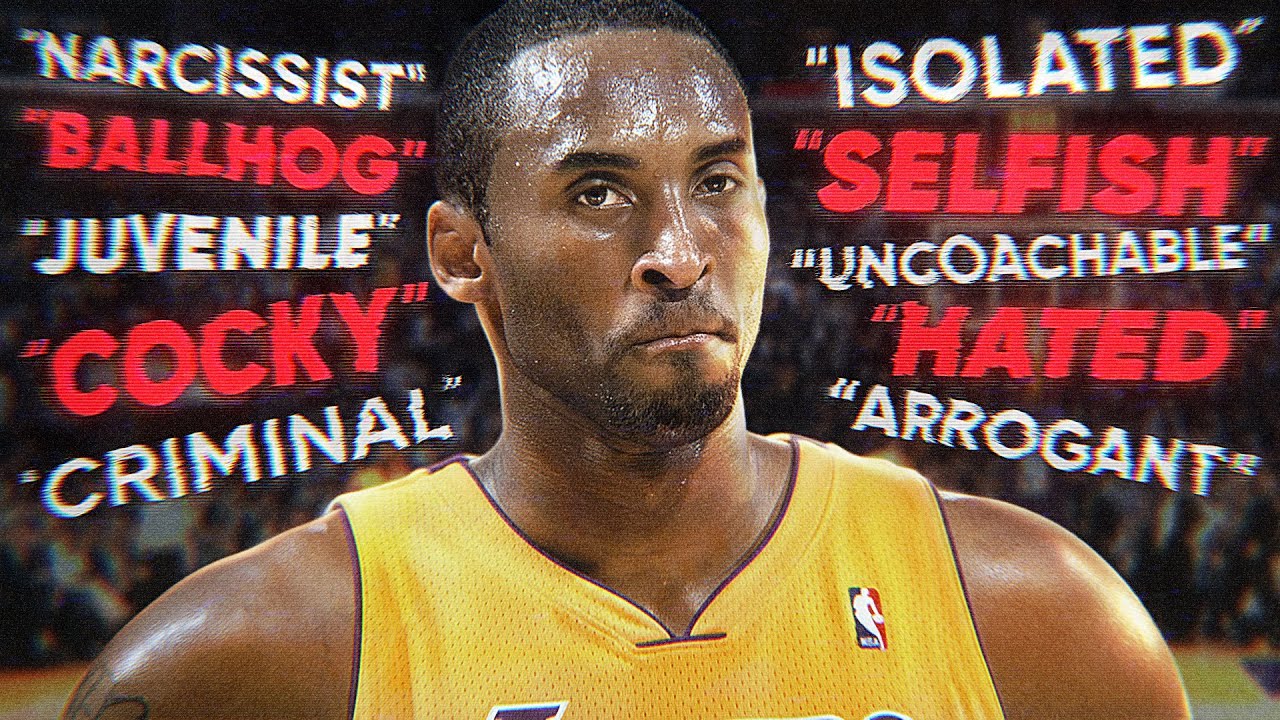
Today, the name Kobe Bryant is spoken with profound reverence. Across the globe, former players, legendary coaches, and casual fans alike rave about his unparalleled dedication, his ferocious work ethic, and his unwavering love for his family. He has been elevated to the status of a modern mythological figure, an infallible deity of hard work whose “Mamba Mentality” has inspired millions. Yet, this sanitized retrospective drastically rewrites history. For the vast majority of his extraordinary career, Kobe Bryant was arguably the most polarizing and fiercely hated player in the National Basketball Association.
To truly understand the complex psychology of the Black Mamba, one must first look at his formative years, which were entirely defined by profound isolation. Growing up in Italy, Kobe was a conspicuous outsider—a young American thrust into a predominantly white, European culture where he had to learn a foreign language merely to survive on the playground. When his family eventually relocated back to Philadelphia, he became an outcast all over again. He did not understand American slang, possessed distinct European sensibilities, and came from a relatively wealthy background. He was a teenager without a tribe. Unable to connect with his peers, he sought refuge in the only thing that made sense: the game of basketball. He became a loner who spent thousands of hours in empty gymnasiums, cultivating a ruthless, singular obsession with greatness.
This deep-seated isolation manifested as supreme arrogance when he burst onto the national stage. In 1996, wearing dark sunglasses indoors and sporting a tailored olive suit, a teenage Kobe arrogantly announced he was skipping college to enter the NBA draft. The public immediately viewed him as a pretentious show-off. This perception only worsened when he signed an unprecedented 48-million-dollar endorsement deal with Adidas before playing a single professional game, and then casually brought R&B superstar Brandy to his high school prom, much to the annoyance of his classmates.
Upon arriving in Los Angeles, Kobe did absolutely nothing to endear himself to his new veteran teammates. During his very first training camp, he boldly declared that nobody in the league was going to “punk” him. He was incredibly standoffish, refusing to go to dinners or clubs with the rest of the roster, preferring instead to lock himself in his hotel room with a VCR to endlessly analyze game tape. On the court, he was perceived as a selfish ball hog. Even superstar Shaquille O’Neal quickly nicknamed him “Showboat” after the rookie relentlessly refused to pass him the ball. Kobe’s spectacular failures, such as famously chucking four airballs in a critical playoff elimination game against the Utah Jazz, brought genuine joy to his growing army of critics who felt the arrogant teenager desperately needed to be humbled.
As Kobe blossomed into an undeniable superstar, his toxic relationship with his teammates and head coach Phil Jackson reached a boiling point. Jackson famously labeled Bryant a “juvenile narcissist” who was entirely uncoachable and actively disrupted the team’s offensive flow. Despite their internal dysfunction, Kobe and Shaq miraculously managed to win three consecutive NBA championships. However, beneath the surface of the confetti and parades, a vicious power struggle was brewing, one that would soon explode into the public eye and permanently alter Kobe’s public image.
In the summer of 2003, the narrative of Kobe Bryant took a horrifyingly dark turn. He traveled to Colorado for a routine knee surgery and was subsequently accused of sexual assault by a hotel employee. The criminal charges stripped away his pristine, corporate-friendly image overnight. He held a tense press conference, weeping as he confessed to adultery but fiercely denying the allegations of assault. The media frenzy was absolute. To make matters infinitely worse, leaked reports revealed that Kobe had told police investigators that Shaq regularly paid off women to keep quiet about his own infidelities. By throwing his legendary teammate under the bus, Kobe blatantly violated the unspoken macho brotherhood of professional sports. O’Neal was furious, reportedly threatening to physically assault Bryant, and the rest of the league looked at the embattled young star with sheer disgust.
Following the dropping of the criminal charges and a civil settlement, Kobe was left completely alienated. In 2004, the Lakers shockingly lost the NBA Finals to the Detroit Pistons, leading to the ultimate breaking point. Shaq was traded to Miami, Phil Jackson resigned, and Kobe was left alone in Los Angeles as the undisputed villain of the basketball world. Free agents actively refused to sign with the Lakers, citing Kobe’s terrible reputation as a teammate. Opposing fans ruthlessly booed him in every arena he entered.
Instead of apologizing or retreating, Kobe leaned entirely into the hatred. Drawing inspiration from the movie Kill Bill, he created an alter ego: The Black Mamba. He weaponized the hostility of the crowd, feeding off the boos to deliver some of the most spectacular individual performances in sports history, including his legendary 81-point game against the Toronto Raptors. Yet, the criticism continued. He was mocked as a terrible copy of Michael Jordan, someone who could score a lot of points but could never win a championship without Shaq’s massive presence.
The true turning point in Kobe’s public perception began in 2008 with the arrival of Pau Gasol. Surrounded by actual talent, Kobe proved he could lead a team, winning two consecutive NBA championships in 2009 and 2010. Following his fifth title, a vindicated Kobe famously told reporters, “I just got one more than Shaq.” The victory was a massive middle finger to his detractors, silencing the critics who claimed his previous rings were a fluke.
As Kobe entered the twilight of his career, the relentless hatred slowly transformed into deep respect. The defining moment occurred in 2013 when a 34-year-old Bryant suffered a catastrophic Achilles tear. Instead of being carried off the floor, he painfully limped to the free-throw line on a completely severed tendon, sank two crucial shots, and walked off the court under his own p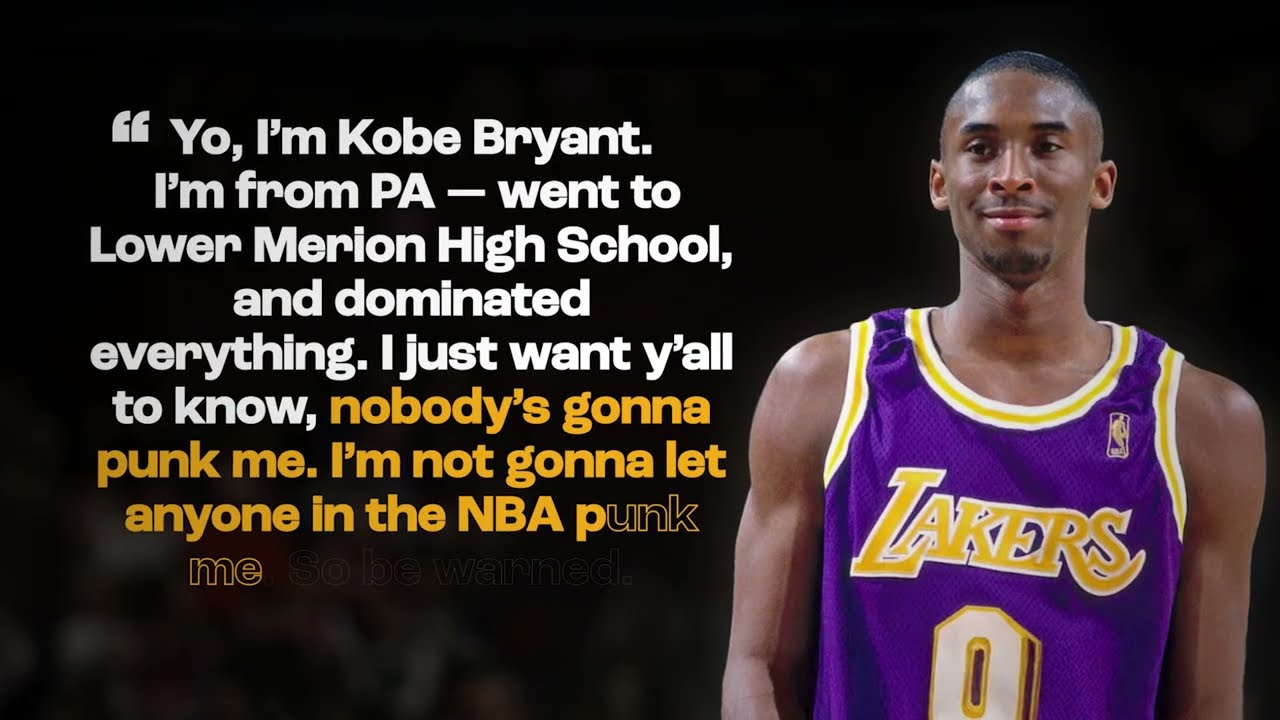 ower. It was a breathtaking display of physical courage that forced even his most ardent haters to acknowledge the astonishing reality of his competitive spirit.
By the time he announced his retirement in 2016, the boos had miraculously turned into standing ovations. The mask of the venomous Black Mamba finally slipped, revealing a warm, highly intelligent, and surprisingly jovial father who simply loved the game of basketball. His cinematic 60-point farewell performance was a perfect, storybook ending to a career built on defying expectations.
The tragic helicopter crash in 2020 that claimed his life, along with his daughter Gianna and seven others, completely shattered the world because we had all finally learned to love him. Kobe Bryant’s legacy is not just one of championships and scoring titles; it is the ultimate story of a man who fought through isolation, self-inflicted scandals, and universal hatred, using nothing but his sheer, undeniable greatness to force the entire world to stand up and cheer.