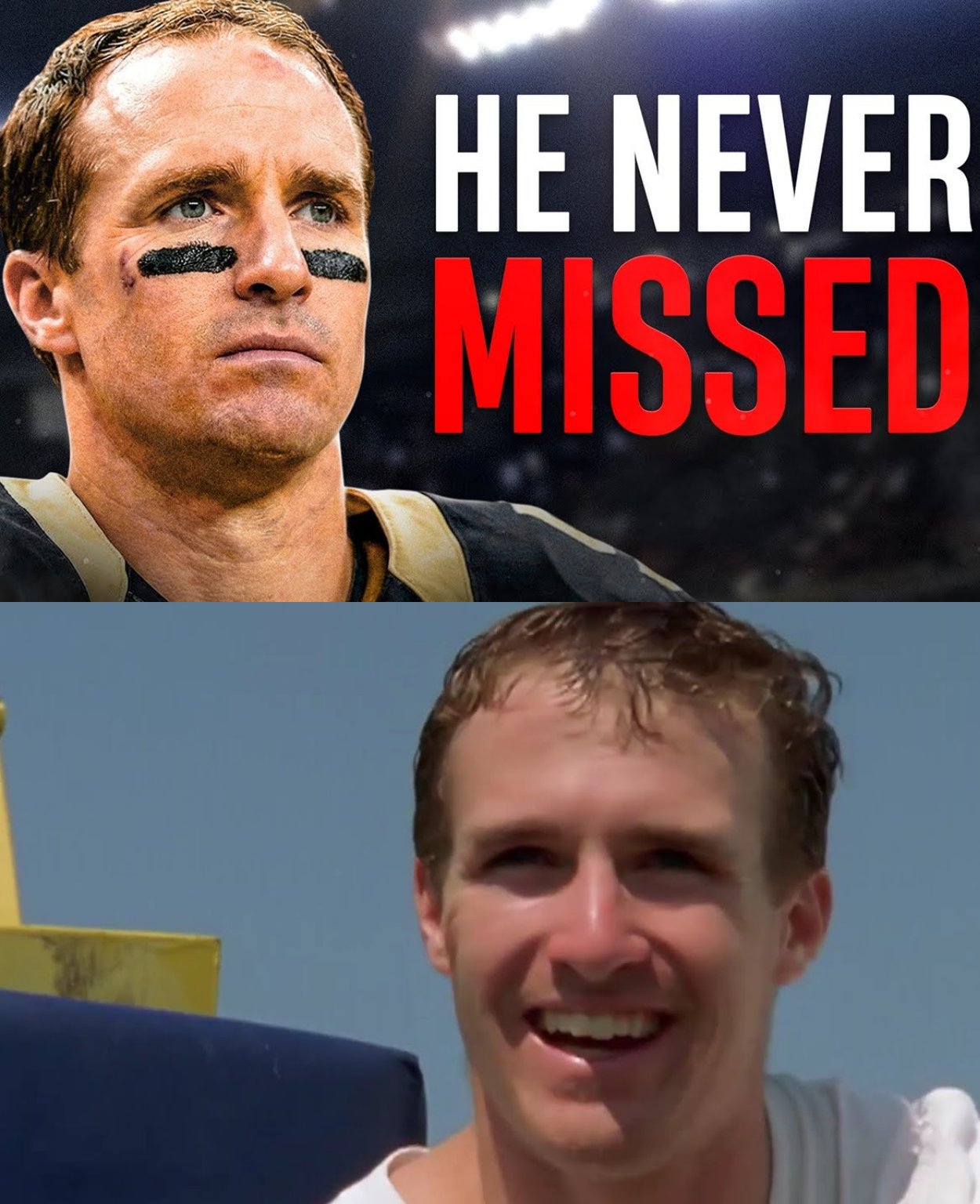
When a young quarterback enters the National Football League today, completing 60 percent of their passes is considered an acceptable, if not elite, benchmark. Yet, by the time one specific man retired from the gridiron, that standard had been ruthlessly elevated to 70 percent. He authored seven distinct seasons above that impossible threshold, setting a single-season record at an absolutely absurd 74.4 percent. While the contemporary football world is obsessed with off-platform throws, chaotic scrambling, and rocket arms capable of hurling a football seventy yards downfield, this man mastered something far more dangerous: the quiet, devastating art of surgical precision.
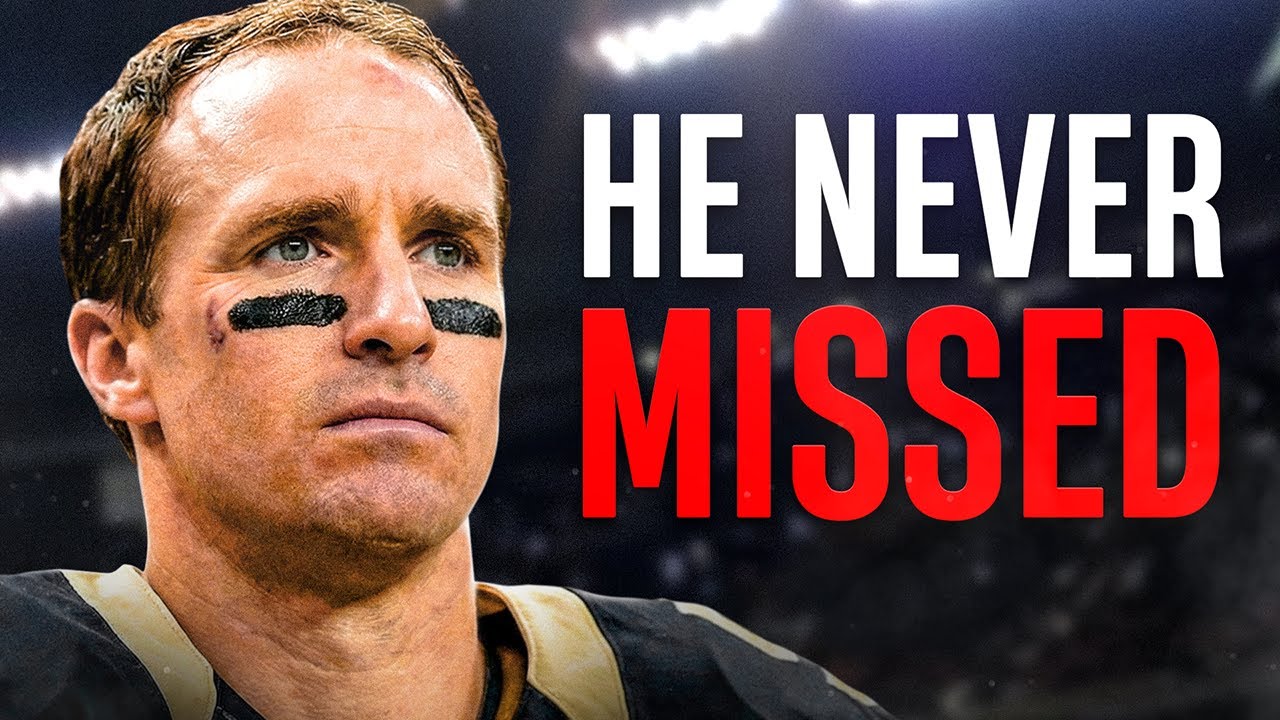
He amassed over 80,000 passing yards, delivered a miraculous Super Bowl victory to a city that had quite literally been underwater, and forced an entire generation of athletes to chase a standard of excellence that he solely created. And yet, despite everything Drew Brees achieved on a football field, his name is mysteriously and consistently omitted when sports pundits debate the greatest quarterbacks to ever play the game. The story of Drew Brees is a masterclass in resilience, a shocking narrative of physical sacrifice, and a glaring example of how society often overlooks quiet perfection in favor of loud, flashy chaos.
Drew Brees was never supposed to be an NFL legend. Growing up in Austin, Texas, he was surrounded by athletic pedigree—his father played basketball at Texas A&M, his mother was a track star, and his uncle was a celebrated college quarterback. But Brees was noticeably undersized, skinny, and lacked the booming arm strength scouts salivate over. When a torn ACL in his junior year threatened to end his athletic dreams before they even began, the doubt grew louder. Instead of folding, Brees used the injury as fuel. He returned for his senior year in 1996 to lead his high school to a flawless 16-0 record and a Texas state championship, out-dueling future NFL talent along the way.
Despite an immaculate resume, major college recruiters barely glanced in his direction. Standing at exactly six feet tall, he simply did not fit the desired physical prototype. Snubbed by the major Texas powerhouses, Brees accepted an offer from Purdue University. There, under an innovative spread offense coined “basketball on grass,” Brees terrorized the Big Ten. He snapped a 33-year Rose Bowl drought for the university, shattered nineteen school records, and left college as one of the most decorated players in the country. Yet, the NFL scouting combine echoed the same tired criticisms: too short, arms not strong enough, definitely not a franchise savior.
The 2001 NFL Draft was a public humiliation. The San Diego Chargers desperately needed a quarterback but traded out of the number one overall pick to avoid taking Brees. They then passed on him again at number five to draft running back LaDainian Tomlinson. As the first round mercifully concluded, Brees remained seated in the green room. It wasn’t until the first pick of the second round that the Chargers finally called his name. It felt less like a triumphant selection and more like a reluctant consolation prize.
His early years in San Diego were a chaotic rollercoaster of brief successes and crushing setbacks. By his third year, he had been benched for veteran Doug Flutie, and the frustrated fan base was actively booing him off his own field. In the ultimate sign of disrespect, the Chargers utilized the number one overall pick in the following draft to secure his highly-touted replacement, Philip Rivers. Brees, however, refused to surrender his locker without a fight. He authored a brilliant comeback season, winning a division title and earning a trip to the Pro Bowl. It seemed the turbulent storm was finally passing—until a fateful hit in the final game of the 2005 season ripped it all away.
Diving for a loose fumble, Brees was crushed by a Denver Broncos defender, completely shredding his throwing shoulder. His labrum was destroyed, his rotator cuff severely damaged. The injury was so catastrophic that leading medical experts sincerely debated whether he would ever be able to grip, let alone throw, a professional football again. Forced to make a ruthless business decision, the San Diego Chargers abandoned Brees, turning the keys of the franchise over to a healthy Philip Rivers. Overnight, Drew Brees went from an emerging Pro Bowler to an unemployed, physically broken liability.
Desperate for a second chance, Brees shopped himself to the league. The Miami Dolphins, led by legendary coach Nick Saban, were heavily interested. But upon examining the terrifying medical scans of Brees’s shoulder, they ultimately decided the risk was simply too high. This historic rejection sent Saban out of the NFL and ultimately landed Brees in the one place as broken and desperate for salvation as he was: New Orleans.
The city of New Orleans was still a shattered shell of its former self, reeling from the catastrophic devastation of Hurricane Katrina. The local football team, the Saints, were perennial losers devoid of a permanent home or a hopeful future. Newly hired head coach Sean Payton needed a quarterback, and he was willing to bet his entire career on Brees’s shattered shoulder. The partnership forged in the sweltering Louisiana humidity would go on to reshape the NFL landscape forever.
Brees didn’t just rehab his shoulder; he returned as a statistical cyborg. Year after year, he carved up the league’s most terrifying defenses with a horrifying level of efficiency. In 2009, he achieved the absolute pinnacle of the sport. Guiding the Saints through a magical, undefeated start to the season, Brees navigated a grueling playoff gauntlet to meet the heavily favored Peyton Manning and the Indianapolis Colts in Super Bowl XLIV. Through sheer willpower, a legendary surprise onside kick, and a flurry of surgical passes, Brees dismantled the Colts. As confetti rained down on the rebuilt Superdome, Brees stood on the podium clutching his infant son and the Lombardi Trophy. It was not just a sports championship; it was the spiritual resurrection of an entire American city.
Yet, greatness is rarely devoid of heartbreak, and the latter half of Brees’s career was defined by agonizing, cinematic tragedies. Despite regularly throwing for over 5,000 yards in a single season—a feat no other quarterback had done more than once—his brilliant performances were consistently wasted by historically horrendous defenses. When the Saints did reach the playoffs, they were eliminated in the most soul-crushing ways imaginable: the chaotic “Beast Quake” run in Seattle, the devastating last-second touchdown to Vernon Davis in San Francisco, the utterly shocking “Minneapolis Miracle” against the Vikings, and the infuriating “Nola No-Call” against the Rams, where a blatant referee mistake literally robbed Brees of a second Super Bowl appearance.
Through the devastating playoff losses, the infamous “Bountygate” scandal that suspended his head coach for an entire year, and the unrelenting passage of time, Brees remained the unwavering anchor of New Orleans. But his physical body was quietly paying an exorbitant toll for his unyielding dedication.
The horrifying climax of this bodily sacrifice occurred late in the 2020 season. After absorbing a vicious hit against the San Francisco 49ers, Brees struggled to catch his breath on the sideline. Medical scans later revealed a gruesome reality: the quarterback had been playing professional football with a collapsed lung and eleven fractured ribs. Most human beings would have been hospitalized and heavily medicated; Brees simply rested for four weeks before returning to the field to lead his team into the playoffs. He was a gladiator masking his pain behind a polite smile and a perfectly spiraled pass.
Following a bitter playoff defeat to Tom Brady and the Tampa Bay Buccaneers, Brees lingered on the empty turf of the Superdome, silently tossing a football to his children. The city knew they were watching a quiet goodbye. Exactly fifteen years to the day after signing his contract with the Saints, Drew Brees officially retired.
Today, the brutal reality of a twenty-year career is heartbreakingly evident. The legendary right arm that famously dissected the greatest defensive schemes in history is now so severely worn down that Brees cannot physically lift it above his shoulder. When he plays catch in the backyard with his children, the most accurate passer in NFL history is forced to throw the ball left-handed.
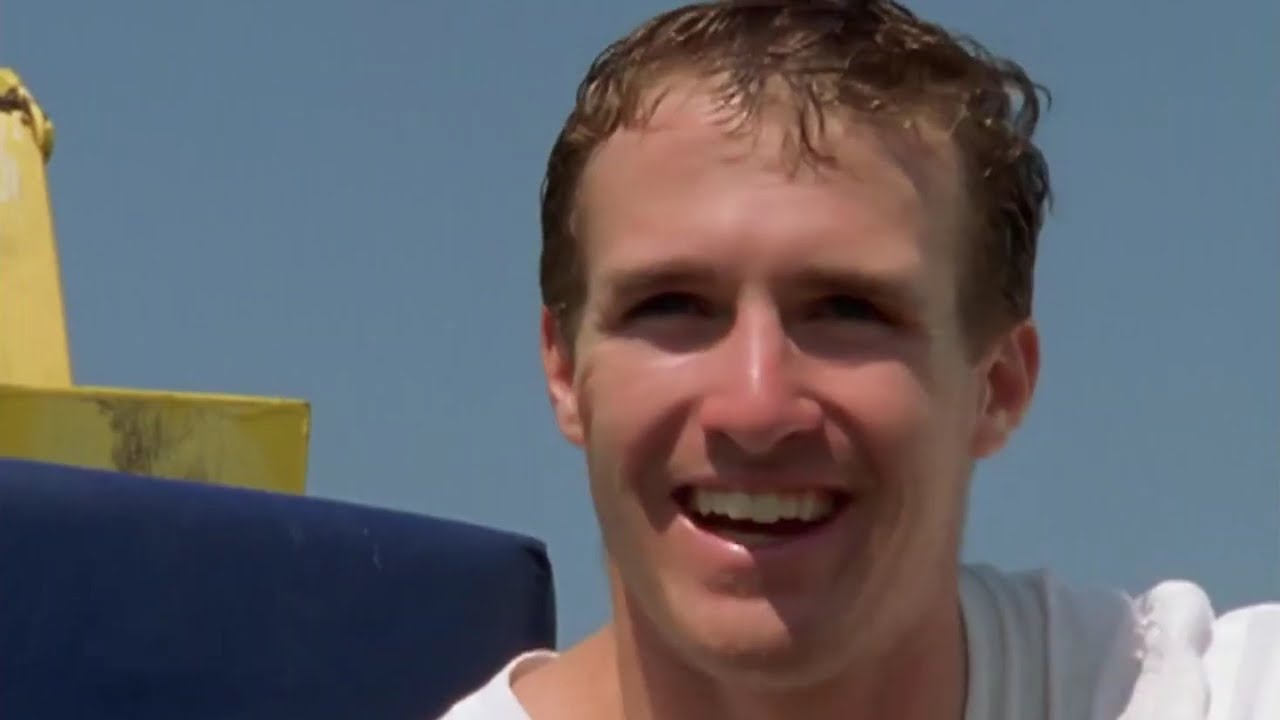
This lingering physical trauma is the ultimate testament to who Drew Brees truly was. He was never the fastest player on the field, nor did he possess the flashiest athletic traits that go viral on social media. He was a relentless, obsessive perfectionist who squeezed every singular ounce of potential out of an undersized frame. His greatness was so consistent, so fundamentally sound, and so brilliantly routine that the casual football fan simply took it for granted. They marveled at the wild, off-balance throws of other stars, completely missing the jaw-dropping reality that Brees was deliberately putting thirty-five consecutive passes within two inches of their intended target. He was a mechanical freak of nature hiding in plain sight.
Drew Brees may not command the loudest conversations when the mythical title of the “Greatest of All Time” is debated in television studios. But in the record books, in the terrified minds of defensive coordinators, and in the deeply scarred, fiercely loyal heart of New Orleans, his legacy remains utterly bulletproof. He gave his shoulder, his ribs, and his entire right arm to achieve perfection, proving once and for all that true greatness is measured not by how far you can throw the ball, but by exactly where you choose to place it.