
A Tense Confrontation in the Halls of Justice
In a moment that felt less like a standard Senate hearing and more like a desperate warning for the future of the American republic, Senator John Kennedy recently sat across from Pam Bondi to address the most critical issue facing the nation today: the integrity of the Department of Justice (DOJ). The exchange, which quickly moved past political pleasantries, served as a chilling indictment of how far the pillars of the American legal system have shifted from their foundation of impartiality [00:00].
For years, Americans have watched the headlines with growing unease, wondering if the law is truly blind or if it has become a weapon used by those in power to settle scores. Senator Kennedy’s line of questioning wasn’t designed to be polite; it was designed to be a mirror, reflecting the anxieties of a populace that fears the system meant to protect them has been compromised [00:13].
The Fall of the Powerful: A Test of Credibility
Kennedy began his interrogation with a seemingly simple question: “Do you remember a person by the name of Michael Avenatti?” [00:39]. He reminded those in the room that Avenatti was once a media sensation, a darling of cable news networks who was constantly on television bashing President Donald Trump. Kennedy’s point was clear: regardless of political affiliation, justice was served when Avenatti, a former “media star,” was sentenced to prison for his criminal actions [01:16].
He then pivoted to Sam Bankman-Fried, the “Boy Genius” of the financial world. Kennedy vividly described the billionaire who appeared before serious figures like Bill Clinton and Tony Blair looking like a “fourth runner up to a John Belushi lookalike contest.” Bankman-Fried’s fall from grace, according to Kennedy, was further proof that the Department of Justice is capable of holding the powerful accountable when they break the law [01:44].
By highlighting these cases, Kennedy set a baseline: the DOJ has, and still contains, many dedicated, hardworking men and women who risk their lives to uphold the law [03:03]. However, he immediately drew a sharp distinction between those public servants and the “bad actors” who have, in his view, delegitimized the entire system over the past four years [03:34].
“Breaking the Seal” on Political Prosecution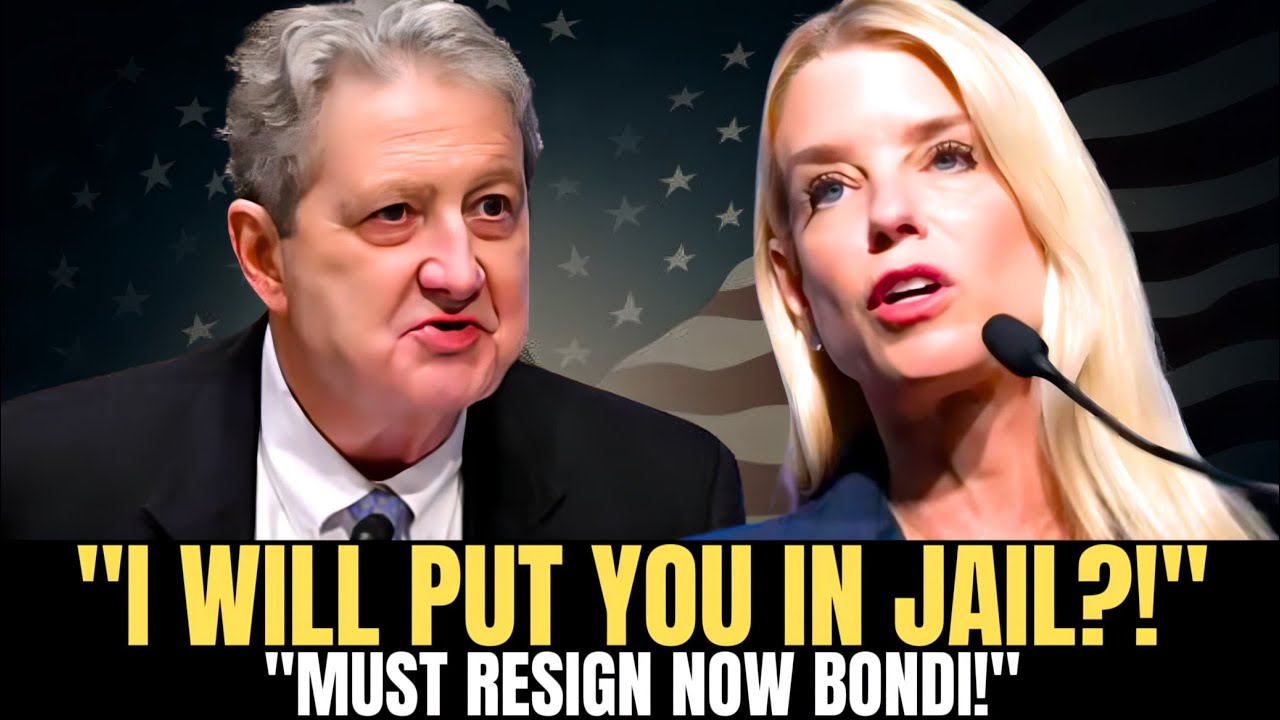
The heart of Kennedy’s argument lay in what he described as the most destabilizing act in the history of the department: the decision to criminally prosecute a former President of the United States on the basis of what he called “dubious facts and untested legal theories” [04:07].
Kennedy did not mince words regarding the timing of this prosecution, noting that it occurred after the former president announced he would run against the sitting administration. He characterized this as a departure from American norms, noting that such political weaponization is the type of action one expects in unstable regimes, not in the United States [05:03].
“It broke the seal,” Kennedy warned. His concern is that by normalizing the prosecution of political opponents, the DOJ has opened a Pandora’s box. He predicted that ambitious prosecutors across the country—both Democrat and Republican—would now feel emboldened to use the justice system as a political tool. He cited the potential for investigations into the inner circles of current leadership regarding issues like mental decline as evidence of the cycle of revenge politics that is now set to unfold [05:35].
The Call for Restoration
As the hearing progressed, the tone became more urgent. Kennedy challenged Bondi to address the internal fractures of the Department of Justice. He urged her to identify the bad actors who have abused their power and to elevate the good, honest public servants who operate on the basis of facts and evidence [06:14].
He explicitly warned against the “temptation” of revenge, telling the committee that “two wrongs don’t make a right; they only make it even” [06:38]. For Kennedy, the stakes are not merely about the outcome of one case or the political fate of one individual. They are about the very concept of legitimacy. If Americans stop believing their justice system is fair, the resulting chaos is not a possibility—it is a guarantee [07:05].
The Crossroads of a Nation
The hearing concluded without easy answers. While Pam Bondi listened intently, the fundamental questions raised by Kennedy remained unanswered. Can the DOJ truly restore trust from both sides of the aisle? Can the “seal” of political weaponization be resealed once it has been broken? [13:00].
The situation serves as a stark reminder that legitimacy in a democracy is not maintained through speeches or political posturing; it is built through transparency, consistent application of the law, and unwavering accountability. As Kennedy suggested, the system is currently standing at a crossroads. It must choose between returning to its original principles or continuing down a path where justice is just another weapon in the partisan toolbox [13:41].
Ultimately, Kennedy’s performance was more than a legislative inquiry; it was a challenge to the American public. As the cracks in the justice system widen, the real question that remains for every citizen is whether they will hold their institutions to the highest standards, or allow the erosion of the rule of law to continue until the damage is beyond repair [14:07]. The time for complacency has passed, and the demand for a fair, transparent, and non-partisan justice system has never been more vital.
Full video: