The Moment the Silence Said Everything
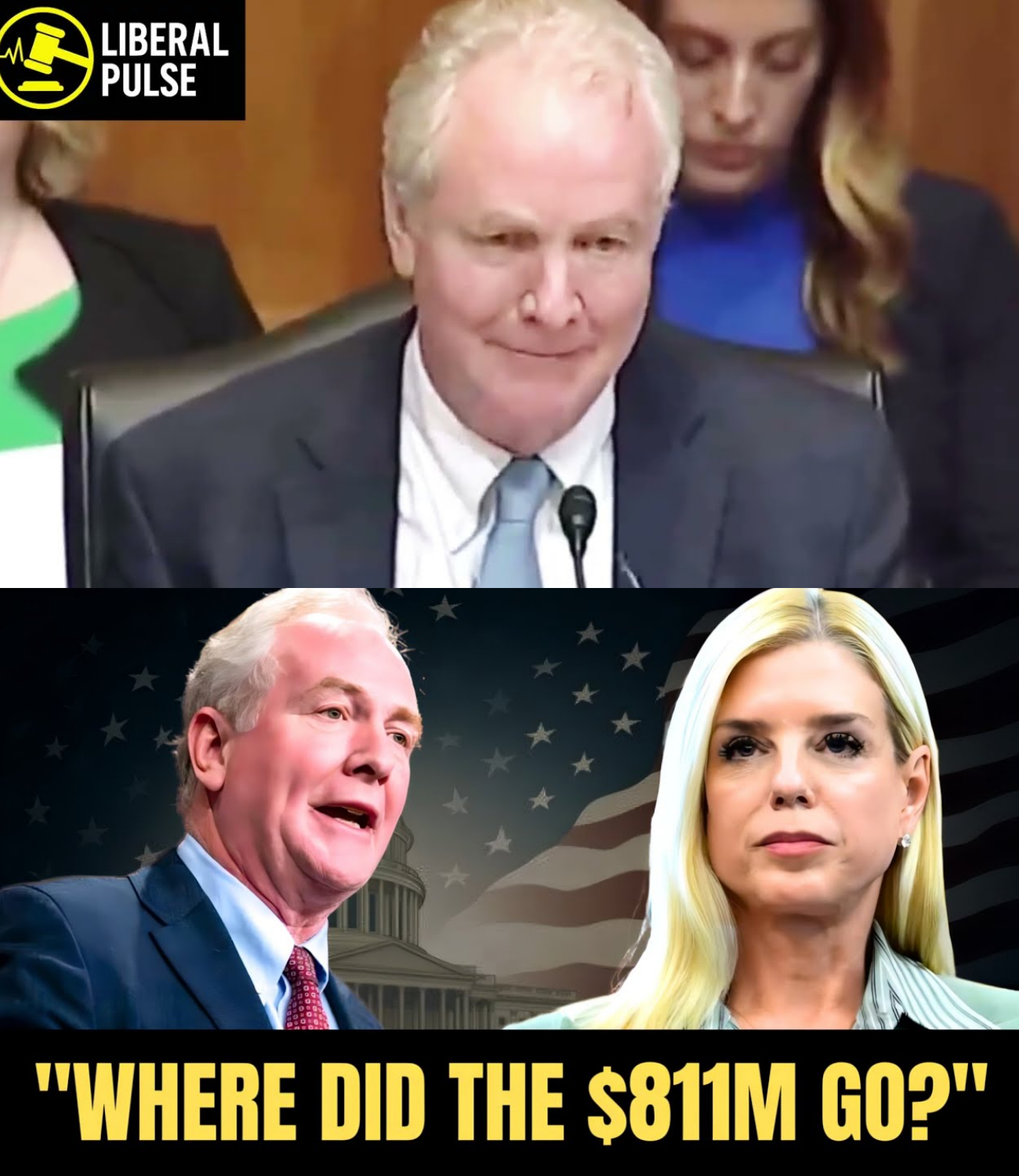
In a high-stakes setting where the standard for discourse is typically measured and procedural, a single, piercing question managed to shatter the facade of routine government operations. When Senator Chris Van Hollen looked across the dais and asked, “Will you comply with the budget authorization law?” the response from the Attorney General, Pam Bondi, was not a simple affirmation of duty. Instead, it was an evasive shift that echoed through the committee room, revealing a growing tension between congressional oversight and executive autonomy.
This moment, occurring during a critical Senate hearing, was not merely political theater. It served as a stark test of whether the Department of Justice (DOJ)—the most powerful arm of federal law enforcement—still operates within the constraints of the Constitution. As the transcript of the hearing reveals [00:00], the ensuing exchange highlighted a troubling pattern: the consolidation of power, the freezing of critical community funds, and the quiet erasure of vital public safety programs.
The Merger and the Constitutional Question
The primary point of contention centered on a proposed administrative reorganization: the merging of two major law enforcement giants, the ATF and the DEA [01:26]. While Bondi framed the move as an exercise in bureaucratic efficiency—promising to “do away with the bureaucracy at the top” and “put hundreds of agents back on the streets” [01:42]—Senator Van Hollen was focused on a more foundational issue: authority.
Under existing appropriations law, such a significant structural change requires congressional authorization. When questioned directly on whether the DOJ could proceed without this legislative blessing, Bondi’s initial confidence faltered. She insisted the department didn’t need congressional action [02:54], a stance that stood in direct opposition to the constitutional balance of power where Congress holds the purse strings. When pressed on her refusal to acknowledge this requirement, her deflection—”we will complete this reorganization and I’m committed… we will not violate the law” [03:48]—did little to reassure committee members who were concerned that the department was operating on its own terms.
The Mystery of the Frozen Grants
The hearing went beyond the structural merger, pulling back the curtain on a financial issue that has quietly plagued communities and organizations across the nation. Van Hollen brought to light the plight of federal grants—specifically over $800 million in funds that had been approved and obligated, yet remained frozen [06:03].
For the groups relying on these funds, the lack of transparency from the DOJ has been devastating. The senator’s frustration was palpable when he noted that many applicants were essentially forced to lobby their own members of Congress just to have their already-awarded money released [07:29]. Bondi’s response, citing ongoing litigation and promising a review, failed to provide a clear timeline or a justification for why so many communities were left in limbo [07:44]. This segment of the hearing illuminated a broader culture of opacity, where bureaucratic delays are used as a tool to maintain leverage over public funds.
The Disappearing Safety Net
Perhaps the most startling revelation of the session involved the quiet removal of critical programs from the DOJ’s budget. Van Hollen pointed out that funding had been zeroed out for three major hate crime initiatives [04:11]:
The Shepard-Bird Hate Crimes Training Program
The Jabara-Heyer No Hate Act
Community Approaches to Advancing Justice
These are not merely symbolic line items; they are essential tools that assist local police departments in tracking hate crimes and providing support to affected communities. At a time when hate incidents are statistically rising, the sudden removal of these programs—and the Attorney General’s admission that she would need to “pull up the details” to explain the cuts—suggested a lack of prioritization for civil rights infrastructure [13:28].
A Pattern of Evasion
As the hearing progressed, a clearer picture emerged. It was not just one incident of a merger or one line item in a budget. It was a cumulative strategy: merging agencies without oversight, freezing grants with minimal explanation, and quietly dismantling civil rights protections. Each of these actions, taken individually, might be interpreted as a technical or administrative adjustment. Viewed together, however, they paint a picture of a department drifting away from public accountability.
Senator Van Hollen’s persistence throughout the hearing was not an attempt to score points; it was an attempt to defend the integrity of the appropriations process. When the nation’s top law enforcement official is hesitant to affirm that she will follow the laws passed by Congress, it undermines the very foundation of the checks and balances that separate a democracy from an unaccountable power structure.
Why It Matters
It is easy for the average citizen to overlook these hearings as dry, bureaucratic formalities. However, the exchange serves as a reminder that the erosion of transparency happens in small, often unobserved increments. When answers are replaced by deflections, and when “looking into it” becomes a standard placeholder for policy-making, the democratic process begins to suffer.
The hearing concluded without the fireworks of a dramatic confrontation, yet the implications remain resonant. The DOJ’s inner contradictions and its push for independent control were placed on the record. For those watching, the message was clear: accountability is not a guarantee—it is a requirement that must be actively demanded. If the Justice Department, the entity tasked with enforcing the law, is permitted to selectively interpret its own obligations, it sets a dangerous precedent for every administration that follows.
Ultimately, Van Hollen’s question—”Will you comply with the law?”—was not just directed at the Attorney General. It was a question directed at the American people. It forces us to consider whether we are comfortable with a government that views oversight as an optional hurdle rather than a constitutional necessity. As the dust settles on this hearing, one thing is certain: the conversation about the limits of executive power has only just begun. The curtain may have been pulled back, but it remains to be seen whether the department will change its course, or if the drift toward unchecked power will continue in the shadows.
Full video: