We live in an era where digital immortality can be achieved in a fraction of a second. You do not need to be a Hollywood superstar, a visionary politician, or a groundbreaking scientist to have your face recognized by billions of people across the globe. Today, all it takes is a single, unscripted moment of pure human emotion. A look of sheer confusion, an accidental tumble into a dirty river, or a furious outburst caught on camera can instantly transform an ordinary person into a permanent fixture of internet culture. We consume these memes every single day, sending them to friends to express our own daily frustrations and joys. But behind every pixelated screenshot and viral video loop lies a real human being whose life was irrevocably altered the moment they went viral.
Perhaps the most jarring and emotionally heavy origin story belongs to one of the most widely shared images in the history of the internet: the woman yelling at a confused white cat. For years, social media users have paired the image of a visibly distressed blonde woman pointing her finger with the photograph of “Smudge,” a cat sitting at a dinner table looking utterly unbothered. It is a brilliant visual punchline used for everything from silly arguments about food to pop culture debates. However, the true context of that photograph is incredibly dark. The woman in the image is Taylor Armstrong, and the screenshot was taken during a highly volatile episode of the reality television show The Real Housewives of Beverly Hills. Taylor was not throwing a superficial Hollywood tantrum; she was suffering a total psychological breakdown. She had been harboring the terrifying secret that she was the victim of severe domestic abuse at the hands of her husband. The moment captured on film was the catastrophic explosion of months of suppressed trauma and terror after her castmates publicly exposed her secret. Knowing the horrific reality behind her tears completely changes the complexion of the joke, yet Taylor herself has remarkably stated that she has found a way to separate herself from the meme and view it with a sense of distant irony.
Long before reality television memes dominated Twitter, the early days of YouTube birthed raw, unedited viral sensations that set the blueprint for internet fame. In 2006, the world was introduced to “La Caída de Edgar” (Edgar’s Fall). It was a simple, grainy home video featuring a young Mexican boy attempting to cross a small creek using two branches. When his friend Fernando maliciously decided to shake the branches, Edgar’s desperate pleas of “Ya güey, pinche pendejo” became a cultural anthem. He lost his balance, plunged into the water, and inadvertently created the first truly global meme. What could have been a deeply humiliating childhood memory instead became a point of historical internet significance. Today, Edgar is a grown man with a degree in communications, and the exact location of his infamous plunge is actually registered as a historical landmark on Google Maps.
Similarly, the legend of “Fernanda la Niurquita” proves that children have absolutely no filter, which makes for incredible comedic gold. A five-year-old girl named Fernanda was simply trying to exist when her teenage cousin decided to relentlessly tease her about a boy. Pushed to her absolute emotional limit, the tiny child snapped, looking dead into the camera to deliver the legendary line, “Me quieres ver la cara de estúpida?” (Do you want to see my stupid face?). The sheer venom and adult-like exhaustion in her voice turned the clip into a sensation. Her family desperately tried to scrub the video from the internet once they realized how viral it had become, but the internet never forgets. That phrase is now permanently embedded in the modern Latin American lexicon.
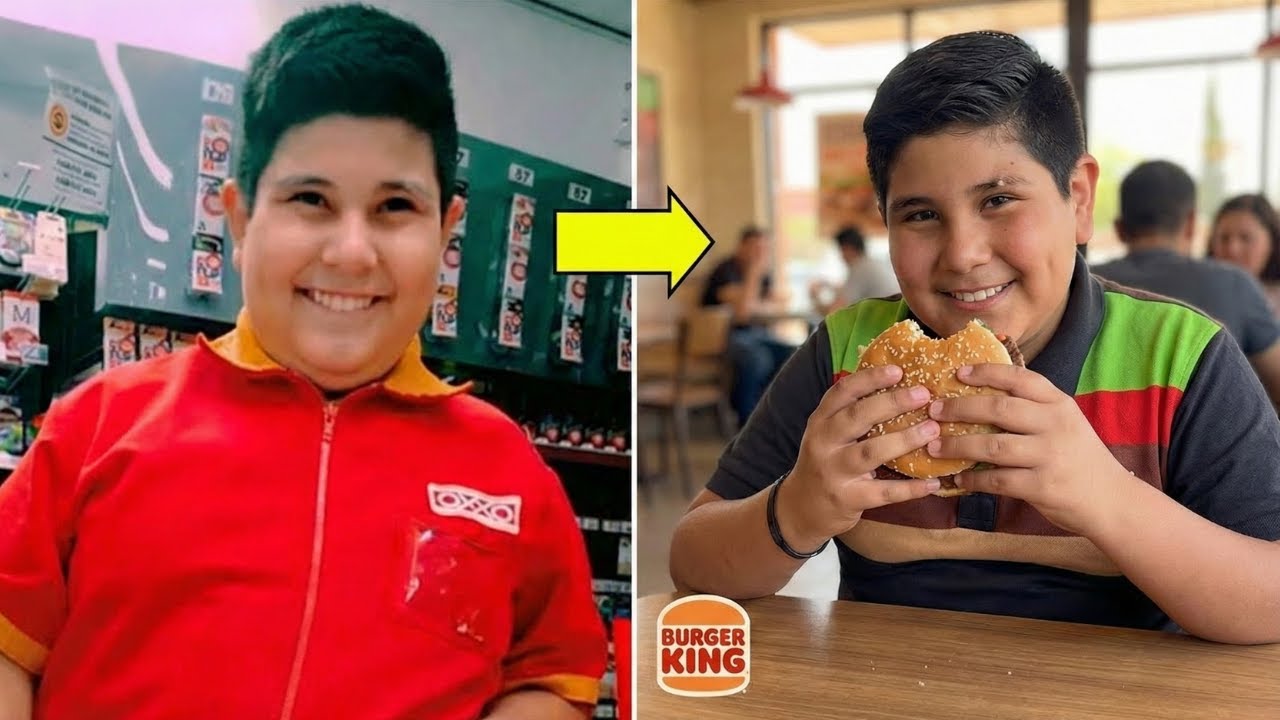
Sometimes, viral fame serves as a bizarre springboard for actual career opportunities. In March 2021, a twelve-year-old boy named Elías Navarro was filmed working behind the counter of an Oxxo convenience store. When a customer suspiciously requested a pack of condoms and some breath mints, Elías delivered a knowing, incredibly mischievous “Mmm…” while giving the camera a hilarious side-eye. The video exploded. Rather than fading into obscurity, Elías capitalized on his newfound fame. Major corporations came knocking, leading to a massive advertising contract with Burger King and an appearance in a blockbuster reggaeton music video. A similar economic phenomenon happened in Argentina with a passionate football fan named Ezequiel. During a televised interview outside a stadium, he angrily complained about the exorbitant price of food, famously declaring that with fifteen pesos, he could make an “Alto Guiso” (a massive, hearty stew). His raw, working-class frustration instantly resonated with a country intimately familiar with economic inflation, turning him into a working-class hero and a permanent fixture in Argentine digital humor.
While some memes are born from the lives of completely ordinary citizens, others are plucked from the golden archives of television history. In the 1990s, the beloved Mexican soap opera María la del Barrio featured one of the most unhinged villain performances of all time. Actress Itatí Cantoral, playing the wickedly evil Soraya Montenegro, burst into a room to find the boy she loved kissing a young woman in a wheelchair. In a completely unscripted, one-take miracle of dramatic overacting, she screamed, “Maldita lisiada!” (Damn cripple!). The sheer theatrical absurdity of the scene allowed it to transcend its era, finding new life decades later as the ultimate visual representation of irrational jealousy.
Yet, there is a distinct psychological toll that comes with becoming a walking, breathing internet joke. Take Laina Morris, the face of the “Overly Attached Girlfriend” meme. In 2012, she submitted a parody video for a Justin Bieber fan contest. She intentionally opened her eyes as wide as possible and smiled like a terrifyingly obsessed stalker. The internet ruthlessly took that single frame and plastered it across millions of posts, associating her real face with the concept of toxic, psychotic behavior. While she initially leaned into the fame, making appearances and securing brand deals, the immense emotional pressure of being constantly perceived as a caricature eventually forced her to completely walk away from social media to protect her mental health.
Then there are the faces of pure, unadulterated confusion that have become a universal language. Nick Young, a professional NBA player, became infinitely more famous for a screenshot of him looking completely bewildered than for his athletic achievements. The face was a natural reaction to his mother criticizing his career choices during a documentary shoot, a facial expression he had been using to dodge trouble since childhood. Similarly, a young girl named Chloe became a global icon when her mother announced a surprise trip to Disneyland. While her sister burst into tears of overwhelming joy, Chloe simply stared from her car seat with a look of extreme skepticism, her side-eye speaking volumes. To this day, her face is the go-to image when someone on the internet encounters something deeply questionable.

Whether it is a child trying to comprehend a chaotic world, a frustrated teenager holding in a bodily function during algebra class, or an ancient aliens enthusiast desperately trying to attribute human history to extraterrestrials, these accidental icons provide the emotional vocabulary for our digital lives. They never asked to be famous. They never hired public relations teams to carefully craft their viral moments. They simply existed, reacting authentically to the absurdities of human life. And in doing so, they gave the rest of the world a reason to laugh, to relate, and to realize that no matter who we are, we are all just one badly timed photograph away from internet infamy.