The 2026 World Cup was meticulously designed to be a grand celebration of global unity, bringing together nations, cultures, and thousands of passionate fans across the United States, Canada, and Mexico. However, the harsh realities of international geopolitics and stringent border security have violently crashed the party. In a developing story that has sparked intense debate and global outrage, celebrated Somali referee Omar Abdulkadir Artan was abruptly denied entry into the United States just days before the tournament kicked off.
While border disputes are not entirely uncommon in international sports, the sheer magnitude of this rejection—and the subsequent, unprecedented actions taken by the world’s leading football governing bodies—has transformed this incident from a bureaucratic travel headache into a massive geopolitical flashpoint. Today, the football world finds itself grappling with a situation where the laws of a host nation have directly clashed with the inclusive spirit of the beautiful game.
The Heartbreaking Rejection at Miami International
The timeline of events paints a picture of sudden, devastating disappointment. On Saturday, June 6, 2026, Omar Artan arrived at Miami International Airport following a long flight from Istanbul. He was carrying a valid United States visa, a prestigious appointment letter from FIFA, and the hopes of an entire African nation resting firmly on his shoulders. He was scheduled to be one of the elite 52 referees officiating the highly anticipated 2026 World Cup.
Instead of a warm welcome, Artan was immediately flagged for a secondary, intensive inspection by U.S. Customs and Border Protection (CBP). After hours of rigorous questioning, the heartbreaking verdict was handed down: he was deemed “inadmissible.”
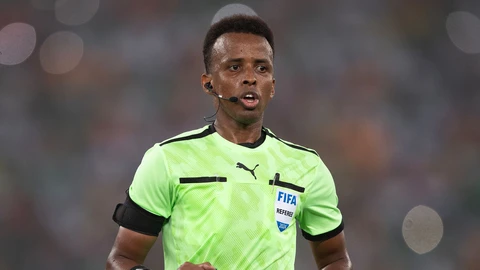
According to administration officials who spoke on the condition of anonymity, the denial stemmed from severe “vetting concerns.” They alleged that derogatory information had surfaced connecting Artan to suspected members of terror organizations. Artan, an internationally recognized sports official, vehemently denied these shocking accusations, insisting he had absolutely no knowledge of or connection to any such groups. Despite his protests, his valid documentation, and his status as a key tournament official, the law remained rigid. The Trump administration’s strict immigration policies, which heavily target specific nations including Somalia, left zero room for negotiation. Artan was placed on a flight and sent away, his lifelong dream shattered in the sterile halls of an airport terminal.
A Dream Deferred: The Rise of Omar Artan
To truly grasp the tragedy of this situation, one must understand exactly who Omar Artan is and what his presence at the World Cup represented. His journey to the pinnacle of global football is nothing short of miraculous.
A Symbol of Resilience: Growing up in Somalia, a nation deeply scarred by decades of civil unrest, Artan pursued his passion for football against impossible odds. Following an injury that ended his playing career, he pivoted to refereeing. In interviews, he previously detailed the terrifying reality of navigating roads plagued by explosions just to reach the stadium for training.
A History-Maker: He officially became a FIFA referee in 2018, steadily climbing the ranks of African football. His dedication culminated in him being named the Confederation of African Football’s (CAF) Referee of the Year in 2025.
National Pride: Artan was set to make history as the very first Somali official to referee at the men’s World Cup. The President of Somalia had publicly hailed him as a profound symbol of inspiration for a new generation.
His exclusion is not just a personal blow; it is a profound loss for a country that desperately looked to him as a beacon of hope and international success. The Somali Football Federation and high-ranking government officials expressed profound sadness, emphasizing that the decision undermined the fundamental sporting spirit of merit and fair play.
FIFA’s Unprecedented Financial Stand
As news of Artan’s deportation spread, immense pressure mounted on FIFA. The global governing body was caught in an incredibly difficult position. On one hand, FIFA fundamentally relies on host nations to facilitate the logistics of its tournaments; they cannot legally override the sovereign immigration laws of the United States. On the other hand, failing to support one of their top officials would be a massive public relations disaster and a betrayal of their own staff.
In a move that has stunned the sports world, FIFA found a unique way to make its stance crystal clear. While confirming that Artan would unfortunately be unable to officiate at the tournament, FIFA announced that he will still receive his full World Cup tournament fee.
This financial compensation is highly unusual. Referees are typically paid a base fee for their selection, plus match fees for the specific games they officiate. By guaranteeing his complete compensation package despite him never stepping foot on the pitch, FIFA is sending a powerful, undeniable message. They are effectively stating that Artan fulfilled all of his professional obligations and that his exclusion was entirely beyond his control and unrelated to his professional competence. It is a bold gesture of solidarity that loudly speaks volumes about where the organization stands regarding the situation.
UEFA’s Incredible Display of Solidarity
The wave of support for Artan did not stop with his paycheck. In a spectacular plot twist that further highlights the global football community’s rejection of his treatment, the Union of European Football Associations (UEFA) stepped into the fray.
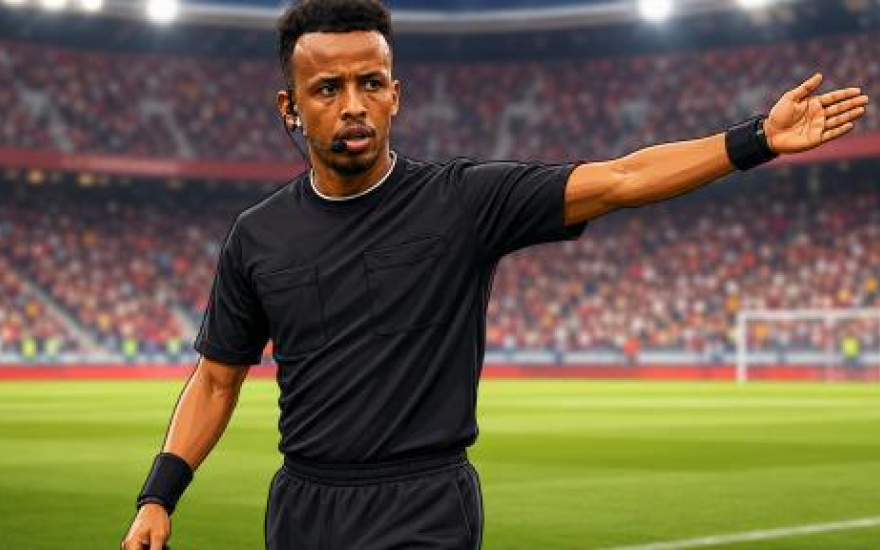
Shortly after the Miami incident, UEFA officially announced that Omar Artan has been appointed to referee the highly prestigious UEFA Super Cup clash between Paris Saint-Germain and Aston Villa, scheduled for this coming August.
This appointment is a massive development for several reasons:
Cross-Continental Cooperation: UEFA explicitly stated that the decision was made following direct discussions with CAF, showcasing a powerful, united front between European and African football authorities.
Reputational Restoration: By handing Artan one of the most high-profile matches in the European club calendar, UEFA is publicly validating his elite status and implicitly rejecting the security concerns raised by the United States.
A Second Chance: It provides Artan with the massive international stage he was so abruptly denied, ensuring his incredible talents are showcased to a global audience.
The Broader Impact on the 2026 Tournament
The saga of Omar Artan has forcefully dragged the uncomfortable politics of border security into the spotlight of the World Cup. It serves as a stark reminder of the massive logistical and ethical hurdles involved in hosting a truly global event in a deeply fractured political climate.
Artan is unfortunately not the only individual facing these hurdles. Reports have surfaced of various international players, support staff, and fans experiencing immense difficulties, prolonged detentions, and sudden visa cancellations under the current administration’s stringent immigration crackdowns. While the United States possesses the absolute right to secure its borders, the aggressive application of these policies threatens to damage the reputation of the tournament. The core promise of the World Cup is that it is a space where the world comes to play; when key figures are locked out based on their nationality or opaque vetting concerns, that promise is fundamentally broken.
A Legacy of Resilience
As the matches of the 2026 World Cup continue to play out across North America, the absence of Omar Artan remains a glaring, uncomfortable truth. Yet, upon returning to the Somali capital of Mogadishu, Artan’s response has been remarkably dignified. Refusing to succumb to bitterness, he publicly expressed his gratitude for the massive outpouring of support from FIFA, CAF, and fans around the world, urging his fellow Somalis to never lose hope in their nation.
Omar Artan’s journey may have hit an insurmountable roadblock at the American border, but his career is far from over. Empowered by his full World Cup fee and a massive upcoming European final, he stands as a powerful testament to personal resilience. The geopolitical forces that kept him out of the United States are intensely powerful, but as this remarkable saga proves, the unifying solidarity of the global football community is a formidable force in its own right. As he prepares to blow the whistle at the UEFA Super Cup this August, the entire world will undoubtedly be watching, cheering not just for the game, but for the man who refused to be sidelined.