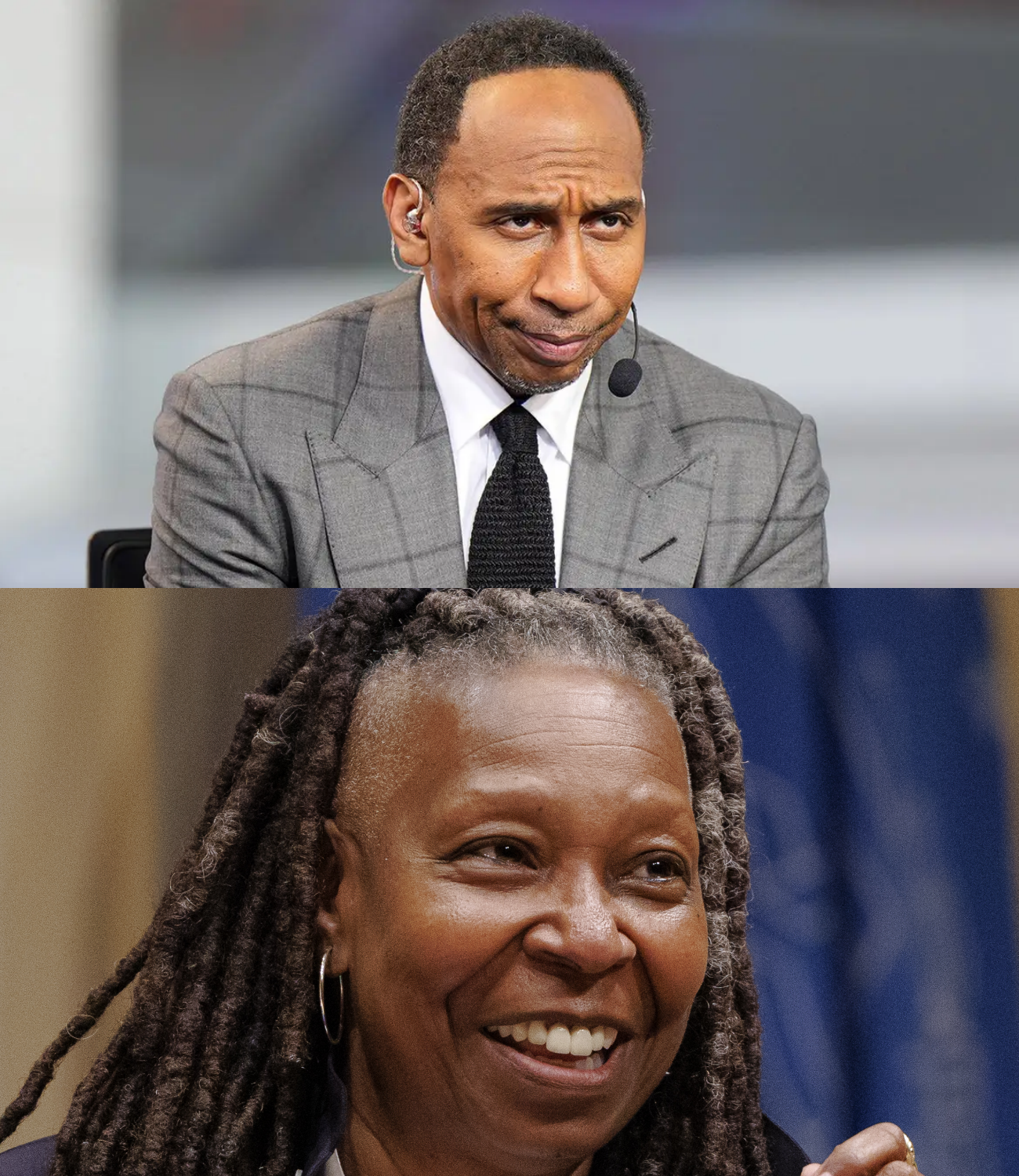
Daytime television is no stranger to intense debates, but a recent live broadcast of the popular talk show The View reached an entirely new level of tension when sports commentator and media personality Stephen A. Smith joined the panel. Known for his unfiltered, high-energy sports analysis, Smith brought that exact same uncompromising intensity to the studio, transforming what was expected to be a standard guest appearance into a fiercely contested, live on-air confrontation. From the moment he walked onto the set, Smith displayed complete confidence and total control of the narrative, signaling to both the co-hosts and the studio audience that he had no intention of holding back his viewpoints, regardless of the pushback he might receive.
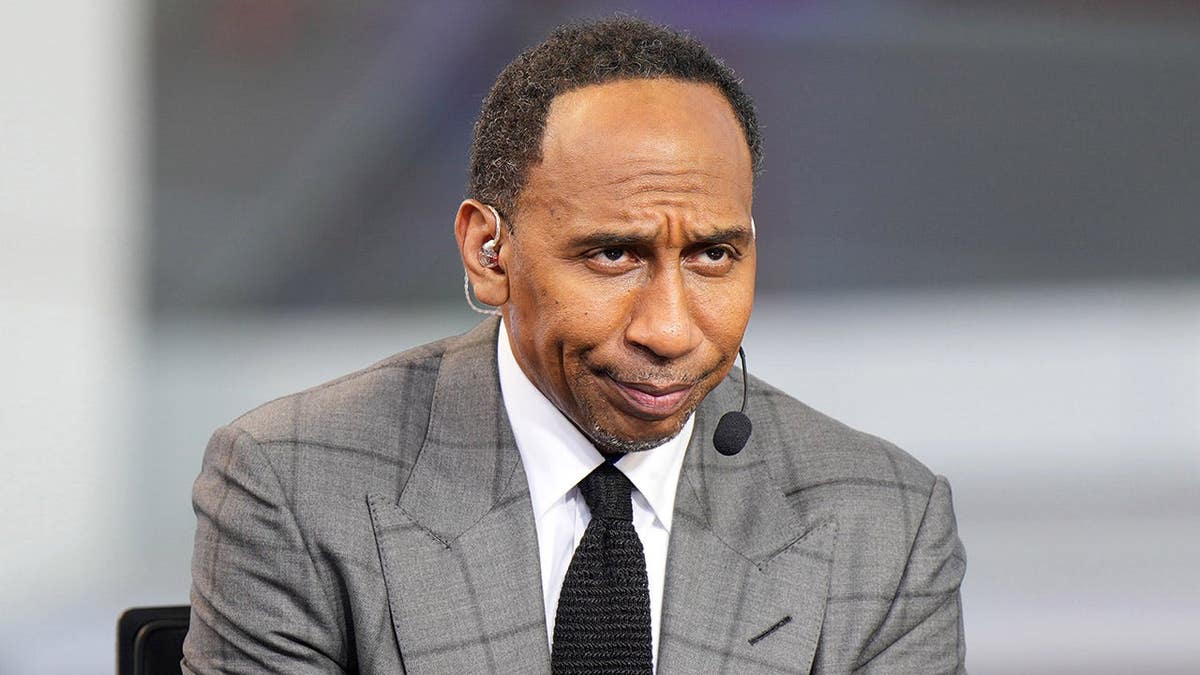
The atmosphere in the studio shifted rapidly as the panel attempted to challenge Smith on his recent public commentary. If the hosts of The View believed they could successfully corner the experienced broadcaster with carefully framed questions or steer him into a rhetorical dead end, they quickly realized they had miscalculated their target. Throughout the opening exchanges, the co-hosts repeatedly tried to push Smith into a tight spot, yet he remained remarkably calm, moving through each sharp verbal volley with a level of control that prevented the panel from throwing him off balance. Instead of buckling under the collective pressure of the co-hosts, Smith leaned into the conflict, establishing early on that his positions were firmly set.
The initial flashpoint of the broadcast occurred when co-host Sunny Hostin directly confronted Smith regarding his past criticisms of Senator Mark Kelly. Hostin brought up comments where Smith had accused the veteran and former astronaut of crossing a line by participating in a public video that reminded military troops they have the right to refuse illegal orders. To strengthen her argument, Hostin introduced a historical quote from 2016 regarding the military’s duty to reject abject crimes and unlawful commands from a commander-in-chief, presenting it as a definitive counterweight to Smith’s perspective. Seizing the moment to create a classic television turning point, Hostin looked directly at Smith and offered him the opportunity to publicly change his position on the matter.
Smith’s response was immediate and definitive. Refusing the invitation to retract his statements, he looked back at the panel and stated firmly, “I’m not changing a thing. I didn’t stutter.” When Hostin characterized his perspective as being “loud and wrong,” Smith did not back down, asserting his right to his analysis and noting that while the panel was entirely entitled to their opinions, he was equally entitled to his.
Smith then went on to elaborate on the core reasoning behind his critique, presenting a structured argument centered on the institutional integrity of the United States Armed Forces. In his view, introducing the military into the nation’s highly polarized political battles represents a dangerous overreach. He argued that public trust in several federal entities—including the Department of Justice and various intelligence agencies—has experienced a sharp decline among the American public in recent years. In contrast, the military has successfully maintained its status as one of the most consistently respected and trusted institutions in the country, a reputation built over generations through discipline, strict hierarchy, and a commitment to duty.
Smith took serious issue with the public approach taken by Senator Kelly and five other Democratic lawmakers, arguing that broadcasting vague warnings about “unlawful orders” to the ranks without providing concrete, legally defined frameworks creates unnecessary confusion within the military structure. He stated that rather than demonstrating political courage, the public messaging appeared careless, potentially opening the door for active-duty personnel to challenge commands based on subjective interpretations rather than established military law. Because these lawmakers chose to broadcast these warnings publicly rather than utilizing official legislative avenues—such as organizing formal committee hearings or requesting a structured legal review from the Pentagon’s inspector general—Smith argued that the entire effort resembled a calculated political performance rather than genuine governing.
As the debate over the military threatened to dominate the segment, moderator Whoopi Goldberg intervened to pivot the conversation in a completely new direction. Shifting the focus away from the chain of command, Goldberg turned the spotlight onto Smith’s previous criticisms of how the Democratic Party managed its strategy during the most recent national election cycle. Goldberg defended the party’s focus, arguing that it was essential for leadership to visibly stand with the LGBT community, Black women, and disenfranchised populations, framing the strategy as a necessary defense of core constituencies.
This pivot altered the tone of the broadcast entirely, moving the discussion from institutional policy to broad political strategy. Before Smith could fully respond to Goldberg’s defense, the show was forced to abruptly cut to a commercial break, leaving the audience waiting for the inevitable counterargument.
When the cameras began rolling again, Smith immediately resumed his disagreement, challenging the idea that the party’s high-level messaging was effectively translating to the everyday realities of working-class citizens. While acknowledging that many individual political candidates genuinely care about the plight of the disenfranchised, Smith argued that the overall campaign apparatus had lost sight of the fundamental mechanics required to secure a national victory. He contended that the leadership spent excessive time and energy pursuing lines of attack against their opponents that failed to resonate with or influence the core voting base.
To illustrate the perceived disconnect between elite political organizing and the general electorate, critics of the campaign have frequently pointed to the massive financial scales involved in modern elections. During the last cycle, reports indicated that the campaign budget for Vice President Kamala Harris reached an unprecedented $1.5 billion, significantly outspending the opposition by a ratio of roughly three to one. For Smith, this highlighted a broader structural issue: despite historic levels of funding and extensive focus on specific advocacy platforms, the messaging failed to connect with the immediate economic anxieties of middle-income and blue-collar families who previously formed the traditional bedrock of the party’s support.
Drawing heavily upon his extensive background in professional sports analysis, Smith summarized his view by emphasizing a simple, pragmatic philosophy: focusing entirely on what it takes to win the immediate contest. He explained that while issues regarding immigration, the economy, and civil rights are undeniably important components of national discourse, the primary objective of any political campaign must be executing a strategy that successfully secures office. In his assessment, the strategic decisions made during the last election cycle simply failed to achieve that objective.

The segment concluded in a highly energized, fast-paced exchange as the co-hosts attempted to counter Smith’s sports-centric political philosophy. Rather than steering the conversation back toward a conventional, structured interview format, the final minutes of the broadcast devolved into a loud, fast-moving debate, with multiple speakers trading points simultaneously. By the time the closing credits rolled, the studio had transformed into a chaotic television spectacle, leaving both the live audience and viewers at home with a stark demonstration of just how deeply divided public discourse remains on matters of national policy and political strategy.