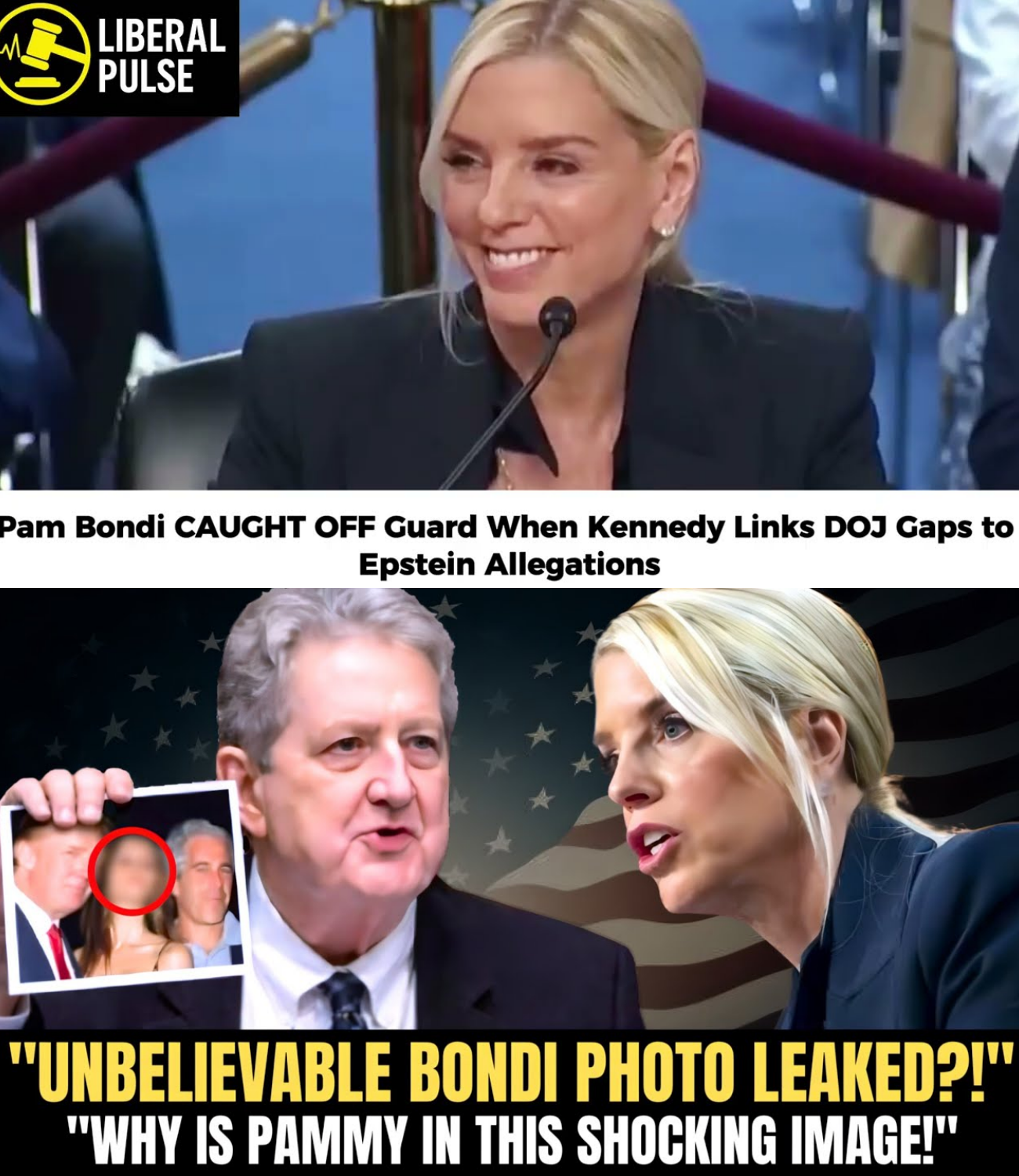
In a recent, high-stakes Senate hearing, Senator John Kennedy delivered a blistering performance that reminded everyone why robust oversight remains the lifeblood of American democracy. With a signature blend of sharp, analytical logic and a blunt, no-nonsense demeanor, Kennedy pushed the boundaries of standard inquiry, forcing the Department of Justice into an uncomfortable spotlight. What unfolded was not merely a routine oversight exchange, but a profound confrontation regarding the privacy rights of elected officials and the long-standing, haunting questions surrounding the Epstein network [00:00], [09:06].
The Privacy Threshold: When Subpoenas Cross the Line
The most explosive portion of the hearing centered on the chilling scenario of government entities obtaining the private phone records of a sitting United States senator. Kennedy moved through the legal landscape with precision, painting a picture that was both hypothetical and deeply alarming. He questioned the standard procedures of telecommunications companies, asking why they would comply with administrative subpoenas without a fight [02:49], [03:05].
Kennedy emphasized that these corporations are not passive participants; they have general counsels whose primary duty is to evaluate civil liability and protect customer privacy. By repeatedly focusing on the status of a “sitting United States senator,” Kennedy underscored the gravity of the potential overreach. He argued that if a telecom company simply hands over data without filing a motion to quash, they might be opening themselves up to significant legal trouble [03:22], [03:36]. His rhetorical question—whether they should have perhaps bought some “testicles online” instead of caving to the pressure—was a biting indictment of a culture that appears to prioritize bureaucratic convenience over fundamental constitutional protections [04:17].
The Persistent Shadows of the Epstein Case
Just as the tension reached a boiling point, Kennedy shifted gears, pivoting to one of the most controversial and distrust-filled topics in modern political memory: the Epstein allegations. By citing recent public comments by Commerce Secretary Howard Lutnik, who reportedly labeled Epstein as the “greatest blackmailer ever,” Kennedy brought the focus back to a case that many feel has been conveniently swept under the rug [07:07], [08:04].
The senator’s line of questioning highlighted a striking investigative failure. Despite claims of extensive reviews by multiple administrations, the witness admitted they had not even reviewed the transcript of an interview where such explosive, relevant information was shared [07:17], [08:49]. For the public, this creates a perception of investigative lethargy. If everyday citizens are investigated with relentless vigor, why do cases involving influential figures seem to stall? Kennedy’s frustration was palpable, not because he was accusing any specific individual of wrongdoing, but because he was exposing a glaring disconnect between the resources of the FBI and the urgency of the investigation [15:36], [17:23].
Transparency as a Necessity, Not an Option
Throughout the session, the witness frequently leaned on the shield of “ongoing investigations” to avoid providing substantive answers. While this is standard procedure in federal oversight, Kennedy’s performance demonstrated that it is no longer sufficient to calm public anxiety. Older viewers, who have witnessed decades of government shifts and evolving surveillance powers, recognized the pattern immediately: when transparency becomes optional, accountability disappears [04:47], [11:52].
Kennedy’s warning was clear: if these issues—whether they relate to the surveillance of lawmakers or the handling of high-profile criminal networks—are not addressed with total transparency, the institutional trust that is already frayed will likely erode further [18:26]. He warned that telecom companies, FBI agents, and even special counsels could face significant liability if they participate in actions that bypass the standard, rigorous checks required by law [05:22].
A Call to Action for Democracy
The hearing served as a sobering reminder that the mechanisms of oversight are fragile. They rely entirely on lawmakers who are willing to insist on the truth and a public that refuses to accept silence as a final answer. Kennedy’s calm, methodical approach proved that you do not need theatrics to expose institutional gaps; you simply need the courage to ask the questions that nobody else wants to answer [17:17], [18:48].
As the hearing concluded, the air in the room was heavy with the weight of the unanswered. The questions asked—about who knew what, when they knew it, and why certain leads were never followed—cut into the heart of democratic trust. If there is one takeaway for those watching at home, it is that accountability is not a political tool to be used only when convenient; it is an essential safeguard that prevents powerful systems from operating in the dark. In the end, Senator Kennedy’s inquiry was a powerful demonstration that no matter how complex the topic or how uncomfortable the witness, the truth is always worth demanding [19:10], [19:18].
Full video: