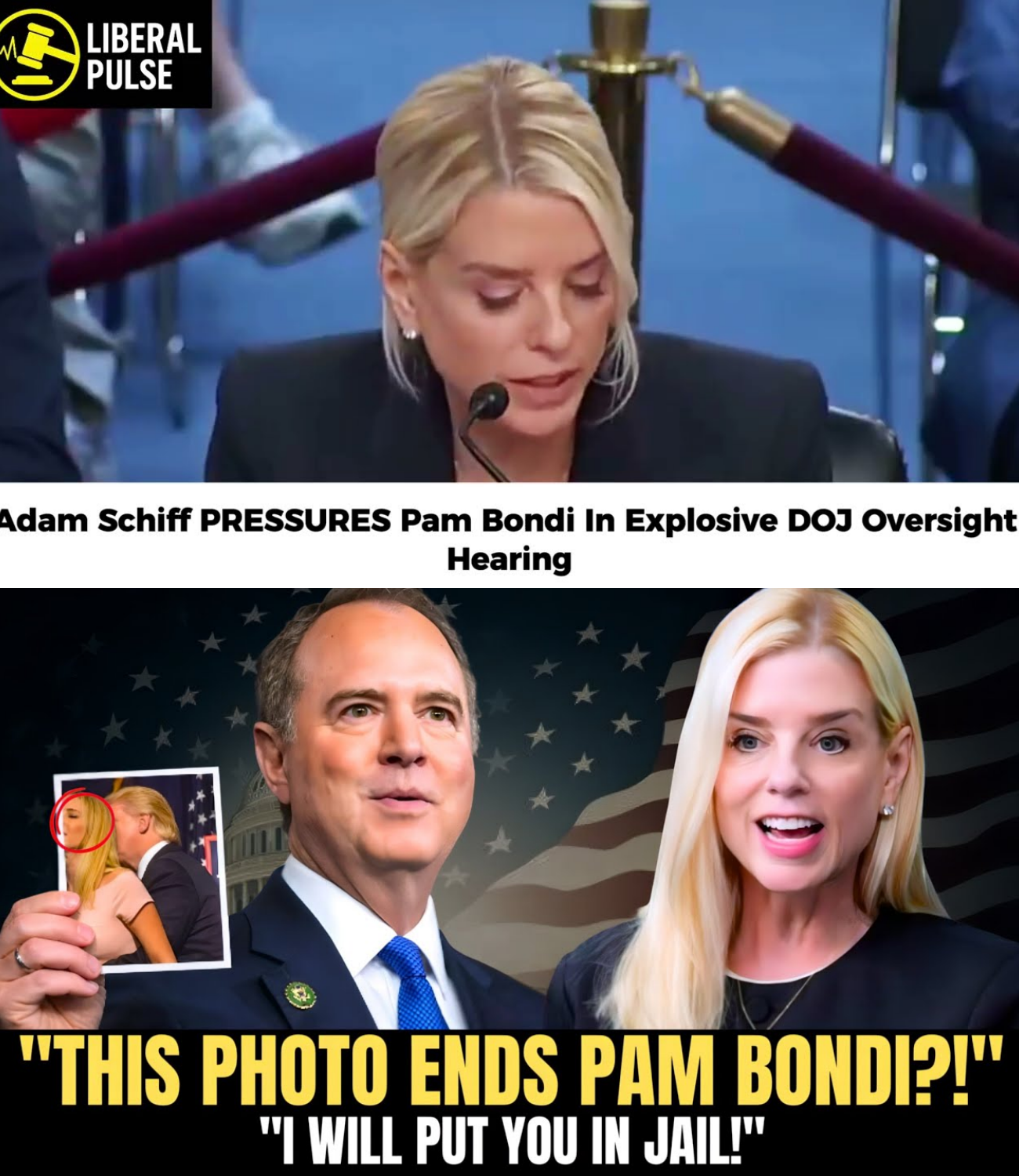
The halls of Congress are no strangers to heated debate, but the recent Department of Justice oversight hearing was something else entirely. What was initially scheduled as a routine session to review departmental operations rapidly devolved into a high-voltage courtroom drama, pinning Senator Adam Schiff against Attorney General Pam Bondi in a standoff that left the nation captivated and sharply divided.
A Shift in Atmosphere
The hearing began under the guise of normalcy. Cameras were positioned, and senators prepared to sift through administrative oversight. However, within minutes, the atmosphere in the room shifted dramatically. The polite veneer of legislative inquiry cracked, giving way to sharp accusations and a confrontational tone that turned the committee room into a battleground. At the heart of this storm were two formidable political figures, each representing a fundamentally different view of the role and integrity of the American justice system.
Senator Adam Schiff entered the hearing with a clear mission: to extract accountability regarding allegations of corruption and political interference within the DOJ. Conversely, Attorney General Pam Bondi maintained a composed, defensive stance, characterizing the senator’s line of questioning as a politically motivated spectacle rather than a genuine pursuit of facts.
The Question of the $50,000 Bribe
The most explosive segment of the hearing centered on allegations concerning Tom Homan and a reported $50,000 cash exchange. Schiff, relentlessly steering the narrative, pressed Bondi on whether there existed audio or video evidence of this transaction. He demanded a clear “yes or no” regarding whether the Department of Justice would support releasing such materials to the committee.
Bondi’s response was immediate and steadfast: she noted that the alleged events occurred prior to her confirmation and that the investigation had already been handled by her predecessors. She cited the findings of FBI Director Patel and Deputy Attorney General Todd Blanch, who maintained that there was no case to be made. Yet, Schiff was not satisfied. He argued that the timing of the events did not absolve the current leadership from providing transparency, effectively framing her refusal to commit to releasing the tapes as a cover-up of institutional rot.
A Pattern of Refusal?
As the hearing progressed, Schiff expanded his scope, moving from the singular allegation involving Homan to a broader list of concerns. He methodically recited a series of questions he claimed the Attorney General had evaded throughout her tenure. His list was extensive, covering topics ranging from ethics consultations regarding a $400 million gift from Qatar to the handling of Epstein-related documents and the firing of career prosecutors who had worked on investigations into the former president.
“You refused to answer that question,” became a rhythmic refrain in Schiff’s questioning. Each repetition was deliberate, designed to leave the audience—and the American public—with the impression that the Department of Justice had become a opaque institution, protecting allies while weaponizing its power against political adversaries.
Competing Narratives in Washington
The confrontation eventually turned deeply personal. Bondi hit back, questioning Schiff’s motives and reminding him of his own past congressional censure. She staunchly defended members of the administration whom Schiff had targeted, calling them trustworthy and accusing the senator of using the hearing to score political points rather than conduct legitimate oversight.
This disagreement highlights a deeper, systemic issue in modern American politics: the erosion of trust in foundational institutions. Schiff painted a portrait of a Justice Department that had abandoned its independence, functioning as a “shield for allies and a weapon against opponents.” Bondi’s counter-narrative portrayed a department unfairly targeted by partisan critics who are obsessed with turning policy discussions into theatrical displays of hostility.
Legacy of the Hearing
By the time the gavel fell to close the session, no smoking gun had been produced, and no dramatic confessions had occurred. For those critical of the administration, the lack of definitive answers from Bondi was seen as an admission of guilt. For those supportive of her, the hearing was nothing more than an orchestrated attack, designed to damage the department’s credibility for political gain.
The significance of the event extends beyond the transcript of the hearing. It serves as a stark reminder of the current state of national discourse, where every question is a strategic maneuver and every silence is interpreted through a partisan lens. Whether the public sees this as an act of courageous oversight or a partisan charade depends largely on which narrative they align with. As the clips circulate on social media, the debate continues, leaving the most pressing question unanswered: in a landscape defined by such intense polarization, is it still possible to separate the truth from political strategy?
Full video: