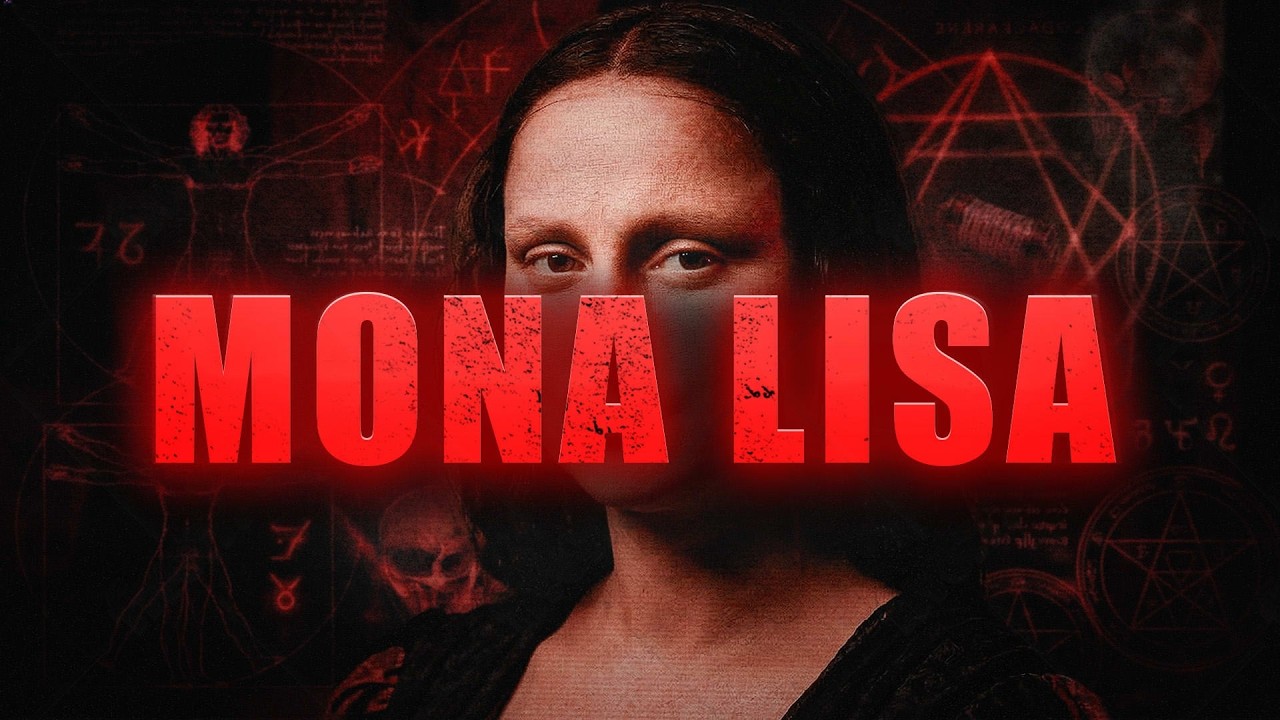
The Louvre in Paris is home to thousands of masterpieces, but over 10 million people annually flock to one specific, unassuming spot. Behind armored glass and surrounded by a fortress of security sensors sits a painting just over half a meter tall. She is the Mona Lisa—the Yoconda—and she remains the most famous face in human history. To the casual observer, she is a static image of a woman, yet to the student of history and science, she represents the pinnacle of artistic evolution and a series of historical accidents that forever changed the landscape of culture.
The Genius of Leonardo
In 1503, Leonardo da Vinci began the portrait of Lisa Gherardini, the wife of a Florentine merchant. For Leonardo, however, this was not a simple commission. As a polymath whose brain spanned the breadth of anatomy, engineering, and optics, Leonardo utilized the portrait as a laboratory.
The result was sfumato, a technique involving dozens of ultra-thin, almost transparent layers of oil. By blurring the boundaries between figure and background, he created a visual softness that makes the skin appear as if it is breathing. Furthermore, he used his deep understanding of optics to create an optical illusion: the smile that seems to vanish when looked at directly, yet reappears when glimpsed through peripheral vision. It is a masterpiece of both art and science, designed to play with the human eye.
From Royal Possession to Global Icon
The painting’s path to fame was far from inevitable. After Leonardo died in France in 1519, the portrait entered the French royal collection and eventually, after the French Revolution, the Louvre. For centuries, it was respected by critics and artists, but it was not a global phenomenon.
The turning point came in 1911. When Vincenzo Peruggia, a museum worker, stole the portrait and kept it hidden for over two years, the news sparked a global frenzy. Before this theft, many hadn’t heard of the Mona Lisa; after, everyone knew the name. When it was recovered in 1913, the portrait returned to Paris as a national symbol. The theft had transformed a masterpiece into a celebrity.
The Enigma of the Multiple Lisas
The story is further complicated by recent art historical revelations. Scholars have long debated the existence of multiple versions of the portrait, particularly the “Isleworth Mona Lisa.” Because Renaissance sketches by Raphael depict a Mona Lisa with columns that are not present in the Louvre version, many believe Leonardo painted early drafts or secondary versions. This discovery forces us to reconsider the Louvre’s painting not as a static, lone object, but as the final, highly refined iteration of a much larger, and perhaps still undiscovered, artistic process.
The Price of Fame
The Mona Lisa’s fame has been both a blessing and a burden. The painting has survived wars, Nazi occupation, and numerous acts of vandalism—from acid attacks to a thrown cake and a hurled teacup. Each attempt at damage has only reinforced its position as a protected cultural treasure.

Today, as we look at the Mona Lisa, we are seeing more than just paint on poplar wood. We are seeing a scientific experiment, a historical survivor, and a testament to how art can transcend its own physical form to become a global legend. Whether you see her as smiling, sad, or indifferent, one thing is certain: Leonardo da Vinci succeeded in his goal of creating something that would never truly be understood, ensuring the Mona Lisa will remain the center of our gaze for centuries to come.