The Price of Power: Accountability at the FBI
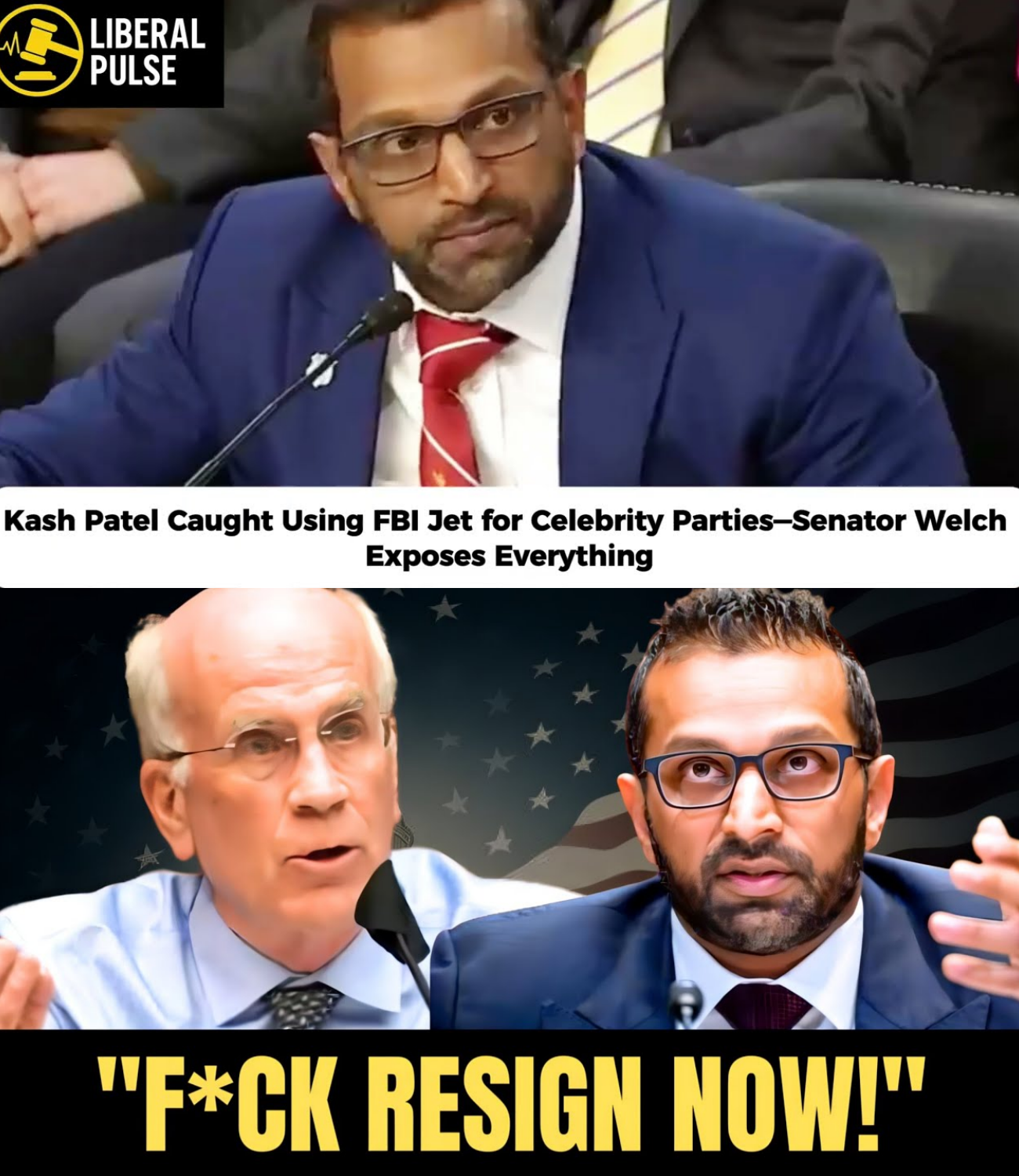
In a high-stakes exchange that has ignited fierce debate across Washington and social media, Senator Peter Welch recently confronted FBI Director Kash Patel, pulling back the curtain on a series of troubling reports regarding the agency’s leadership. The hearing, which ranged from questions of operational integrity to the personal conduct of the Director himself, painted a stark picture of an agency seemingly divided between its elite leadership and the hardworking men and women on the ground.
At the heart of the confrontation was a fundamental question: Do the rules that apply to the average citizen and the typical FBI agent also apply to those in the highest positions of power?
A Pattern of Questionable Travel
The most explosive moment of the hearing occurred when Senator Welch presented flight tracker data that appeared to contradict the public perception of the FBI Director’s official duties. Welch pointed to multiple instances where an FBI-owned jet was used for round-trip flights from Washington, D.C., to luxury destinations like Las Vegas and New York.
According to the data presented, these trips coincided with high-profile social outings. On the weekend of March 7, the FBI jet was reportedly used for a trip to Las Vegas, where Director Patel attended a UFC fight alongside actor Mel Gibson [07:19]. On April 5, the same aircraft was allegedly used for a trip to New York City for a hockey game attended by Wayne Gretzky [08:21]. A third flight followed on April 12, taking the Director to a UFC event in Miami [08:34].
Patel defended the travel, arguing that he pays the commercial equivalent for his seat and that his use of the aircraft is mandated by Congress for security purposes [08:52]. However, Welch countered this by highlighting the disparity between the Director’s lifestyle and that of ordinary FBI agents. “Everyday FBI agents who are assigned in Washington don’t get to fly home on a private jet,” Welch remarked, underscoring the optics of the situation [07:50]. To the public, the use of government assets for celebrity-filled weekends creates an image of a two-tiered justice system—one for the political elite and another for everyone else.
The Human Cost: Firing Heroes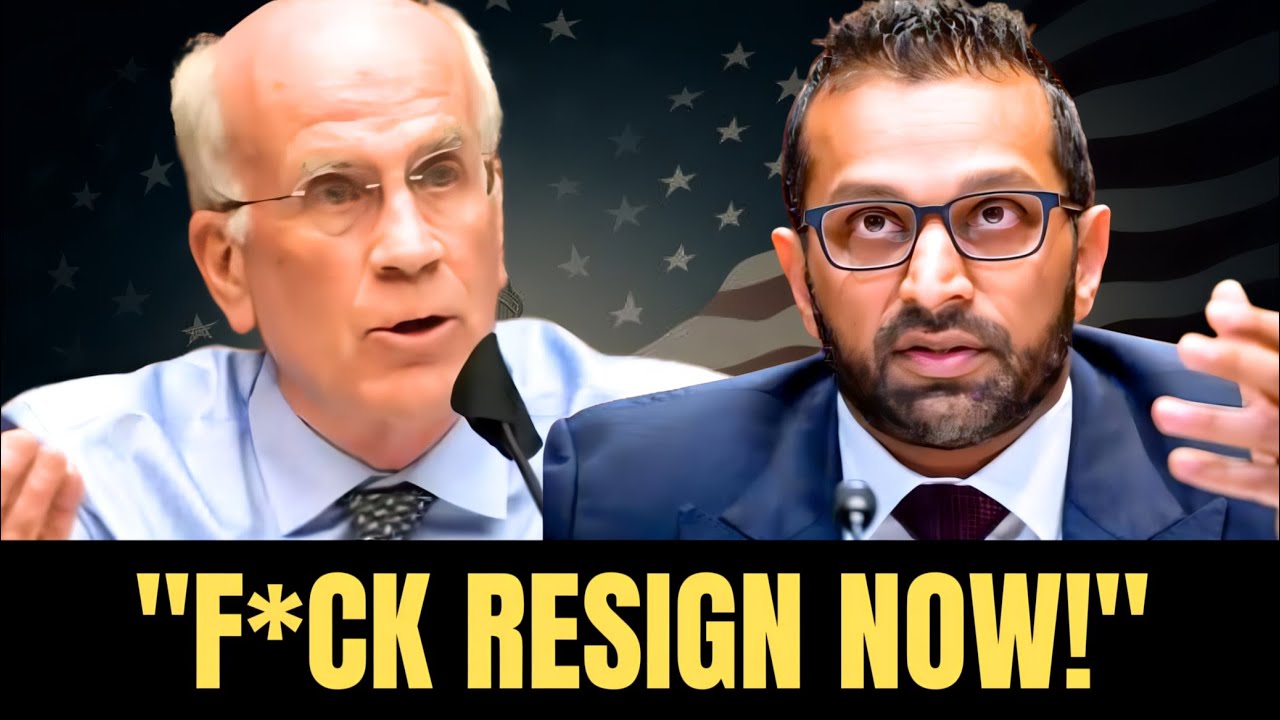
The travel controversy was compounded by Welch’s deep dive into the internal culture of the FBI, specifically the termination of veteran agents. The case of Brian Driscoll, a highly decorated official, served as the focal point. Driscoll, who served the FBI for over 18 years, was a commander of the elite Hostage Rescue Team and a recipient of the Medal of Valor for his role in high-stakes counterterrorism operations, including the raid to rescue hostages from ISIS [03:30, 04:12].
Driscoll was reportedly fired after he expressed apprehension regarding political pressures surrounding the investigation into the January 6th events. Specifically, he was asked to provide a list of agents involved in the investigation and reportedly feared that those agents would face political retaliation [04:56]. Welch framed this as a case of a leader standing up for his subordinates, contrasting it sharply with the Director’s own behavior.
“That record suggests to me that this person is worthy of consideration for the Presidential Medal of Freedom, and he got fired,” Welch stated, challenging Patel on why a hero with such a sterling record was let go [05:58]. Patel deflected by noting that the matter is under ongoing litigation, but the damage to morale—and the public’s perception of fairness within the agency—was clear [05:30].
Budget Cuts vs. Luxury Spending
Beyond the personal conduct of the Director, Welch addressed the fiscal priorities of the FBI. The Senator highlighted that local law enforcement agencies across the country have faced significant budget hits, specifically pointing to the removal of $500 million in COPS grants, which fund vital local police operations in cities like Burlington and Rutland [09:48].
While local police departments are struggling to maintain staffing and safety, Welch brought up reports that the FBI was seeking to procure a new private jet with an estimated price tag between $72 million and $80 million [11:08]. Patel disputed the accuracy of these figures, describing the current jet as an “operational asset” rather than a personal perk [10:33]. Nonetheless, the juxtaposition of budget cuts for community policing and massive expenditures for agency air assets struck a nerve with many who feel that government priorities have become disconnected from the needs of the average taxpayer.
Credibility and the Public Trust
The hearing also revisited an earlier incident that damaged the agency’s credibility. During the response to an attack on Charlie Kirk, Patel publicly announced that the FBI had “got our man,” only for it to be revealed 27 hours later that the actual suspect was still at large [01:34, 01:40].
When pressed on this, Patel insisted he was simply working to keep the public informed and could have been more careful with his word choice [02:14]. Welch, however, pinpointed why this mattered: such announcements lead the public to believe the danger has passed. “If you put out a statement that says we’ve got our man, and in fact it turns out that you didn’t have your man, that’s not a mistake,” Welch argued [12:48]. It is another example, the Senator suggested, of a leadership that prioritizes optics and immediate messaging over the hard, slow work of accuracy and truth.
The Bottom Line
As the session concluded, the divide between the two men could not have been clearer. Senator Welch presented himself as a representative of the everyday citizen, demanding accountability for tax dollars and fairness for the agents who serve the country with distinction. Director Patel, on the other hand, maintained that he was operating within the rules and managing a complex agency under difficult circumstances.
This confrontation is more than just a political spat. It is a mirror reflecting the deeper frustrations of a nation watching its institutions. Whether it is the perceived misuse of government property, the firing of honorable public servants, or the disconnect between massive federal budgets and local community needs, the exchange provided a stark look at the fragility of trust in government.
For the American public, the question remains: Are those in positions of immense power truly held to the same standards as the people they are sworn to protect? As the fallout from this hearing continues, one thing is certain: the pressure for transparency and accountability is only beginning
Full video: