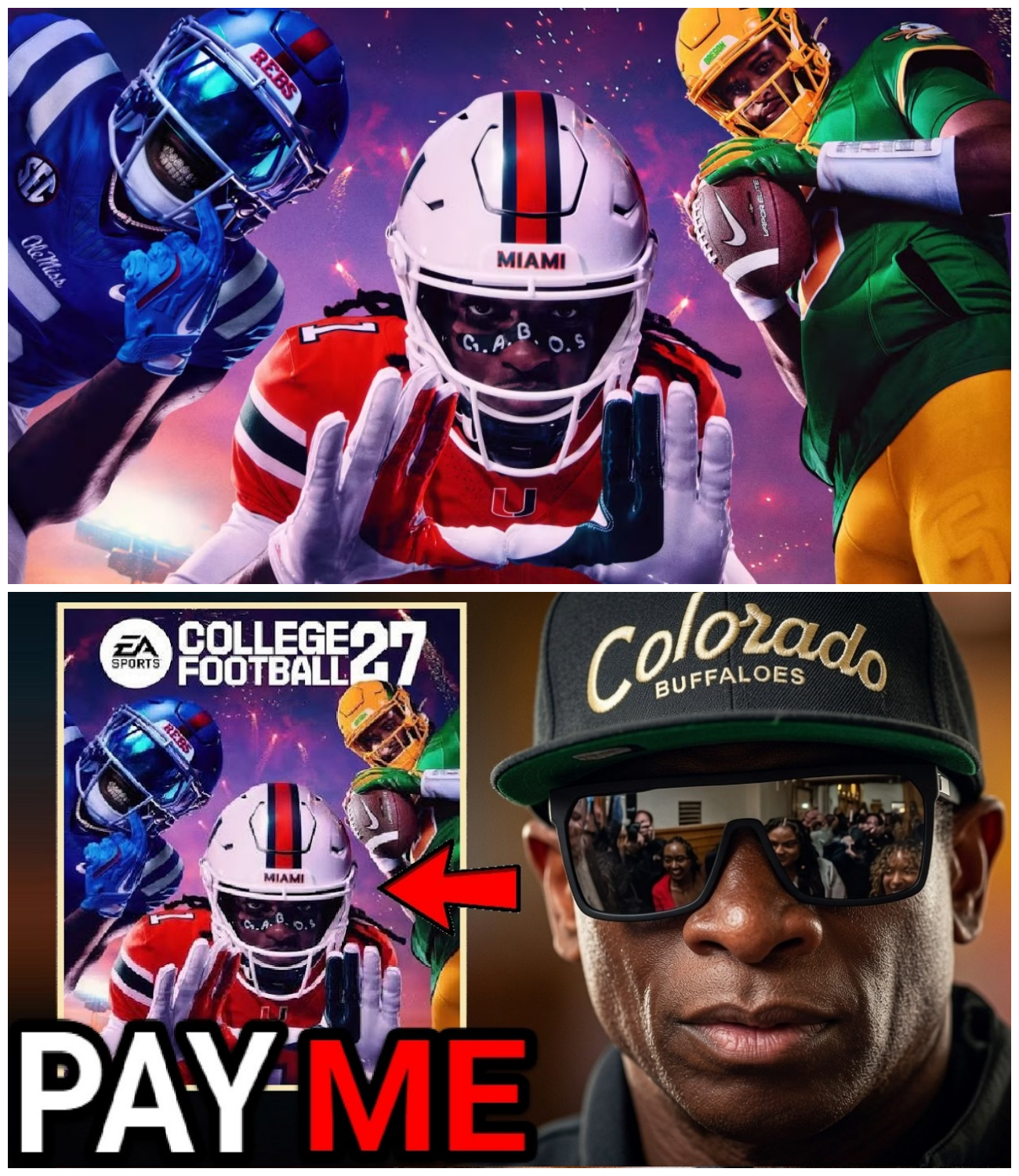
In the high-stakes world of modern college athletics, few figures command as much attention as Deion “Coach Prime” Sanders. Whether he is on the sidelines in Boulder or making headlines in the media, Sanders exists in a perpetual spotlight. However, his most recent headline isn’t about a recruiting victory or a game-day triumph. Instead, it is about his conspicuous absence from the highly anticipated College Football 27 video game. When asked why he wasn’t featured in the game, Sanders didn’t offer a diplomatic spin. He was blunt, business-like, and unapologetically direct: “I have a wonderful team that handles a lot of business for me. If I’m not in the game, that means they weren’t paying enough.”
That simple statement ignited a wildfire across social media, pitting die-hard fans against the Colorado Buffaloes coach. But beneath the surface-level outrage lies a much more complex narrative—one that intersects with the rapidly evolving landscape of Name, Image, and Likeness (NIL) deals, the monopolization of sports gaming, and the growing frustration players have with the industry’s shift toward aggressive microtransactions. Is Deion Sanders being “money-hungry,” or is he simply playing the game by the rules that corporations like EA Sports have set? And more importantly, is the outcry against him a distraction from the fundamental problems plaguing College Football 27?
The “Coach Prime” Dilemma: Brand Over Presence
To understand the controversy, one must acknowledge the current economic reality of college sports. For decades, players and coaches were mere commodities within the collegiate ecosystem, generating billions for institutions while receiving limited direct compensation. Today, the NIL era has changed the calculus. Coaches are no longer just leaders of men; they are high-powered CEOs managing personal brands that compete with the very institutions they serve.
When Sanders says, “they weren’t paying enough,” he is articulating a perspective that is increasingly common in professional athletics. His brand is immense. His presence in a video game would undeniably boost sales and engagement for EA Sports. From his perspective, if a corporation is profiting off his likeness and his team’s momentum, he is entitled to a fair slice of that revenue. The fans who argue that he should have participated “for the love of the game” or “for the recruits” are operating under an antiquated model of collegiate sports—one where the participants are expected to be grateful for exposure, rather than compensated for their value.
However, the backlash from the fan base is equally understandable. For many, College Football 27 represents a return to a beloved tradition, a way to connect with the sport on a granular level. When a major personality refuses to participate, it feels like a disruption of that connection. Recruits play the game; they want to see themselves in the digital simulation of their dreams. By opting out, Sanders is, in the eyes of his detractors, placing his own financial interests above the immersion and engagement of the very community he seeks to cultivate. It is a classic clash between modern professional entitlement and the traditional expectations of fan-centric entertainment.
The “EA Problem”: Beneath the Microtransactions
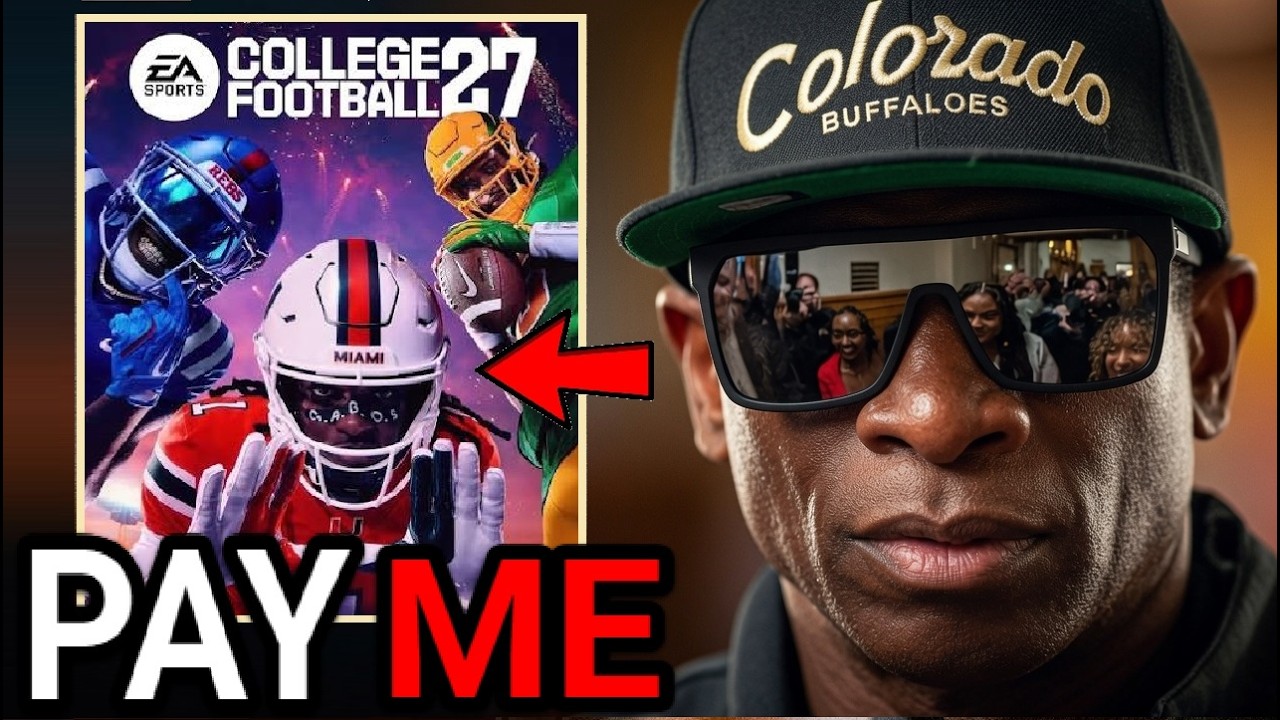
While the focus remains fixed on Coach Prime, a silent but growing storm is brewing regarding the game itself. The discourse surrounding College Football 27 has shifted rapidly from who is in the game to the quality of the product being delivered. Gamers are becoming increasingly disillusioned with EA Sports, citing a trend of “pay-to-win” mechanics that threaten to undermine the entire experience.
The core of the issue lies in the “Road to Glory” mode. Traditionally, this mode was a test of skill, endurance, and strategy. You started as an underdog, grinded through the seasons, and slowly developed your player into a superstar. Today, players report a vastly different reality. The progression system is allegedly balanced in such a way that meaningful upgrades are gated behind paywalls. Stories have emerged of users spending upwards of $100 just to elevate a player’s rating to a respectable level, effectively turning a single-player journey into a transactional grind.
This shift is emblematic of a broader crisis in the gaming industry. Developers are no longer just selling a finished product; they are selling a service that requires continuous “investments” to remain competitive or even enjoyable. When a game costs $70 to purchase—a premium price point—but then demands additional funds to unlock basic progression, consumers have every right to be outraged. The irony is palpable: while fans criticize Deion Sanders for being money-driven, they are simultaneously subsidizing an EA Sports business model that is arguably far more predatory toward the end user.
A Failure of Attention: The Glitches and the Oversight
The frustration with EA Sports extends beyond simple economics; it encompasses technical incompetence and a perceived lack of attention to detail. One of the most glaring examples of this is the misidentification of athletes within the game. In a title that purports to be the definitive simulation of college football, having players misidentified or erroneously depicted—such as the incident involving a BYU defensive back being incorrectly represented—is a sign of institutional carelessness.
These are not just minor aesthetic flaws. They represent a fundamental disconnect between the developer and the sport they are simulating. If a game cannot get the fundamental details of its roster correct, it calls into question the integrity of the entire project. When these errors are compounded by gameplay glitches—such as wide-open passes being dropped due to AI errors or movement systems that feel unresponsive—the product begins to feel less like a labor of love and more like a rushed, cynical release designed to capitalize on brand loyalty.
The Intersection of Likeness and Legacy
So, where does this leave us? The controversy involving Deion Sanders serves as a lightning rod for broader tensions. It is a microcosm of the current state of college football: a sport that has embraced the professionalization of its participants while still trying to hold onto the veneer of amateur tradition.
Deion Sanders’ seat, while not yet “hot” in the traditional coaching sense, is certainly warm. If the Colorado Buffaloes struggle to meet expectations on the field this upcoming season, the narrative will shift from his absence in a video game to his performance as a leader. Yet, for now, the outrage directed at him feels misaligned. While his refusal to join the game may be seen as a business move that ignores fan sentiment, he is not the one charging $100 for player upgrades or failing to accurately represent the athletes on the field.
As consumers, the gaming community has a responsibility to demand more—not just from the coaches and the players, but from the corporations that hold the licenses. If we are to see a truly great college football simulation, it requires more than just high-fidelity graphics and licensed uniforms. It requires a commitment to the integrity of the sport and a respect for the people, both players and coaches, who bring it to life.
In the end, the College Football 27 saga is a reminder that sports and gaming are no longer separate entities. They are intertwined in a complex web of branding, monetization, and fan expectations. Whether or not Coach Prime eventually decides to join the digital gridiron is almost secondary to the question of whether the game itself can earn back the trust of the community it claims to represent. Until then, the arguments will continue—and in the world of modern college football, that is perhaps the only thing that is guaranteed.