
A Defining Moment in Washington
In a political climate often defined by partisan bickering and performative soundbites, rare moments occur where the veneer of institutional decorum is completely stripped away, revealing the raw, uncomfortable mechanics of power. Such a moment took place during a recent congressional hearing, when Representative Thomas Massie turned the spotlight directly onto the FBI, forcing a confrontation that left many viewers stunned. Armed with official FBI documentation—specifically FD-302s, which record interviews with victims—Massie systematically dismantled the bureau’s defensive posture regarding the Jeffrey Epstein case.
The chamber grew uncharacteristically still as Massie began to read a list of individuals implicated by the victims themselves. These were not the ramblings of internet theorists; they were names transcribed into federal records. Among those mentioned were a prominent banker, a royal prince, a magician, a high-profile musician, a Hollywood producer, and at least six billionaires, including one from Canada. As Massie’s voice resonated through the room, the focus shifted to FBI Director Kash Patel, who appeared visibly paralyzed by the gravity of the information being presented in broad daylight [00:00].
The Wall of “Ongoing Investigations”
The core of the confrontation centered on the FBI’s long-standing claim that there is “no credible information” to suggest Epstein trafficked victims to anyone other than himself. Massie, clearly prepared, pushed back against this narrative with legal precision. He noted that while the FBI has historically cited constraints from 2006-2007 search warrants as a reason for not pursuing certain leads, those limitations did not apply to the 2019 sex trafficking indictment in the Southern District of New York.
This distinction was crucial. The FD-302 documents in question were the result of the 2019 investigation, meaning they were fresh, credible statements from survivors who had cooperated with federal authorities [01:38]. When Massie asked if these victims were deemed “not credible” by the bureau, Patel attempted to sidestep the issue by shifting the burden to previous U.S. Attorney offices and different administrations. He claimed, “It’s not my assertion, sir; it’s the assertion of two different United States attorneys’ offices… who investigated those same materials” [03:26]. It was a quintessential display of bureaucratic circularity: the agency being questioned pointed to previous decisions made by that very same agency to justify its current inaction.
A Culture of Selective Transparency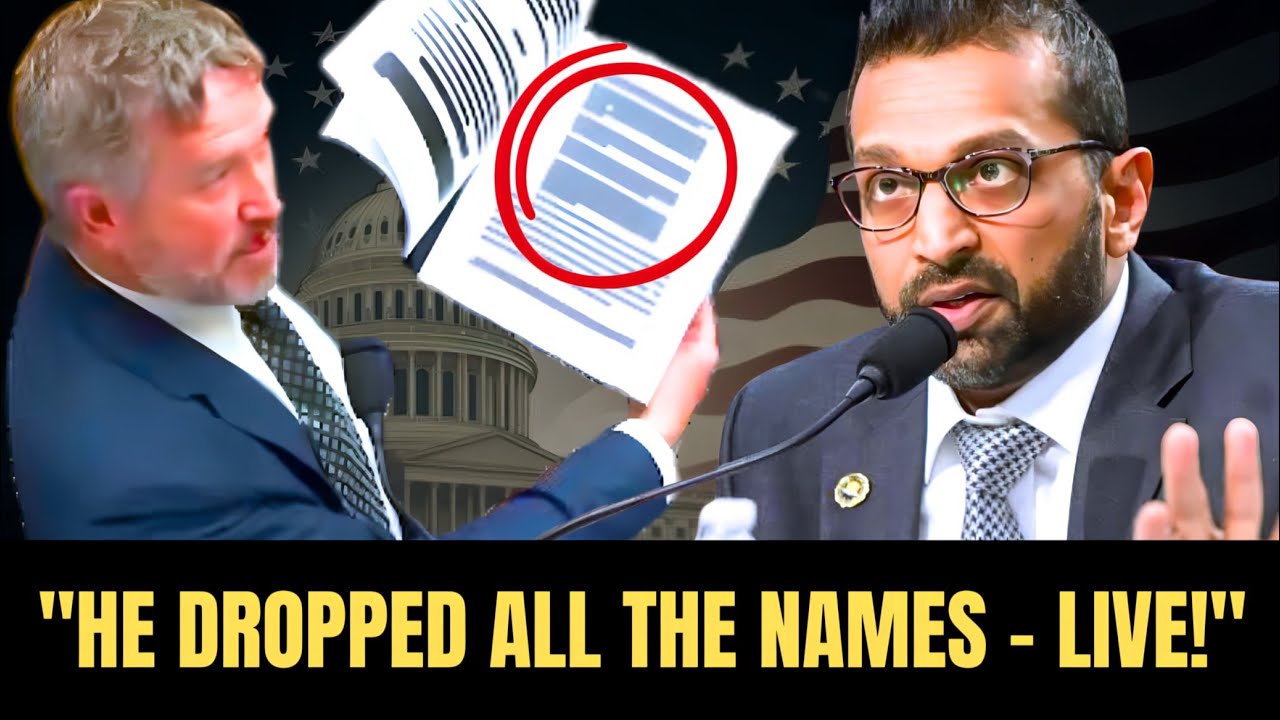
One of the most emotionally charged parts of the exchange occurred when Massie questioned Patel regarding his willingness to meet with Epstein’s victims. The congressman pointed out the irony that the FBI had previously found the time to release binders to social media influencers at a White House event in the name of “transparency”—a process that reportedly resulted in the negligent exposure of unredacted victim names [04:21].
When asked if he would personally meet with the women who survived Epstein’s abuse, Patel defaulted to institutional language: “The FBI will meet with anyone who has new information,” and regarding a personal meeting, “The FBI and the professionals who are handling the cases will” [08:40]. To many observers, this was not just a refusal; it was a cold, institutional dismissal. It highlighted a stark contrast: the government seemingly has time for public relations events with influencers, yet personal engagement with the actual survivors of a heinous trafficking network is delegated to nameless “professionals” [08:57].
The “Intelligence” Connection
Perhaps the most haunting aspect of Massie’s line of questioning involved the alleged connections between Epstein and intelligence agencies. Massie cited documents suggesting that former Labor Secretary Alex Acosta was told to back off because Epstein “belonged to intelligence” [09:13]. The inclusion of this detail in an official congressional hearing elevated the conversation from a criminal case to a matter of national security and systemic corruption.
When pressed on whether he had reviewed the CIA’s file on Epstein, Patel’s response was characteristically cagey: “That’s presuming there’s a CIA case file” [10:09]. This “if it exists” tactic is a well-worn path in Washington—acknowledging nothing, promising only to review what is provided, and ensuring that no individual leader takes personal accountability for the secrets buried in the archives [14:08]. It suggests that the Epstein case is not merely a failure of law enforcement, but a strategic “black hole” where the intersection of high-finance, politics, and intelligence creates a zone of absolute immunity.
The Illusion of Accountability
The lasting impact of this exchange lies in what it suggests about the nature of American justice. For years, the public has been told that the Epstein investigation is an “ongoing investigation,” a phrase that has effectively become a euphemism for “we are not going to talk about this.” As Massie masterfully illustrated, “ongoing investigation” is the most effective tool in the bureau’s arsenal for silencing questions and burying accountability under layers of procedural paperwork [11:01].
The fact that a sitting congressman had to read victim statements from federal files just to get an official response underscores a terrifying reality: the system is designed to protect its own. When the people being accused of failing to act are the same ones responsible for the investigation, justice becomes a circular performance. The victims remain ignored, their truths labeled “not credible” by the very institutions that should have protected them, while the names of the powerful men they identified remain shielded behind a wall of bureaucratic secrecy [13:15].
The Truth Cannot Be Buried Forever
Despite the freezing stares and the practiced deflections, this hearing served a vital purpose. It placed on the public record the existence of evidence that officials would prefer to keep in the dark. It forced the FBI Director to confront the reality that the public is no longer satisfied with empty phrases.
The Epstein story has never been just about one man; it is about how a network of influence protects itself across decades and administrations. When power becomes untouchable, it ceases to be a government and begins to resemble a closed society. Yet, as history has shown—from Watergate to the present day—the truth has a persistent habit of surfacing. Witnesses speak, documents leak, and citizens continue to demand answers. The silence in the room during Massie’s questioning was not a sign of the story’s end; rather, it was a snapshot of a system realizing that it can no longer keep its secrets hidden in plain sight [17:02].
In the final analysis, this hearing wasn’t about politics. It was about the fundamental right to know whether the scales of justice are truly balanced or if they are permanently weighted in favor of the elite. As Congressman Massie’s interrogation demonstrated, the answers provided by those in charge often matter less than the questions they refuse to answer. The quest for accountability continues, and for the victims who have waited years for their voices to be heard, this moment was a small, yet significant, step toward the light. The truth is still there, buried in the files, waiting for the next person with the courage to bring it out into the open [17:51].
Full video: