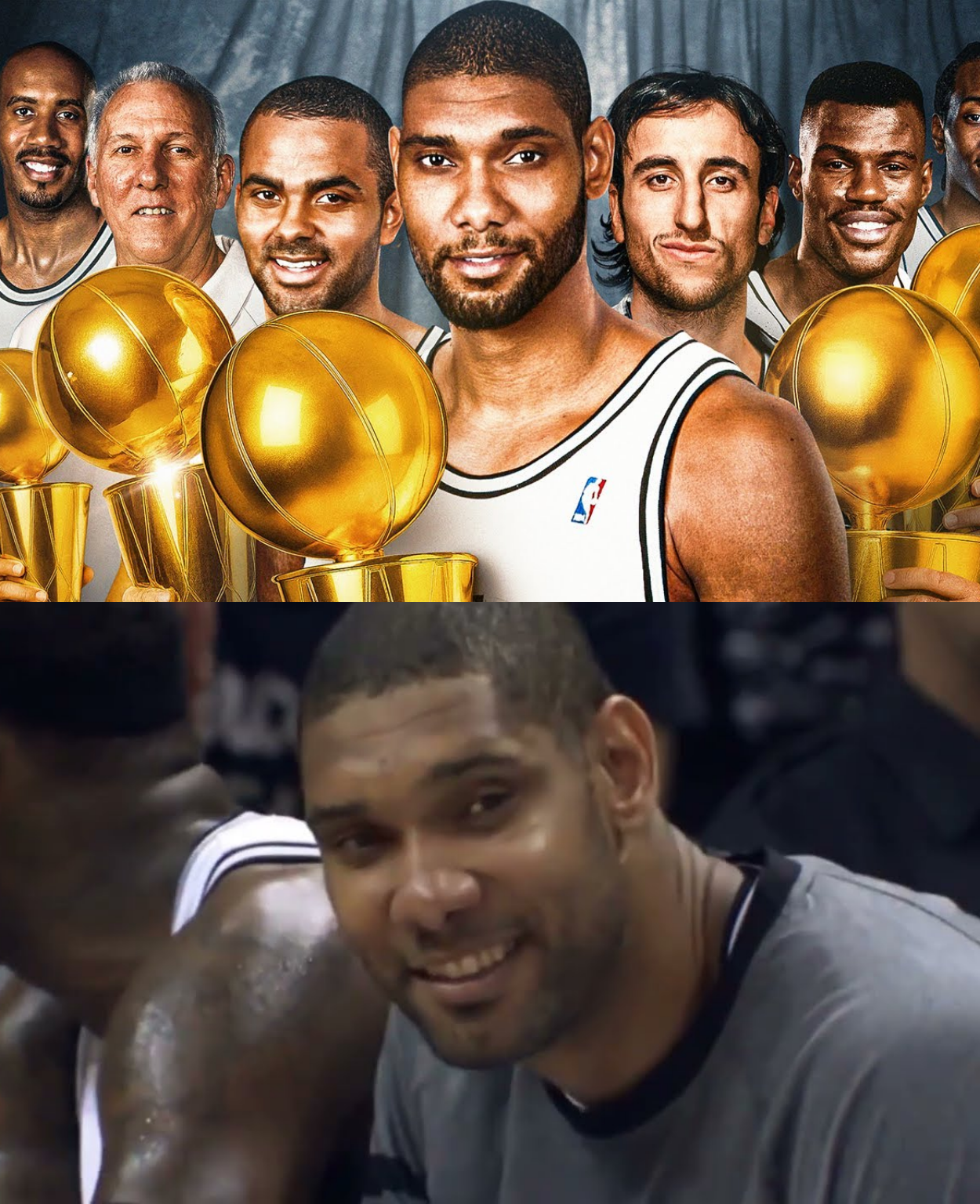
In the world of professional sports, dynasties are usually loud. They are characterized by massive egos, media firestorms, and flashy superstars who dominate the headlines as much as they dominate the court. But then, there were the San Antonio Spurs. For two decades, from 1997 to 2017, the Spurs operated in the shadows of the league’s bigger markets, quietly building a record of sustained excellence that remains unmatched in the modern NBA. They were the “silent” dynasty—a team that didn’t just win; they engineered victory through discipline, selflessness, and a rigid adherence to a philosophy known simply as “The Spurs Way” [00:30].
To understand the Spurs, one must look past the box scores and into the boardroom. Their success was not a product of luck, though they certainly had their share, but a triumph of organizational alignment between owner Peter Holt, General Manager R.C. Buford, and legendary head coach Gregg Popovich [08:15].
The Lottery Luck That Changed Everything

The Spurs were a decent franchise before 1997, defined by stars like George “The Iceman” Gervin and David Robinson, the “Admiral.” But they had never crossed the threshold into true championship territory [02:01]. That changed with the catastrophic 1996-97 season, which saw Robinson sidelined by injury [02:36]. The team bottomed out, winning just 20 games. It was a failure that resulted in the greatest draft pick in league history: Tim Duncan.
When Popovich, having recently taken the reins as head coach, flew to the U.S. Virgin Islands to meet Duncan, he didn’t spend the time talking about pick-and-rolls or defensive rotations [03:23]. He spent days discussing life, family, and values. That trip laid the foundation for a twenty-year marriage of basketball genius and player character. Duncan was not just a power forward; he was the personification of the franchise’s soul—humble, reliable, and utterly selfless [27:02].
The Blueprint: International Scouting and Player Development
As the league trended toward athleticism and isolation-heavy scoring, the Spurs looked elsewhere. They became the NBA’s gold standard for international scouting, finding gems like Tony Parker (the 28th pick in 2001) and Manu Ginobili (the 57th pick in 1999) [06:40, 09:48]. At the time, the rest of the NBA viewed European players with skepticism, often dismissing them as “soft.” The Spurs, however, valued fundamentals, basketball IQ, and cultural fit above all else [07:01].
This was the “Moneyball” of the NBA. Without the budget to sign top-tier free agents, the Spurs identified players who were overlooked—like Bruce Bowen, the archetype for the modern “3-and-D” player—and integrated them into a system where every player knew their role [09:01]. The development of these players was handled by a world-class staff, including shooting coach Chip England, who could take an average shooter and turn him into a lethal threat [08:08].
The Evolution of the System
The true genius of Popovich was his ability to adapt. In the early 2000s, the Spurs were a defensive juggernaut that played “in the mud.” They funneled opponents into the paint, where Duncan and Robinson—the “Twin Towers”—patrolled the rim [04:55]. They didn’t need to be high-scoring; they just needed to be tougher than everyone else.
As the team aged, Popovich shifted gears. He pioneered “load management,” resting his aging superstars during the regular season to keep them fresh for deep playoff runs [14:46]. Then, in the twilight of the Duncan-Parker-Ginobili era, he orchestrated the most profound transformation in the team’s history. They moved away from the slow-paced, post-up style and embraced a “beautiful game” offensive system characterized by ball movement, extra passes, and spacing [23:46]. This culminated in the 2014 NBA Finals, where they dismantled the Miami Heat with a display of team basketball that is still cited as one of the greatest offensive performances in Finals history [25:26].
The Culture of Selflessness
If there is one story that encapsulates the Spurs, it is that of Manu Ginobili. A superstar in his own right, Ginobili agreed to come off the bench for most of his career so the team could maintain balance [29:09]. On any other team, a player of his caliber would have demanded to start. On the Spurs, he did it because it was “the right thing to do.”
This culture extended to the coaching staff. Popovich and his front office operated in complete unison; managers sat in on coaches’ meetings, and coaches participated in management discussions [08:30]. There was no finger-pointing, no back-channel leaking, and no power struggles. When things went wrong—like the heartbreaking 2013 loss to the Heat—they didn’t blow up the roster [22:41]. They trusted the system, returned the next year, and exacted revenge.
The Final Chapter and Legacy
The end of the dynasty began with the eventual retirement of Duncan in 2016 and the messy departure of Kawhi Leonard, who had been drafted as the heir apparent to the culture [26:38, 28:14]. While the exit was uncharacteristically chaotic for a franchise known for its stability, it didn’t diminish the preceding twenty years of sustained excellence.
The San Antonio Spurs are often compared to the New England Patriots of the NFL, and the parallels are clear: long-tenured coaches (Popovich and Belichick), franchise-defining superstars who prioritized team success (Duncan and Brady), and a cultural intolerance for players who put themselves above the team [28:43].

The Spurs dynasty was not just about the five championships; it was about the standard they set. They proved that a small-market team could become an international brand without compromising its values. They demonstrated that you could win consistently by being smart, by being patient, and by building a system that was greater than any one player. For twenty years, the San Antonio Spurs were the gold standard of professional sports, and their legacy remains a masterclass in how to win the right way.