The Tragic Life of Joan Rivers: The Truth Behind the Laughter #wealth #comedy
Joan Rivers had a closet full of furs, a penthouse on 5th Avenue, a daughter who worshipped her, and a laugh that could rattle the walls of any room she walked into. She had a television show that made her a household name, a jewelry line that made her a millionaire three times over, and a comedy career that spanned more than half a century.
She was, by almost any measure, one of the most successful women in the history of American entertainment. She was also, by many accounts, profoundly lonely. Not the kind of lonely that comes from having no one around. Joan Rivers was never without people. Her phone rang constantly. Her calendar was always full.
Her apartment was decorated with photographs and mementos from a life lived at full volume, surrounded by friends and colleagues and admirers who genuinely loved her. She was the kind of woman who made other people feel like the most important person in the room. And she did it deliberately, with skill. Because she understood attention, and she understood what it meant to want it.
The loneliness was was something quieter than all of that. It was the loneliness of a woman who had built everything herself, who had fought for every inch of the ground she stood on, who had survived humiliations that would have finished lesser people, and who had done it largely without the one person she had expected to do it with.
Her husband, Edgar Rosenberg, took his own life in 1987. Joan Rivers was 53 years old. She never fully remarried. She never found another partner she trusted in the same way. And for the remaining 27 years of her life, she ran her empire alone. This is the story of how she built it, what it cost her, and what she left behind.
The girl from Brooklyn who wanted too much. Joan Alexandra Molinsky was born on June 8th, 1933, in Brooklyn, New York. Her parents, Meyer C. Molinsky and Beatrice Heller, were Russian Jewish immigrants who had come to America with the particular combination of fear and ambition that defined that generation. Meyer became a physician, and after moving through Crown Heights and Belle Harbor, the family eventually settled in Pelham Manor, a comfortable suburb in Westchester County, New York.
They were not rich in the way Joan Rivers would eventually become rich, but they were comfortable, respectable, and deeply invested in appearances. This last detail matters. Joan Rivers spent her entire career telling jokes about herself, her looks, her weight, her age, her inadequacy. She built a persona out of self-deprecation that was so relentless and so specific that audiences sometimes forgot it was a performance.
But it was rooted in something real, something that began in a household where looking a certain way and being a certain kind of woman was the measure of success. Her mother, Beatrice, was glamorous and demanding, a woman who cared enormously about how things looked from the outside.
She is the woman Joan spent decades performing for, even after she was gone. Joan was not the daughter her mother had imagined. She was not conventionally beautiful, not in the way that the 1950s required a woman to be beautiful. She was sharp where she was supposed to be soft. She was loud where she was supposed to be quiet.
She had opinions she was not supposed to have, and a mouth she was not supposed to use the way she used it. From a very early age, she understood that the world was not going to give her what she wanted based on how she looked. She was going to have to earn it a different way. She studied at Connecticut College and then transferred to Barnard College, where she graduated with a Bachelor of Arts in English Literature and Anthropology in 1954.
She was bright, she was disciplined, and she was, by the time she finished school, absolutely certain that she wanted to be an actress. Her parents were absolutely certain she did not. Her father’s position was that show business was not a stable path. Her mother’s position was somewhat crueler. That Joan simply did not have the looks for it, and that she should aim for something more realistic.
What Joan Rivers did with that opposition was turn it into material. Not immediately, not cleanly, and not without years of genuine pain, but eventually every dismissal became a punchline, and every humiliation became part of the act. She was doing what comedians have always done, taking the worst things that happened to them and finding the angle that made other people laugh.
The difference with Joan Rivers was the scale of what she was converting, and the relentlessness with which she did it. She worked in the early 1960s, struggling under the stage name Pepper Miller. After a brief first marriage to James Sanger in 1955, that was annulled within a year. She worked as a fashion coordinator.
She did small acting jobs. She wrote for a sketch comedy group called The Showstoppers, and slowly, painfully, made her way toward the stand-up comedy clubs of Greenwich Village, where a new kind of comedy was being invented, confessional, personal, raw, and where a woman like Joan Rivers, with something genuine to say, might actually find an audience.
It nearly didn’t happen. For years, it nearly didn’t happen at all. The years nobody saw. The period between the early 1960s and Joan Rivers’ national breakthrough in 1965 is not the part of her story that gets told most often. It does not have the glamour of the later years or the tragedy of the years that followed.
It has instead the particular quality of a person grinding against the world and refusing against all evidence to stop. She played small clubs. She worked rooms in Greenwich Village where the audience was sparse and frequently indifferent. The Bitter End, the Gaslight Cafe, places where the tables were close together and the drinks were cheap and the crowd had come primarily for the folk singers and only tolerated the comedian because the club needed to fill the early slot before the real acts went on.
Joan worked those rooms with the focus of someone who understood that she was being evaluated not just by the audience, but by her own future self and that she could not afford to give a bad performance even to a room of 11 people on a Tuesday night in January. She got better. She got more specific.
She developed a voice that would eventually become one of the most recognizable voices in American comedy. The voice of a woman who knew exactly what society expected of her and had decided to be loudly, furiously, hilariously honest about all the ways she had failed to meet those expectations. She talked about her looks. She talked about her mother.
She talked about being Jewish, about being a woman in a man’s world, about the relentless pressure to be smaller and quieter and more accommodating than she had any interest in being. She did not do it with bitterness. She did it with a precision that made audiences feel like she had put into words something they had all been feeling and had not known how to say.
That is the particular genius of Joan Rivers in her prime. She was not just funny, she was clarifying. She was saying the thing that everyone else had been tiptoeing around. The comedy world of the early 1960s was not designed for women. This is not a dramatic overstatement. It is a simple description of the landscape.
The clubs were run by men, the bookers were men, the headliners were men. Mort Sahl and Lenny Bruce and Bob Newhart and Dick Gregory were the names that mattered. The names that got written about in the new journalism that was beginning to treat stand-up comedy as a serious art form. A woman who walked into that world and demanded to be taken as seriously as those names was not simply fighting for stage time.
She was fighting against a shared assumption held by almost everyone in the room that comedy of this kind was not something women did. That women could be funny, certainly, but in a different register, a softer one, a supporting one. Not the kind of comedy that drew blood. Joan Rivers drew blood. She had been drawing blood in living rooms and at dinner tables since she was a child and she was not interested in stopping now that she finally had a microphone.
She was rejected repeatedly and specifically. Bookers told her she was too aggressive. Audiences occasionally walked out. Club managers told her she needed to soften the material, to make herself more likable, to remember that people came out at night to feel good, not to be challenged. She listened to all of this feedback with the attentiveness of someone who was learning and she discarded almost all of it because she understood something that the bookers and the managers did not.
The women in the audience were not leaving. The women were staying, leaning forward, laughing in a way that was slightly different from the way they laughed at other things. With relief in it, with recognition, with the specific pleasure of hearing something that had previously felt unspeakable spoken out loud.
She met Edgar Rosenberg in 1964. He was a British film producer, handsome and composed in the way that certain men of that era managed to be, and he came into Joan’s life at the precise moment she needed someone who believed in her more than she believed in herself. Edgar Rosenberg did not have a great deal of success as a producer.
His credits were modest and his career never reached the heights he had hoped for. But he had something that for Joan Rivers was more valuable than a filmography. He had an absolute unshakable conviction that she was talented, that she was important, and that the world had not yet understood what it was dealing with.
He was also, crucially, not threatened by her. This was rarer than it sounds. Joan Rivers was a woman who took up a great deal of space, metaphorically, professionally, energetically, and the men who encountered her tended to respond to that space-taking in one of two ways. They were either drawn to it, fascinated by the force of her, or they were made uncomfortable by it and found reasons to step back.
Edgar stepped forward. He became, in the years before the Carson appearance and in the years immediately after it, the architecture of her professional life. The person who negotiated the contracts and handled the logistics and dealt with the parts of the business that Joan found tedious or demoralizing, so that she could focus on the work.
They married on March 15th, 1965. It was also almost exactly the year everything changed. The Tonight Show and the night America heard her. On February 17th, 1965, Joan Rivers appeared on The Tonight Show with Johnny Carson for the first time. She was 31 years old. She had been working the clubs for years.
She was not a name. She was not someone who had been on the cover of anything or been profiled in any magazine. She was a comedian from Greenwich Village who had gotten a shot at network television and had approximately 11 minutes to make something happen. What happened in those 11 minutes became one of the most cited moments in the history of American comedy.
Carson laughed. Not politely, not professionally, not in the way that talk show hosts are trained to laugh at their guests. He laughed the way people laugh when something genuinely catches them off guard, when the joke lands before you have time to protect yourself from it. He leaned forward. He pointed at her.
He said the words that became the beginning of Joan Rivers’ career as the world came to know it. “God, you’re funny. You’re going to be a big star.” It was the kind of thing that television hosts say sometimes and mean rarely. In this case, Carson was right. The response to Joan’s appearance was immediate and overwhelming.
She was booked again and again. She became a fixture on The Tonight Show, the rare guest who could be counted on to walk out and make everything funnier than it had been before she arrived. Carson called her his permanent guest host. She appeared on the show more than 100 times over the next two decades.
She was, for a long time, his closest professional ally in the comedy world. What that relationship actually meant, in the years when it was working, is something that gets undersold in the shorthand version of Joan Rivers’ story. Carson was not simply a booking. He was not simply a platform. He was, for Joan Rivers, a form of legitimacy in a world that had been telling her she did not belong.
Every time he laughed, and he laughed genuinely, consistently, in ways that television cameras captured clearly enough that viewers at home could see the difference between a professional courtesy laugh and the real thing. He was making an argument on her behalf. He was saying, with his body and his face and his unmistakable comedic intelligence, that this woman was as funny as anyone he had ever sat across from.
In a medium still dominated by men and still deeply ambivalent about whether women could be leads rather than supporting players, that argument was worth more than any contract. She used the platform the way she used everything, completely and without hesitation. Each appearance was prepared meticulously. She did not go on The Tonight Show to wing it.
She had notebooks full of material cross-referenced by topic and by the kinds of audiences that responded to each kind of joke. She worked the same way she had worked the village clubs with the same discipline and the same obsessive attention to which word in a sentence carried the laugh and why. The difference was that she was now working for an audience of millions instead of dozens and she understood that perfectly and calibrated accordingly.
The content of her comedy was still, at its core, what it had always been. The merciless dissection of herself and everyone around her. She talked about her looks with an enthusiasm that seemed almost aggressive. She had developed what she called the “Can we talk?” opening, the casual, confidential pivot toward the audience that made every joke feel like a secret being shared between friends.
She talked about her marriage to Edgar with a frankness that was unusual for the time, making him a recurring character in her act while managing managing never to make the jokes feel genuinely cruel. She talked about celebrities with a sharpness that would have been scandalous if it had not been so funny. She was also, during this period, beginning to understand something important about the economics of fame.
She was not simply building a comedy career, she was building a brand, though that word was not yet used the way it is used now. She was building a persona so specific and so consistent that it could be packaged and sold and extended into areas far beyond the stand-up stage. That understanding would eventually make her more money than any of her television appearances combined.
Melissa and what she meant. In 1968, Joan Rivers gave birth to Melissa Rosenberg. She was 34 years old, which was considered late for a first child in that era, and the pregnancy had not been simple. But Melissa arrived healthy, and Joan Rivers, who had spent her entire career performing a version of herself that was fundamentally defined by inadequacy, became a mother with the same ferocious intensity she brought to everything else.
What is striking, reading accounts from people who knew the family during Melissa’s childhood, is how deliberately Joan Rivers tried to give her daughter something she had not entirely had herself. She was protective without being smothering. She was present without making Melissa feel like a prop in the larger performance of Joan Rivers’ life.
She was, according to Melissa’s own account, given in interviews and in a memoir published after Edgar’s death, genuinely warm in private in ways that the public persona did not always suggest. Melissa grew up in New York and Los Angeles, shuttling between coasts the way children of entertainment industry parents tend to do. She was aware from very early on of who her mother was, of what the name Joan Rivers meant in the world, and of the complicated inheritance that came with it.
She was not pushed toward show business. She was not paraded at events or used for publicity. Joan Rivers, who had spent her career talking about every intimate detail of her own life, was remarkably protective of her daughters. Melissa went to the University of Pennsylvania and graduated with a degree in English.
She eventually made her way into television production and later into acting, appearing alongside her mother in various projects and eventually becoming one of Joan’s closest professional collaborators. But all of that came later. In the 1970s and early 1980s, Melissa Rosenberg was simply a child growing up in a house that had a lot of love in it and a great deal of noise.
The family was, by all appearances, genuinely happy during this period. Joan was working constantly, touring, recording, appearing on television, developing her craft into something more polished and more powerful than anything she had done in the village clubs. Edgar was managing her career, which was a role that suited him better than producing had, and which he took seriously in ways that not every spouse of a major comedy star would have been willing to take seriously.
He was the administrator of her ambition, the person who made sure that the machine ran while she was on stage being brilliant. What nobody in the wider world saw was the extent to which Joan Rivers was also, during this period, developing an anxiety about her position in the industry that would never fully leave her.
She understood with perfect clarity that the entertainment world was precarious, that fame was not permanent, that the audience’s attention could shift without warning and leave you without anything to stand on. She had worked too hard and from too far behind to be comfortable with that uncertainty. So she kept working.
She kept performing, pushed herself forward into projects and deals and appearances at a pace that would have exhausted most people half her age, because stopping meant the possibility of being forgotten, and that was the one thing she could not allow. The Fox deal and the beginning of the end of one era. By the mid-1980s, Joan Rivers was one of the most successful woman in American entertainment.
She was a best-selling author. She had won a Grammy for best comedy album. Her stand-up tours were selling out arenas across the country. She was still appearing on The Tonight Show, still Carson’s permanent guest host, still one of the most reliably brilliant performers on American television. And then Fox called. In 1986, the fledgling Fox Broadcasting Company offered Joan Rivers the opportunity to host her own late-night talk show.
The Late Show Starring Joan Rivers would air directly opposite The Tonight Show. It was an extraordinary opportunity and simultaneously a catastrophic misstep. The reasons for the catastrophe were not immediately obvious. The terms of the offer were significant. Fox was willing to give Joan something that The Tonight Show never would.
Total ownership of her time slot, her own desk, her own show with her name in the title. After two decades of being the guest, the substitute, the permanent backup, she was being offered the chance to be the principal. That is not a small thing. That is the difference between borrowing someone else’s stage and owning your own.
For a woman who had spent her entire life being told she was too much, too loud, too aggressive, too unconventional to be given a show of that kind, the offer carried a meaning that went beyond money or ratings or network affiliation. She took it. And she did not tell Carson first. The problem was not the show itself, which premiered on October 9th, 1986 to strong ratings and genuine excitement.
The problem was Carson. Joan Rivers had not told him she was leaving. She had not consulted him. She had not given him the professional courtesy of a conversation before publicly announcing that she was going to compete directly against him. Carson was, by every account, deeply wounded by this.
He felt that she had betrayed a friendship that had been one of the cornerstones of her career. He never spoke to her again. He never allowed her name to be mentioned on The Tonight Show. He did not acknowledge her existence in any public forum for the rest of his life. Joan Rivers later said in interviews that she had been advised by lawyers and by Fox not to call Carson before the announcement on the grounds that doing so might give him or NBC time to interfere with the deal.
She followed that advice. Whether it was the right advice is impossible to say with certainty, but the consequence of following it was permanent and severe. The man who had made her career by laughing at the right moment in 1965 spent the rest of his life pretending she did not exist. And for Joan Rivers, who understood exactly what she owed to that original moment of recognition, that was a weight she carried until she died.
For Joan Rivers, this was a wound that never healed. Carson’s endorsement had been the thing that made her. His laugh that first night in 1965 had been the beginning of everything. To lose his friendship, and particularly to lose it this way through what he experienced as a betrayal, was a kind of professional and personal grief that she carried for decades.
The Late Show ran into trouble quickly. Fox’s affiliates were inconsistent. The time slot was difficult. And Edgar Rosenberg, who was producing the show, was in a situation that was increasingly impossible. He was trying to manage his wife’s career and produce a major television show while also dealing with a network that was still figuring out what it was doing.
The pressure was severe. The creative disagreements were frequent. And Edgar, who had always been the calm one, the composed one, the man who held everything together, was beginning to come apart. Those who worked with Edgar during the production of The Late Show have described a man who was visibly struggling.
Not simply with the pressures of the job, but with something deeper and more personal. He had health problems. He had professional anxieties that were not irrational, but that had become consuming in ways that were difficult for people around him to address. He had built his identity for more than two decades around being the person who made Joan Rivers possible.
When the show started failing, when the critics turned on it and the affiliates started pulling back, and the network began talking about changes, Edgar experienced it not just as a professional setback, but as a personal verdict. As though the failure of the show were proof of something that had always been lurking at the edge of his self-perception.
Joan was fired from The Late Show in May 1987. The show continued for a time without her before being canceled entirely. Edgar Rosenberg flew to Philadelphia, Pennsylvania. On August 14th, 1987, he was found dead in his hotel room. He had taken his own life. He was 62 years old. Joan Rivers was 53. Melissa was 19.
What happened after? There are moments in a person’s life that divide everything into before and after. For Joan Rivers, August 14th, 1987 was that moment. Everything that came before it, the grind of the early years, the breakthrough on Carson, the marriage, the tours, the books, the fame, existed in a world where Edgar was alive. Everything that came after existed in a world where he was not.
The weeks following his death were, by Joan’s own description, the closest she came to not surviving. She has spoken about this period with unusual candor for someone who generally handled pain through comedy. She was broke. She had been fired from Fox. Carson would not return her calls. The industry, which had been celebrating her for two decades, went quiet.
She found herself at 53 with a grieving teenage daughter, a hollowed-out bank account, and a career that appeared to be finished. She was also, and this is the part that gets left out of the simpler versions of her story, in the middle of a grief so complete and so physical that it affected how she moved and how she slept and how she could function in basic ways.
She had loved Edgar Rosenberg in a way that complicated the public image of their marriage. The jokes about him had been affectionate, she had said. Always affectionate. He had been the one person who had believed in her before there was evidence to believe in. His death did not just leave her alone. It left her without the witness to her own life.
Melissa later described this period in terms that are quietly devastating. She was 19. She had just lost her father to suicide, and she watched her mother, who had always been the loudest person in any room, become someone who needed to be held up. The dynamic between them shifted in ways that would shape their relationship for the rest of Joan’s life.
Melissa became, in some essential way, her mother’s person. The one she called first, the one she trusted most. The one who understood both the public Joan Rivers and the private woman underneath. There were also the financial realities, which were stark and specific. Joan Rivers had earned significant money throughout her career, but Edgar had managed much of it, and in the chaos of the Fox period, a great deal of it had been consumed by legal fees and production costs and the general expense of mounting and then losing a major
network show. She was not simply grieving. She was grieving while trying to figure out how to pay her bills, while trying to hold her daughter together, while trying to understand whether the career she had spent three decades building was in fact gone. What Joan Rivers did with her grief was the only thing she knew how to do.
She worked. She went back on the road. She did small venues at first, the kind of venues she had not played in 20 years because the large ones were not calling. She did what comedians call paying your dues again, except that she was doing it in her mid-50s, after a career most comedians would have killed for.
And she was doing it with the specific humiliation of having fallen from a height that was very public and very well documented. The material during this period was different from what had come before. It was raw. The jokes about Edgar were still there because the audience expected them and because they were good jokes, but they carried now the particular weight of jokes about someone who is gone.
She talked about grief on stage in ways that were recognizable as Joan Rivers, sharp, precise, funny, but that also contained something more uncomfortable, something that the audience could feel even when they were laughing at it. She was doing what she had always done, converting pain into material, but the pain was bigger now and the conversion was more visible.
She rebuilt slowly and with a fury that people who saw her in this period have described as something almost frightening in its intensity. She rebuilt. QVC, the red carpet, and the second act nobody expected. The story of Joan Rivers’ comeback is in many ways more interesting than the story of her initial rise because she did not simply return to what she had done before.
She invented something new. She began selling jewelry on QVC in 1990. This was not at the time a decision that impressed anyone in the entertainment industry. QVC was a home shopping channel. It was not where careers were rebuilt. It was where careers went to retire quietly. The entertainment press treated the news with the particular condescension they reserved for former stars who appeared to have run out of options.
They were wrong, and the wrongness of their assessment became one of the more satisfying reversals in the history of American show business. Joan was on QVC a revelation. The format suited her perfectly. The direct address to the camera, the personal tone, the humor, the relentless enthusiasm for the product she was selling.
She was not pretending to love the jewelry. She genuinely loved it. She had always loved jewelry, had been fascinated by it since childhood, had spent every significant moment of her adult life accumulating pieces that told the story of where she had been and who she had been with. Now she was designing her own, and she was selling it to women across America who felt, watching her, like they were buying something from a friend rather than from a television channel.
The key was the authenticity, and it was unmistakable. When Joan Rivers held up a brooch on QVC and described it with the same precision and warmth she brought to her comedy, she was not performing enthusiasm. She was genuinely enthusiastic. She had an eye for what was beautiful, and she had opinions about why it was beautiful, and she was happy to share both.
The women watching at home received it as something they had rarely gotten from television shopping programs before. The sense that the person selling them something actually cared whether they liked it, whether it suited them, whether it was worth their money. That is not a small thing. That is, in fact, the whole thing.
The Joan Rivers Classics Collection eventually generated more than a billion dollars in gross retail sales for the network. One billion dollars from jewelry sold on a home shopping channel. It was, by any measure, one of the most improbable business success stories in the history of American entertainment. And it was built entirely on Joan Rivers being on camera exactly who she was.
Simultaneously, she was developing a new career lane that would define her second act more than anything else, the red carpet. She began co-hosting red carpet coverage for the Academy Awards and other major award shows. First with her daughter Melissa, and the combination of Joan’s acid wit and Melissa’s more diplomatic approach created something that had not quite existed before in Hollywood coverage.
The red carpet format was, in retrospect, made for Joan Rivers. It asked for exactly the things she had in abundance, opinions, speed, precision, a complete lack of deference to celebrity, and the ability to say something memorable in the 15 seconds before the next star walked past the camera. She did all of these things better than anyone else covering the same events, because she had been training for this specific format across a career of 50 years without knowing that was what she was training for.
Every comedy set in which she had assessed another person’s choices with surgical precision. Every appearance on The Tonight Show in which she had to be funny on demand in a very small window of time. Every conversation she had ever had about clothes and jewelry and the way people presented themselves to the world.
All of it fed into the red carpet persona. Fashion Police, the show that grew out of this work, became one of the defining entertainment programs of the early social media era. Joan sat at a desk and said, with tremendous precision and tremendous confidence, exactly what she thought about what celebrities were wearing. She was not always kind.
She was frequently outrageous. She was occasionally flat wrong about what was actually beautiful. But she was never boring. And she was never hedging. And in a media landscape that was becoming more cautious and more deferential to celebrity power with every passing year, there was something genuinely refreshing about a woman in her 70s who simply did not care who she upset.
The irony, which Joan Rivers discussed in interviews more than once, was that the woman who built a second career telling other people what was wrong with their appearance had spent her entire adult life altering her own. The plastic surgery was not a secret. It was, in many ways, the opposite of a secret. It was material.
She joked about it constantly and specifically. She had had, by her own count, an extraordinary number of procedures. She was one of the most prominent examples in American public life of the pressure that women in entertainment face to look a certain way. And she processed that pressure the only way she knew how, by making it into something funny.
What she did not discuss as openly was what the pressure felt like from the inside. What it meant to be a woman in her industry who understood, with perfect clarity, that her face and her body were part of the product she was selling. And that the market for that product had very specific requirements about what aging was permitted to look like.
She made jokes about it. She made good jokes about it. But underneath the jokes was something that was not funny at all. The particular loneliness of a woman who has spent so much of her life worrying about how she appeared that the question of who she actually was had sometimes gotten lost in the noise. The feuds, the friends, and the way she loved people.
Joan Rivers was famous for her feuds. She feuded with celebrities who objected to her jokes. She feuded with television executives. She feuded at various times with nearly everyone in the entertainment industry. And many of those feuds were well-documented and genuinely contentious. She had a talent for provocation that was sometimes so sharp it left marks.
The targets of her sharpest comedy sometimes pushed back publicly. And when they did, she rarely backed down. She understood that the joke was not separable from the consequence of the joke. That if you were going to say the thing that was true and also devastating, you had to be willing to absorb the reaction. This was not bravado.
It was a position she had arrived at through decades of considering what comedy was for and what it cost. She had a theory, articulated in interviews and in her books, that the comedian who flinched from the reaction was not telling the full truth of the joke. You had to mean it all the way through, including the part where somebody got hurt.
What gets talked about less is how she loved people. And she loved people with the same ferocity she brought to everything else. Her friendship with Elton John, which began in the 1970s, was one of the most quietly important relationships of her adult life. They were, in many ways, kindred spirits.
Both performers whose public personas were enormous and elaborate constructions built over a private self that was considerably more vulnerable. Elton has spoken about Joan in terms that go beyond professional admiration. He has described her as someone who made him feel understood in a specific way that was rare for both of them.
They shared a particular kind of humor, sharp and self-aware and slightly savage. And they shared something underneath the that was more serious. An understanding of what it meant to be different from what the world expected. And to have built a life around that difference, rather than in spite of it. She was fiercely loyal to the people she let inside.
Not everyone got in. She was perceptive enough about people to know fairly quickly who was genuinely interested in her versus who was interested in proximity to the name. And the people who were interested in the name tended to find after a certain number of interactions that she had quietly recalibrated the relationship.
She was not cruel about it. She simply directed her energy and her affection toward the people who had demonstrated that they deserved it. She had a wide circle of close friends in New York, many of them women, who had known her since before she was famous or who had come into her life during the difficult years after Edgar’s death and had stayed.
She was, by all accounts, an extraordinary host. Her apartment on Fifth Avenue was the site of dinners that her guests still describe in terms usually reserved for experiences rather than meals. The table set with beautiful things, the conversation somehow simultaneously hilarious and substantive, Joan moving around the room making sure everyone had what they needed. She sent notes.
Handwritten notes in an era when handwritten notes had become almost an affectation, sent to mark the specific moments in people’s lives that she paid attention to because she actually paid attention. Birthdays she remembered without prompting, illnesses she followed up on, losses she acknowledged with a specific kind of warmth that was private in ways her public persona never was.
This is the Joan Rivers that the people who loved her remember, and it is the one who is most absent from the public record. The public record has the jokes. The public record has the feuds and the controversies and the outrageous moments. What it has less of is the woman who sat with a friend through a difficult night or who called to check in on someone who had mentioned months earlier that they were going through something hard.
That woman was real and she mattered to people in ways that had nothing to do with how funny she was on television. She also had the capacity for genuine cruelty and it would be dishonest not to say so. Some of the jokes went too far, further than humor could justify, into territory that caused real pain to real people.
She was not always right about where the line was. She crossed it sometimes without noticing and sometimes while noticing perfectly well and deciding to cross it anyway. The people who loved her tended to forgive this because they understood where it came from, because they understood that the ferocity was inseparable from the talent and that the talent was inseparable from the wound.
But it is part of the picture. Melissa and the weight of inheritance. Melissa Rosenberg Rivers grew up in the shadow of a name that preceded her everywhere she went. She was, from childhood, Joan Rivers’ daughter before she was anything else. And the question of how to build an identity inside that shadow is one she has navigated across her entire adult life.
She joined her mother’s professional world not because she had no choice, but because she genuinely wanted to. She is clear about this in interviews and in her memoir. She found the entertainment industry interesting and she was good at it and working alongside her mother gave her access to a creative partnership that was, at its best, genuinely extraordinary.
The two of them had a shorthand, a vocabulary for what was funny and what was not, a shared sensibility about comedy and about women in show business that could not have been developed any other way. The depth of their relationship had been forged, as has already been noted, in the hardest possible years. Edgar’s death had changed both of them in permanent ways, and the closeness that developed between Joan and Melissa in the aftermath of that loss was not simple closeness.
It was the kind that comes from having survived something together. The kind that carries obligation and comp- lexity and love in proportions that are not always easy to separate. Melissa was there for everything. She was there for the QVC years and the Fashion Police years and the stand-up tours and the writing of the memoirs.
She was there when Joan had health scares and when Joan had career triumphs and when Joan had feuds that went too far. She was the person Joan called when something went wrong and she was the person Joan called when something went right. She was functionally the most important person in Joan Rivers’s life for the last quarter century of it.
Melissa married John Endicott in 1998. Their son, Cooper Endicott, was born in 2000. Cooper was the great love of Joan Rivers’s old age, the grandchild she doted on with a specificity and a warmth that people who saw them together described as genuinely touching. Joan Rivers, who had spent her career performing for the widest possible audience, apparently performed her her most natural and most unguarded when she was with Cooper.
He became, in the last years, part of the material. She talked about being a grandmother with the same frank, funny, loving precision she had brought to every other phase of her life. Melissa’s marriage eventually ended. She has been, for a number of years, a single parent raising Cooper with the help of a family that was built around Joan as its organizing center.
The loss of that center, when it came, reshaped everything. The last years and the last performance. In 2012, Joan Rivers was the subject of a documentary called Joan Rivers: A Piece of Work, which had been filmed 2 years earlier and which showed her, for the first time on screen, in something close to her actual daily life.
It is one of the most remarkable documentary portraits of an entertainer ever made. Not because it reveals anything shocking, but because it is so honest about what the life of a working comedian actually looks like after five decades. There are scenes of Joan sitting alone in her enormous apartment, surrounded by the accumulated evidence of a life in show business, going through her schedule, taking meetings, preparing material.
There are scenes of her on stage, working rooms that would have felt beneath her 20 years earlier, because she had not stopped working. And she was not going to. There are scenes of her with Melissa, and those scenes have a naturalness and a warmth that is unmistakable. She is funny throughout the documentary.
She is also, in quieter moments, visibly tired. Not tired of performing. That seemed to be the thing that was keeping her going, but tired in the way that people get when they have been carrying something very heavy for a very long time. And the option of putting it down has simply never presented itself. The jokes kept coming.
The tours continued. Fashion Police was a hit. She published more books. She appeared on more talk shows, did more interviews, walked more red carpets, performed more sets. She was 78 years old, then 79, then 80. She showed no signs of slowing down, because slowing down was not a concept she appeared to have access to.
She had said, in interviews many times, that she would perform until she could not perform anymore. That the act was not separate from the life, but was the life itself, and she meant it literally. On August 28th, 2014, Joan Rivers went to Yorkville Endoscopy, a clinic on Manhattan’s Upper East Side, for a routine endoscopy procedure on her throat.
She had been experiencing a raspy voice, and her doctor had recommended the procedure to examine her vocal cords. She was 81 years old. The procedure was supposed to be routine. She went into cardiac arrest on the operating table. She was transported to Mount Sinai Hospital and placed on life support. She never regained consciousness.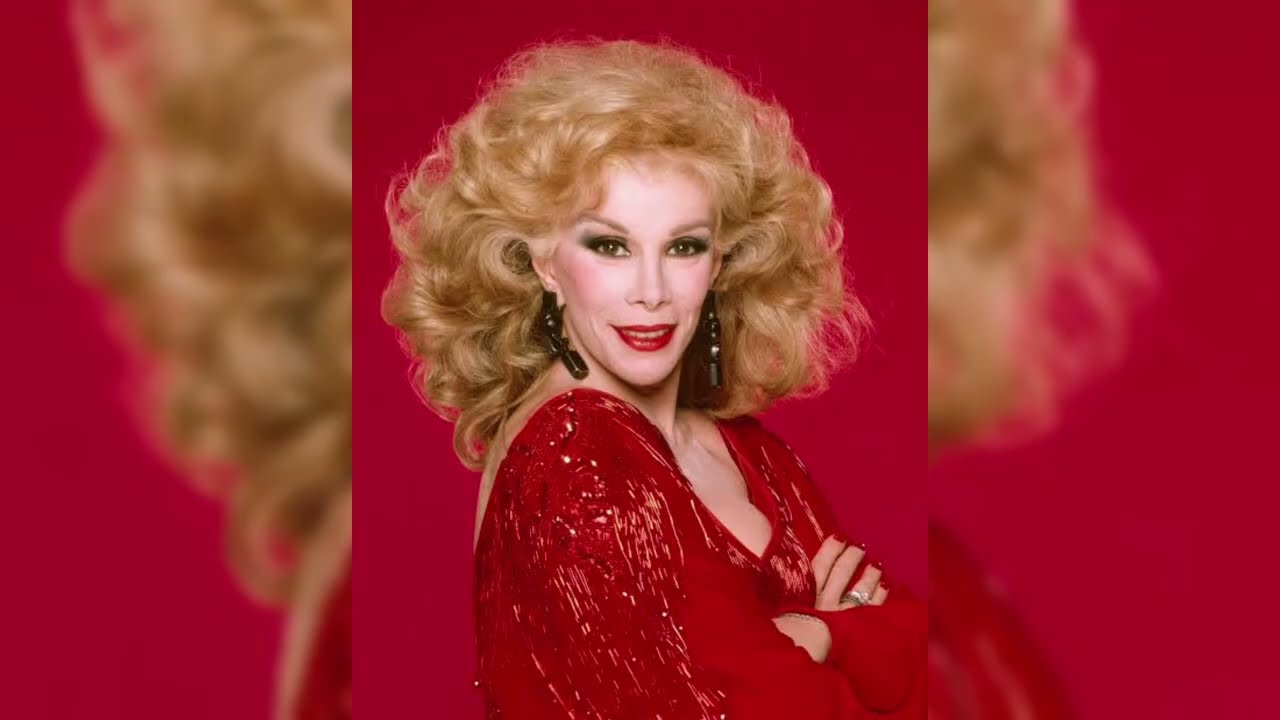
Melissa was there. She stayed. She sat by her mother’s side for 6 days while the people who loved Joan Rivers gathered at the hospital and waited and hoped and slowly understood that what they were hoping for was not going to happen. Joan Rivers died on September 4th, 2014. She was 81 years old. She had been in show business for more than 50 years. She had never fully stopped.
The investigation into her death found that the clinic had performed procedures that were not originally authorized and had failed to properly monitor her vital signs. The clinic’s medical director resigned from his position amid federal and state investigations following the incident. Melissa filed a wrongful death suit that was settled out of court.
The funeral that was also a performance. Joan Rivers had planned her own funeral. This fact, reported widely in the weeks after her death, was received by most people who knew her as entirely in character. She had left instructions. She wanted it to be, as she had said in her memoir, a show biz affair.
She had requested that men in top hats carry her casket. She had requested that there be music. She had requested that people wear colors, not black. She had requested, in some accounts, that it be funny. It was held at Temple Emanu-El on 5th Avenue in New York, one of the largest synagogues in the world, on September 7th, 2014. Thousands of people attended.
The eulogies were given by people who had loved her across different chapters of her life, colleagues, friends, family members. Howard Stern spoke. Hugh Jackman was there. Deborah Norville and Whoopi Goldberg and Kelly Osbourne, who had sat beside Joan on Fashion Police and who had wept publicly when the news broke.
Melissa spoke. She stood at the front of that enormous room and talked about her mother with a precision and a love that was all the more striking for its composure. She talked about what Joan had been as a mother. She talked about what it had been to grow up with that woman, to work alongside her, to love her in the complicated and consuming way that you love a person who is everything, parent and mentor and colleague and best friend, all at once.
She talked about the loss in terms that were specific and honest and, despite everything, occasionally funny. Because Joan would have wanted that. Joan would have wanted the laughter. She had spent her entire life insisting that laughter and pain were not opposites but partners, that you could feel both simultaneously and that feeling both was more honest than feeling only one.
The funeral was, by accounts from everyone who was there, exactly what she would have wanted, enormous and warm and full of people who loved her and full also of moments where the grief broke into something lighter. What she left behind, Joan Rivers’ estate, was, according to reports, substantial.
She had worked every year of her adult life. She had generated income from stand-up, from television, from books, from jewelry, from endorsements, from properties, from investments, from a perfume line, from brand partnerships that stretched across decades. The numbers cited in various accounts range considerably, but the consensus is that she died having built something genuinely significant from almost nothing.
From a girl from Pelham Manor who was told by her own mother that she was not pretty enough for the life she wanted. The jewelry business, the Joan Rivers Classics Collection, was her most enduring commercial legacy. It continues to sell. The pieces she designed and the aesthetic she developed over more than two decades of working with materials and settings have a following that is loyal and large and that crosses generational lines in ways that most entertainment brand legacies do not.
The Comedy Store in Los Angeles has a room named after her. The Broadway show she developed in her later years, with her one-woman stage show that toured for years, and which she performed with a physical energy that stunned audiences who had expected something more sedate from a woman in her 70s, is remembered as some of the finest comedy performance work of her career.
The stand-up sets from this period, available on streaming platforms, hold up with a ferocity that is startling. Her books, and there were many, sold well during her lifetime and remain in print. Bouncing Back, the memoir she wrote in the aftermath of Edgar’s death and the collapse of the Late Show, is one of the most honest accounts ever written by an American entertainer about professional failure and survival.
It is specific in the way that Joan Rivers was always specific. She named the amounts of money she had lost. She named the people who had turned away from her. She named her own mistakes with a candor that was not comfortable to read and was clearly not comfortable to write. The documentary remains one of the essential portraits of an American performer.
It has been cited by comedians who came after Joan Rivers as a formative influence, not on their comedy necessarily, but on their understanding of what a life in comedy actually requires, of what it costs, of what it demands from the person who has chosen it. And then there’s Melissa. Melissa Rivers did not dissolve when her mother died.
She was, by the time it happened, a woman in her mid-40s with a career of her own and a child she was raising and a sense of herself that had been built over decades of standing beside and occasionally standing behind the most prominent version of her family’s name. She has spoken about grief with the same honesty her mother brought to everything.
She wrote a memoir, The Book of Joan, published in 2015, which drew on memories and reflections gathered across a lifetime of being Joan Rivers’s daughter and closest collaborator. She has continued working. She has remained connected to the causes and institutions her mother supported. She has raised Cooper with the values she learned from both of her parents, though the parent who taught her most of them lived the longest.
Cooper Endicott, who was 14 when his grandmother died, grew up knowing that the woman at the center of his family’s story was not simply a celebrity, but was a person of genuine and specific dimensions. A person who had fought hard and loved hard and who had in the end built something that was worth building.
The loneliness beneath the laughter. There is a version of Joan Rivers’s story that is purely triumphant. The girl from Brooklyn who was told no by everyone and said yes anyway, who built an empire from a microphone and a sharpened tongue, who survived betrayal and bankruptcy and grief and came back stronger every time.
That version is not wrong. The facts support it. The arc of the career, looked at from a certain distance, is genuinely extraordinary. But there is another version that is equally true. And it is the version that the people closest to her understood. And that she herself, in her more unguarded moments, was willing to speak to.
It is the version in which a woman who made the entire world laugh, spent a great deal of her private life in rooms that were quieter than they should have been, missing the person she had built everything with, going through the motions of a social life that was full and warm and genuine, and still somehow not quite the thing she had wanted.
She had Melissa. She had Cooper. She had her friends and her colleagues and her fans and her jewelry and her dogs, whom she loved with an extravagance that was entirely characteristic. She had enough. In many ways, she had more than enough. But Edgar was gone. And the particular kind of not aloneness that comes from a marriage, from the simple fact of someone waiting when you come home, someone who has been with you long enough to understand your private language, someone whose presence makes the silence feel inhabited rather than
empty, that kind of not aloneness was gone, too. And nothing in the decades that followed had quite replaced it. She spoke about this occasionally in interviews that reached past the comedy to something more plainly honest. She was not self-pitying about it. She was never self-pitying about anything, because self-pity was not a mode she had access to or any interest in accessing.
But she was honest. She acknowledged that she was lonely. She acknowledged that she had hoped, in the years after Edgar’s death, that she might find someone else, and that she had not, and that she had made peace with that the way she made peace with everything, by making it funny, and then, when no one was watching, by feeling it.
The apartment on Fifth Avenue, all accounts, was beautiful. It was full of beautiful things, collected over a lifetime of work and acquisitions and relationships. It was also, for most of the last 27 years of her life, a place where she lived alone. Melissa came often. Cooper came often. Friends came often. But at the end of the evenings, when the guests had gone and the kitchen had been cleared and the dogs had been settled, it was Joan alone in the particular silence of a life that had been very loud for a very long time.
She handled it the way she handled everything. She worked. She planned. She booked the next show and the next appearance and the next book and the next chapter. She did not stop because stopping meant facing the silence directly. And she was not interested in facing it directly when there were stages to stand on and audiences to reach and jokes still waiting inside her that the world had not yet heard.
There were still jokes. There were always still jokes. That, perhaps, is the most honest thing you can say about Joan Rivers. She never ran out of material because she never stopped paying attention and she never stopped caring what people thought and she never stopped wanting, needing to make them laugh.
The hunger that had driven a girl from Pelham Manor into the clubs of Greenwich Village in her late 20s was still there at 81, undiminished, unappeasable, and utterly real. What she was and what she proved. Joan Rivers was not the first woman to do stand-up comedy. She was not the first comedian to turn personal pain into public material.
She was not the first person in show business to survive catastrophic failure and come back from it. But she did all of those things with a consistency and a duration and a scale that have no real equivalent in the history of American comedy. She proved, across six decades of work that a woman could be as funny as any man in the room, could be funnier than most men in the room, and could do it while talking about being a woman in ways that were not gentle or accommodating or designed to make anyone comfortable. She proved that failure was
not end the end, that the industry that had celebrated you could turn on you and you could survive that and build something larger on the other side. She proved that ambition in a woman was not a character flaw, but a force of nature, and that the world, whatever it said about women who wanted too much, would eventually have to make room for someone who simply refused to stop taking it.
She also proved, though this is a harder thing to talk about, that the price of that kind of life is real and is paid in specific ways. She was not happy in the simple sense that word sometimes implies. She was often in pain. She worked at a pace that was not sustainable by ordinary human standards. Because stopping was not an option she had given herself access to.
She altered her body repeatedly in response to pressures that no one should be under. She carried grief that she could never fully put down. She lived, for the better part of three decades, in a house that was beautiful and full of things and fundamentally alone. And she was funny. She was genuinely, outrageously, historically funny until the last performance she gave, until the last interview she sat for, until the last joke she told to the last audience that laughed because she had made them, one more time, feel the particular release
of seeing the truth stated plainly and with absolute precision and absolute confidence. The comedians who came after her, and there are many who cite her, quietly or publicly, as the reason they believed it was possible, inherited not just the permission she granted them, but the specific courage it took to grant it.
To stand in front of an audience and say the thing that was true and uncomfortable and funny all at once without softening it, without apologizing for it, without waiting for someone to tell you it was allowed. She did not wait. She never waited. From the moment she walked into the first club in Greenwich Village to the moment she was wheeled into that clinic on the Upper East Side, she moved forward. Always forward.
Always toward the next stage and the next audience and the next joke she had not yet told. That is the legacy. Not the jewelry, though the jewelry was beautiful. Not the television shows, though they were entertaining. Not the feuds, though they were spectacular. The legacy is the voice, the specific, relentless, unapologetic voice of a woman who found out early that the world had no interest in making room for her and decided with complete clarity that she would simply take the room herself.
She took it. For 50 years she took it. And the room was never the same after she was in it. Joan Rivers was asked in one of her last major interviews what she wanted people to say about her after she was gone. She thought about it for a moment, which was longer than Joan Rivers usually took to answer anything.
Then she said she wanted them to say that she was funny. Just that she was funny. That she had made people laugh and that the laughter had been real. And that it mattered. She did not say she wanted to be remembered as a pioneer, though she was one. She did not say she wanted to be remembered as a businesswoman or a survivor or a mother or a friend, though she was all of those things, too.
She said funny. Because funny was the thing she had been before she was anything else. The thing she had been in the living room in Pelham Manor when she made her mother laugh despite herself. The thing she had been in the clubs in Greenwich Village at 30, the thing she’d been on Carson’s couch at 31 when the whole country heard her for the first time.
Funny was not what Joan Rivers did. It was what Joan Rivers was. And she knew with the clarity that only a woman who has spent 60 years paying very close attention to the truth could know that the truest things about a person do not change no matter what else does. She got what she wanted. She usually did. If you found this video meaningful, please like and subscribe so you never miss another story like this one.