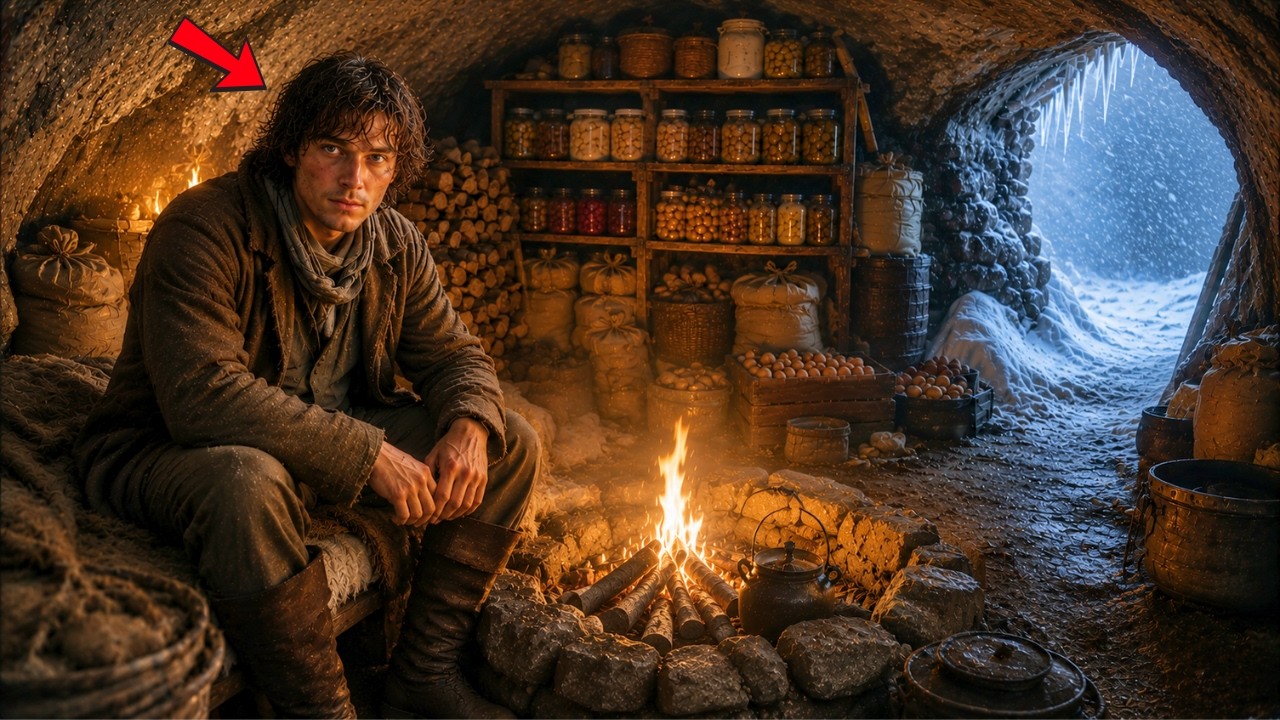
The frozen rope dug into Zeke Holloway’s shoulder. A pain as sharp and cold as a dagger’s blade. Below him, the sled lurched, teetering on the edge of a chasm swallowed by the snow. He locked his muscles, refusing to let go because what lay inside those two sacks, the cargo he was hauling through this frozen hell, was more precious than gold.
More vital than a rifle or a warm blanket. They were only turnips, two frozen sacks of them. It was the brutal truth the mountain taught. A winter curse the men in the valley below chose to ignore. The cold didn’t kill you first. Hunger was the first executioner. Hunger dulled the mind.
A dull mind made mistakes, and mistakes invited the killing frost to finish what was left. Above him, the mountain swallowed the sound of the wind. Ahead, the dark maw of a cave, nearly invisible, promised shelter. But it wasn’t a sweet promise. Before the blizzard buried the world alive, that cave would be the crucible that decided who lived and who died.
And the mountain’s judgment had only just begun. The biting pain in his shoulder was nothing compared to the chill in his own kitchen three weeks ago. It was a cold born not of wind or snow, but of silence. His stepmother Martha hadn’t shouted. She had simply stood there, her voice as flat and sharp as a shard of ice, as she read the numbers from the food ledger.
“Salted pork, flour, barley.” Each number was a hammer blow, sealing Zeke’s exile. “Not enough,” she said quietly, and the two words seemed to steal the heat from the hearth. Not for another grown man through a hard season. But the cruelest cut came from his father, Elias. He sat there, his injured foot wrapped, his gaze locked on the dented tin cup turning between his hands, as if his entire world had shrunk to the size of his own shame.
He never said a word, never looked up. His silence was his consent, a mute nod to his wife’s verdict. Zeke didn’t argue. In that house, numbers spoke louder than blood. He packed in silence before sunset. An axe, traps, and two empty grain sacks. By dawn, the snow was already drifting over the fences, slowly erasing the footprints of a son cast out by his own family.
For several days, Zeke Holloway drifted along the outer edges of Mercer Valley like a man slowly being erased by weather. One night, he slept inside an abandoned wagon shed that smelled of wet hay and mouse droppings. The next night inside a collapsing hunting lean-to near the timberline. After that, beneath a narrow wooden bridge beside a creek already freezing solid from upstream down.
Every morning felt colder than the one before it. Frost hardened across his beard before sunrise. Ice gathered along the seams of his coat collar while he slept. Some mornings, his fingers refused to close properly for nearly an hour. And little by little, something dangerous started happening.
His body began adjusting to the cold, not resisting it, accepting it. That frightened him more than the wind because men rarely froze to death while fighting the cold. Usually, it happened after exhaustion settled in. After the body stopped arguing, after sleep started feeling warm. Cold did not always kill through pain. Sometimes, it killed through comfort.
Late one afternoon, Zeke climbed the western ridge searching for dead tamarack before another snow front rolled through the mountains. Wind swept hard across the exposed basalt shelves high above Mercer Valley. Most men avoided that ridge once winter started building. Too much loose stone, too much hidden ice beneath the snow crust.
That was where Zeke noticed the airflow. Not strong, barely enough to move the frost hanging from a burned pine trunk near the rocks, but it moved differently than the ridge wind. The air drifting from the crack stayed steady while the outside gusts shifted direction every few seconds. Zeke stopped immediately. He lit a crude pine pitch lamp and squeezed sideways through the narrow basalt opening hidden behind the blackened tree roots.
The passage widened deeper inside the mountain into an ancient lava tube untouched for years. Cold air lingered there, but the cold felt strangely stable, controlled somehow. Then Zeke realized the most important part. The airflow inside the mountain never changed direction with the wind outside. Zeke moved deeper into the lava tube slowly, holding the pine pitch lamp low, while shadows twisted across the basalt walls.
The farther he went beneath the ridge, the quieter the mountain became. Wind still howled somewhere outside, but inside the stone, the sound faded into a dull distant pressure. That was when he noticed the soot stains. Thin black smoke marks stretched across part of the ceiling above a flat basalt shelf near the rear chamber. Someone had burned fires there years ago, maybe decades.
Nearby stood a narrow crack running upward through the stone, a natural vent, small but real. Zeke crouched beside the old fire shelf and studied the airflow carefully. Warm air drifted upward toward the crack exactly as it should, but colder air pooled heavily along the lower floor near the back wall. A cold sink, dangerous during sleep.
Worse still, frost-covered condensation clung to several sections of basalt near the chamber edges where moisture gathered and froze. The shelter was not safe. Not automatically. One bad fire could choke the entire chamber with smoke if outside pressure shifted during a storm. A sleeping man might never wake up long enough to crawl out.
That mattered to Zeke because false shelter killed people every winter across the frontier. Cabins burned wrong. Chimneys drafted backward. Wet bedding pulled heat from exhausted bodies. This place was no miracle hiding beneath the mountain. It was a system. Stone, airflow, moisture, heat. All working together according to rules most men never bothered learning.
And judging by the old soot marks above the basalt shelf, somebody else had understood those rules once before. The next morning, Zeke Holloway returned to the lava tube carrying a barley sack across the narrow sled behind him. The trip up the western ridge took nearly 2 hours through loose snow and broken basalt shelves.
Wind swept constantly across the exposed slope, hard enough to shove the sled sideways whenever the runners struck buried stone. After the barley came smoked trout sealed in old glass jars packed with rendered fat. Then split tamarack bundled tight with rawhide cord. Then resin-sealed tinder tubes wrapped in waxed cloth to keep moisture away from the spark fibers inside.
Every trip followed the same pattern. Pull, stop, breathe, pull again. By the [clears throat] fourth day, dark bruises spread across both shoulders where the frozen rope fibers cut through his old wool coat. His gloves stiffened with ice before each climb ended. Once the sled flipped sideways near a drift pocket and dumped half a load of firewood down the ridge.
Zeke climbed after every piece anyway. Dry fuel mattered too much to waste. He never hauled random supplies. Every item served winter directly. Calorie dense food, dry burning wood, reliable fire starters, stable storage, nothing decorative, nothing heavy without purpose. Slowly, load after load, the hidden chamber beneath the basalt ridge began changing.
Not into a home, into a system built to survive a mountain winter. Wade Mercer spotted Zeke halfway up the western ridge late one gray afternoon. The old freight hauler stood beside his mule team watching the sled runners carve through fresh snow behind the younger man. That enough supplies for a trapping camp? Wade shouted over the wind.
Zeke tightened the rope across his shoulder without stopping. Keeping it where snow can’t bury it. Wade laughed once at that. Short, dry. Winter comes every year, boy. Valley’s still standing. Zeke said nothing after that. He simply leaned forward and kept dragging the overloaded sled higher into the basalt ridge while wind carried Wade’s laughter across the snow glare below.
The older man watched him disappear between the black rocks before finally shaking his head. Boy’s preparing for the end of the world. Once the supplies were stacked beneath the basalt ridge, Zeke Holloway started rebuilding the lava tube itself. Not into comfort, into efficiency. The first problem was moisture.
Water collected naturally along the lower stone edges where cold air settled during the night. So, Zeke dug a narrow gravel trench across part of the chamber floor using a broken shovel head and a trapping pick. The trench carried meltwater away from the sleeping area toward a deeper crack in the basalt.
After that came the bed platform. Cedar poles first, then cross slats. Then a layer of stove ash beneath the bedding to slow heat loss from the stone below. Without insulation, the mountain would pull warmth downward all night long, no matter how large the fire became. Next came the fire shelf. Zeke stacked dark basalt chunks into a curved reflector wall behind the flames to push radiant heat back into the chamber.
Small improvements, slow improvements, but every change mattered. The airflow took longer to solve. Some nights the draft moved cleanly through the natural vent above the chamber. Other nights the mountain pressure shifted and pushed smoke backward into the shelter instead. Zeke tested different airflow baffles made from scrap hide, broken boards, and loose stone. Most failed.
One nearly killed him. Late one night, he woke coughing violently inside complete darkness. Thick smoke had dropped low across the chamber while he slept. His eyes burned instantly. Every breath tasted like wet ash and burned pitch. Zeke crawled blindly toward the entrance, half choking before finally reaching clear air near the outer tunnel.
That mistake changed everything afterward. From then on, he stopped building large fires entirely. Instead, he used two smaller flames spaced apart along the basalt shelf. Twin fires burned steadier, cleaner, easier to control when pressure changed outside. And lying awake beside the fading coals later that night, Zeke understood something most frontier men never learned until too late.
Underground shelters could suffocate fools as easily as storms did. Eleanor Pike noticed the pattern before anyone else did. The old widow had survived three hard winters in Mercer Valley and buried a husband during the freeze of 1871. Men like Wade Mercer saw Zeke hauling supplies and thought fear had gotten into his head.
Eleanor watched what he bought instead. Extra salt, dry barley, split tamarack stacked under oilcloth. One cold evening she stopped him outside the trading post while he loaded another sled bundle. Her weathered hands rested quietly atop a sack of smoked roots. “You found ground that holds heat, didn’t you?” she asked. Zeke stayed silent for several seconds before finally giving one small nod.
That answer seemed to satisfy her. Eleanor handed him the smoked roots without asking payment. “Basalt keeps warmth longer than most stone,” she said softly, “but it pulls dampness into a man’s bones if the floor isn’t separated right.” Zeke looked at her carefully then, realizing she understood far more than she first appeared to.
Before leaving, Eleanor glanced once toward the dark western ridge. “Most men build against winter,” she said quietly, “smart ones build beneath it.” By late November, Mercer Valley started behaving strangely, not violently, quietly. That was what unsettled Zeke Holloway most. Elk herds moved down from the timberline nearly 2 weeks earlier than usual.
Thin ice formed across the creek from upstream first, instead of near the slower lower bends. Some mornings, loose snow dust drifted sideways across the western ridge against the direction of the wind itself. Even the sled dogs near the freight yard grew restless after dark. Several refused to cross the open mountain pass at night, no matter how hard their handlers pulled the reins.
Inside the small diner near the supply road, men discussed the signs over coffee and tobacco smoke. Most still treated it like another rough season building in the mountains. Bad weather, heavy snow maybe, nothing more. Wade Mercer even laughed once and said the valley had survived worse before.
Zeke said nothing from his corner table. He listened. Watched the northern sky through the frosted window glass. Then he left before sunset and climbed back toward the basalt ridge carrying another full load of split tamarack. Animals had already made their decision about winter. The valley hadn’t. One night a wet freeze rolled across the western ridge without warning.
Rain came first, then temperature. By midnight the entire mountainside locked beneath a shell of ice. When Zeke woke before dawn, the lava tube smelled wrong immediately. Damp, heavy. Thin condensation frost coated sections of the basalt wall beside the sleeping platform. One corner of a barley sack had turned wet where moisture gathered along the stone overnight.
Worse still, the bedding nearest the rear wall felt cold and stiff beneath his hand. Not frozen solid, but close. Zeke understood the danger instantly. Heat meant nothing if moisture stayed trapped underground. Wet air stole warmth slowly, quietly. A man could survive dry cold for weeks and still lose against damp stone pulling heat from his body hour after hour.
So the entire shelter changed again that morning. Zeke tore apart the sleeping area completely. He raised the cedar platform higher off the floor, added more stove ash beneath the bedding, shifted the grain farther from the sweating basalt wall, opened air flow space near the lower trench to move dampness away from the chamber.
The work frustrated him more than the cold itself because every solution inside the mountain created another problem somewhere else. and staring at the frozen condensation stretching across the basalt afterward, Zeke realized something dangerous. A warm shelter could still slowly kill the people inside it. A light snowfall drifted across Mercer Valley the next afternoon while Zeke dragged another overloaded sled toward the western ridge.
Split tamarack logs rose nearly shoulder high behind him beneath a canvas sheet stiff with ice. Wade Mercer spotted him near the lower trail crossing and let out a low whistle. You’ve got enough wood up there to heat a railroad camp, the older man called. Zeke never stopped walking. No, he answered. Just enough to survive a buried entrance.
Wade frowned at that. Buried entrance? But Zeke kept pulling the sled uphill through the growing snow haze without explaining further. The runners hissed softly across fresh powder while wind pushed loose flakes sideways along the ridge. For the first time all season, Wade did not laugh immediately afterward.
He looked at the overloaded sled then toward the pale gray sky gathering above the mountains and somewhere beneath his skepticism, something colder finally started moving. Three nights later, winter finally struck Mercer Valley with its full weight. The pressure collapse rolled down from the northern mountains after midnight like something breaking loose inside the sky itself.
Wind slammed through the ridge gaps hard enough to shake cabin walls before the first heavy snow even arrived. Then the lake effect funnel hit behind it. Fast, dense, white. Barn doors burst open under the pressure. Loose fencing disappeared almost immediately beneath drifting snow. Chimneys that had drafted cleanly for years suddenly failed and pushed smoke back into crowded rooms.
Outside, snow no longer fell downward. It blasted sideways across the valley like ground glass. Inside the basalt lava tube, Zeke Holloway reacted before panic ever had a chance to form. He reduced the fire immediately. Large flames wasted oxygen and destabilized the draft. Two smaller fires burned lower and steadier along the basalt shelf instead.
After that, he sealed one secondary airflow crack with a wet hide flap to slow pressure swings moving through the chamber. Then he waited. The mountain groaned above him for hours while wind screamed across the western ridge like a giant saw cutting through timber. Loose basalt gravel rattled down the outer tunnel walls several times during the night.
Once, the entire chamber vibrated hard enough to shake ash loose from the reflector stones behind the fire shelf, but the airflow held. Smoke continued climbing upward through the natural vent exactly the way Zeke had hoped it would. The gravel trench stayed dry. The elevated bedding remained warm enough to touch barefoot for several seconds at a time, and that frightened him more than the storm itself.
Because the quieter the shelter became beneath the mountain, the worse the blizzard outside had to be. By the second day, the mountain started trying to bury the shelter alive. Snow drifted hard against the outer entrance until the lower tunnel narrowed to barely shoulder width. Inside the lava tube, the airflow changed almost immediately.
Smoke no longer lifted cleanly toward the vent crack above the basalt shelf. Instead, a gray layer began hanging lower across the chamber ceiling with every passing hour. Zeke recognized the danger at once. The entrance drift was choking the mountain itself. He tied a rope line around his waist before crawling toward the outer tunnel carrying a short shovel and cedar pole.
Wind exploded through the entrance the moment he broke into the whiteout beyond. Snow blasted across the ridge so violently he could barely see his own hands. Still, he kept digging. Halfway across the slope, one gust slammed into him hard enough to send his boots sliding sideways over ice-coated basalt.
For one terrifying second, the ridge disappeared beneath him. The rope snapped tight against the tunnel stones just before he slid into the ravine below. Zeke clawed his way back upward and kept working. Because stopping meant suffocation later. At last, the new vent shaft broke through the drift line above the buried entrance. Fresh air rushed downward instantly.
Inside the shelter, the smoke layer slowly began rising back toward the ceiling again. And standing there coughing in the thinning haze, Zeke nearly collapsed from relief. Late that afternoon, while checking the emergency vent shaft above the buried entrance, Zeke noticed movement through the whiteout below the ridge.
At first, the figure looked like nothing more than drifting shadow between waves of snow. Then it fell, stood again, fell a second time. Someone was trying to climb the ridge in the middle of the storm. Zeke grabbed the shielded lantern immediately and forced his way outside. Wind hit him hard enough to steal half his breath before he cleared the tunnel entrance.
Snow blasted sideways across the slope so thick the lantern globe barely reached 10 ft ahead. The figure collapsed again near a cluster of ice-covered basalt. Eleanor Pike. The old widow was dragging a small supply sled loaded with medicine jars and wrapped bandages meant for a sick family trapped below in Mercer Valley. Her gloves had frozen stiff around the rope handle.
Frost coated her eyelashes white. Her lips had nearly turned blue. Zeke reached her just as another gust knocked her sideways into the snow. Without wasting words, he pulled her upright and wrapped the lantern shield against the wind beside her face. Then both of them started fighting their way back toward the hidden tunnel beneath the ridge.
Their footprints vanished almost immediately behind them. Twice, Eleanor stumbled badly enough to nearly disappear into the drifts. But the moment they crossed back inside the lava tube, the storm noise dropped away behind the basalt walls like a door closing against death itself. Eleanor looked weakly toward the twin fires flickering deeper inside the chamber.
Then she whispered through chattering teeth, “I knew you’d gone beneath the mountain.” Several hours passed before Eleanor Pike finally stopped shivering hard enough to spill soup from the tin cup in her hands. By then, the twin fires had settled into low, steady flames along the basalt shelf, and the lava tube carried that strange, quiet warmth found only in deep stone shelters.
Eleanor studied everything carefully after that. The split tamarack stacked beneath oilcloth far from the damp walls. The elevated cedar bedding raised above the cold sink along the floor. The stove ash packed beneath the blankets for insulation. Even [clears throat] the food supplies had been arranged with purpose instead of convenience.
Grain farther back where temperatures stayed steadier. Fire starters kept dry near the inner wall. Nothing wasted. Nothing random. Most of all, she noticed the basalt itself. Hours after Zeke reduced the flames, the reflector stones behind the fire shelf still radiated warmth slowly back into the chamber.
Not sharp heat, stored heat, patient heat. Steam drifted quietly upward from the soup kettle between them, while dry air moved steadily through the vent above. That was when Eleanor finally understood the full truth of what Zeke had built beneath the mountain. This was not a hiding place. It was a thermal system. She looked toward the warm basalt wall one last time before speaking softly into the firelight.
“Most men waste heat fighting winter. You trapped it instead.” By the fourth day, Mercer Valley finally began collapsing under the storm. Fast. Brutally. Exactly the way Zeke Holloway had feared it would. Chimneys across the valley stopped drafting correctly once snow sealed the lower roof lines. Smoke backed into cabins instead of rising upward.
Wet firewood hissed and smoldered without producing real heat. Several livestock pens disappeared beneath drift walls taller than a grown man. Somewhere near the southern road, the roof of a feed barn gave way under the snow load during the night. Even through the storm, people heard the beams crack. Inside the lava tube beneath the basalt ridge, the air remained dry enough for bare hands to warm slowly beside the twin fires.
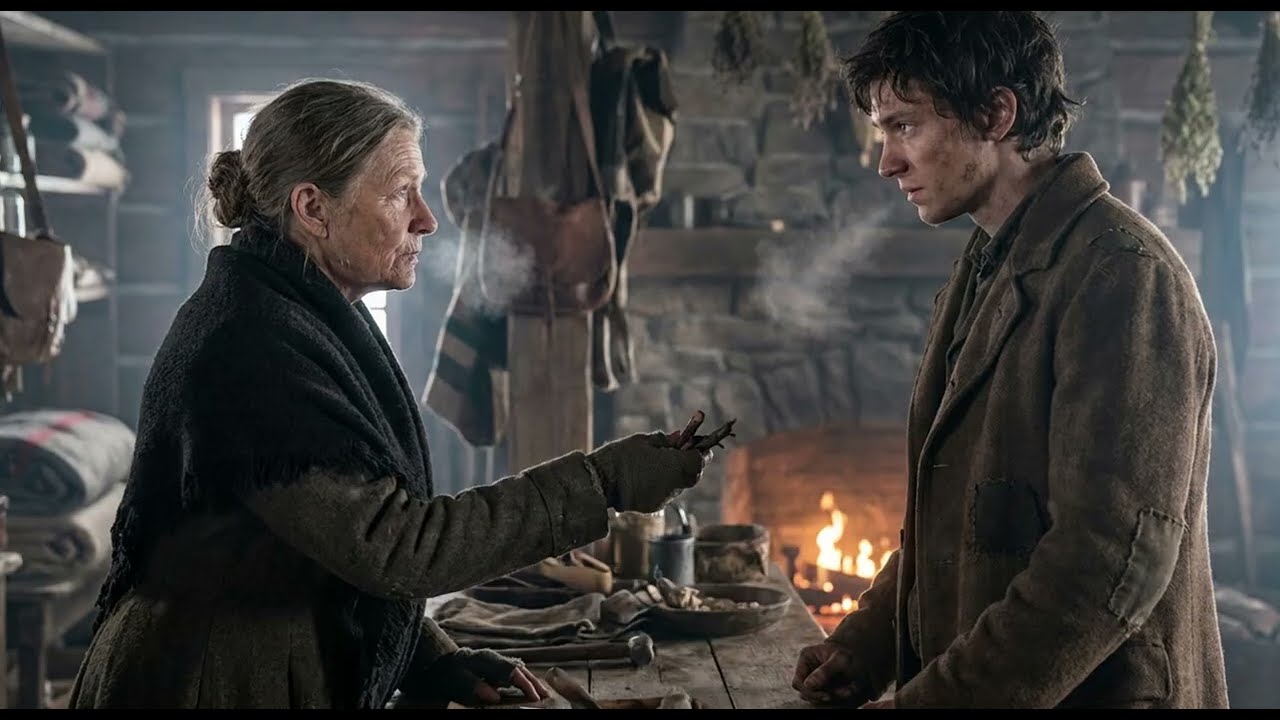
That difference started bringing people uphill. The first family arrived shortly before dusk. A father carrying a lantern nearly blown dark by the wind. A woman stumbling behind him through waist-deep snow. And between them, a small boy wrapped in blankets so stiff with ice they barely bent when he moved.
Zeke opened the hidden entrance just enough to pull them inside before snow buried the opening again. The father stopped instantly once the warm dry air touched his face. Real warmth, not the choking heat of an overloaded stove. Stable warmth. The kind that reached the lungs first. The child’s lips had already turned blue from cold.
Frost clung to the edges of his eyelashes. Yet inside the shelter, his breath slowly stopped freezing in the air almost at once. For several seconds, the father simply stared at the basalt chamber around him. The glowing firelight, the dry wood stacks, the warm stone walls still holding heat hours into the storm. Then he lowered his eyes and spoke in a voice rough from smoke and exhaustion.
“My stove died yesterday.” Wade Mercer reached the western ridge near midnight on the sixth day of the storm. Frost covered his beard completely white. Both hands bled through cracked skin where he had spent two straight days digging snowdrifts away from buried stable doors in the valley below. Zeke pulled the hidden entrance open just long enough to drag Wade inside before the wind sealed it again behind them.
The older man stopped dead almost immediately, not because of the fire, because of the stability. Warm basalt walls still radiated heat long after the twin flames had been reduced. Dry tamarack rested beneath oilcloth without a trace of frost. Food shelves lined the inner chamber in careful measured rows. Even the air felt different underground.
Dry. Breathable. Controlled. Near the elevated bedding, two exhausted children slept beneath blankets several feet away from the nearest fire and still remained warm enough to sleep peacefully. That alone stunned Wade more than anything else in the chamber. Back in the valley, men were feeding entire armfuls of wood into stoves that barely kept frost off the walls.
Yet here beneath the mountain, Zeke maintained stable heat using smaller fires than most cabins burned during autumn. Wade looked slowly around the shelter again. The stone. The airflow. The ration shelves. The people still alive because of them. Then his eyes settled on Zeke Holloway standing quietly beside the fire shelf. And at last, the older man understood what he had mistaken all winter long.
“You weren’t hiding from winter,” Wade said softly. “You were preparing for everyone else.” For nine straight days, the lava tube beneath the basalt ridge functioned like a living machine buried inside the mountain. >> [clears throat] >> By the middle of the storm, nearly 13 people crowded the shelter.
Families slept shoulder to shoulder along the elevated bedding platforms. Wet gloves hung drying near the reflector wall. Snowmelt simmered slowly inside iron kettles, while twin fires burned low and steady through every hour of darkness. And through all of it, Zeke Holloway kept the system balanced. Nothing happened carelessly underground.
Rations were measured exactly. Too much food at once wasted supplies and raised body heat unevenly inside the chamber. Snow for drinking water melted slowly in small batches to prevent excess moisture from building along the basalt walls. Airflow watches rotated every few hours, especially at night when drifting snow threatened to choke the upper vent shaft again. The fires never roared.
That mattered more than most people understood. Large flames burned wood fast and destabilized the draft. Small flames held steady heat longer, while the basalt reflector wall stored warmth deep inside the stone itself. That was the profound difference. Outside in the valley, humanity was trying to overpower winter with brute force, a chaotic, desperate war they were destined to lose.
But beneath the mountain, survival worked differently. The chamber stayed warm because heat was trapped instead of wasted. Air moved because airflow was controlled instead of ignored. Supplies lasted because every pound of food had been hauled uphill before the storm ever arrived. Nothing inside the shelter wasted heat. Nothing wasted effort.
Nothing wasted life. The seventh night inside the shelter passed almost silently. Wade Mercer sat near the fire shelf watching Zeke measure another careful portion of barley into the kettle. After everything the younger man had done, the old freight hauler finally shook his head once in disbelief.
“You saved this valley.” he said quietly. Zeke stared into the flames for several seconds before answering. “Funny thing is,” the fire cracked softly between the basalt stones. “They threw me out because they thought winter couldn’t feed another mouth.” No one answered after that. Around the chamber, eyes lowered toward the floorboards and ration bowls instead.
Because every person inside the shelter understood the truth all at once. The man once treated like a burden had become [clears throat] the reason the rest of them were still alive. On the ninth morning, the wind finally began losing strength. Not suddenly, slowly. Like an animal growing tired after days of violence.
People emerged cautiously from the lava tube entrance into a world almost unrecognizable beneath the snow. Mercer Valley lay buried in every direction. Barn roofs protruded halfway from the drifts like broken ships trapped in ice. Several storage sheds had collapsed completely under the weight of packed snow.
Frozen livestock stood motionless beside fences. No one could even see anymore beneath the white fields. Roads had vanished. Chimneys sat cold and silent across much of the valley. And behind the survivors, the black basalt ridge still stood untouched above the storm like something ancient and immovable. For a long time, nobody spoke. They simply looked back toward the hidden shelter entrance behind Zeke Callaway and understood what the mountain had revealed to all of them.
The mountain had judged everyone equally. Preparation was the only thing it spared. Two days after the blizzard finally loosened its grip on Mercer Valley, Zeke Holloway returned to the farm he had been forced to leave before winter began. A narrow sled followed behind him through the snow carrying barley sacks, smoked trout jars sealed in fat, bundles of split tamarack, and resin-packed tinder tubes wrapped carefully against moisture.
Martha Holloway opened the cabin door first. For a moment, she simply stared at the supplies on the sled runners without speaking. The kitchen behind her looked colder than the shelter beneath the basalt ridge ever had. Smoke drifted unevenly from the stovepipe. Weak draft, too much damp wood, too little steady heat.
Near the fire, Elias Holloway sat beneath old blankets with both hands wrapped around a tin cup. He could not bring himself to fully look at his son. Zeke carried the supplies inside one load at a time and placed them quietly across the floorboards beside the stove. No anger, no triumph, no revenge left in him anymore, only understanding.
At last, he looked toward his father. “Winter wasn’t short on mouths,” Zeke said calmly. The weak fire snapped once behind him. “It was short on preparation.” Neither Martha nor Elias found an answer for that. Spring arrived slowly after the great storm. Snow retreated from the valley floor, one gray layer at a time, while Mercer Valley rebuilt itself around the lessons winter had carved into it.
Root cellars grew deeper before the next cold season arrived. Families rebuilt chimney vents to draft cleaner during heavy snow. New dry woodsheds appeared beside barns throughout the valley. Grain stores doubled almost everywhere. And high above the settlement, the lava tube beneath the western ridge stopped being a secret.
People started calling it Black Ridge Hollow. Some climbed there simply to see the basalt chamber that had outlasted the mountain storm. Others studied the airflow vents, the reflector wall, the elevated bedding platforms. They wanted to understand why it had worked when so many cabins failed. Most of all, people remembered the winter itself, the silence, the buried roads, the way the mountain spared preparation and punished everything else.
After that year, nobody in Mercer Valley laughed when someone stocked supplies early for winter. The mountain had already taught them why. And if winter had forced you out before the storm came, would you have trusted the warmth of the valley or followed Zeke beneath the mountain?