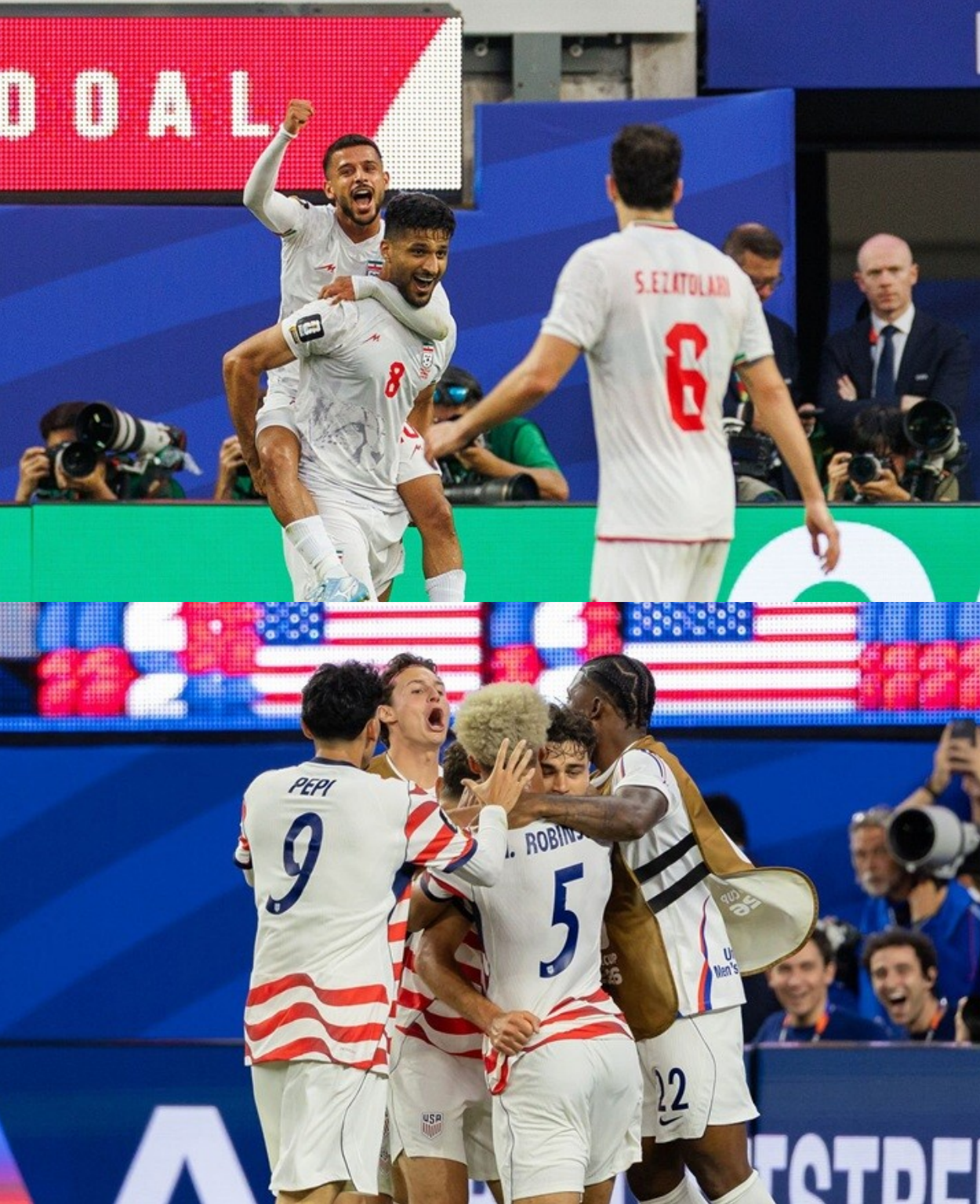
The magic of the FIFA World Cup lies in its unparalleled ability to weave unexpected narratives, turning standard sporting events into monumental chapters of human history. It is a tournament where fate, mathematics, and geopolitical realities often collide on a rectangular patch of green grass. As the 2026 World Cup unfolds across North America, an astonishing and highly intense scenario is quietly taking shape in the group stages. Fans, analysts, and casual observers are beginning to realize that the United States and Iran are on a direct collision course. If current group stage trajectories hold true, these two nations will face each other in the Round of 32, setting the stage for a match that will transcend the boundaries of sport and capture the attention of the entire globe.
\
To understand how this monumental clash could happen, one must look at the current standings and the mathematical mechanics of the tournament’s expanded format. The United States, placed in Group D, kicked off their campaign with a resounding and emphatic 4-1 victory over Paraguay. Playing with the roaring confidence of a host nation, the American squad showcased tactical brilliance and relentless attacking prowess. However, the path to topping their group is fraught with challenges, as they still have to navigate tricky fixtures against Australia and Turkey. Meanwhile, over in Group G, the Iranian national team opened their tournament with a pulsating 2-2 draw against New Zealand. Iran demonstrated immense resilience in a match defined by breathtaking counter-attacks and end-to-end action. They now look ahead to crucial battles against Belgium and Egypt.
The tournament bracket dictates a fascinating, almost poetic crossing of paths. According to the structural layout of the 2026 knockout stages, the runner-up of Group D is slated to face the runner-up of Group G. Should both the United States and Iran finish second in their respective groups—a highly plausible outcome given the competitive nature of their opponents—they will meet in the Round of 32. This is not just another game on the schedule; it is an elimination match. One team will advance to chase ultimate glory, while the other will suffer the agonizing heartbreak of an early exit.
If this scenario materializes, the grand stage for this epic encounter will be none other than the AT&T Stadium in Arlington, Texas. Known as a colossal temple of modern sports, this architectural marvel boasts a capacity of over 80,000 screaming fans. Imagine the atmosphere on match day: a sea of red, white, and blue colliding with the passionate, thunderous support of the Iranian faithful. The sheer acoustics of the enclosed stadium will amplify every chant, every tackle, and every desperate shot on goal. For the United States, playing an elimination game on home soil carries an immense burden of expectation. For Iran, stepping into the heart of Texas to face the host nation represents the ultimate underdog narrative, a chance to silence an overwhelming crowd and make international headlines.
To fully grasp the magnitude of this potential matchup, we must look back at the historical tapestry of the USA-Iran footballing rivalry. This is not the first time these two nations have crossed paths on the world’s biggest stage. Just four years ago, at the 2022 World Cup in Qatar, the two teams met in a decisive, high-stakes Group B finale. The context was incredibly tense: Iran needed only a draw to secure a historic spot in the knockout rounds, while the United States faced an absolute must-win situation. The atmosphere in Al Thumama Stadium was electric, thick with anticipation and nervous energy. In the end, it was an unforgettable moment of sacrifice that decided the outcome. Christian Pulisic, putting his body on the line, bundled the ball into the back of the net just before halftime, securing a 1-0 victory for the Americans. The United States advanced, and Iran was sent home in heartbreak. That recent wound is still fresh in the minds of the Iranian players and their supporters, adding a fierce desire for redemption to the upcoming tournament.
However, the roots of this rivalry stretch back even further, to a warm summer night in Lyon during the 1998 World Cup in France. Billed at the time as the “Mother of All Football Matches,” the encounter was heavily laden with political subtext following the severing of diplomatic ties between the two nations decades earlier. Despite the heavy geopolitical clouds hanging over the stadium, the players delivered a poignant moment of sportsmanship, posing together for a joint team photograph and exchanging white roses as a symbol of peace before kickoff. When the referee’s whistle blew, however, the pleasantries ceased. Iran delivered a stunning performance, defeating the United States 2-1 in a match that remains one of the proudest moments in Iranian sporting history. It was a cultural touchstone, a moment where a football victory was celebrated wildly in the streets of Tehran.
Now, in 2026, the narrative comes full circle, but the stakes are completely different. This potential match would not be a group stage fixture where a loss could theoretically be salvaged. It is the Round of 32. It is sudden death. The loser goes home, and the winner writes their name into the history books. Furthermore, the global backdrop cannot be ignored. Over the past several months, the geopolitical friction and diplomatic complexities between the two nations have dominated international news. While the players on the pitch are athletes focused purely on the tactical and physical demands of the game, it is impossible to separate the match from the broader context. For 90 minutes, or potentially 120 minutes and a nerve-shredding penalty shootout, the football pitch becomes a microcosm of national pride.
The beauty of the World Cup is that, once the whistle blows, the politics fade into the background and the pure essence of the sport takes over. It becomes about the tactical battle between the managers, the physical endurance of the athletes, and the undeniable magic of the beautiful game. The United States brings a golden generation of talent, eager to prove they belong among the world’s elite footballing nations. Iran brings a squad heavily fortified by technical skill, tactical discipline, and a deep-seated fighting spirit that makes them a nightmare for any opponent to break down.

As the group stages progress, millions of eyes will be glued to the standings of Group D and Group G. Every goal scored, every yellow card issued, and every point earned will be meticulously calculated by fans anticipating this colossal showdown. Will the stars align to give us this unforgettable spectacle? If destiny decides to place the United States and Iran on the pitch at AT&T Stadium for a knockout battle, it will be more than just a highlight of the 2026 World Cup. It will be a cultural phenomenon, a television spectacle that shatters viewership records, and a stark reminder of why football remains the undisputed king of global sports. The countdown has begun, and the world is waiting with bated breath to see if this ultimate collision course becomes a breathtaking reality.