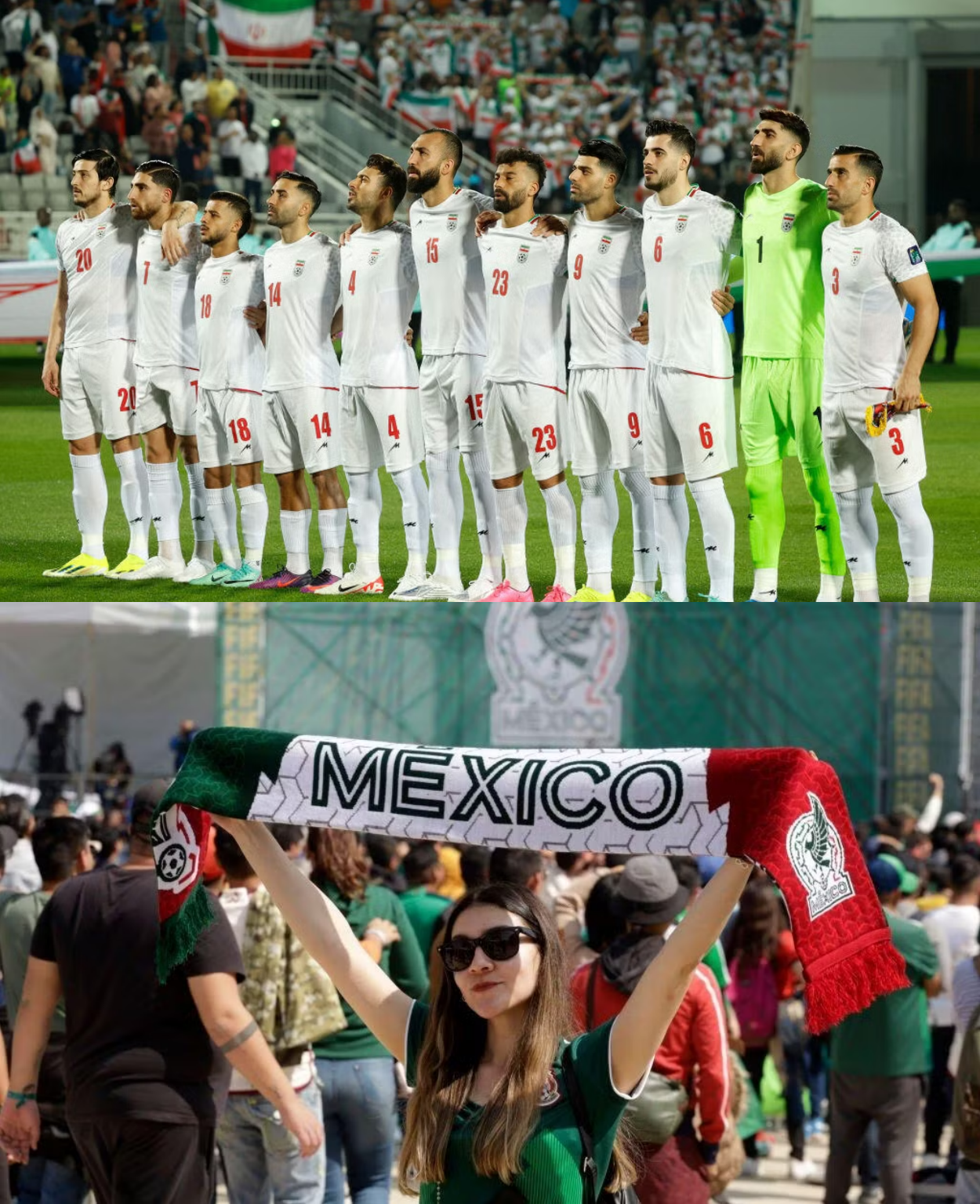
The 2026 FIFA World Cup was meticulously designed to be the ultimate celebration of North American unity. Spanning the United States, Mexico, and Canada, the tournament promised to showcase cross-border collaboration, welcoming the globe to a massive, continent-wide festival of football. However, the idealistic vision of sports transcending borders has collided violently with the harsh reality of global geopolitics. In an unprecedented and highly controversial turn of events, the United States has reportedly refused to welcome the Iranian national football team onto American soil. This firm stance has plunged the tournament’s logistics into chaos, forcing a frantic scramble behind closed doors. Now, in a remarkable twist of fate, co-host Mexico has stepped forward, ready to play the ultimate “firefighter” to save the tournament from a historical embarrassment.
The Diplomatic Deadlock
To understand the gravity of this situation, one must look at the deeply entrenched geopolitical friction between the United States and Iran. For decades, diplomatic relations between the two nations have been virtually nonexistent, characterized by severe economic sanctions, travel bans, and profound mutual distrust. While international sporting events usually operate under a banner of neutrality—where host nations agree to grant visas to all qualifying participants regardless of political standing—the reality of federal immigration law often tells a different story.
The United States government has taken a rigid stance, prioritizing its strict national security and entry protocols over the traditional expectations of hosting a global sporting event. By refusing to issue the necessary clearances for the Iranian delegation, the US has essentially drawn a line in the sand. This decision is not merely a bureaucratic hurdle; it is a massive geopolitical statement. It forces the world to confront the uncomfortable truth that while athletes may just want to play a game, they are ultimately tethered to the passports they hold and the foreign policies of the nations they represent.
This refusal has created an absolute nightmare for FIFA. The governing body of world football strictly mandates that host nations must guarantee unimpeded entry for all participating teams, officials, and fans. The failure to do so is a direct violation of standard hosting agreements. Yet, FIFA finds itself in an incredibly delicate position, lacking the authority to override the sovereign federal laws of the United States. The threat of a qualified team being unable to compete due to political blockades risks severely damaging the integrity of the entire tournament.

Mexico to the Rescue
Just as the situation seemed entirely unresolvable, a lifeline emerged from south of the border. Mexico, sharing the hosting duties of the 2026 World Cup, has reportedly raised its hand to absorb the logistical shock. Stepping into the role of the “firefighter,” the Mexican organizing committee has offered to host the Iranian national team, offering them a secure base camp and moving their scheduled group-stage matches to Mexican venues.
This bold intervention by Mexico is nothing short of heroic in the context of sports administration. Mexico possesses a rich, deeply ingrained footballing culture and boasts some of the most iconic stadiums in the world, such as the legendary Estadio Azteca in Mexico City and the state-of-the-art Estadio Akron in Guadalajara. By offering to take in the Iranian squad, Mexico is not only bailing out its northern neighbor from a massive diplomatic embarrassment but also preserving the competitive fairness of the World Cup.
The cultural contrast will be stark. While the Iranian team might have faced a highly tense and politically charged environment in the United States, they are likely to be met with the warm, passionate embrace of the Mexican footballing public. Mexican fans are renowned for their profound love of the game, often celebrating visiting nations with vibrant hospitality. For the Iranian players, who are simply looking to compete on the world’s biggest stage, relocating to Mexico might inadvertently offer a more focused, welcoming, and traditional footballing atmosphere.
The Logistical Gymnastics
While Mexico’s offer resolves the immediate crisis of team entry, it triggers a cascade of staggering logistical challenges. Relocating a World Cup team’s entire base of operations and shifting highly anticipated matches across an international border mere months or weeks before a tournament is an incredibly complex undertaking.
Venue Reallocation: Matches originally slated for massive NFL stadiums in American cities like Los Angeles, Dallas, or New York will now have to be squeezed into the Mexican venue schedule. This requires a masterful balancing act to avoid clashing with previously scheduled games, training sessions, and broadcast windows.
Ticketing Chaos: Hundreds of thousands of fans from around the world purchase tickets years in advance, booking flights and hotels based on the original schedule. Refunding, transferring, and managing the fallout of fans who bought tickets for US-based games that are now happening in Mexico will be a colossal customer service and financial challenge.
Security and Broadcasting: Security protocols will need to be entirely redrawn. Furthermore, international broadcasters who had set up complex infrastructures in specific American cities will now have to hastily reroute equipment and personnel across the border to ensure global coverage remains uninterrupted.

The Human Toll on Players and Fans
Amidst the bureaucratic scrambling and political posturing, the human element of this crisis cannot be ignored. For the players of the Iranian national team, this situation is incredibly disruptive. Preparing for a World Cup requires immense psychological focus and meticulous physical conditioning. Being at the center of an international political storm, unsure of where they will sleep, train, or play, places an unfair and agonizing mental burden on athletes who have trained their whole lives for this moment. They are being forced to navigate a geopolitical minefield when their only objective is to play football.
Furthermore, the fans are caught brutally in the crossfire. Iranian supporters, both domestic and in the diaspora, look forward to the World Cup as a rare moment of global representation and national pride. The US visa blockade does not merely apply to the players; it effectively shuts out thousands of passionate traveling fans. While Mexico’s intervention saves the matches, the sudden shift in geography will leave many supporters scrambling to change expensive travel plans, and unfortunately, many will be priced out or logistically unable to make the new journey.
A Dangerous Precedent?
As the dust settles on this chaotic chapter of the 2026 World Cup, profound questions remain about the future of international sports. If a host nation can successfully block a participating country based on political disputes without facing severe sporting consequences, it sets a highly dangerous precedent. It opens the door for future tournaments to be used as political weapons, where governments can handpick which nations are allowed to compete on their soil.
The United States’ refusal to welcome Iran has starkly highlighted the fragility of global sporting events in an increasingly divided world. Football has long prided itself on being a universal language, a temporary truce where nations can battle respectfully on the pitch regardless of their off-field conflicts. While Mexico’s swift and gracious intervention as the tournament’s savior ensures the games will go on, the scars of this diplomatic standoff will linger. It serves as a stark reminder that while the beautiful game has the power to unite, it is still frustratingly vulnerable to the borders and barriers erected by the world outside the stadium.