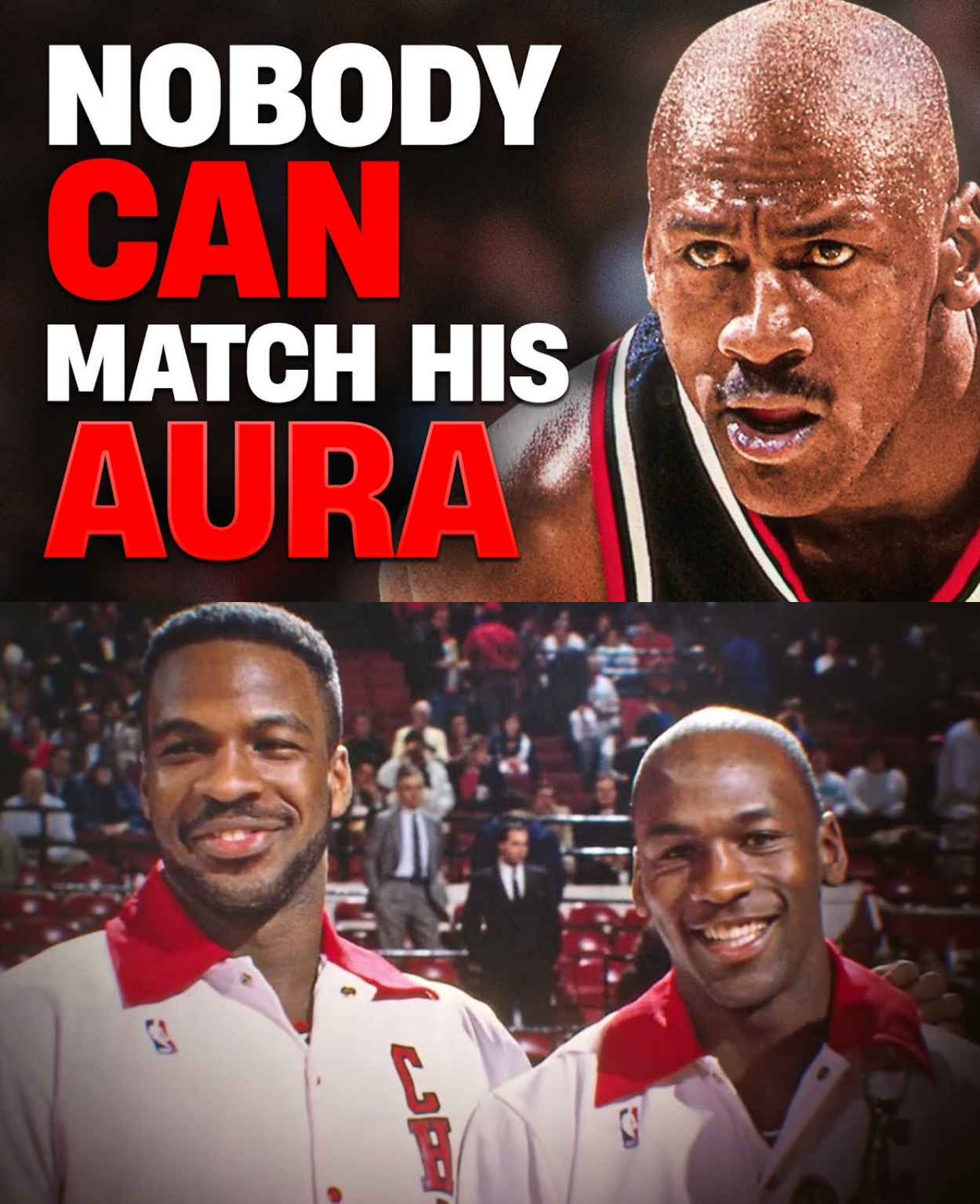
In the lexicon of professional sports, there are stars, there are legends, and then there is Michael Jordan. There is a reason why, across virtually every high-stakes field—from neurosurgery to the highest offices of government—the term “the Michael Jordan of…” is used to denote the absolute pinnacle of mastery. It is a shorthand for excellence that is universally understood, transcending borders, languages, and generations. But what exactly constituted the “aura” of Michael Jordan? It was not just his gravity-defying dunks or his collection of six championship rings; it was a psychological presence that turned the basketball court into his personal theater of dominance.
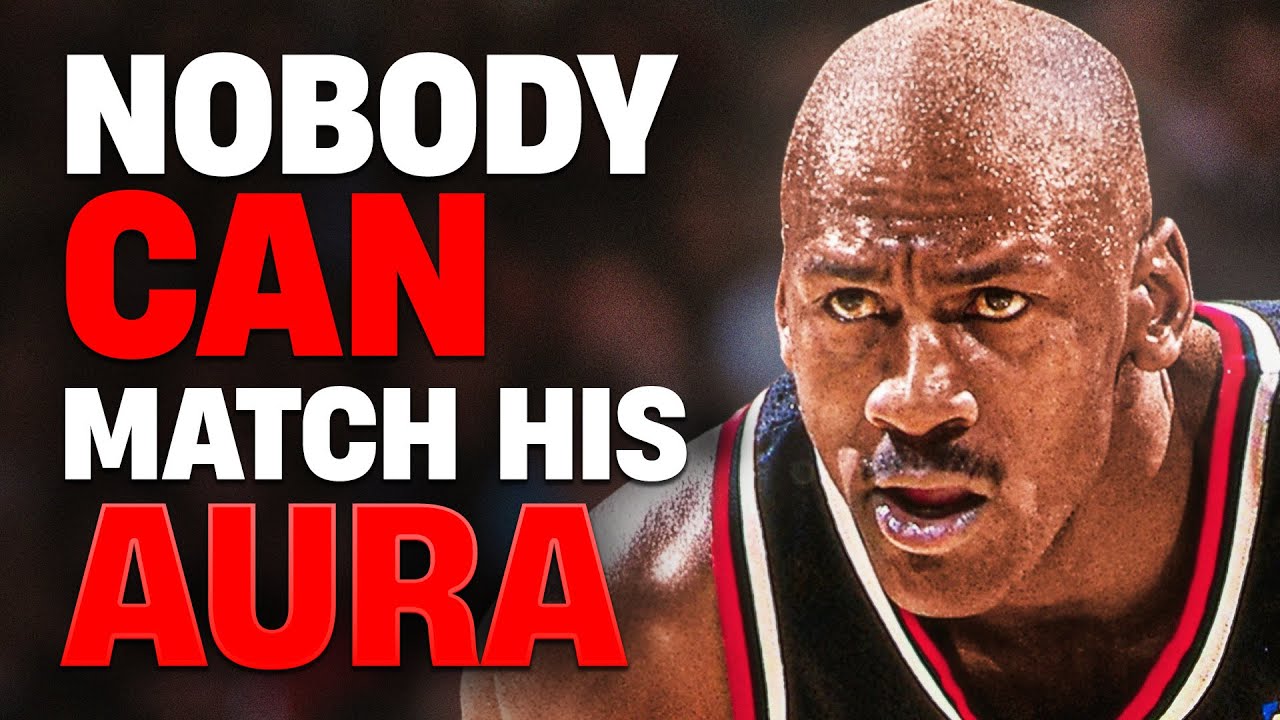
The Cult of Fear and Respect
For two decades, Michael Jordan reigned not just as a player, but as a cultural specter. While other greats were feared for specific skills—Shaquille O’Neal for his brute force, Allen Iverson for his ankle-breaking handles—Jordan was feared for his totality [01:04]. He was as vicious and vindictive as he was talented. Players knew that if they showed even the slightest sign of disrespect, Jordan would not just beat them; he would meticulously dismantle their reputation.
The legendary story of Nick Anderson, who famously claimed “45 is not 23,” serves as a perfect case study [01:35]. Jordan didn’t just take the comment as an opinion; he took it as a declaration of war. He responded by letting his play do the talking, showing up with the focus of a predator. This was the Jordan standard: any external doubt, perceived insult, or analytical slight was repurposed into high-octane fuel for his competitive engine [02:01].
Engineering Motivation: The Art of the Grudge
Jordan’s genius lay in his ability to manufacture his own obstacles. If there wasn’t a narrative to fuel his intensity, he would invent one. Before the 1992 NBA Finals, when analysts suggested Clyde Drexler might be a better three-point shooter, Jordan didn’t get angry; he got to work. He responded by raining down six three-pointers in the first half alone, scoring 35 points in a display of offensive annihilation that shattered records [02:20].
Perhaps even more telling is the story of Washington Bullets guard LaBradford Smith. After a game where Smith scored 37 points, Jordan allegedly heard him say, “Good game, Mike” [02:35]. Jordan decided that Smith was mocking him. He vowed to score 37 points against Smith in the first half of their next meeting. While he “only” managed 36 before halftime, the revelation years later that Smith never actually said the phrase in the first place highlights a crucial truth: Jordan didn’t need reality to be motivated; he simply needed a reason to crush his opponent [03:00].
The Ruthless Competitor: No One Was Safe
Jordan’s competitiveness was indiscriminate. Whether it was trash-talking a 5’3″ Muggsy Bogues—telling him to “shoot it, you f***ing midget”—or dunking on 7’1” center Mel Turpin just to prove a point to a heckling team owner, his ego was as expansive as his skill set [03:46, 04:32]. Nothing was too small or too petty. During the 1992 Olympics, after losing to rookie Christian Laettner in a ping-pong match, Jordan didn’t just accept defeat. He secretly ordered a table for his own room, practiced maniacally for days, and then returned to reclaim his dominance [05:03].
This intensity was even directed at his teammates. The stories of Jordan punching Steve Kerr or Will Purdue during practice have become the stuff of legend [06:08, 06:14]. To Jordan, these were not acts of malice but of standard-setting. He demanded perfection from everyone around him because he was performing at a level of perfection himself. Scott Burrell, often a target of Jordan’s verbal barrages, later admitted that Jordan’s intimidation was a form of preparation for the pressure of the playoffs [06:56].
The Legend of the Beer and the Smokes
Perhaps the most surreal aspect of the Jordan mythology is the “invincibility” factor. Stories of Jordan drinking beer before games, or playing 36 holes of golf and then dropping 50-plus points on an opponent, only added to his aura of being “otherworldly” [12:12, 13:03]. It challenged the logic of professional athletics. How could a human being operate with such casual confidence while remaining so devastatingly effective?
The imagery of Jordan smoking a cigar before entering the arena, the Ferrari parked inside, the sheer “cool” factor—it created a sense of inevitability [13:29]. Opponents knew they were fighting a battle they had already lost. When he asked, “Who’s going to check me?” he wasn’t looking for an answer; he was stating a fact [13:36].
The Clutch Gene and the Terminator
Jordan’s clutch performance is the foundation of his greatness. With 28 game-winning shots and an NBA record for buzzer-beaters, he was the personification of the “Terminator” archetype [10:47]. When the clock wound down, the fear shifted from the crowd to the opponent. Even after his retirement, the Bulls struggled to even reach 50 points in a game—a staggering testament to the vacuum of success left behind by his departure [10:54].
Even in his later years, well past his physical prime, Jordan’s dominance remained unquestioned. His famous lesson to a young OJ Mayo—taking him to school after the prospect dared to challenge his status—solidified that his dominance was not just athletic; it was psychological [11:18].
Conclusion: The Standard of Greatness
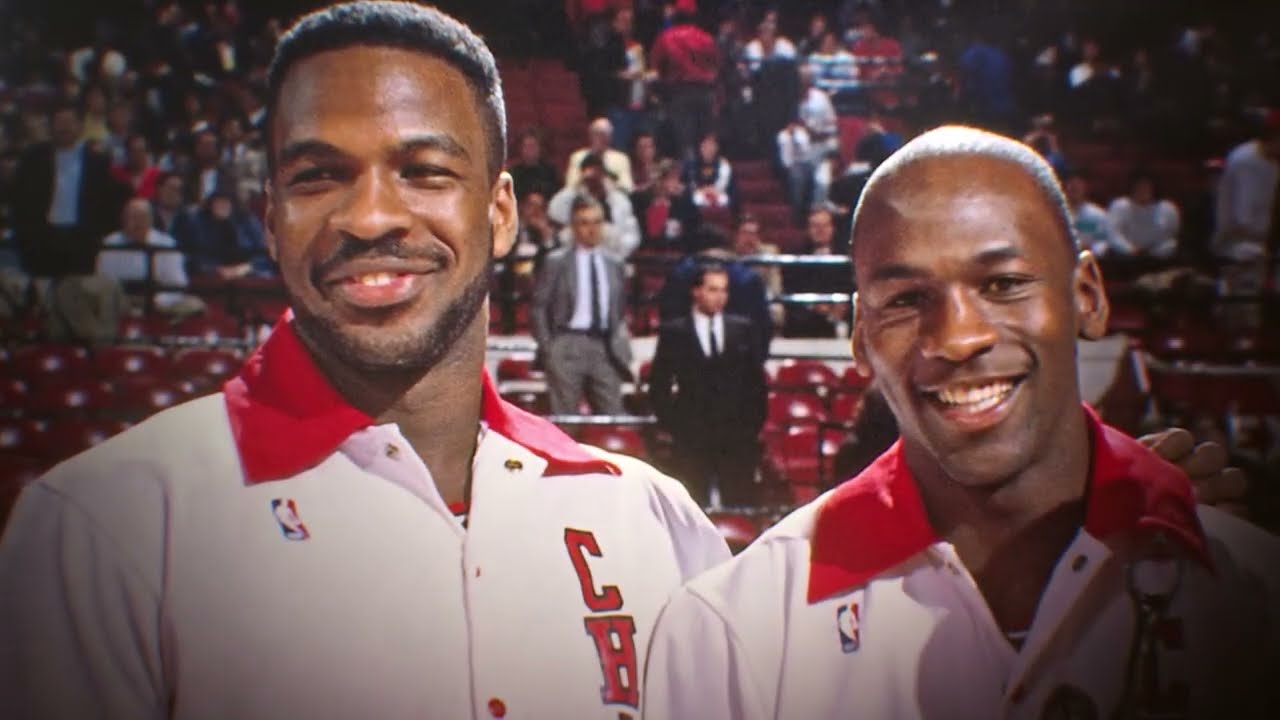
Michael Jordan’s aura was not a gimmick. It was the byproduct of a singular, uncompromising obsession with being the best at everything he touched. He was the definition of someone so skilled that his presence alone changed the atmosphere of a room. He inspired a generation not just to play basketball, but to approach their chosen crafts with the same cold-blooded intensity he brought to the court.
The “Black Jesus” of the NBA remains the high-water mark for sporting excellence. His legend is built on the moments where he defied the conventional logic of effort and motivation, proving that greatness is not just a skill, but a state of mind. As long as people play basketball, they will chase the ghost of Michael Jordan, trying to understand how one man could possess such an unmatched, terrifying, and awe-inspiring aura.