
The atmosphere inside Madison Square Garden was funeral quiet. It was Game 4 of the NBA Finals, and the New York Knicks found themselves staring down the barrel of a horrifying 27-point deficit at halftime against the San Antonio Spurs. The cameras panned across a sea of devastated faces, heavily focusing on the Spurs’ towering phenom, Victor Wembanyama, who seemed entirely unstoppable. Virtually nobody in the arena, nor the millions watching on television, was paying attention to the 6-foot-2 point guard sitting quietly in the corner of the Knicks’ bench. Yet, just two hours later, that same overlooked guard had engineered the largest comeback in the history of the NBA Finals, hanging 36 points on the board, securing a dramatic victory, and taking absolute control of the series. His name is Jalen Brunson, and his journey to the mountaintop is the ultimate indictment of how modern sports evaluate human potential.
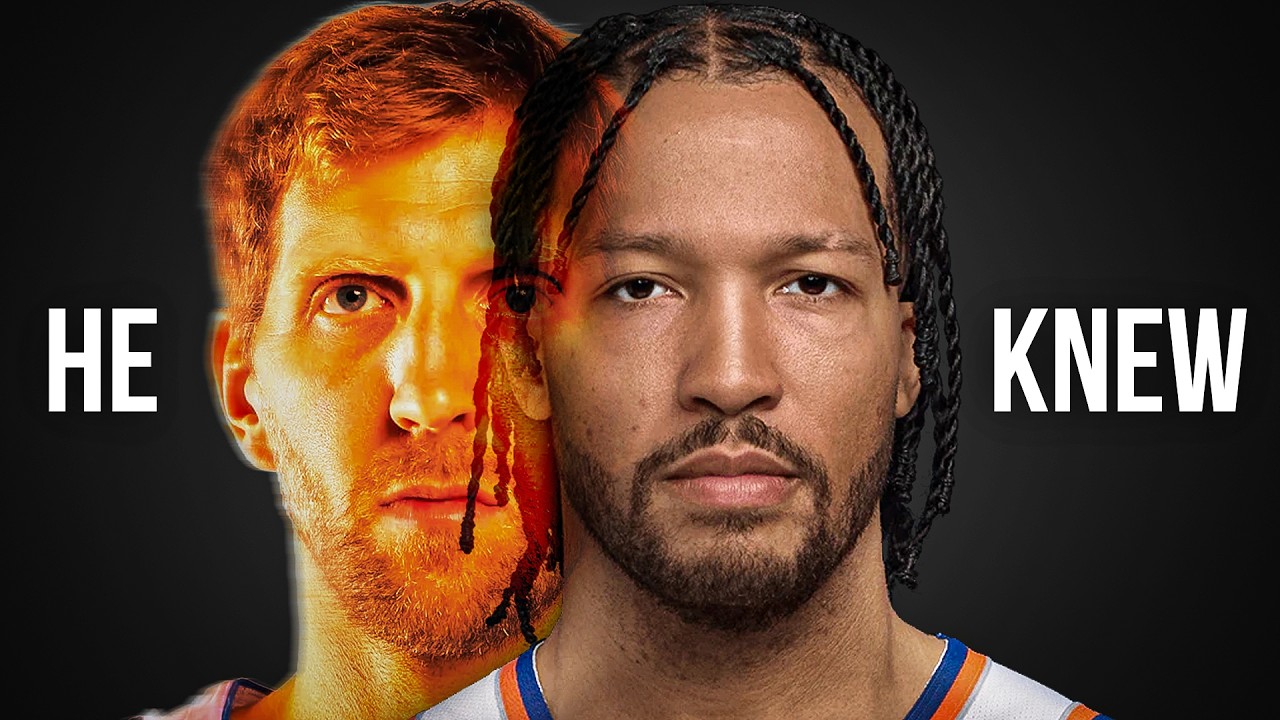
To fully grasp the magnitude of what Jalen Brunson is accomplishing right now, you have to rewind the clock to 2018. We live in an era of basketball that is entirely obsessed with measurables. Front offices, heavily reliant on complex algorithms and advanced analytics, obsess over wingspans, vertical leaps, and switchability. When scouts looked at Brunson coming out of Villanova, they did not see the heart of a champion who had just won two back-to-back national titles. They saw a player who lacked elite burst, a player who did not possess a gasp-inducing vertical jump, and a player whose ceiling was supposedly capped by his physical dimensions. The consensus was brutal and unanimous: he was a great college player who would inevitably get eaten alive in the unforgiving environment of the NBA.
Consequently, on draft night, Brunson watched thirty-two names get called before his own. The Dallas Mavericks finally scooped him up with the 33rd pick, viewing him not as a foundational building block, but merely as a safe, low-ceiling backup project. However, destiny has a funny way of aligning the stars. Brunson’s rookie season serendipitously coincided with the final farewell tour of Mavericks legend Dirk Nowitzki. While the entire franchise was rightfully focused on passing the torch to their new prodigy, Luka Doncic, Nowitzki found himself quietly observing the forgotten second-round pick.
What the 7-foot German icon saw completely contradicted the scouting reports. Dirk did not care about the lack of a 40-inch vertical. Instead, he saw a young kid who was the first one in the gym and the last one to leave. He saw an obsessive competitor who approached routine practice drills with the terrifying intensity of a Game 7. Nowitzki pulled the young guard aside and delivered a message that would ultimately echo through basketball history: “You’re already way ahead of my curve. I admire what you do already at a young age.” Dirk recognized the exact same intangible qualities—work ethic, relentless professionalism, and a quiet obsession with the craft—that had built his own legendary two-decade career. He vehemently tried to tell anyone who would listen that this kid was special. But the league, blinded by spreadsheets, simply refused to hear it.
For four long years, Brunson played the role of the good soldier in Dallas. He accepted his fate as a secondary option, averaging a modest 12 points a night while operating in the massive shadow of a generational superstar. He was viewed as a solid complimentary piece, someone who could secure a decent paycheck but would never be the face of a franchise. That narrative began to crack in the 2022 playoffs. When an injury sidelined their star player, Brunson was thrust into the spotlight against the Utah Jazz. Without a superstar blocking the sun, Brunson absolutely exploded, dropping 41 points in Game 2 and carrying the Mavericks to the Western Conference Finals. You would think this heroic performance would force the front office to back up the Brinks truck and secure his loyalty forever.
Instead, in a move that will haunt them for decades, the Mavericks let him walk. They simply did not believe the breakout was real. When Brunson signed a four-year, $104 million contract with the New York Knicks, the media reaction was swift and merciless. Pundits across the nation loudly condemned the deal as a catastrophic overpay. They confidently declared that New York had locked itself into a decade of mediocrity. They predicted that Brunson would completely fold under the notoriously blinding pressure of the New York media. In a heartbreaking twist, even his biggest advocate, Dirk Nowitzki, publicly admitted he had doubts about whether Brunson could handle the unique, soul-crushing weight of playing in Madison Square Garden.
But as soon as Brunson put on the blue and orange jersey, the script flipped with violent speed. He did not just survive the pressure; he absorbed it and weaponized it. In his very first year, he shattered his career highs, averaging 24 points a night and dragging a lottery-bound franchise to their first playoff series victory in a decade. The so-called “worst contract in the league” rapidly morphed into the biggest bargain in modern sports history. By year two, he was an All-Star. By year three, he was an All-NBA selection, leading the Knicks to back-to-back 50-win seasons and their first Eastern Conference Finals appearance since the year 2000.
The true coronation, however, arrived during this most recent, historic season. Brunson transcended from being merely a great player to becoming a genuine cultural phenomenon. He achieved the unthinkable by dropping 40 points in an elimination game to secure the first-ever NBA Cup for New York, walking away with the MVP trophy. And it was right there, in the glow of that monumental victory, that the narrative truly came full circle. Dirk Nowitzki appeared on the broadcast, looked Brunson dead in the eye, and delivered a stunningly vulnerable apology on live television. The Hall of Famer admitted he was wrong to ever doubt him, expressing profound pride in watching the work ethic he praised in 2019 finally conquer the biggest stage in basketball.
That raw television moment perfectly encapsulated the devastating flaw in how we evaluate athletes. The league spent millions of dollars trying to measure greatness with advanced mathematics, completely ignoring the fiery, unquantifiable human spirit that Dirk Nowitzki saw on day one. When Brunson walked into that locker room down 27 points in the NBA Finals, he did not scream or throw chairs. He methodically instructed his team to chip away at the deficit, relying on the same quiet, psychotic determination that allowed him to survive being passed over 32 times in the draft. He orchestrated the greatest comeback in Finals history not because he jumped the highest or ran the fastest, but because his mind and his heart simply refused to accept defeat.
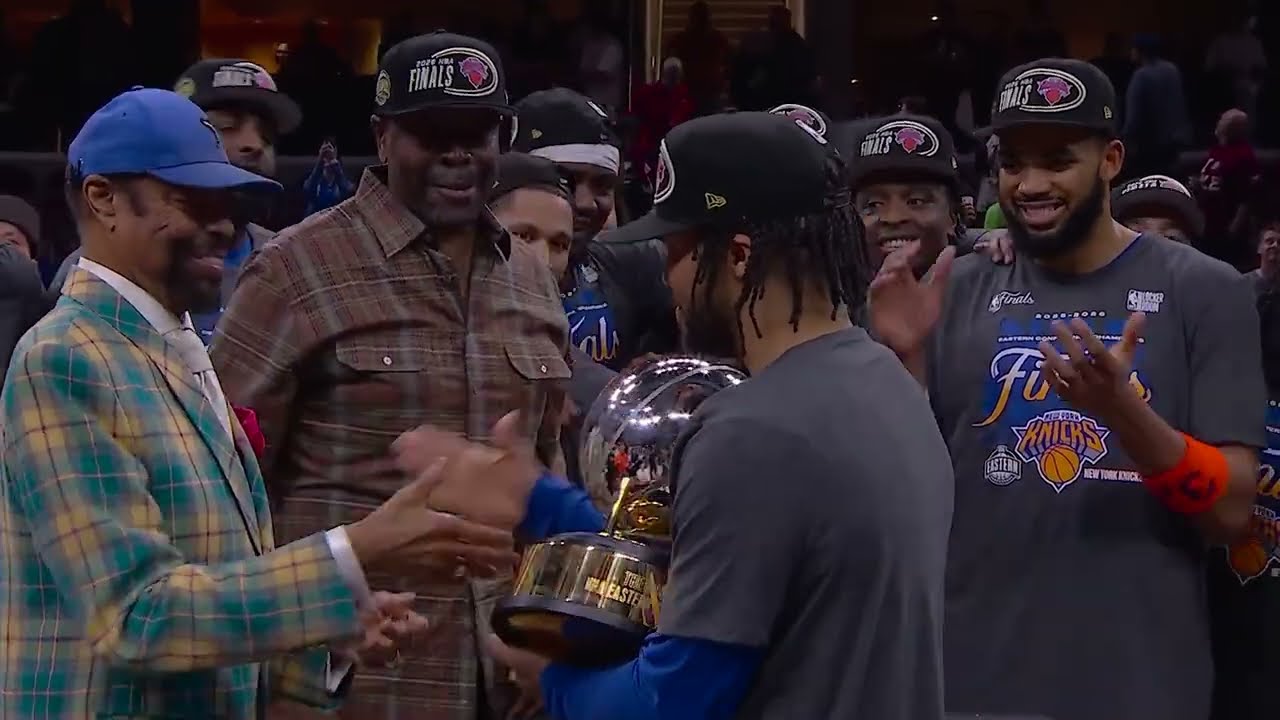
Today, Jalen Brunson stands not just as a champion, but as a permanent warning to every scout and executive in professional sports. He is the ultimate proof that you cannot calculate heart on a spreadsheet. Every single doubter has been forced to publicly fold, realizing far too late what one German basketball legend knew all along. The story of Jalen Brunson is no longer about whether he can handle the pressure; it is about how incredibly foolish we all were for ever doubting him in the first place.