The neon-drenched streets of Bangkok are globally renowned for their intoxicating, restless energy. They are a bustling maze of tantalizing street food vendors, towering modern skyscrapers, and an electric nightlife that seemingly never sleeps. However, the true lifeblood of this sprawling metropolis relies heavily on its vast army of motorcycle taxi drivers. Clad in their highly recognizable bright orange vests, these men and women navigate the notoriously gridlocked traffic to transport locals and tourists alike for a few hard-earned baht. It is a grueling, exhausting profession characterized by long, unregulated hours and incredibly slim profit margins. But for a group of drivers stationed in the busy Din Daeng district, a routine night of ferrying passengers transformed into an unspeakable nightmare. In the early hours of a quiet Sunday morning, a seemingly trivial argument over a standard fare—equating to less than four US dollars—exploded into a terrifying barrage of gunfire. By the time the smoke cleared, two hardworking men were dead, a third was severely injured, and the man holding the weapon was revealed to be a sworn officer of the law.
This devastating incident has sent profound shockwaves throughout Thailand, ripping the veil off deeper, systemic issues surrounding police conduct, gun control, and the perilous vulnerability of the working class. It serves as a stark, horrifying reminder of how fragile human life truly is, and how quickly a fleeting moment of anger can irrevocably destroy multiple families.
A Petty Dispute Turns Fatal
The fatal encounter commenced at approximately 2:20 AM near the entrance to Soi Pracha Songkhro 38, a typically lively residential and commercial street. According to detailed police reports and harrowing eyewitness testimonies, the suspect—later officially identified as 33-year-old Police Senior Sergeant Major Namthap Phakwatthana, an off-duty border patrol officer—approached a designated motorcycle taxi stand. He requested a ride from the Huai Khwang area back to his personal residence located in the neighboring Makkasan district.
The riders working the stand accurately quoted him the standard, accepted late-night fare for that specific route: 120 baht (approximately $3.50 to $4.00). However, the off-duty officer became immediately irate, aggressively complaining that the price was entirely too high. Attempting to de-escalate or simply brush off the difficult customer, the exhausted taxi workers firmly suggested that if he was unhappy with their set pricing, he should walk away and hail a metered car taxi instead.
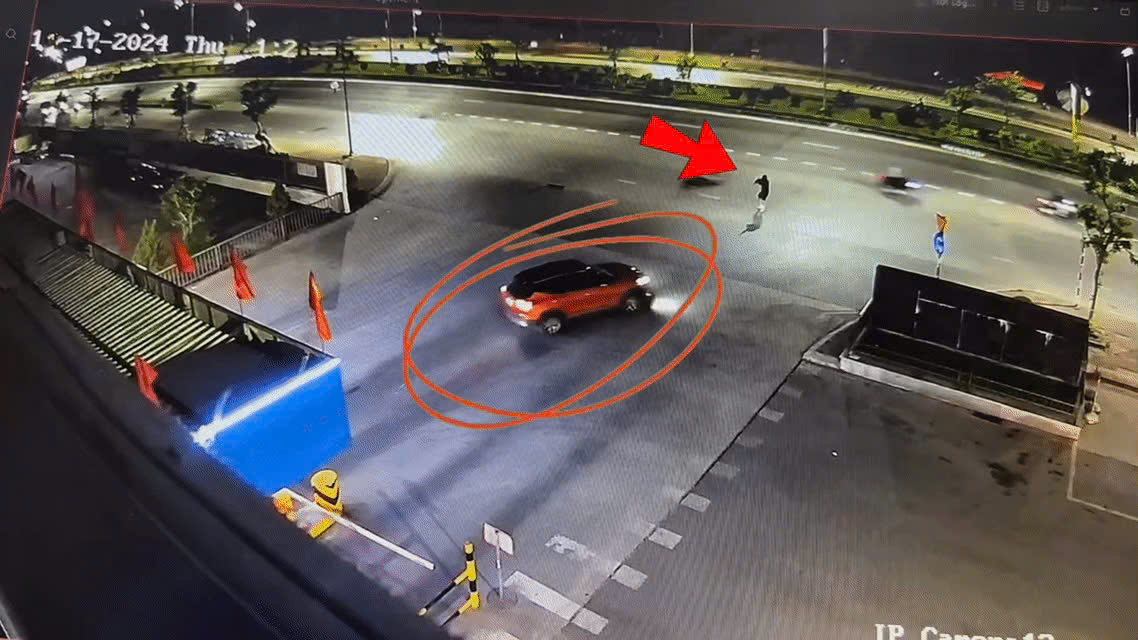
Rather than accepting this logical advice and moving on, the situation rapidly deteriorated into a highly volatile shouting match. The verbal insults quickly crossed the line into physical aggression. Grainy but chilling surveillance camera footage recovered from nearby storefronts captured the chaotic escalation. The footage allegedly shows the orange-vested taxi drivers, clearly frustrated by the aggressive demeanor of the officer, engaging in a physical altercation. The workers were seen kicking the suspect to the ground and aggressively chasing him away from their designated taxi stand.
While the physical retaliation from the drivers was undoubtedly an escalation, what happened next was a wildly disproportionate and ultimately lethal response. Retreating from the immediate brawl, Namthap reached for his personal firearm. Without hesitation, he drew his 9mm handgun and fired multiple, devastating rounds directly into the group of unarmed drivers.
The Gruesome Aftermath and the Victims
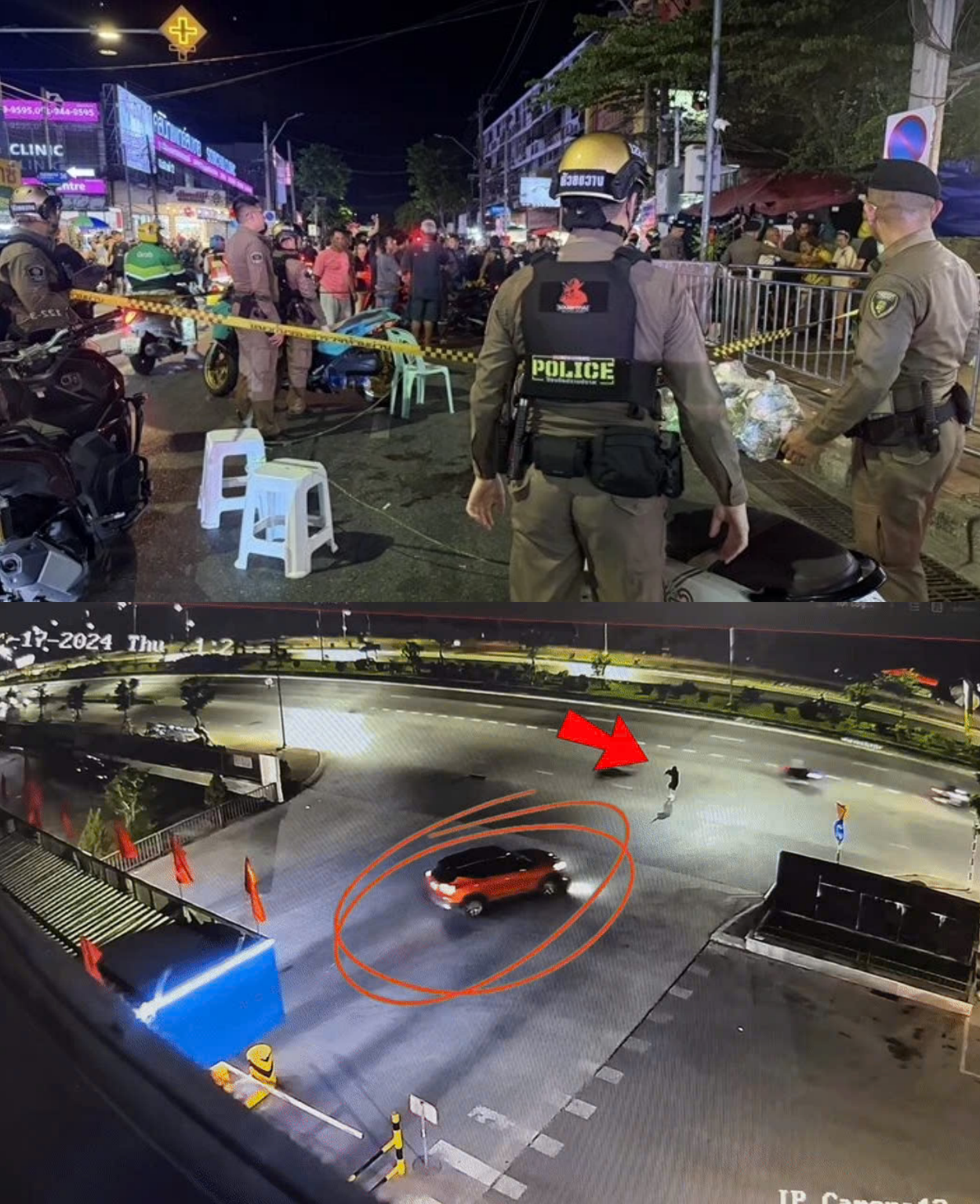
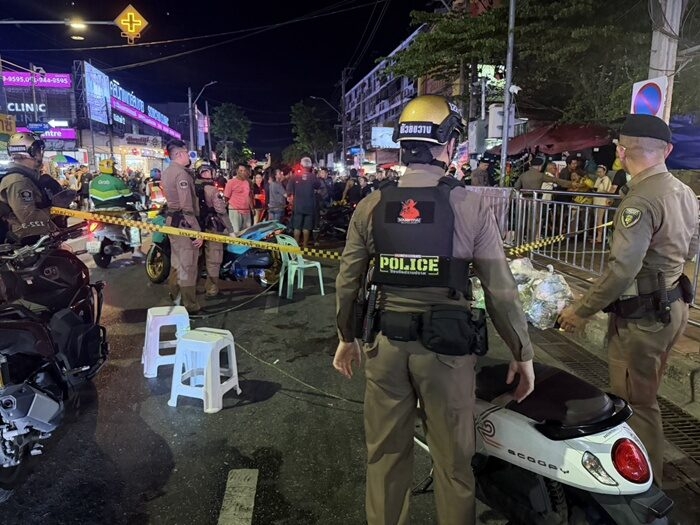
When emergency responders and local Huai Khwang police officers arrived at the chaotic, blood-stained scene at approximately 2:50 AM, they were met with absolute carnage. They found 37-year-old Purit Mangthisan, a veteran motorcycle taxi rider, lying completely motionless on the pavement. He had sustained catastrophic injuries, with multiple entry wounds in his back and exit wounds tearing through his chest, indicating he may have been actively trying to flee when he was struck. Paramedics pronounced him dead at the scene.
The terrifying spray of bullets also struck two of his colleagues. Charin Khunarak, 48, suffered severe gunshot wounds to his thigh and his hand, while 46-year-old Kiatisak Srirat was shot entirely through the thigh. Both severely wounded men were immediately rushed to separate local hospitals for emergency, life-saving trauma surgery. Tragically, despite the desperate efforts of the medical staff, one of the wounded drivers later succumbed to his massive internal injuries, bringing the final death toll of the senseless dispute to two.
Forensic investigators combing through the dimly lit street later recovered a chilling arsenal of evidence. Scattered across the concrete were nine spent 9mm shell casings, eighteen rounds of live, unspent ammunition, a discarded weapon magazine, and numerous shattered bullet fragments. The sheer volume of ammunition present clearly painted a picture of a man who was prepared for immense violence.
| Incident Overview | Verified Details |
| Location | Din Daeng District, Bangkok (Soi Pracha Songkhro 38) |
| Time of Incident | Approximately 2:20 AM – 2:50 AM, Sunday |
| Suspect | Namthap Phakwatthana, 33 (Off-duty border patrol police officer) |
| Casualties | Two motorcycle taxi drivers deceased, one driver severely injured |
| Crime Scene Evidence | 9 spent 9mm casings, 18 live rounds, one magazine |
| Disputed Fare Amount | 120 Baht (Roughly $3.50 – $4.00 USD) |
Surrender, Self-Defense, and Mental Health Claims
Hours after fleeing the immediate area, Namthap voluntarily surrendered himself at the Makkasan police station, fully turning over his weapon to the investigating officers. During his initial interrogation, the 33-year-old officer attempted to construct a legal defense based entirely on self-preservation. He explicitly claimed that the violent dispute originated strictly over the fare and passionately argued that the taxi motorcyclists had brutally assaulted him first. He stated that he only drew his weapon and fired the shots because he genuinely feared for his life and felt he had to act in self-defense against a larger, aggressive group.
However, the legal threshold for lethal self-defense requires that the force used be directly proportionate to the immediate threat faced. Legal analysts and infuriated citizens alike have quickly pointed out that firing a deadly weapon repeatedly into a crowd of unarmed men who were primarily using their hands and feet vastly exceeds any reasonable definition of proportional defense.
Adding an incredibly complex and troubling layer to the ongoing investigation are the statements provided by the suspect’s own family. A close relative of Namthap informed police investigators that the officer had a documented history of severe mental health conditions and was actively taking heavily prescribed psychiatric medication. This alarming revelation has instantly triggered a fierce, nationwide debate regarding the rigorous psychological evaluations—or glaring lack thereof—required for individuals entrusted to carry lethal weapons and uphold the law within the Thai police force.
A Crisis of Confidence in Law Enforcement
This horrific shooting is not occurring in a vacuum. It represents yet another deeply troubling incident in a mounting string of controversies that have severely eroded public trust in the Royal Thai Police. Citizens are growing increasingly exhausted by headlines detailing extreme corruption, violent abuses of power, and off-duty officers utilizing their service weapons to ruthlessly settle highly personal, petty scores.
Thailand possesses a deeply entrenched gun culture, with one of the absolute highest rates of civilian firearm ownership in all of Asia. When violent disputes inevitably arise, they frequently escalate into deadly shootings. However, when the perpetrator of that extreme gun violence is a trained police officer—someone who is theoretically educated in conflict de-escalation and sworn to preserve human life—the societal betrayal feels incredibly profound. The public is rightfully asking how a man with an allegedly unstable mental condition was permitted to serve as a border patrol officer and maintain unrestricted access to high-capacity firearms.
Furthermore, the tragedy highlights the severe daily dangers faced by the working-class citizens of Bangkok. Motorcycle taxi drivers are fundamentally unprotected gig workers. They operate entirely in the open air, dealing with inebriated tourists, aggressive locals, and wildly unpredictable street conditions throughout the night. They do not have the luxury of secure corporate offices or comprehensive hazard pay. When they are brutally murdered over a fare that barely covers the cost of a basic meal, it exposes the massive, glaring inequities that silently plague the city’s economic structure.
The Path to Justice
The Metropolitan Police Bureau has firmly assured the furious public that the investigation will be handled with the utmost transparency and strict adherence to the law, promising that no special treatment will be afforded to the suspect despite his official rank. Namthap has been formally hit with a barrage of incredibly severe criminal charges, including premeditated murder, attempted murder, and illegally carrying a loaded firearm in a public place without proper permission or necessity.
As the grieving families of Purit Mangthisan and his fallen colleague actively prepare for unexpected, heartbreaking funerals, the vibrant city of Bangkok is left to grapple with the incredibly heavy, lingering trauma of the event. The bright orange vests of the motorcycle taxi drivers will continue to weave bravely through the chaotic city traffic, representing the undeniable resilience of the Thai working class. However, the empty spots at the Soi Pracha Songkhro 38 taxi stand will serve as a permanent, chilling monument to a night where basic human empathy completely vanished. The loss of two human lives over the equivalent of four dollars is a tragic, absolute failure of society, proving that until strict accountability and mental healthcare are taken seriously within law enforcement, the dangerous streets of the city will remain vulnerable to those who are sworn to protect them.