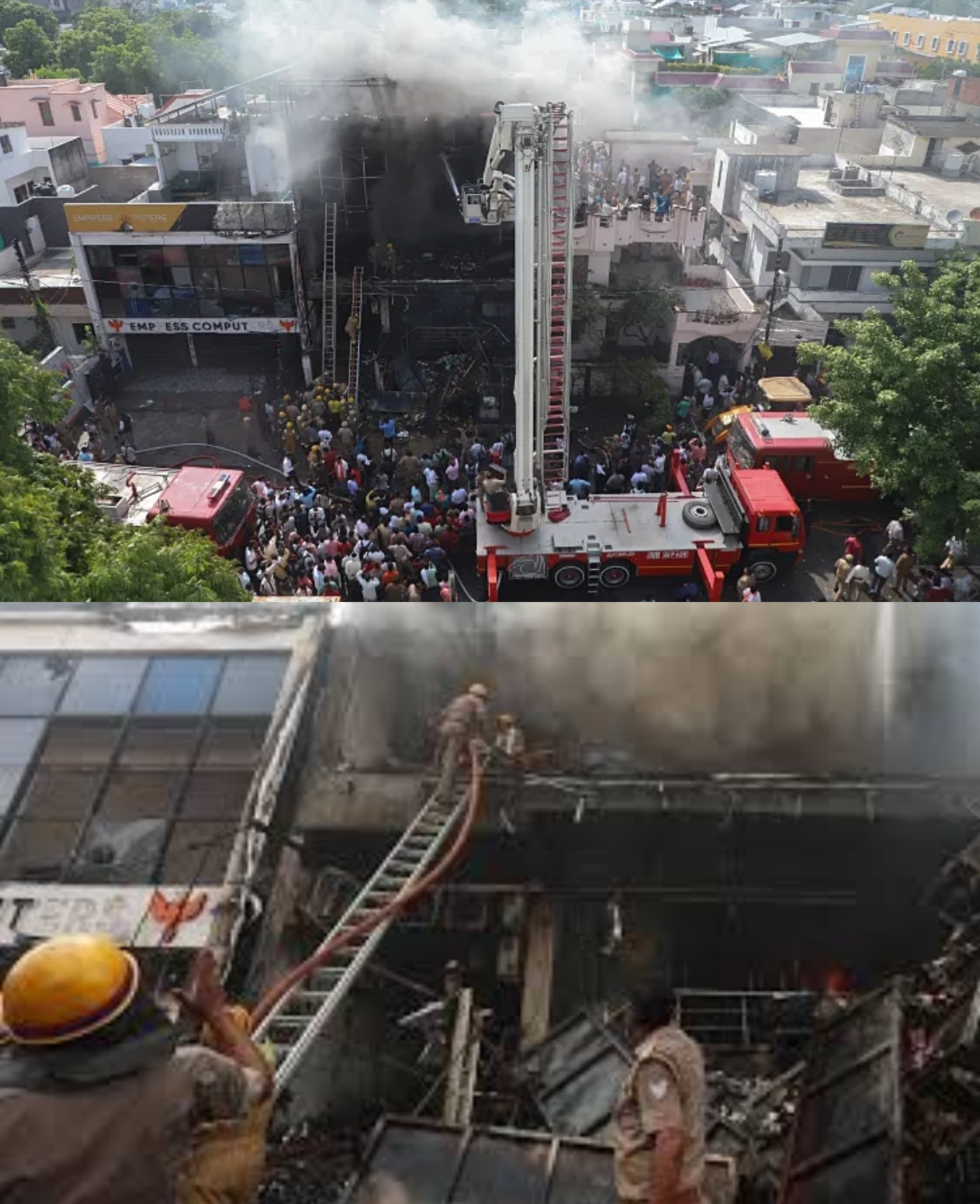
The vibrant, bustling streets of Lucknow, the capital city of India’s northern state of Uttar Pradesh, are usually filled with the energetic hum of students, local vendors, and busy commuters. In the premium residential and commercial neighborhood of Aliganj, this lively atmosphere is a daily constant. Young adults gather at local cafes, flock to coaching centers to prepare for their futures, and spend hours immersed in books at neighborhood libraries. But on a seemingly ordinary Monday afternoon, this peaceful, everyday rhythm was brutally shattered by a sudden, devastating tragedy. A massive fire tore through a crowded three-story commercial building, transforming a hub of learning and creativity into a deadly inferno. By the time the thick, suffocating smoke finally cleared, at least 14 people—most of them young students with their entire lives ahead of them—were tragically confirmed dead.

The horrific incident has sent profound shockwaves across the nation, leaving grieving families completely devastated and local authorities scrambling for immediate answers. It stands as a stark, heartbreaking reminder of how quickly a normal day can spiral into an unimaginable nightmare, and it violently thrusts the ongoing crisis of urban building safety in India back into the harsh glare of the public spotlight.
A Deadly Trap in the Heart of Aliganj
To understand the sheer magnitude of the panic that unfolded, one must first understand the incredibly dense layout of the affected building. Located on Usha Mehta Marg, the three-story structure was a bustling microcosm of urban commercial life. The lower levels housed a popular local pet shop and a veterinary clinic. Moving upstairs, the building transitioned into an educational and creative space, hosting a busy coaching center for college students, a quiet library, and Head Hopper Studio, a vibrant gaming and animation firm that also functioned as a training wing.
When the fire initially broke out around 3:00 PM, the building was packed with people who had just returned from their lunch breaks. Initial reports and preliminary forensic findings suggest that the blaze may have been triggered by a sudden electrical short circuit, possibly originating from an air conditioning unit on the ground floor. Fed by highly combustible materials stored within the premises, the flames multiplied with terrifying speed.
Within minutes, the fire rapidly escalated from the lower levels, aggressively pushing its way up the stairwells and acting as a massive, lethal chimney. The dense, toxic black smoke moved faster than the flames themselves, swiftly engulfing the narrow passageways and completely cutting off the primary escape routes for the dozens of students and employees trapped on the upper floors.
Desperate Leaps for Survival
The scenes that subsequently played out on the streets of Aliganj were nothing short of apocalyptic. As the heat inside the building reached unbearable temperatures, sheer panic gripped the trapped occupants. Witnesses standing completely horrified on the pavement below watched as thick plumes of smoke billowed violently out of shattered windows.
With the main exits entirely blocked by a roaring wall of fire, the young students were forced into making split-second, agonizing decisions. Several terrified individuals, realizing that waiting for rescue might mean certain death, broke the glass windows and desperately jumped from the upper levels of the building onto the hard street below. Harrowing videos rapidly circulating across social media captured these chaotic, heartbreaking moments. While some of those who jumped miraculously survived and were immediately rushed to local hospitals with severe back injuries and fractures, the sheer terror of having to leap from a burning building highlights the absolute desperation of the situation.
For those unable or too afraid to jump, the ordeal inside was utterly horrific. Survivors recounted the horrifying speed at which the visibility dropped to zero. Rescue teams later discovered that several victims, all reportedly in their early twenties, had tragically locked themselves inside small washrooms and interior rooms in a frantic, doomed attempt to escape the fast-spreading flames and suffocating soot.
“At first we thought it was a small fire. By the time we tried to leave, smoke had filled the rooms and passageways. The panic was absolute, and we couldn’t breathe.” — Mohammad Asin, an employee who narrowly escaped the animation studio.
A Frantic and Complex Rescue Operation
The emergency response was massive, but it was severely hampered by the very design of the blazing structure. Officials stated that a fleet of fifteen fire engines, including highly specialized hydraulic platform vehicles, was rapidly deployed to the scene, with the first units arriving within a remarkably swift eight minutes of receiving the initial distress call. However, getting inside the building proved to be a monumental, life-threatening challenge.
The front facade of the building was a raging inferno, forcing firefighters and teams from the National Disaster Response Force (NDRF) to employ extreme, aggressive tactics to reach the trapped victims. Rescue teams actually had to climb onto the terrace of an adjoining property and physically drill large openings through the heavy brick rear walls of the burning building just to gain entry.
Once inside, the conditions were described as nightmarish. The immense volume of wooden furniture and electronics inside the coaching center and animation studio created a toxic, blinding smoke that obscured everything. Firefighters were forced to bring in heavy-duty industrial exhaust fans simply to clear enough smoke to visually search the rooms and hallways. Tragically, as they systematically moved through the charred remains of the second and third floors, they began recovering the bodies of the young students who had succumbed to severe smoke inhalation and severe burns. In a heartbreaking addition to the human toll, animal rights activists confirmed that at least six pets trapped inside the ground-floor veterinary clinic also perished in the disaster.
| Incident Overview | Verified Details |
| Location | Aliganj neighborhood, Lucknow, Uttar Pradesh |
| Time of Outbreak | Approximately 3:00 PM, Monday |
| Total Casualties | At least 14 confirmed dead, mostly in their 20s |
| Injured | Minimum of 7 individuals hospitalized |
| Building Tenants | Pet shop, vet clinic, library, coaching center, animation studio |
| Suspected Cause | Electrical short circuit spreading to combustible materials |
Systemic Failures and Political Outrage
As the last of the flames were finally doused and the grim, quiet reality of the death toll set in, the emotional response quickly transitioned from profound grief to intense, entirely justified anger. Deadly building fires are a tragically common occurrence across India, a direct result of a systemic, routine disregard for basic fire safety regulations, rapid and unchecked urban construction, and a lack of proper emergency infrastructure.
Political leaders immediately voiced their sorrow and promised swift accountability. Uttar Pradesh Deputy Chief Minister Brajesh Pathak, visibly emotional while visiting the devastated site, confirmed the fatalities and assured the public that no leniency would be shown to those responsible. “Fourteen children from happy families were killed in the incident. I have seen the bodies with my own eyes,” Pathak somberly told the gathered press.
Prime Minister Narendra Modi also expressed his deep anguish over the senseless loss of life, taking to social media to announce financial relief packages. The Prime Minister’s office sanctioned an ex-gratia payment of over $2,100 (Rs 2 lakh) for the families of the deceased and additional funds for the critically injured. Meanwhile, Uttar Pradesh Chief Minister Yogi Adityanath abruptly cut short a political tour to return to Lucknow, visiting the hospitalized victims and officially ordering a high-level, seven-day probe by a Special Investigation Team (SIT) to determine the exact sequence of events and identify severe code violations.
A City Left Mourning Its Youth
While high-level investigations and financial compensation are standard, necessary governmental responses, they offer incredibly little comfort to the parents who sent their children to a coaching center on a Monday afternoon, fully expecting them to return home for dinner. The victims were young, ambitious individuals—aspiring animators, dedicated college students, and hardworking staff members. Their sudden, violent absence leaves a massive, gaping hole in the very fabric of the local community.
The catastrophic fire in Lucknow is not just an isolated, unfortunate accident; it is a glaring, blaring alarm bell. It painfully exposes the deadly consequences of ignoring stringent building codes, neglecting routine electrical maintenance, and failing to provide clear, accessible emergency exits in commercial spaces. Until strict, unyielding safety regulations are fundamentally enforced and property owners are held absolutely accountable for the lives inside their walls, the terrifying risk of another inferno remains a constant, looming threat.
As the city of Lucknow begins the agonizing process of mourning its lost youth, the charred, blackened shell of the building on Usha Mehta Marg stands as a dark, silent monument to a completely preventable tragedy. The absolute best way to honor the fourteen bright lives extinguished in the flames is not just through political condolences, but through immediate, uncompromising action to ensure that a disaster of this horrifying magnitude never happens again.